Coffee Culture in Dubai: The Ultimate Guide (2026)
 Real Estate Club Dubai
- Dubai blends 500+ years of Arabic coffee tradition with a booming third-wave specialty scene.
- The Spanish Latte is Dubai's unofficial signature drink — sweet condensed milk meets espresso.
- Expect to pay AED 18–32 for a specialty coffee; karak chai starts at just AED 1–3.
- Neighborhoods like Dubai Marina, Al Quoz, and Downtown Dubai are the epicenters of cafe culture.
- Over 3,500 cafes operate across the city — more per capita than most European capitals.
- Cafe culture directly influences property desirability, walkability scores, and community living.
Dubai has quietly — and then not so quietly — become one of the world's great coffee cities. What started with traditional Arabic Gahwa served from ornate dallah pots in Bedouin majlis tents has evolved into a sophisticated, multi-layered coffee ecosystem that rivals Melbourne, London, and Tokyo. The city now hosts over 3,500 cafes, dozens of specialty roasters, and a coffee culture that reflects its population: diverse, ambitious, and unapologetically luxurious.
Whether you're an expat who just arrived, a long-time resident looking for your next favorite spot, or an investor curious about how cafe culture shapes neighborhood value — this guide covers every aspect of Dubai coffee in 2026.
Why Dubai Has Become a Global Coffee Capital
Several forces have converged to make Dubai one of the world's most dynamic coffee markets. Understanding them explains why the city's cafe scene feels unlike anywhere else on earth.
Population diversity. Over 200 nationalities live in Dubai. Each brings its own coffee traditions — Italian espresso culture, Turkish coffee rituals, Ethiopian ceremony, Australian flat white precision, and Southeast Asian iced coffee preferences. This melting pot creates demand for every style simultaneously, and Dubai's entrepreneurs are happy to supply it all.
Climate and lifestyle. With temperatures exceeding 40°C for five months of the year, iced and cold coffee drinks aren't a seasonal trend — they're a survival strategy. This has driven extraordinary innovation in cold brew, iced lattes, and nitrogen-infused beverages. Air-conditioned cafes also function as social spaces, co-working hubs, and community gathering points in a city where outdoor socializing is limited for much of the year.
Wealth and willingness to pay. Dubai's affluent population supports premium pricing. A single-origin pour-over at AED 35 doesn't raise eyebrows here. This financial runway allows roasters to source exceptional beans, invest in state-of-the-art equipment, and hire world-class baristas — creating a virtuous cycle of quality improvement.
Social media culture. Dubai is one of the world's most Instagram-active cities. Cafes compete not just on taste but on aesthetic — latte art, interior design, and plating. This has pushed the entire industry toward higher production values. The result benefits everyone: beautiful spaces that also serve excellent coffee.
Strategic geography. Positioned between the coffee-growing regions of East Africa, South Asia, and Southeast Asia, Dubai has become a global coffee trading hub. The Dubai Multi Commodities Centre (DMCC) handles significant volumes of green coffee beans, giving local roasters access to exceptional lots that might never reach European or American markets.
Traditional Emirati Coffee Culture: Gahwa, Dallah, and the Majlis
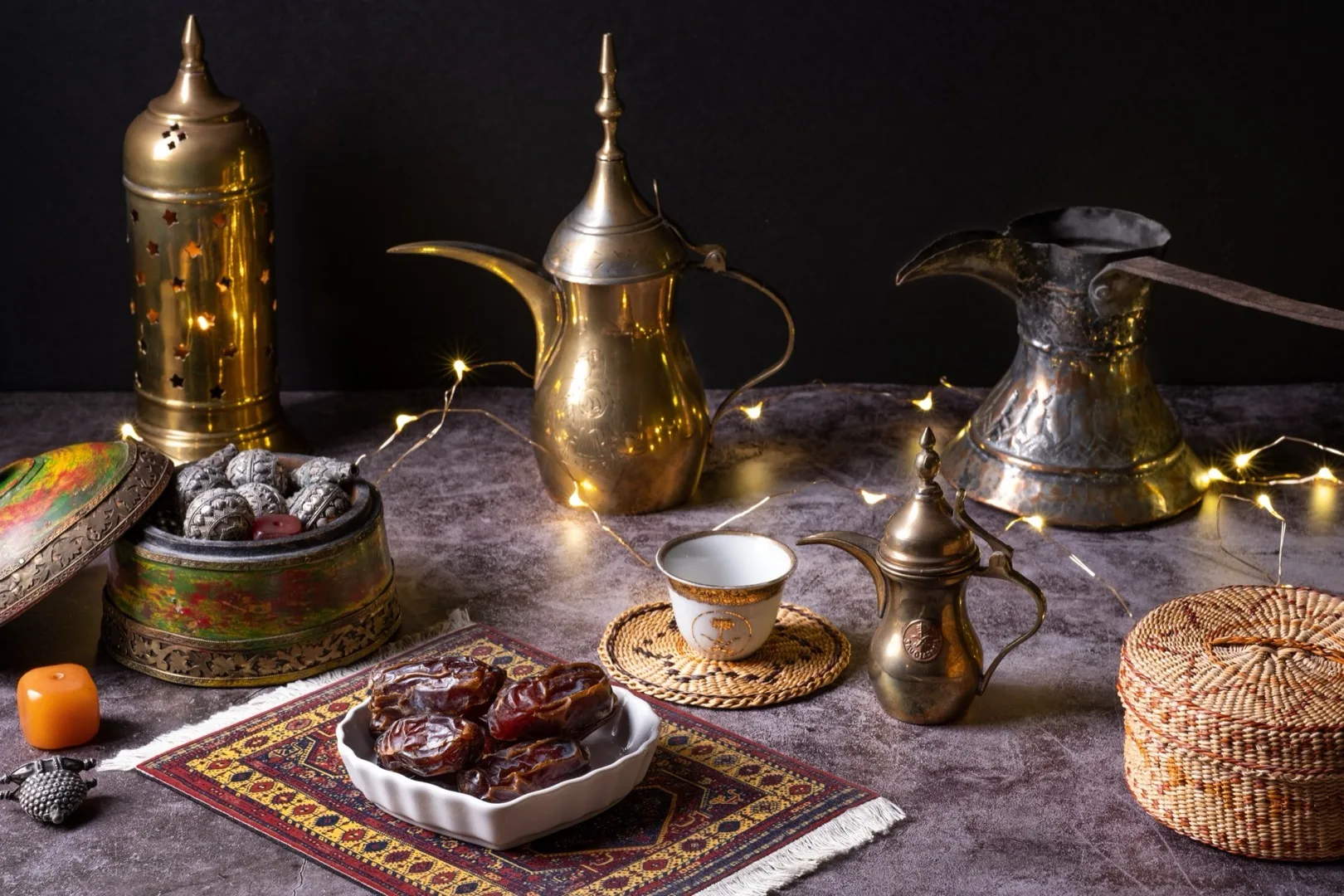
Before the specialty coffee wave, before the Spanish Latte, before the Instagram-worthy pour-overs — there was Gahwa. Arabic coffee isn't just a beverage in the UAE; it's a UNESCO-recognized cultural practice, a symbol of hospitality, and a living connection to Bedouin heritage.
What Is Gahwa?
Gahwa (قهوة عربية) is made from lightly roasted green coffee beans, ground with cardamom and sometimes saffron or cloves. It's pale gold or greenish in color — nothing like the dark espresso most Westerners picture when they hear "coffee." The flavor is delicate, herbal, and aromatic, with cardamom as the dominant note. It's served unsweetened, traditionally alongside dates whose natural sweetness balances the bitterness.
The Dallah and the Finjaan
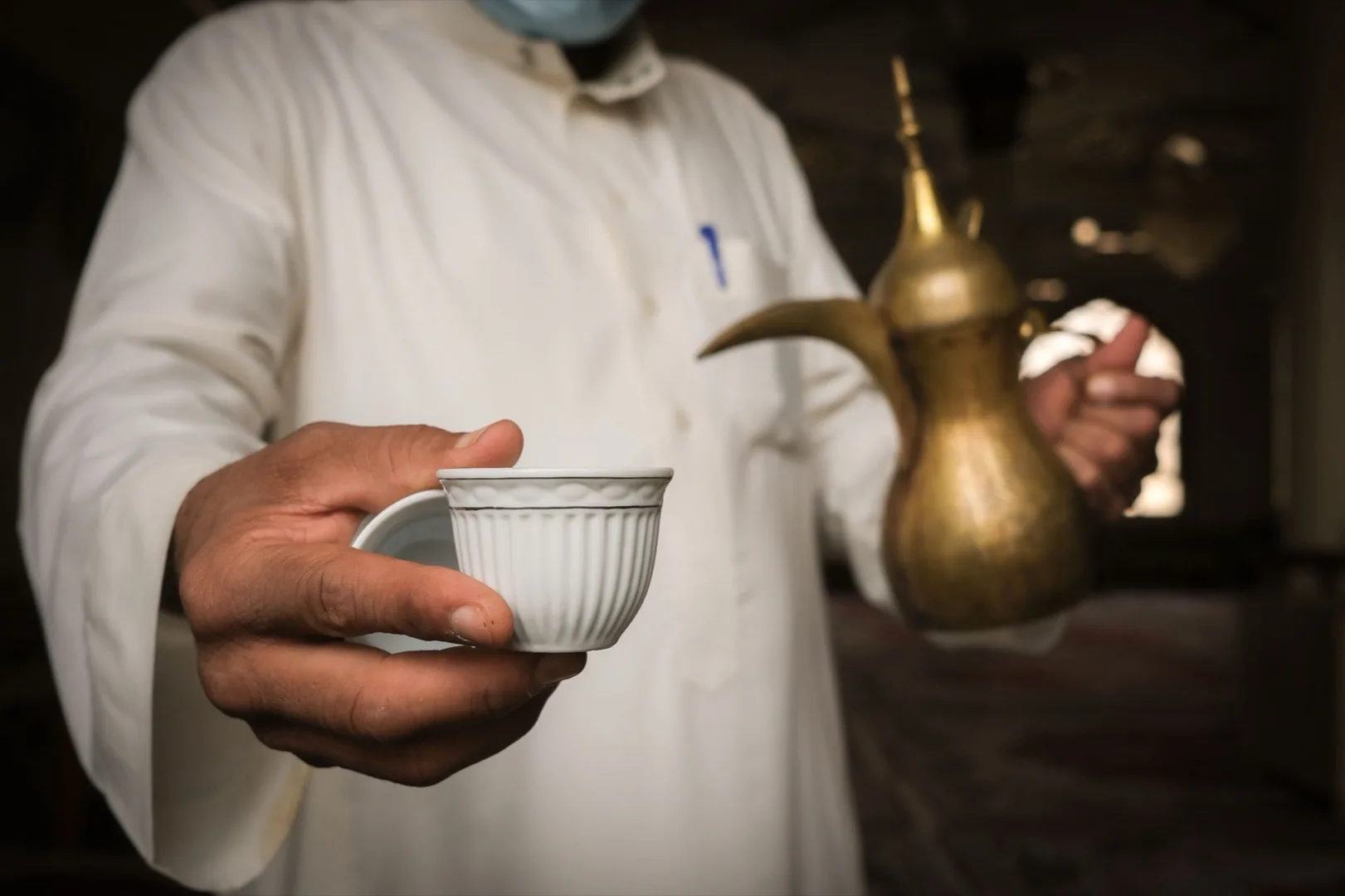
Gahwa is brewed in a dallah (دلة) — a distinctive long-spouted pot that has become an icon of Gulf culture. It appears on the UAE's one-dirham coin and on road signs throughout the Emirates. The coffee is poured into small handleless cups called finjaan (فنجان), filled only one-third to halfway — a practice rooted in hospitality. A full cup is considered a signal for the guest to leave; a partially filled cup invites them to stay for more.
The Majlis Tradition
The majlis (مجلس), literally meaning "a place for sitting," is the traditional Emirati gathering space where Gahwa is served. In modern Dubai, the majlis tradition continues in homes, hotels, and cultural centers. You'll find public majlis experiences at the Coffee Museum in Al Fahidi, at heritage events during the Dubai Shopping Festival, and in the lobbies of luxury hotels like the One&Only Royal Mirage.
Where to Experience Authentic Gahwa
- Arabian Tea House, Al Fahidi: A heritage courtyard cafe in the historic district. Gahwa with dates is served the traditional way. AED 15–25.
- Al Fanar Restaurant, Festival City: Recreates a 1960s Emirati village setting. Gahwa is part of the cultural dining experience.
- XVA Art Hotel, Al Fahidi: Boutique hotel with a courtyard cafe serving Gahwa alongside contemporary Emirati cuisine.
- Sheikh Mohammed Centre for Cultural Understanding (SMCCU): Hosts cultural breakfasts and lunches where Gahwa is served and explained in context.
Most Popular Coffee Drinks in Dubai
Dubai's drink menu is a reflection of its population — a fusion of Middle Eastern tradition, European technique, and pan-Asian innovation. Here are the drinks that define the city's coffee culture.
Spanish Latte
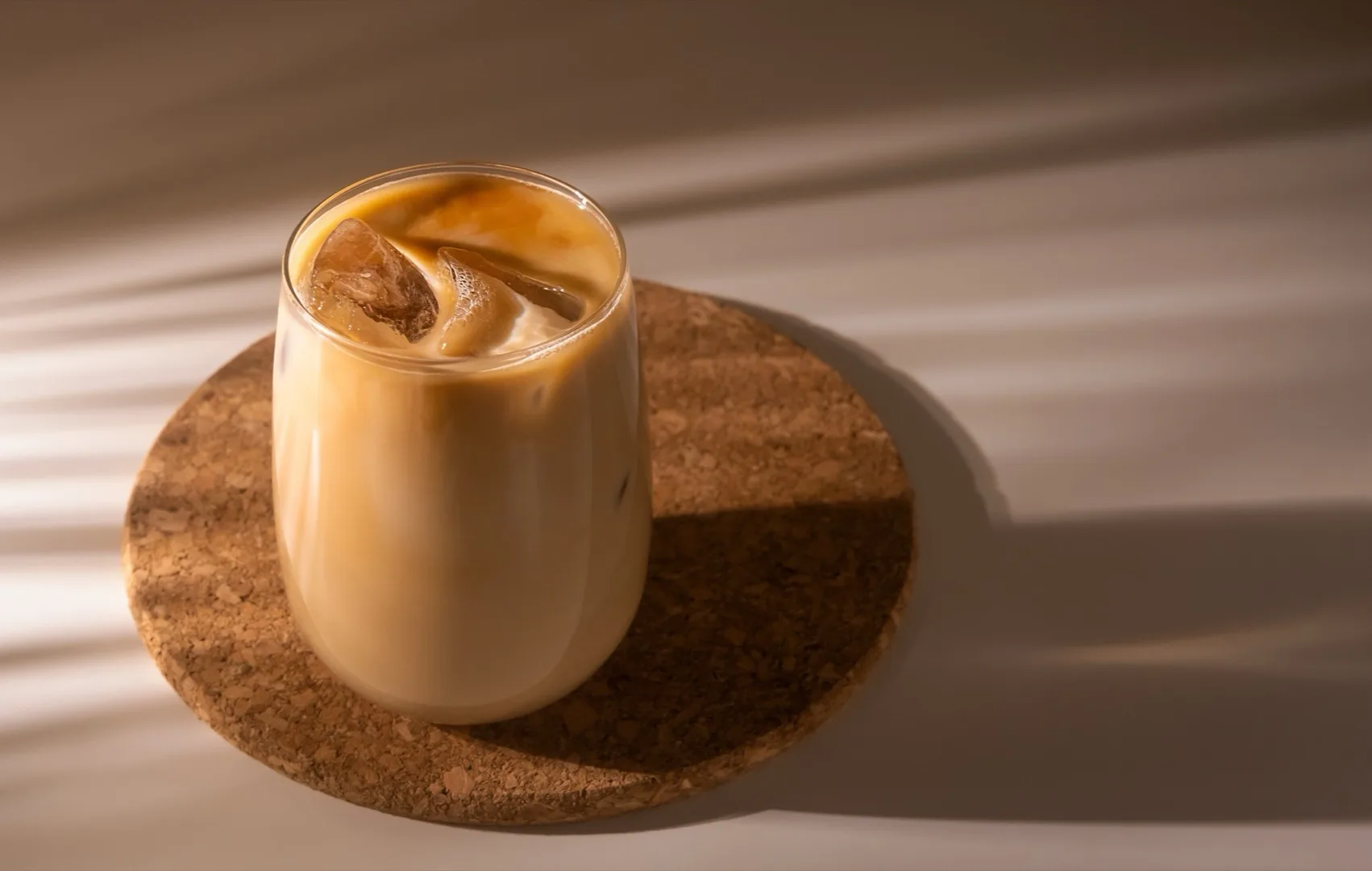
Dubai's unofficial signature coffee. A double espresso with steamed milk and a generous layer of sweetened condensed milk. The result is rich, creamy, and dessert-sweet. Nearly every cafe in Dubai serves some version of it, and it's the most-ordered specialty coffee drink in the city. Expect to pay AED 22–35 at specialty cafes.
Karak Chai
Technically tea, not coffee — but you cannot discuss Dubai's hot beverage culture without karak. This spiced, sweetened milk tea (cardamom, saffron, sometimes ginger) is the city's true street drink. Available at every cafeteria for AED 1–3, karak is consumed across all demographics, from construction workers to CEOs. Some cafes offer premium karak versions for AED 12–18 with saffron or pistachio milk.
Iced Americano
The workhorse of Dubai's summer coffee scene. A simple double espresso over ice and water, it's the go-to for those who prefer their coffee strong and uncomplicated. In peak summer, most cafes sell more iced Americanos than any other drink. AED 16–26.
Pistachio Latte
A Dubai favorite that predated the global pistachio trend by years. Espresso with pistachio paste, milk, and often a dusting of ground pistachio on top. Some versions are iced, some are hot, and the best ones use real pistachio rather than syrup. AED 25–40.
Saffron Rose Latte
A distinctly Middle Eastern creation — espresso combined with saffron-infused milk and rosewater. The flavor is floral, aromatic, and unlike anything in a Western coffee menu. It bridges the gap between traditional Arabic flavors and modern specialty coffee technique. AED 28–42.
Flat White
The Australian and New Zealand community in Dubai has ensured the flat white is everywhere. It's the drink of choice for purists who want milk coffee without sweetness. The best flat whites in Dubai rival anything in Melbourne. AED 18–28.
Cold Brew and Nitro Cold Brew
Cold brew has exploded in Dubai for obvious reasons — it's smooth, less acidic, and perfectly suited to the climate. Nitro cold brew (infused with nitrogen for a creamy, Guinness-like texture) is increasingly available at specialty cafes. AED 22–38.
Turkish Coffee
Finely ground coffee simmered in a cezve with sugar (optional) and cardamom. Served unfiltered with the grounds settling at the bottom. Dubai's large Turkish, Lebanese, and Levantine community keeps this tradition alive. AED 12–22.
Best Specialty Coffee Shops by Area
Dubai's cafe landscape is vast. Rather than an overwhelming list, here are the standout specialty cafes organized by neighborhood — useful whether you're a visitor planning your day or a resident choosing where to live based on walkable coffee access (a completely valid criterion).
Al Quoz — Dubai's Creative Coffee District
The industrial-turned-creative district of Al Quoz is ground zero for Dubai's third-wave coffee scene. Warehouses that once stored goods now house roasteries, galleries, and concept cafes.
- Nightjar Coffee Roasters: Arguably Dubai's most respected specialty roaster. Single-origin focus, rotating seasonal menu, excellent pour-over program. The roastery-cafe is a pilgrimage site for serious coffee lovers. AED 20–40.
- The Sum of Us: A massive warehouse space combining specialty coffee, an in-house bakery, and an all-day dining menu. Consistently ranked among Dubai's top cafes. AED 22–38.
- Raw Coffee Company: Another Al Quoz institution focused on direct-trade single-origin beans. Their espresso blends are available across many Dubai restaurants. AED 18–35.
Downtown Dubai and DIFC
The financial and commercial heart of the city, Downtown Dubai and DIFC offer polished, high-end cafe experiences that cater to professionals and tourists.
- % Arabica: The Kyoto-born minimalist coffee brand has multiple Dubai locations. The Dubai Mall outlet, facing the Burj Khalifa, is iconic. Excellent espresso and flat whites in a no-frills aesthetic. AED 22–32.
- Cafe Rider: Located in Gate Village, DIFC. A serious specialty cafe popular with finance professionals. Known for precise pour-overs and rotating single-origin offerings. AED 22–38.
- Alchemy by RAW: A premium cafe concept offering gold-standard specialty coffee in a sleek Downtown setting. AED 25–42.
Dubai Marina and JBR
Dubai Marina is one of the most walkable neighborhoods in the city, and its promenade is lined with cafes that benefit from waterfront footfall.
- Five Guys Specialty Coffee: Not the burger chain — a homegrown specialty concept in Marina Walk. Great cold brew and iced drinks. AED 20–32.
- Urth by Nabz&G: A health-focused cafe with organic coffee, plant-based options, and a loyal community following. Popular with Marina residents. AED 24–38.
- Common Grounds: A specialty coffee shop at Marina Promenade with excellent flat whites and a relaxed co-working atmosphere. AED 18–30.
Jumeirah and Umm Suqeim
- Project Chaiwala: Started as a karak chai brand and evolved into a full specialty cafe concept. Jumeirah location offers both traditional chai and modern specialty drinks. AED 15–30.
- Tom & Serg: A long-standing favorite in Al Quoz/Jumeirah border area. Massive space, excellent brunch, and reliably good coffee. AED 20–35.
- Cassette: Jumeirah 1 outpost of this popular brand known for its retro-themed interiors and well-executed menu. AED 22–36.
JVC, JVT, and Emerging Suburban Cafes
As communities like Jumeirah Village Circle (JVC) mature, their cafe scenes are growing rapidly — a sign of genuine community formation.
- Brew Lab: A compact specialty cafe in JVC that punches above its weight. Single-origin pour-overs and excellent cold brew. AED 18–28.
- Circle Cafe: Multiple locations across emerging communities. Reliable quality and a neighborhood-cafe feel. AED 16–26.
Other Notable Specialty Cafes
- Stomping Grounds (Al Wasl): Australian-style specialty cafe with excellent brunch and some of the best flat whites in the city. AED 20–32.
- Discipline (various locations): Premium specialty brand with a focus on precision and education. Their baristas regularly compete in UAE championships. AED 24–38.
- Seven Fortunes (Business Bay): Korean-influenced specialty cafe with creative signature drinks and immaculate presentation. AED 22–38.
- Mokka Specialty Coffee (Deira): Bringing specialty coffee to old Dubai. A welcome addition to the historic side of the creek. AED 16–28.
Third-Wave Coffee and Specialty Roasters in Dubai
Dubai's third-wave coffee movement has matured significantly since its early days around 2014–2015. Today, the city boasts a world-class specialty roasting scene that sources beans directly from farms across Ethiopia, Colombia, Kenya, Rwanda, Guatemala, and Yemen.
What Makes Dubai's Specialty Scene Unique
Several factors distinguish Dubai's third-wave coffee from that of other cities:
- Proximity to origin: Yemen, one of coffee's ancestral homelands, is essentially next door. Dubai roasters have access to rare Yemeni varietals (Haimi, Ismaili, Udaini) that seldom reach Western markets. Ethiopian and Kenyan lots also arrive fresher due to shorter shipping routes.
- Investment capacity: Dubai's roasters often operate with more capital than their counterparts in other cities. This means top-tier Loring, Probat, and Giesen roasters, state-of-the-art quality control labs, and the ability to purchase micro-lots at premium prices.
- Barista talent: The city attracts baristas from the Philippines, Ethiopia, Australia, South Korea, and across Europe — creating a diverse talent pool that brings different traditions and techniques. The UAE Barista Championship is now one of the most competitive national events globally.
Leading Specialty Roasters
| Roaster | Location | Specialty | Price (250g bag) |
|---|---|---|---|
| Nightjar Coffee | Al Quoz | Single-origin, seasonal lots | AED 65–120 |
| Raw Coffee Company | Al Quoz | Direct trade, house blends | AED 55–95 |
| Discipline | Various | Competition-grade espresso | AED 70–130 |
| Mokha 1450 | DIFC | Rare Yemeni single-origin | AED 90–200 |
| Emirati Coffee Co. | Online + pop-ups | UAE-roasted specialty blends | AED 50–85 |
Living in Dubai?
Dubai Living Tips Weekly
Cost-of-living data, neighborhood guides, and practical expat tips — every week.
✓ You're in! Check your inbox.
Coffee Prices in Dubai — What to Expect in 2026
Coffee pricing in Dubai spans an enormous range — from AED 1 karak chai at a neighborhood cafeteria to AED 200+ for a cup of rare Yemeni Geisha at a specialty roaster's tasting event. Here's a detailed breakdown to help you budget your daily caffeine habit.
| Drink | Cafeteria / Chain | Mid-Range Cafe | Specialty / Premium |
|---|---|---|---|
| Karak Chai | AED 1–3 | AED 8–15 | AED 15–22 |
| Americano (hot/iced) | AED 8–12 | AED 16–22 | AED 22–30 |
| Cappuccino / Latte | AED 12–16 | AED 20–26 | AED 26–35 |
| Spanish Latte | AED 14–18 | AED 22–28 | AED 28–38 |
| Flat White | AED 12–16 | AED 18–24 | AED 24–32 |
| Pistachio Latte | AED 16–20 | AED 25–32 | AED 32–42 |
| Cold Brew | AED 12–16 | AED 20–28 | AED 28–40 |
| Pour-Over (single origin) | — | AED 25–32 | AED 35–55 |
| Turkish Coffee | AED 5–10 | AED 12–18 | AED 18–25 |
| Arabic Gahwa (with dates) | AED 5–10 | AED 15–22 | AED 22–35 |
Monthly coffee budget estimate: If you drink one coffee per day at a mid-range cafe, expect to spend AED 500–750/month (USD 136–204). At specialty cafes, that rises to AED 750–1,100/month. For a detailed breakdown of all living expenses, see our complete cost of living guide for Dubai.
Best Areas for Cafe Culture — Where to Live If Coffee Matters
For many expats, walkable access to quality coffee is a genuine lifestyle priority — and in Dubai, it increasingly influences where people choose to live. Here's how the city's neighborhoods rank for cafe culture.
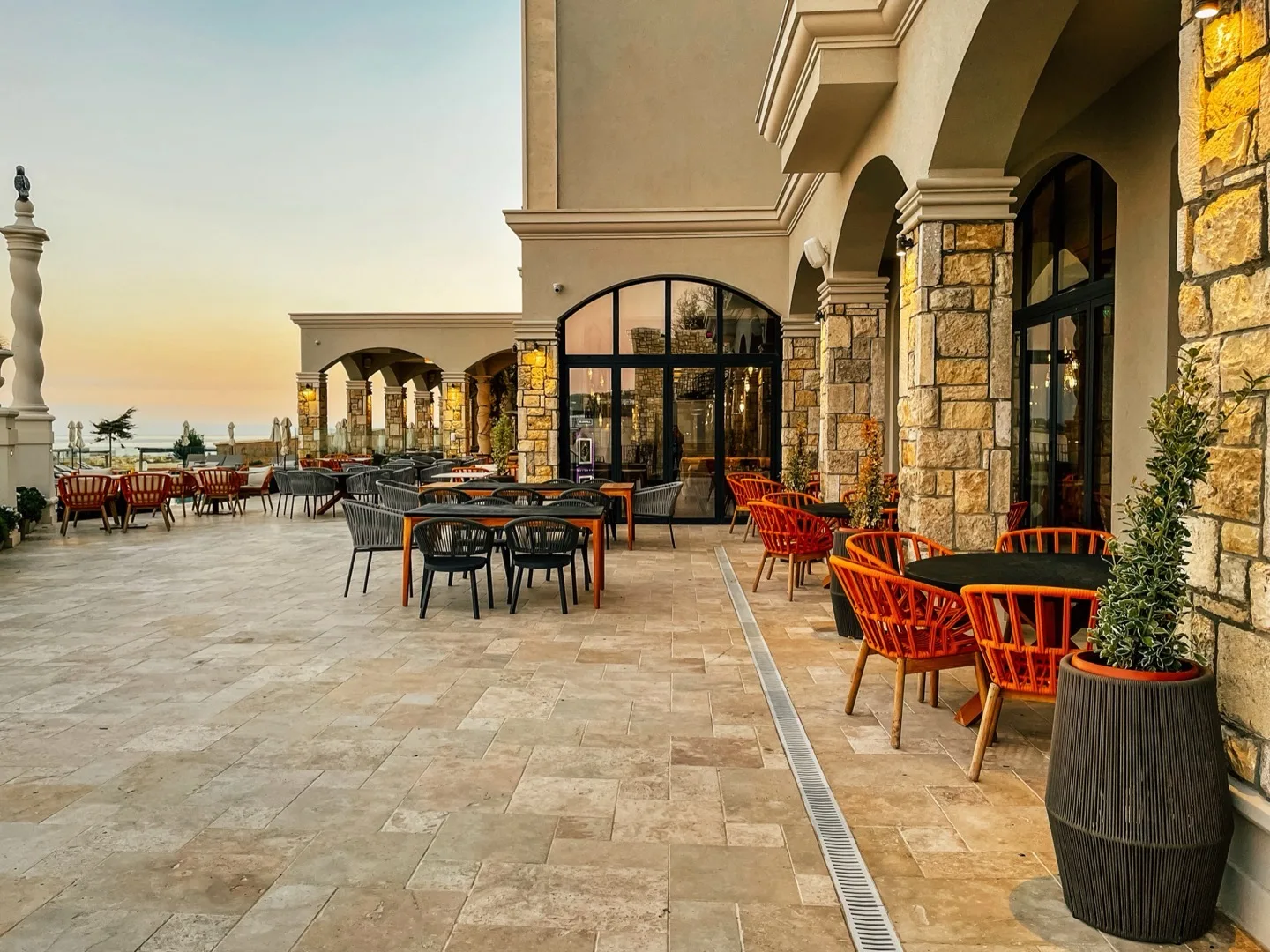
Al Quoz / Alserkal Avenue
The undisputed epicenter of specialty coffee in Dubai. Al Quoz's warehouse district, anchored by Alserkal Avenue, houses more specialty roasters per square kilometer than anywhere else in the Middle East. Living in Al Quoz itself is limited (it's primarily commercial/industrial), but neighboring communities like Al Safa, Jumeirah 1, and Business Bay offer quick access.
Downtown Dubai
Downtown Dubai offers the highest density of cafes relative to its size. The Dubai Mall alone contains dozens of coffee options, from % Arabica to local concepts. The DIFC extension adds another layer of premium cafe culture. The trade-off is pricing — both rent and coffee lean toward the premium end.
Dubai Marina and JBR
Dubai Marina wins on walkability. The Marina Walk and JBR promenade create a continuous stretch of cafe options that you can access on foot — rare in Dubai. For residents who want to grab their morning coffee on a walk rather than a drive, Marina is the top choice.
Jumeirah Village Circle (JVC)
JVC has undergone a cafe transformation in the past two years. What was once a purely residential suburb now has a growing cluster of independent cafes and specialty spots. For investors, this is worth noting — the arrival of quality cafes is a leading indicator of community maturation and rising property values.
Deira and Old Dubai
For traditional coffee experiences — Turkish coffee in the spice souks, Gahwa in heritage houses, karak chai at every corner — old Dubai remains unmatched. The cafe culture here is less Instagrammable but more authentic, and property prices are a fraction of new Dubai.
Business Bay
Business Bay's cafe scene has grown rapidly, driven by its large working population. The area now offers a good mix of chains, independent cafes, and co-working coffee concepts. Its central location makes it accessible to multiple neighborhoods.
Dubai Coffee Festivals and Events
Dubai's calendar includes several major coffee events that draw enthusiasts, professionals, and industry leaders from across the region and beyond.
- Dubai Coffee Festival: Held annually (typically November/December), this is the Middle East's largest coffee event. Hosted at Dubai World Trade Centre, it features roasters, equipment showcases, latte art championships, and cupping sessions. Free entry for general admission in recent years.
- World of Coffee Dubai: The Specialty Coffee Association (SCA) has increasingly featured Dubai in its global circuit. World of Coffee events bring international roasters, green coffee buyers, and barista competitors to the city.
- GITEX/GULFOOD Coffee Pavilion: GULFOOD, the world's largest food and beverage trade show (held annually in Dubai), dedicates substantial space to coffee — from farm-level sourcing to retail technology.
- UAE National Barista Championship: The country's premier barista competition, which qualifies winners for the World Barista Championship. Events are held throughout the year at various Dubai venues.
- Specialty cafe pop-ups and cupping events: Roasters like Nightjar, Raw, and Discipline regularly host public cuppings, brewing workshops, and guest roaster events. Follow them on Instagram for announcements.
Coffee Delivery Apps and Subscriptions
Dubai's delivery infrastructure extends to coffee — both prepared drinks and whole beans. Here are the main options for getting your coffee without leaving home.
Prepared Coffee Delivery
- Deliveroo and Talabat: Most cafes in Dubai are available on one or both platforms. Delivery typically takes 20–35 minutes. Minimum orders usually apply (AED 20–30). Deliveroo Plus subscribers get free delivery.
- Careem (now integrated with Uber): Another major delivery platform with broad cafe coverage.
- COFE App: A UAE-born app specifically for coffee delivery. Partners with both major chains and specialty cafes. Often offers promotions and loyalty rewards.
Bean Subscriptions and Home Delivery
- Nightjar Coffee Subscriptions: Weekly or bi-weekly delivery of freshly roasted single-origin beans. Starting around AED 55/bag. The most popular specialty subscription in the UAE.
- Raw Coffee Company: Offers online ordering with next-day delivery across Dubai. Rotating seasonal offerings.
- S&B Market (Amazon.ae): For more commercial options, Amazon.ae carries a wide range of specialty and mainstream beans with Prime delivery.
- Boutique roasters on Instagram: Many micro-roasters operate primarily through Instagram and WhatsApp, offering same-day or next-day delivery. Search #DubaiCoffeeRoasters for current options.
How Cafe Culture Shapes Community Value and Real Estate in Dubai
This section connects two things that might seem unrelated — coffee and property — but in Dubai, the link is increasingly direct and measurable.
The "Third Place" Effect
Sociologist Ray Oldenburg coined the term "third place" to describe social spaces between home (first place) and work (second place). Cafes are the quintessential third place, and in a city like Dubai — where extreme heat limits outdoor socialization for months — they become essential infrastructure for community life. Neighborhoods with strong cafe cultures develop stronger social bonds, higher resident satisfaction, and lower turnover rates.
Walkability Premium
Properties within walking distance of quality cafes, restaurants, and retail command a measurable premium in Dubai. In Dubai Marina, apartments on or near Marina Walk (with direct cafe access) rent for 10–15% more than equivalent units in towers further from the promenade. The same pattern holds in Downtown Dubai, where Boulevard-facing units outperform those without direct retail access.
Community Maturation Signal
For property investors, the arrival of specialty cafes in a developing community is a strong signal of maturation. When neighborhoods like JVC, Dubai Hills, and Town Square start attracting quality independent cafes, it indicates that population density has reached a critical mass, the demographic is willing to pay for quality, and the community is transitioning from "just residential" to "desirable lifestyle." These are all precursors to accelerated rental and capital growth.
Impact on Property Selection
When advising clients, we consistently see that access to walkable food, beverage, and cafe options ranks among the top three priorities for expat tenants — alongside commute time and school proximity. If you're considering buying property in Dubai as an investment, prioritizing communities with established or emerging cafe and retail infrastructure is one of the most reliable strategies for sustained rental demand.
Frequently Asked Questions
What is the most popular coffee drink in Dubai?
The Spanish Latte is the most ordered specialty coffee drink in Dubai. Made with espresso, steamed milk, and sweetened condensed milk, it's available at virtually every cafe in the city. For non-specialty drinks, karak chai (spiced milk tea) is consumed in even greater volumes — it's the true street beverage of Dubai.
How much does a coffee cost in Dubai?
A basic Americano at a cafeteria costs AED 8–12 (USD 2–3). At a mid-range cafe, expect AED 18–26 (USD 5–7). Specialty cafes charge AED 22–40 (USD 6–11) for most drinks. Premium experiences like single-origin pour-overs can reach AED 55 (USD 15). Karak chai at a street cafeteria is just AED 1–3.
Is Dubai good for coffee lovers?
Absolutely. Dubai is one of the world's best cities for coffee enthusiasts. With over 3,500 cafes, a mature specialty roasting scene, proximity to coffee-growing origins (Ethiopia, Yemen, Kenya), and a population that demands quality, the city offers everything from traditional Arabic Gahwa to world-class third-wave specialty roasters. The diversity of coffee traditions represented here is unmatched.
What is Arabic coffee (Gahwa) and where can I try it?
Gahwa is a lightly roasted, cardamom-spiced coffee that's central to Emirati hospitality. It's pale gold in color, served in small cups without sugar, and traditionally accompanied by dates. Try it at Arabian Tea House in Al Fahidi, the Coffee Museum, or at cultural dining experiences hosted by the Sheikh Mohammed Centre for Cultural Understanding.
What is karak chai and why is it so popular in Dubai?
Karak chai is a strong, spiced milk tea made with black tea, cardamom, sugar, and evaporated or condensed milk. It originated in South Asia and became Dubai's street beverage through the city's large South Asian community. At AED 1–3 per cup from cafeterias, it's consumed across all demographics — arguably more widely than coffee itself.
Are there any Dubai coffee festivals?
Yes. The Dubai Coffee Festival (typically November/December at Dubai World Trade Centre) is the Middle East's largest coffee event. The city also hosts World of Coffee events, the UAE National Barista Championship, GULFOOD's coffee pavilion, and regular cupping sessions and workshops hosted by specialty roasters throughout the year.
Which Dubai neighborhoods have the best coffee scenes?
Al Quoz (Alserkal Avenue area) is the specialty coffee epicenter. Downtown Dubai and DIFC offer the highest density of premium cafes. Dubai Marina has the best walkable cafe experience. Deira and Al Fahidi are best for traditional Arabic and Turkish coffee. JVC has the fastest-growing cafe scene among suburban communities.
Can I find good specialty coffee beans to buy in Dubai?
Dubai has an excellent specialty bean market. Nightjar, Raw Coffee Company, Discipline, and Mokha 1450 all sell freshly roasted beans online and in-store. Prices range from AED 50–200 per 250g bag depending on origin and rarity. Most roasters offer subscriptions with weekly or bi-weekly home delivery.
Settling into Dubai?
Ask us anything about living here — or get matched with trusted local services.
Thank You!
We'll get back to you within 24 hours.
Home Maintenance & Cleaning in Dubai
Explore providers from our business directory
Still have questions?
Ask a follow-up, or get connected with a vetted Dubai professional.