Moving to Dubai from Hong Kong: Property, Visa, Banking & Tax Guide 2026

- HKSAR passport holders enter the UAE visa-free for 30 days, extendable for another 30. The British National (Overseas) passport (BNO) generally also receives visa-on-arrival.
- The Hong Kong financial professional flow toward Dubai has accelerated since 2020. DIFC has become a primary destination for HK-based asset managers, hedge funds, family offices, and fintechs relocating Asian operations.
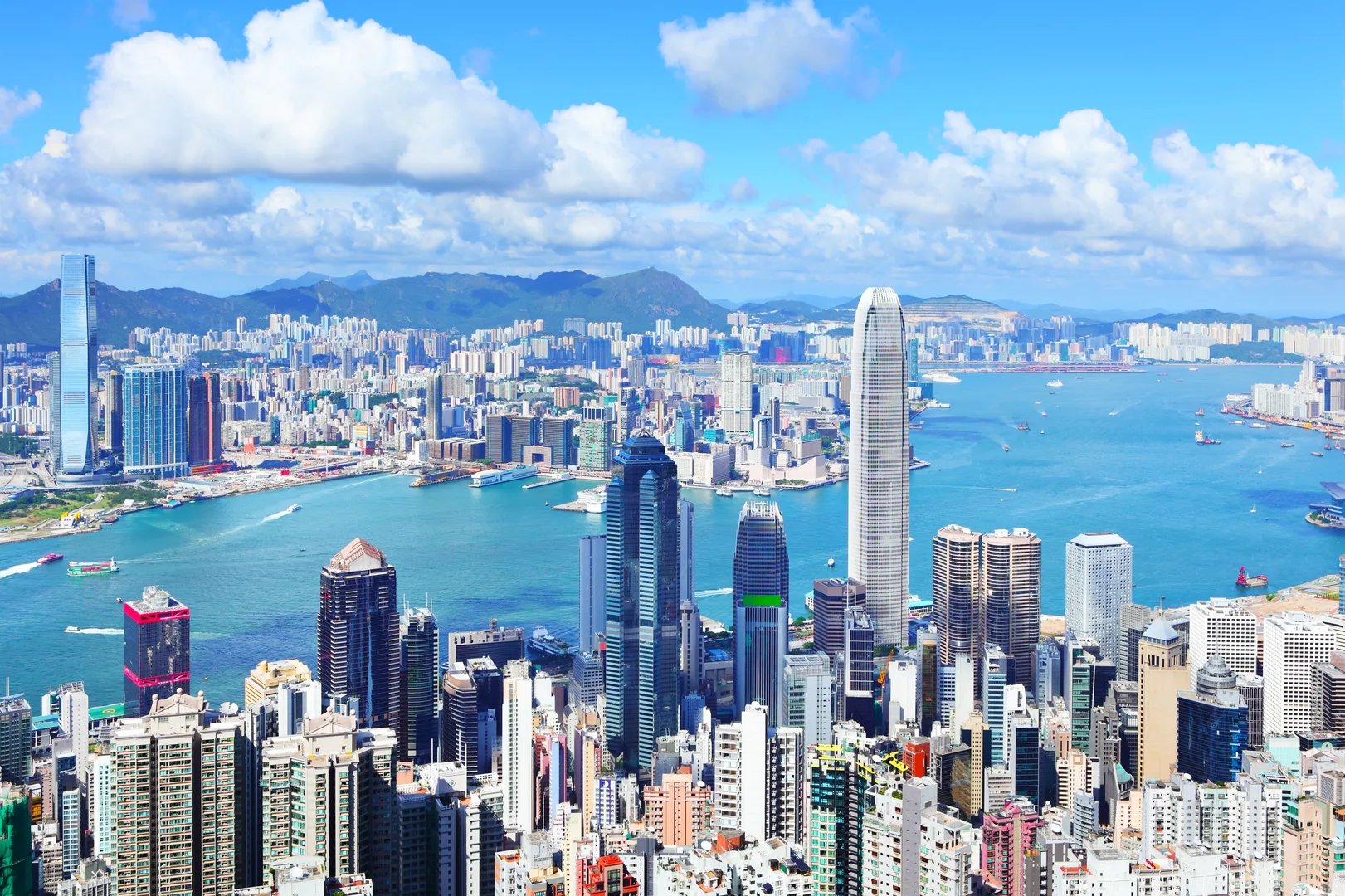
- Hong Kong vs Dubai is a comparison of two compact, expensive, glass-tower cities. HK has world-class transit and density; Dubai trades density for space, beach, and a lower property price per square foot at the prime end.
- HK applies salaries tax of 2–17% (very low globally) and has no GST/VAT. UAE has 0% personal income tax but 5% VAT. The after-tax delta is small for typical HK earners but property carrying costs in Dubai are notably lower.
- The HK–UAE Double Tax Treaty entered into force in 2015 and provides clarity for cross-border professionals, dividend flows, and asset disposals.
- Direct daily flights between Hong Kong (HKG) and Dubai on Emirates and Cathay Pacific take approximately 8 hours 30 minutes. Time difference is 4 hours (Hong Kong ahead).
Why Hong Kongers Are Moving to Dubai
Hong Kong's outbound flow toward Dubai has grown sharply since 2020. The drivers are well-documented: political and regulatory changes that have reshaped Hong Kong's positioning as an international financial centre, tighter mainland integration, three years of zero-COVID restrictions that disrupted business and family life, and a competitive landscape where Singapore and Dubai are actively recruiting Hong Kong financial talent.
Dubai has positioned itself deliberately. The Dubai International Financial Centre (DIFC) operates under English common law with its own independent regulator (DFSA), its own court system (DIFC Courts), and a tax framework friendly to asset management, family offices, hedge funds, and fintechs. For Hong Kong financial professionals, DIFC's structure feels familiar — common law, English-language regulation, dispute resolution that mirrors HK or London. Many HK firms have set up DIFC entities since 2020, and senior staff have relocated alongside.
Beyond finance, Hong Kongers are drawn by lifestyle factors that Hong Kong cannot match: significantly more space per dirham at the residential level, year-round outdoor lifestyle in winter (October to April), reliable international connectivity that does not depend on regional political weather, and an English-friendly daily environment.
The Hong Kong community in Dubai is small but high-quality, concentrated in DIFC, family offices, asset management, professional services (law, audit, consulting), and increasingly in tech/fintech. The British community provides natural overlap for HK professionals with British or BNO documentation.
Visa Options for Hong Kong Citizens
Hong Kong SAR passport holders enjoy visa-free entry to the UAE for 30 days, extendable once for another 30 days. BNO passport holders also generally qualify for a 30-day visa-on-arrival as British nationals. This makes scouting trips, DIFC interviews, and property viewings simple. For long-term residence, several pathways are open.
Employment Visa
The standard route — particularly for HK financial professionals joining DIFC firms, asset managers, banks, hedge funds, family offices, and consulting firms. Your employer sponsors a 2–3 year residence visa. Spouse and children can be sponsored as dependants once your monthly salary exceeds AED 4,000 plus accommodation.
Investor / Business Owner Visa (DIFC and Free Zones)
For HK entrepreneurs and asset management founders, setting up a DIFC entity is the primary route. DIFC company setup typically costs USD 8,000–25,000+ in first-year fees depending on category, and includes residence visa allocations. DIFC offers:
- English common law jurisdiction with independent regulator (DFSA) and courts (DIFC Courts).
- 0% corporate tax for 50 years (subject to UAE corporate tax framework — DIFC continues to provide certain exemptions; consult specialist advisers).
- 100% foreign ownership and unrestricted profit repatriation.
- Established ecosystem of international banks, law firms, audit firms, and fund administrators.
Other relevant free zones include DMCC (commodities, trading) and Dubai Internet City (technology). Mainland setup is also straightforward for non-financial businesses.
Golden Visa (10-Year Residence)
The Golden Visa programme grants 10 years of renewable residence to investors, entrepreneurs, specialised talent, and outstanding students. Property investors qualify with AED 2 million in property — the property can be under mortgage. For HK-based investors who plan a Dubai property allocation, the Golden Visa often comes as a side benefit. Full details in our Golden Visa 2026 guide.
Property Visa (2-Year Residence)
For property purchases between AED 750,000 and AED 2 million, a 2-year renewable residence visa is available. Property must be ready (not off-plan), and valid health insurance is required.
Property Investment: What Hong Kong Buyers Need to Know
Hong Kong buyers come to Dubai with one key insight already: property is a known asset class, and tower density is normal. Dubai sits between Hong Kong's extreme verticality and a more spread-out city like Sydney. The decisive advantage Dubai offers HK buyers is price per square foot. Even at the prime end (Palm Jumeirah, Downtown, DIFC), Dubai prime is dramatically cheaper than HK prime by area.
HK nationals have full freehold ownership rights in Dubai's designated areas — identical to any other foreign buyer. The Dubai Land Department (DLD) regulates all transactions. The buying process is significantly less complex than HK's, with no Buyer's Stamp Duty for foreign buyers (HK applies up to 30% BSD on non-permanent residents) and no Special Stamp Duty on resale.
Popular Areas Among Hong Kong Buyers
| Area | Typical Budget (1–3BR) | Why It Appeals to HK Buyers | Gross Rental Yield |
|---|---|---|---|
| DIFC Residences | AED 2M–10M | Walk to office (DIFC towers), familiar financial-district lifestyle | 5–6% |
| Downtown Dubai | AED 1.5M–5M | Burj Khalifa views, high-density convenience similar to Central / Wan Chai | 5–6.5% |
| Dubai Marina | AED 1.2M–4M | Waterfront density similar to HK Mid-Levels with sea views | 5.5–7% |
| Palm Jumeirah | AED 3M–25M+ | Prime branded residences, beachfront, capital appreciation play | 4–6% |
| Dubai Hills Estate | AED 2M–8M | Family villa option — closest analogue to HK families relocating from Repulse Bay or Sai Kung | 5.5–6.5% |
Total transaction costs run approximately 7–8% of the purchase price (4% DLD fee, 2% agency commission, plus admin) — significantly cheaper than HK's stamp duty regime for non-residents. For a complete walk-through of buying remotely, see our non-resident remote investor's guide.
Cost of Living: Hong Kong vs Dubai
Hong Kong vs Dubai is the comparison of two of the world's most expensive global cities. Both have premium dining scenes, both have luxury retail saturation, and both run on glass towers. Where they differ:
- Property: Dubai is dramatically cheaper per square foot at the prime end. A Mid-Levels apartment that costs HKD 35M–60M in Hong Kong can buy comparable square footage in DIFC or Downtown for AED 8M–15M.
- Rent: Central Dubai 1BR is meaningfully cheaper than central HK 1BR — and you typically get 1.5–2x the floor area.
- Tax: HK salaries tax of 2–17% is already very low globally. Dubai's 0% income tax is lower still, but the gap is much narrower than for high-tax origins like Switzerland or the UK.
- VAT/GST: Hong Kong has none. UAE applies 5% VAT on most goods and services. This is a small headwind in Dubai.
- Schools: Both expensive at the international school level. Dubai has more capacity at the value end (AED 20K–40K) than Hong Kong.
- Transport: HK MTR is unbeatable. Dubai Metro is decent but limited; most Dubai residents need a car.
| Expense Category | Hong Kong (Monthly HKD / USD) | Dubai (Monthly AED / USD) | Notes |
|---|---|---|---|
| Rent (1BR, central) | 22,000–38,000 HKD / $2,800–4,850 | 5,000–8,000 AED / $1,360–2,180 | Dubai significantly cheaper for comparable centrality |
| Utilities | 1,500–3,000 HKD / $190–385 | 600–1,000 AED / $165–275 | Comparable; both have AC-driven summers |
| Groceries | 5,000–8,500 HKD / $640–1,090 | 1,500–2,500 AED / $410–680 | Dubai cheaper overall; both rely heavily on imports |
| Dining out (mid-range meal) | 200–450 HKD / $25–58 | 50–150 AED / $14–41 | Dubai meaningfully cheaper at most price points |
| Transportation | 800–2,500 HKD / $100–320 | 500–1,500 AED / $136–410 | HK MTR cheap and exceptional; Dubai often requires car |
| Health insurance | 1,500–4,000 HKD / $190–510 | 500–1,500 AED / $136–410 | Both rely on private; Dubai often employer-provided |
| Income tax (salaries) | 2–17% | 0% | Small but real after-tax improvement in Dubai |
| VAT / Sales Tax | 0% | 5% | Small headwind in Dubai vs HK |
For mid-to-senior HK professionals, Dubai typically delivers comparable or better disposable income while offering significantly more living space. Run your own scenario via our Relocation Cost Estimator or read the full Dubai cost of living breakdown.
Banking and Money Transfers
HK financial professionals are accustomed to HSBC, Standard Chartered, Hang Seng, Bank of China (HK), and Citi. UAE banking is mature, English-language by default, and regulated by the UAE Central Bank. Many HK relocators retain HK accounts (especially for HKD/USD/RMB multi-currency strategies) and add UAE accounts for daily life and AED-denominated property.
Opening a UAE Bank Account
With residence visa and Emirates ID, opening a UAE bank account takes 3–10 working days. HSBC UAE and Standard Chartered UAE are natural starting points for HK professionals (potentially with Premier-to-Premier and Priority-to-Priority transfers maintained). Local banks — Emirates NBD, ADCB, FAB, Mashreq — also serve the segment well. For high-net-worth clients, Emirates NBD Private Banking, Julius Baer, and various international private bank branches in DIFC offer wealth management services.
Transferring Money from Hong Kong (HKD to AED)
| Transfer Method | Speed | Typical Fee | Exchange Rate |
|---|---|---|---|
| Wise | 1–2 business days | 0.4–1.0% of transfer amount | Mid-market rate (best available) |
| HSBC HK to HSBC UAE (intra-bank) | Same day to 1 day | Low to nil for Premier clients | Bank's own rate (1–2% markup) |
| HK bank SWIFT transfer | 2–5 business days | HKD 100–300 + intermediary fees | Bank's own rate (1.5–2.5% markup) |
| Specialist FX broker | Same day | Negotiated | Tightest spread for AED 2M+ transfers |
For property-purchase transfers above AED 1M equivalent, a specialist FX broker or intra-bank transfer with a private banking relationship typically beats Wise on spread. Whichever route, document the source of funds — UAE Central Bank AML compliance is strict for property-related inflows.
Relocating to Dubai?
Get Your Relocation Checklist
Cost of living, visa requirements, housing tips, and everything you need to plan your move.
✓ You're in! Check your inbox.
Tax Considerations: Hong Kong and the UAE
Hong Kong operates a territorial tax system: only HK-source income is taxed. Salaries tax is 2–17% (with the standard rate cap of 15% on net chargeable income). There is no capital gains tax, no dividend tax, no estate duty, and no GST/VAT. UAE has 0% personal income tax but applies 5% VAT on most consumer transactions.
HK Tax Residency and the "Centre of Vital Interests"
Because HK applies a territorial system, formal "tax residency" determinations are less critical than in worldwide-tax jurisdictions like the UK or US. The key question is whether your income is HK-source. If you have ceased HK employment and are paid by a UAE-based employer, your salary is generally not HK-taxable regardless of where you spend your days. If you continue to derive HK-source income (HK rental property, HK director fees, HK business profits), HK tax continues to apply.
For HK property investors who continue to hold HK assets after relocating to Dubai, the practical implications are usually: HK property rental income remains subject to HK Property Tax / Profits Tax; HK shares dividends remain HK-source for tax purposes (and HK does not tax dividends to individuals); Dubai-source income (UAE salary, Dubai rental property) is fully tax-free.
HK–UAE Double Tax Treaty
The Hong Kong–UAE Double Tax Agreement entered into force in December 2015 and applies from the 2016/17 tax year in HK. It covers business profits, employment income, dividends, interest, royalties, and capital gains. The treaty provides clarity for HK financial professionals who continue to deal with HK-source income while UAE-resident, and ensures fund managers, directors, and HNW individuals are not double-taxed on the same flow.
Practical Steps Before Departure
- File final-year HK tax returns for any HK-source income.
- If you operate an HK business that you continue, document its HK ties and UAE ties carefully.
- Coordinate with HK and UAE tax advisers for any complex cross-border holdings (HK Limited companies, family offices, trusts).
- For BNO passport holders also tax-resident in the UK, the UK Statutory Residence Test analysis is critical.
Schools, Community, and Daily Life
Schools
Dubai's international school market is large and well-developed. HK families typically choose British, IB, American, or Australian curriculum schools. The British curriculum is the most common pick, given its overlap with HK ESF (English Schools Foundation), HKIS, and CDNIS pathways. Premium schools include GEMS Wellington, Repton, Dubai College, JESS, and Dubai International Academy. Fees range from approximately AED 25,000 at value schools to AED 100,000+ at top-tier institutions. The KHDA publishes annual inspection ratings.
HK Community in Dubai
The HK community is small but well-connected, particularly within DIFC and the broader financial services sector. The Hong Kong Trade Development Council (HKTDC) maintains a Dubai office. Informal HK alumni networks (HK university alumni, HK secondary school alumni, professional associations) are active in DIFC. The British community provides natural overlap for HK professionals with British or BNO documentation.
Cantonese and Asian Food
Authentic Cantonese dim sum and Hong Kong-style cuisine is available though less abundant than in HK. Notable spots include Hakkasan, Yuan, Shang Palace, and various hotel-based Chinese restaurants. For broader Asian cravings, Dubai has strong Singaporean, Thai, Korean, Japanese, and Vietnamese options. Asian groceries (oyster sauce, dried mushrooms, Chinese sausage, dim sum freezer items) are stocked at Carrefour, Spinneys, and dedicated Asian grocers in Karama and Dragon Mart.
Connectivity to Hong Kong
Direct daily flights between Dubai (DXB) and Hong Kong (HKG) operate on Emirates and Cathay Pacific, with flight times of approximately 8 hours 30 minutes. Return economy fares typically range AED 2,500–5,000 depending on season; business class around AED 12,000–30,000. The 4-hour time difference (HK ahead) is workable for business — late HK afternoon overlaps with early Dubai morning.
Healthcare in Dubai
Health insurance is mandatory for all UAE residents. Employers are legally required to provide cover. Self-employed and freelance visa holders purchase basic compliant plans starting around AED 5,000–7,000 per year, with comprehensive plans (closer to HK private hospital coverage) running AED 10,000–25,000 annually.
Major hospital networks include Mediclinic, Aster, NMC, Saudi German, and Cleveland Clinic Abu Dhabi. HK expats typically find quality comparable to HK Sanatorium, Adventist, or Matilda — with shorter wait times for specialist appointments and lower out-of-pocket caps under good employer plans. The Dubai Health Authority regulates the sector.
Practical Moving Checklist: Hong Kong to Dubai
Before You Leave Hong Kong
- Confirm visa or job offer in writing before terminating your HK lease.
- Document collection. Birth certificate, marriage certificate, university diplomas, professional credentials — apostilled. Hong Kong is part of the Hague Apostille Convention; apostilles are issued by the High Court of HKSAR.
- Driving licence. Hong Kong is on the UAE's approved country list. You can convert your HK licence to a UAE licence without a driving test — only an eye test and document submission at an RTA centre. Total cost is approximately AED 500–800.
- Notify your HK bank. If retaining accounts (recommended for HSBC Premier, Standard Chartered Priority, etc.), register your overseas address and update card delivery preferences.
- MPF (Mandatory Provident Fund). Decide whether to leave MPF in place (default) or apply for early withdrawal on the basis of permanent departure (form ETW). Specialist advice helps optimise.
- Final tax filings for any continuing HK-source income.
Shipping Belongings
- International movers. Allied Pickfords, Crown Relocations, AGS Movers, Asian Tigers, and Santa Fe all run HK-to-Dubai routes. Sea freight from HK to Jebel Ali takes approximately 18–25 days; door-to-door service typically 5–7 weeks.
- Customs. Personal household goods imported under your residence visa are generally exempt from UAE customs duties (visa held 3+ months, goods clearly for personal use).
- Restricted items. Verify medications against the UAE Ministry of Health prohibited list.
Pet Import
- Requirements. Microchip, current rabies vaccination (administered at least 21 days and no more than 12 months before travel), health certificate from an HK veterinarian within 10 days of travel, and a UAE MOCCAE import permit (AED 300).
- Process. Cathay Pacific and Emirates both accept pets in cabin (small) or as cargo. Quarantine generally not required when documentation is complete.
First Two Weeks in Dubai
- Medical examination for residence visa (DHA-authorised centres).
- Emirates ID biometrics at an ICP centre.
- Bank account opened with full document set.
- Mobile phone postpaid plan with du or Etisalat.
- Driving licence conversion at any RTA centre.
For all the relocation-related visa fees in detail, see our Dubai residency visa costs guide.
Frequently Asked Questions
Do Hong Kong citizens need a visa to visit Dubai?
No. HKSAR passport holders receive a free visa-on-arrival valid for 30 days, extendable once for another 30 days. BNO passport holders also generally qualify for visa-on-arrival as British nationals. For longer stays, a residence visa via employment, business, or property investment is required.
Can Hong Kong nationals buy property in Dubai?
Yes. HK nationals have full freehold ownership rights in Dubai's designated areas with no nationality-based restrictions. The buying process is regulated by the Dubai Land Department and is significantly cheaper than HK on stamp duty — Dubai has no equivalent of HK's Buyer's Stamp Duty (up to 30% for non-permanent residents) or Special Stamp Duty on resale.
How does Dubai tax compare with Hong Kong tax?
HK applies salaries tax of 2–17% with no GST/VAT. Dubai has 0% personal income tax but 5% VAT. The income tax delta is small for most HK earners, but the 0% capital gains tax in both jurisdictions, plus Dubai's significantly cheaper property prices and rents, often produce a meaningful overall improvement in disposable income and net worth growth.
Is my Hong Kong driving licence valid in Dubai?
Hong Kong is on the UAE's approved country list. You can convert your HK licence to a UAE licence without a driving test — only an eye test and document submission at an RTA centre. Total cost is approximately AED 500–800. Your HK licence is also valid as a tourist for the first month.
What happens to my MPF when I leave Hong Kong permanently?
You can elect to apply for early withdrawal of your MPF balance on the basis of permanent departure (using the ETW form). This typically requires evidence of a long-term overseas residence visa and a statutory declaration. Alternatively, you can leave the MPF in place and continue to invest. The right answer depends on your asset allocation, age, and tax planning — engage a specialist before deciding.
What is DIFC and why does it matter for HK financial professionals?
The Dubai International Financial Centre is a financial free zone operating under English common law with its own independent regulator (DFSA), independent courts (DIFC Courts), and a tax framework friendly to asset management, funds, family offices, and fintechs. For HK professionals, DIFC's structure is intuitive — common law, English-language regulation, and dispute resolution that mirrors HK or London. Many HK firms have set up DIFC entities since 2020.
How is Cantonese and Chinese food in Dubai?
Available though less abundant than HK. Notable Cantonese restaurants include Hakkasan, Shang Palace, and various hotel-based Chinese kitchens. For dim sum cravings, options exist but require travel. Asian groceries (oyster sauce, dried mushrooms, Chinese cooking ingredients) are well-stocked at Carrefour, Spinneys, and Asian specialty grocers in Karama and Dragon Mart.
How long are direct flights between Hong Kong and Dubai?
Approximately 8 hours 30 minutes. Emirates and Cathay Pacific both operate daily direct services. Return economy fares typically range AED 2,500–5,000 depending on season; business class AED 12,000–30,000. The 4-hour time difference (HK ahead) makes business calls comfortable — late HK afternoon overlaps with early Dubai morning.
Every HK-to-Dubai relocation has its specifics — DIFC employment offer, family office setup, MPF treatment, BNO status, family schooling — all shape the optimal path. If you are planning a move from Hong Kong and want tailored advice on visas, DIFC setup, property, or settling in, our REC Lifestyle Specialists work with HK families and finance professionals regularly. Reach out through our community for an introduction.
Planning Your Move?
Get personalized relocation advice from our Dubai team.
Thank You!
We'll get back to you within 24 hours.
Moving & Relocation Companies in Dubai
Explore providers from our business directory
Still have questions?
Ask a follow-up, or get connected with a vetted Dubai professional.
Join our Telegram channel
Handover alerts, new launches & DLD data — first, in real time.