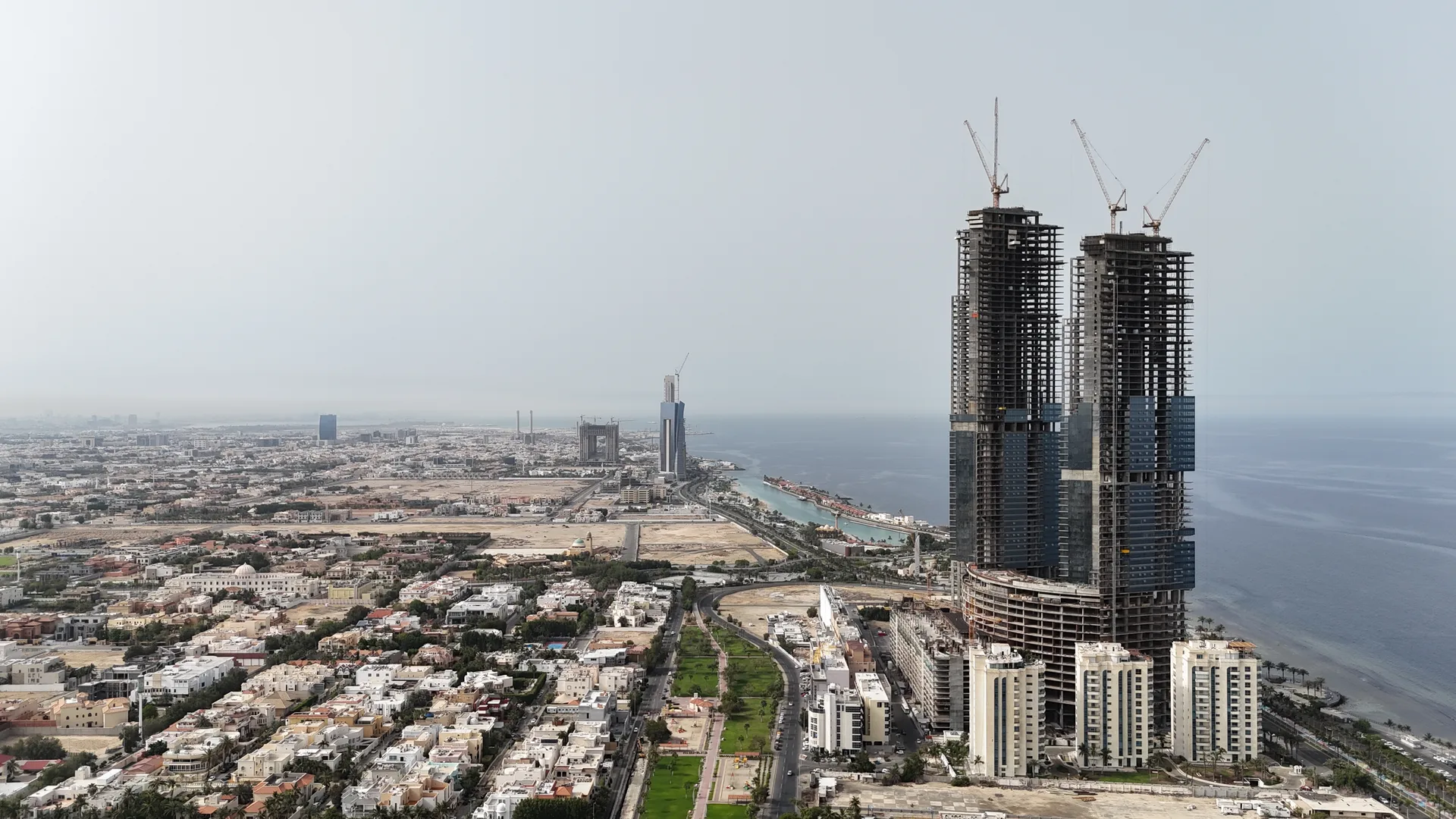
Moving to Dubai from Saudi Arabia: Property, Visa, Banking & Lifestyle Guide 2026

- As GCC nationals, Saudi citizens enjoy unique privileges in the UAE — visa-free entry on national ID, ability to live and work without residence visas, and the right to buy property in any area of Dubai (not just designated freehold zones), including villa plots.
- The Saudi community in Dubai is substantial — estimated tens of thousands of permanent residents, with many more owning second homes used for weekends, summers, and Eid breaks.
- Direct flights from Riyadh, Jeddah, Dammam, AlUla, and other Saudi airports to Dubai run multiple times per hour on Saudia, flydubai, Emirates, and flynas — flight time typically 90–120 minutes.
- Both Saudi Arabia and the UAE have 0% personal income tax. Differences exist in VAT (15% in Saudi vs 5% in UAE), corporate tax for businesses, and Zakat for Saudi citizens — work with a tax advisor on cross-border structures.
- Popular areas with Saudi buyers include Palm Jumeirah, Emirates Hills, Dubai Hills Estate, Downtown Dubai, and Jumeirah villas — premium positioning, family-suitable communities, and strong long-term value.
- Banking is straightforward — Saudi nationals can open accounts with Emirates NBD, FAB, ENBD KSA branch, Al Rajhi Bank UAE, and others. Transfers between SAR and AED are nearly seamless given GCC banking integration.
- The Saudi-UAE relationship is the deepest in the GCC — visa-free travel, work rights, property rights, and family-friendly cultural alignment make the move smoother than for any other nationality.
Why Saudi Nationals Are Moving to Dubai
Saudi nationals have a unique relationship with Dubai. As Gulf Cooperation Council (GCC) citizens, Saudis are not strictly "moving" to a foreign country — they are shifting between two countries with reciprocal rights. The flow has accelerated since Saudi Arabia's Vision 2030 reforms, the rise of mega-projects in NEOM, AlUla, and the Red Sea, and the growth of Riyadh as a regional hub. Many Saudi professionals, entrepreneurs, and families now split their lives between the two countries — Riyadh or Jeddah for primary residence, Dubai for business, lifestyle, and weekend escapes.
The push and pull factors are different from other nationalities. There is no income tax difference (both are 0%). The pull is lifestyle, business diversification, and access to Dubai's deeper international ecosystem — Saudi entrepreneurs use Dubai as a hub to serve markets where the UAE has more favourable visa, banking, and trade arrangements. Saudi investors view Dubai property as a stable USD-pegged asset that complements their domestic Saudi exposure.
The community side is substantial. The Saudi community in Dubai is large enough to feel native — Saudi-friendly restaurants, hotels, weekend hangouts in Downtown, JBR, and Palm Jumeirah, and Saudi-owned businesses across every sector. You are not joining a community — you are part of one that already exists.
Visa Options for Saudi Citizens
Saudi nationals enjoy unique GCC privileges in the UAE. The standard concept of "visa" applies very differently — and most Saudis do not need a residence visa at all to live in Dubai.
GCC National Entry (Visa-Free)
Saudi citizens can enter the UAE using only their national ID card (no passport required, though most travel with passport). There is no visa, no entry fee, no maximum stay, and no residence visa requirement. You can live, work, study, and own property without any visa formality. This is the most flexible status of any nationality in the UAE.
Working in the UAE as a Saudi National
GCC nationals can work in the UAE in both public and private sectors without an employment visa. The "GCC national" status is recognised by the Ministry of Human Resources and Emiratisation. Employment contracts are simpler than for non-GCC expats. Saudi professionals often work as senior executives, board members, or in regulated sectors (financial services, healthcare) that benefit from GCC status.
Establishing a Business
Saudi nationals can establish 100% Saudi-owned businesses on the UAE mainland (without an Emirati partner requirement) under GCC company law provisions. Free zone setup is also available with similar 100% foreign ownership benefits. This is a major commercial advantage compared to non-GCC foreign nationals (though recent UAE reforms have widened 100% foreign ownership for many sectors generally).
Golden Visa (Optional but Useful)
While Saudi nationals do not need a Golden Visa for residence rights (GCC status already provides those), some still apply for the 10-year Golden Visa for additional administrative benefits — sponsoring extended family members under the Golden Visa rules, longer validity for car registration, and useful documentation when dealing with non-GCC institutions internationally. For property investors, the AED 2 million threshold applies the same way as for any other nationality. See our Golden Visa 2026 guide.
Property Investment: Unique Advantages for Saudi Buyers
This is where the GCC status really matters. Saudi nationals are not restricted to Dubai's "designated freehold areas" the way non-GCC foreign nationals are. As a Saudi citizen, you can buy property in any area of Dubai, including:
- Old Dubai areas — Deira, Bur Dubai, Karama, Satwa (not available to non-GCC foreign nationals on freehold basis)
- Established villa areas — Jumeirah, Al Safa, Al Wasl, Umm Suqeim (full freehold ownership across all of these)
- Modern freehold zones — same as any other buyer (Palm Jumeirah, Downtown, Marina, etc.)
- Land plots — Saudi GCC nationals can purchase land for villa construction, including in areas restricted for non-GCC foreigners
The buying process is regulated by the Dubai Land Department (DLD). For a typical purchase: select a property, agree terms, sign a Memorandum of Understanding (MOU), pay a 10% deposit, and complete the transfer at the DLD. Total transaction costs — DLD 4% registration, agency commission, NOC, admin — typically run 7–8% of purchase price. For step-by-step process, see our step-by-step buying process.
Popular Areas Among Saudi Buyers
Saudi buyers in Dubai tend to gravitate toward premium villa communities and family-friendly developments. Based on transaction patterns:
| Area | Typical Budget | Why Saudi Buyers Like It | Type |
|---|---|---|---|
| Palm Jumeirah | AED 5M–50M+ (villas), AED 2.5M+ (apartments) | Iconic positioning, beachfront villas, weekend getaways from KSA | Villas + Apartments |
| Emirates Hills | AED 25M–100M+ | Most exclusive villa community — comparable to Riyadh's Diplomatic Quarter or Jeddah's North Obhur | Custom Villas |
| Dubai Hills Estate | AED 3M–20M (villas), AED 1.2M+ (apartments) | Family community, schools, golf, balanced lifestyle for full-time residence | Villas + Apartments |
| Downtown Dubai | AED 1.5M–15M+ | Iconic location, Burj Khalifa, Dubai Mall, premium hotel residences | Apartments + Penthouses |
| Jumeirah (Old Dubai villas) | AED 8M–40M+ | Established beachside villas — only available to GCC nationals on full freehold; UAE/Saudi buyers only | Beachfront Villas |
| Arabian Ranches | AED 3M–15M | Established family community, schools, golf, equestrian — appeals to Saudi families with children | Villas |
For Saudi investors specifically interested in returns, our highest ROI areas in Dubai 2026 guide ranks the strongest yield communities. For mortgage details — many Saudi buyers prefer cash or use their KSA banking relationships — see our non-resident mortgage guide.
Cost of Living: Riyadh / Jeddah vs Dubai
For Saudi nationals, the cost comparison is more nuanced than for other nationalities. Both countries are 0% personal income tax. The differences are in VAT, lifestyle costs, and the implicit value of subsidised services available in Saudi Arabia (fuel, electricity for citizens).
| Expense Category | Riyadh / Jeddah (Monthly SAR / USD) | Dubai (Monthly AED / USD) | Notes |
|---|---|---|---|
| Rent (premium 1BR apartment) | SAR 5,000–9,000 / $1,330–2,400 | AED 6,000–10,000 / $1,635–2,725 | Roughly comparable; Dubai slightly higher in premium central areas |
| Villa rent (4–5 bedroom) | SAR 12,000–25,000 / $3,200–6,650 | AED 20,000–50,000 / $5,450–13,615 | Dubai villa rent is meaningfully higher in premium communities |
| Utilities | SAR 800–1,500 / $215–400 | AED 800–1,500 / $220–410 | Comparable; both have hot summers driving cooling costs |
| Groceries | SAR 2,000–3,500 / $530–930 | AED 1,800–3,000 / $490–820 | Dubai slightly cheaper due to broader competition; both rely on imports |
| Dining out | SAR 60–200 / $16–53 per meal | AED 50–200 / $14–55 per meal | Comparable; Dubai has more international fine dining options |
| Transport / fuel | SAR 800–1,500 / $215–400 | AED 1,000–2,500 / $275–680 | Saudi fuel cheaper; Dubai car insurance and Salik tolls add up |
| Schools (international, per child) | SAR 30,000–80,000 / $8,000–21,330 per year | AED 30,000–95,000 / $8,170–25,880 per year | Roughly comparable; Dubai has wider IB and British curriculum choice |
| VAT | 15% | 5% | Significant difference on big-ticket purchases (cars, jewellery, electronics) |
| Personal income tax | 0% | 0% | No difference; same for Saudi citizens (Zakat applies separately for businesses) |
The headline takeaway: Dubai is broadly comparable to Riyadh and Jeddah on cost, with Dubai meaningfully more expensive in villa rentals and premium dining, and meaningfully cheaper on VAT-affected purchases. For a fuller cost breakdown, see our complete cost of living guide for Dubai or run the Relocation Cost Estimator.
Banking Setup: Opening Accounts and Transferring Money
Saudi nationals enjoy seamless banking access in the UAE. Most major Saudi banks (Al Rajhi, SNB, Riyad Bank) have UAE branches or partnerships with UAE banks. UAE banks (Emirates NBD, ADCB, FAB, Mashreq) actively serve the Saudi customer base.
To open a UAE account, Saudi nationals typically need: passport or national ID, proof of address (UAE tenancy contract / Ejari for residents, or hotel address for non-residents), and source of income documentation. The process takes 3–7 working days. Some banks offer dedicated Saudi customer desks with Arabic-speaking relationship managers.
Transferring Money from Saudi Arabia (SAR to AED)
Both currencies are USD-pegged (AED at 3.6725 to USD; SAR at 3.75 to USD), making the SAR/AED rate extremely stable at approximately 0.98. Transfers are nearly seamless thanks to GCC banking integration.
| Transfer Method | Speed | Typical Fee | Exchange Rate |
|---|---|---|---|
| GCC instant transfer (e.g., AFAQ) | Real-time / minutes | SAR 10–25 | Near mid-market (very low spread) |
| Wise | Hours to 1 business day | 0.4–0.8% of transfer | Mid-market rate |
| Bank SWIFT transfer | 1–3 business days | SAR 50–150 + intermediary fees | Bank's own rate (low spread for SAR/AED) |
| UAE exchange houses | Same day (cash) | Built into rate | Very competitive for SAR/AED cash |
For most Saudi clients, GCC instant transfer through the AFAQ network is the fastest and cheapest option. For property purchases, your Saudi bank can typically execute SAR-to-AED transfers within 1–2 business days with full source-of-funds documentation handled at origin.
Relocating to Dubai?
Get Your Relocation Checklist
Cost of living, visa requirements, housing tips, and everything you need to plan your move.
✓ You're in! Check your inbox.
Tax Considerations: Saudi Arabia and the UAE
Both Saudi Arabia and the UAE have 0% personal income tax. The tax landscape for Saudi nationals moving to or splitting time with Dubai is therefore much simpler than for most other nationalities. However, several considerations matter:
Zakat and Corporate Tax
Saudi citizens are subject to Zakat at 2.5% on qualifying business assets — calculated by ZATCA (Zakat, Tax and Customs Authority). UAE residents are not subject to Saudi Zakat on UAE-located assets, but Saudi-based businesses owned by you remain subject to Zakat in Saudi Arabia.
UAE Corporate Tax (9%)
The UAE introduced a 9% corporate tax (effective 2023) on business profits above AED 375,000. This applies to Saudi-owned companies operating in the UAE the same way as to any other foreign-owned company. Free zone qualifying income may benefit from 0% rates subject to conditions. For Saudi entrepreneurs operating cross-border, professional advice on optimal corporate structure is essential. See our company-held property tax guide.
VAT Differences
Saudi VAT is 15%; UAE VAT is 5%. This is meaningful on big-ticket consumer purchases (cars, jewellery, electronics, fine dining). Many Saudi families do significant shopping in Dubai precisely for this reason.
Saudi-UAE Tax Cooperation
Both countries cooperate under GCC frameworks and global tax transparency standards (CRS/AEOI). Maintain clean documentation of your Saudi and UAE economic activities, especially if you have substantial holdings in either jurisdiction. Always consult a qualified tax advisor for cross-border structuring.
Schools and Education for Saudi Families
Dubai's school landscape is large and includes options that fit Saudi family preferences well.
Arabic-Curriculum and Saudi-Standard Schools
Several schools in Dubai offer Saudi-standard Arabic curriculum, recognised by the Saudi Ministry of Education for transferability. Examples include some private schools serving GCC families. Many Saudi families also choose IB or British curriculum schools that combine strong English instruction with Arabic and Islamic studies.
International Baccalaureate (IB) and British Schools
GEMS World Academy, Dubai International Academy, Raffles World Academy, Dubai College, Repton Dubai, and many others offer programmes well-suited to Saudi families planning international university pathways for their children. Fees range from AED 50,000 at value tiers to AED 100,000+ at premium institutions. The KHDA publishes annual inspection results — see our best international schools in Dubai by area guide.
Healthcare for Saudi Nationals in Dubai
GCC nationals can access UAE government healthcare facilities at preferential rates, but most Saudi residents in Dubai use private healthcare. Major providers — Mediclinic, Aster, NMC, Cleveland Clinic Abu Dhabi, King's College Hospital London Dubai — offer Arabic-speaking staff and family-friendly facilities. Standards are excellent, often better than Saudi private hospitals on wait times and access to specialists.
Health insurance is mandatory for residents in Dubai. If you are working for a UAE employer, the employer is required to provide insurance. For self-employed or non-working Saudi nationals, private plans range AED 5,000–20,000+ per year depending on coverage tier.
The Saudi Community in Dubai
The Saudi presence in Dubai is one of the most established expat communities in the city — though "expat" is the wrong word given the GCC integration.
Saudi Restaurants and Cuisine
Saudi restaurants serving kabsa, mandi, jareesh, and traditional Najdi cuisine are widely available across Dubai — particularly in JBR, Al Wasl, Jumeirah, and Sheikh Zayed Road. Najd Village, Al Khaimah, and many specialty restaurants serve authentic Saudi food. Saudi cafés and shisha lounges are part of the everyday Dubai landscape.
Cultural Events and Community
The Saudi Consulate General in Dubai serves the community for consular matters. Saudi National Day (23 September) is widely celebrated across Dubai with public events. Saudi Tourism Authority and Saudi cultural events are regularly hosted at venues across the city. The community side of Saudi life in Dubai feels more like an extension of Saudi cities than a separate expat experience.
Lifestyle Alignment
Cultural alignment between Saudi and UAE society makes integration seamless. Family-friendly venues, prayer facilities everywhere, halal food universal, weekend timing aligned (Friday-Saturday weekend in both countries). Saudi families with children typically find Dubai schools, parks, and entertainment perfectly suited to their preferences.
Practical Moving Checklist: Saudi Arabia to Dubai
Because of GCC privileges, the relocation checklist is much simpler than for non-GCC nationalities:
Before You Leave Saudi Arabia
- Property scouting. Multiple visits are easy — direct flights every hour. No visa preparation needed; just book and fly.
- Document preparation. National ID, passport, marriage certificate, children's birth certificates, school transcripts. UAE typically accepts Saudi documents directly without complex apostille requirements for GCC nationals (though attestation may be needed for some specific transactions — verify case by case).
- Driving licence. Saudi driving licences are accepted for conversion in the UAE without a driving test. Bring the original licence to an RTA centre.
- Notify your Saudi bank. Standard relocation notification — your accounts can remain active without issue given GCC banking integration.
- Schools. If moving with children, secure school places in Dubai before relocation — popular schools have waiting lists, especially at premium tiers.
Shipping Your Belongings
- Cross-GCC moves are straightforward. Moving companies offer Saudi-to-UAE services with transit times of 3–7 days for road freight. Customs clearance at Salwa or Batha border is routine. Many Saudi families simply drive over with car-loads of essentials and ship the rest.
- Vehicles. You can drive your Saudi-registered car into the UAE for tourism, but for long-term use you should re-register it in the UAE. Inspection at RTA, transfer of registration, new plates. Some choose to sell in Saudi Arabia and buy fresh in the UAE for simplicity.
- Pets. Standard UAE import requirements — microchip, rabies vaccination, MOCCAE permit. Cross-border travel with pets is straightforward.
First Two Weeks in Dubai
- Tenancy registration. Sign your tenancy contract and register Ejari online — required for many subsequent activities (utility setup, school enrolment, etc.).
- Utilities setup. DEWA (Dubai Electricity and Water Authority) account opening is straightforward with your tenancy contract.
- Driving licence conversion. Visit any RTA centre with Saudi licence, passport/ID, and two photos.
- School enrolment finalisation. Submit transcripts, attend any required interviews, complete admission process.
- Bank account. Open or activate your UAE banking relationships.
Frequently Asked Questions
Do Saudi citizens need a visa to enter or live in Dubai?
No. As GCC nationals, Saudi citizens enjoy visa-free entry using just a national ID card, can live in the UAE without any residence visa, can work without an employment visa, and can buy property in any area of Dubai (not just designated freehold zones). The GCC framework gives Saudis the most flexible status of any nationality in the UAE.
Can Saudi nationals buy property in any area of Dubai?
Yes. Unlike non-GCC foreign nationals who are restricted to designated freehold zones, Saudi citizens can purchase property in any area of Dubai including older neighbourhoods (Deira, Bur Dubai, Karama), established villa areas (Jumeirah, Al Safa), and land plots for villa construction. Full freehold ownership applies in all cases.
What is the property purchase process for a Saudi national in Dubai?
The process is the same as for any other buyer: select property, agree terms, sign MOU, pay 10% deposit, complete transfer at the Dubai Land Department. Total transaction costs (DLD 4%, agency commission, NOC, admin) typically run 7–8% of purchase price. The DLD process is digital and efficient — many Saudi buyers complete transfers in a single day.
Is there a Saudi-UAE Double Tax Treaty?
Both countries have 0% personal income tax, so the practical relevance of a DTT for individuals is limited. For corporate structures, the UAE introduced 9% corporate tax in 2023 and Saudi Arabia has its own corporate tax/Zakat regime. Cross-border business structures require professional tax advice. For individuals not operating businesses, the cross-border tax burden is essentially zero.
How does VAT differ between Saudi Arabia and the UAE?
Saudi VAT is 15%, UAE VAT is 5%. This 10-percentage-point difference is meaningful on large purchases — cars, jewellery, electronics, watches, premium dining, hotel stays. Many Saudi families do significant shopping in Dubai precisely for this reason.
Can I keep my Saudi job while living in Dubai?
Yes — many Saudi professionals do exactly this. With direct flights every hour and 90-minute travel times, weekly commuting between Riyadh/Jeddah and Dubai is entirely feasible. Some live in Dubai full-time and travel to Saudi for weekly board meetings or business reviews.
Are there Arabic-curriculum schools in Dubai for Saudi children?
Yes. Several schools offer Arabic-curriculum programmes recognised by the Saudi Ministry of Education for transferability back to Saudi Arabia. Many Saudi families also choose IB or British curriculum schools with strong Arabic and Islamic studies departments — these provide the international qualifications useful for university applications worldwide while preserving Arabic fluency.
How do I transfer money between Saudi Arabia and the UAE?
Cross-border GCC banking is integrated. Instant transfer networks (like AFAQ) move funds in real time at near mid-market rates. For larger property-related transfers, your Saudi bank can typically execute SAR-to-AED conversions within 1–2 business days. Both currencies are USD-pegged so the SAR/AED rate is extremely stable at approximately 0.98.
Whether you are moving full-time or buying a second home for weekends and summers, our REC Lifestyle Specialists work regularly with Saudi families and investors. We can help with property selection, school placement, business setup, and integrating your Saudi-Dubai life seamlessly. Reach out through our community or send us a message — we have helped Saudi families find the right home in Dubai for every lifestyle and budget.
Planning Your Move?
Get personalized relocation advice from our Dubai team.
Thank You!
We'll get back to you within 24 hours.
Moving & Relocation Companies in Dubai
Explore providers from our business directory
Still have questions?
Ask a follow-up, or get connected with a vetted Dubai professional.
Join our Telegram channel
Handover alerts, new launches & DLD data — first, in real time.