Barsha Heights (Tecom) Area Guide 2026: Prices, Metro & Rental Yields

- Barsha Heights, still widely called Tecom, packs more than 95 completed towers into a compact strip off Al Hessa Street, next to Dubai Internet City and Dubai Media City — apartments and hotel apartments only, no villas.
- Ownership is mixed freehold and leasehold by building, so always verify a specific tower's status with the developer or DLD before making an offer.
- Indicative 2026 sale prices: studios from roughly AED 370,000, one-beds from around AED 499,000, two-beds from about AED 1.15 million, three-beds from close to AED 1.65 million — among the more accessible entry points inside a Red Line metro catchment.
- Rents tracked by Property Finder in mid-2026 average roughly AED 69,000 for a studio, AED 82,000 for a one-bed, AED 110,000 for a two-bed and AED 165,000 for a three-bed, broadly in line with — and in some brackets above — neighbouring Al Barsha.
- The Dubai Internet City metro station sits inside the community, and the April 2026 Hessa Street widening doubled road capacity on the district's northern boundary, cutting a 15-minute stretch to about 4 minutes.
- Combining current rents against typical entry prices puts gross yields for smaller, lower-priced units in the high single to low double digits, with two- and three-bed stock more commonly in the 7–9% band — treat any single yield figure as indicative, not a guarantee.
- Best fit: single professionals, couples and small households in tech, media and creative roles who want metro access, short commutes to Internet City/Media City and Dubai Marina, and a lower entry price than Dubai Marina or JLT.
Barsha Heights does not sell itself on a skyline photo. It is not a beachfront or a golf-course backdrop; it is a dense, working residential-and-commercial pocket squeezed between Sheikh Zayed Road and Al Hessa Street, next door to Dubai Internet City and Dubai Media City. That location — walkable to two of Dubai's biggest office clusters, one metro stop from the Marina corridor, and still carrying its old "Tecom" name in half the listings you will see — is the entire investment case. This guide sets out what a buyer or renter actually pays here in 2026, how the area compares with Al Barsha and Jumeirah Lake Towers, and where the real risks sit. Last updated: July 2026.
Where Barsha Heights Is and What It Actually Is
Barsha Heights sits centrally in Dubai, bordered by Al Hessa Street (D61) to the north with direct access onto Sheikh Zayed Road (E11) and Al Khail Road (E44), according to Bayut's area guide. It connects toward Jumeirah Lake Towers, The Greens and Emirates Hills via Jebel Ali Racecourse Road and First Al Khail Street, and sits roughly a 21-minute drive from Burj Khalifa and about 25 minutes from Dubai International Airport.
The area was rebranded from "Tecom" (short for Dubai Technology, Electronic Commerce and Media Free Zone Authority) to Barsha Heights years ago, but the older name has never fully disappeared — most portals, drivers and long-term residents still use both interchangeably, and this guide does too. According to Bayut, the community now contains more than 95 completed projects, the large majority high-rise residential and mixed-use towers, alongside serviced apartments and around 70 hotels and other accommodation options. There is no villa stock here: this is strictly an apartment and hotel-apartment market.
Ownership status is mixed. Bayut's area guide describes Barsha Heights as "both freehold and leasehold," meaning some towers sit on freehold plots open to full foreign ownership while others remain leasehold. That mix is unusual for a Dubai community this size and is the single most important thing to confirm before signing anything — verify the specific building's tenure with the developer, your broker and the Dubai Land Department before you commit, rather than assuming the area-wide freehold label applies to the tower you have your eye on.
Who Actually Lives Here
The resident profile is younger and more transient than Dubai's family-suburb communities. Barsha Heights draws single professionals, young couples and short-to-medium-term residents working in tech, media, digital and creative roles at Internet City and Media City, plus a meaningful share of hospitality and service-industry staff drawn by relatively affordable rents and metro access. It is not a pram-and-playground community in the way Arabian Ranches or Dubai Hills Estate are — most towers are studio- and one-bed-heavy, though two- and three-bedroom units exist for those who want more space without a villa-district commute.
Community amenities are practical rather than resort-style: green pockets and paved walkways with jogging and cycling tracks, a large stock of cafes and restaurants spanning Thai, Indian, Italian, Mexican and Lebanese cuisines, and everyday retail including Carrefour branches in i-Rise Tower and Vista Tower plus Géant and Park n Shop. Multispecialty clinics — Aster, GMC, Clover Medical Centre — cover routine healthcare, with Saudi German Hospital and Al Zahra Hospital a short drive away. Emirates Golf Club and the Jebel Ali Racecourse sit adjacent, and Al Sufouh Beach is about seven minutes by car, Kite Beach around 15. The trade-off residents most commonly flag, per Bayut, is congestion at the community's exit and entry points during evening peak hours — a friction point the 2026 Hessa Street upgrade (below) was specifically designed to ease.
Commute Times: The Real Reason People Choose Barsha Heights
Strip away the marketing language and Barsha Heights is bought and rented for one reason above all others: it minimises the commute for people who work along the Sheikh Zayed Road office corridor. Dubai Internet City and Dubai Media City — two of the largest employment clusters in the emirate, home to everything from regional tech headquarters to broadcasters and advertising agencies — are within easy walking distance of several towers and one metro stop from almost all of them. Dubai Marina and JBR are a short drive or a couple of metro stops further along the Red Line; Downtown Dubai and DIFC are reachable by metro without a transfer in most cases, typically inside 25–30 minutes door to desk outside of peak congestion.
That matters more than it might sound. Dubai's biggest quality-of-life complaint among renters and buyers alike is commute time on a car-dependent road network, and Barsha Heights is one of a small number of communities where a car genuinely becomes optional rather than assumed. For a tenant weighing a longer commute from a cheaper suburb against a shorter one from a pricier inner community, the maths often favours paying more per square foot in Barsha Heights and saving the equivalent in fuel, parking and — most valuably — time. This is also why the area's tenant base skews so heavily toward single professionals on one- to three-year horizons rather than long-term family settlers: it is optimised for commute efficiency first, lifestyle amenity second.
Sale Prices by Unit Type
Barsha Heights is an apartment-only market, and pricing spans a wide range depending on tower age, view and finish quality. The figures below represent typical entry-level pricing for the segment rather than a single average, since asking prices and transacted DLD prices can diverge significantly in an area with a 15-plus-year range of building vintages.
| Unit type | Typical sale price from (AED) | Approx. USD | Typical annual rent (AED) |
|---|---|---|---|
| Studio | ~370,000 | ~$100,700 | ~69,000 |
| 1 bedroom | ~499,000 | ~$135,900 | ~82,000 |
| 2 bedrooms | ~1,150,000 | ~$313,100 | ~110,000 |
| 3 bedrooms | ~1,650,000 | ~$449,200 | ~165,000 |
| 4 bedrooms | Limited stock — verify per listing | — | ~193,000 |
Sale prices are typical entry-level figures for the segment, drawn from Bayut and Property Finder-aggregated listing and transaction data; rents per Property Finder's Barsha Heights area insights, mid-2026. Both sale and rent figures move with tower age, floor and view — treat these as a starting point for negotiation, not a valuation.
Two things stand out in that table. First, the studio and one-bed entry prices are genuinely low for a metro-connected, Sheikh Zayed Road-adjacent community — cheaper than equivalent stock in Dubai Marina or JLT, and closer to what you would pay in Discovery Gardens or International City, but with a materially better commute. Second, the rent-to-price relationship at the affordable end looks unusually strong on paper, which is exactly why Barsha Heights keeps coming up in yield-focused investor searches — see the yield section below for the caveats that come with that.
How Barsha Heights Rents Compare to Al Barsha and JLT
Because Barsha Heights sits between Al Barsha and Jumeirah Lake Towers geographically, both areas are the natural rent benchmark. Using the same Property Finder area-insights data source for all three communities gives a like-for-like comparison.
| Unit type | Barsha Heights (Tecom) | Al Barsha | JLT |
|---|---|---|---|
| Studio | AED 69,000 | AED 51,000 | AED 66,000 |
| 1 bedroom | AED 82,000 | AED 71,000 | AED 95,000 |
| 2 bedrooms | AED 110,000 | AED 97,000 | AED 138,000 |
| 3 bedrooms | AED 165,000 | AED 133,000 | AED 192,000 |
Average annual rents per Property Finder area-insights pages for each community, mid-2026.
The pattern is consistent across every unit size: Barsha Heights rents sit above Al Barsha and below JLT. That is a fair reflection of the fundamentals — Al Barsha is further from Sheikh Zayed Road's office corridor and has an older, more mixed building stock with less metro proximity in parts, while JLT has a lake-facing, DMCC free-zone premium and a stronger retail base at ground level. Barsha Heights lands in between: better connected than Al Barsha, less polished than JLT, and priced accordingly. For a deeper look at Al Barsha specifically, see our Al Barsha area guide, and for JLT our JLT area guide.
Free Weekly Insights
Get Dubai Market Updates in Your Inbox
Expert analysis, market data, and practical tips — trusted by Dubai professionals.
✓ You're in! Check your inbox.
Rental Yields: What the Numbers Actually Support
Gross rental yield is simply annual rent divided by purchase price, and it is the metric most commonly quoted — and most commonly overstated — for affordable Dubai apartment communities. Running the entry-level sale prices in the first table against Property Finder's mid-2026 rent averages produces gross yields in roughly the 15–18% range for studios and one-beds, and 7–10% for two- and three-beds. Publish that top-line number on its own and it looks implausible for a mature Dubai submarket, and in one sense it is: it compares a lower-bound "from" sale price against an average, not median, achieved rent, so it flatters the smallest and cheapest units in the mix.
The more defensible read is this: Barsha Heights consistently ranks among Dubai's higher-yielding non-luxury apartment communities because entry prices for older, smaller units have not run up as fast as rents have, particularly for studios and one-beds aimed at single tenants working nearby. Two- and three-bedroom units — priced closer to their replacement cost and rented to fewer, more price-sensitive family tenants — land in a more conventional 7–9% gross yield band, broadly consistent with the citywide apartment average of roughly 7% reported across Dubai in 2026. Treat any single precise yield percentage you see quoted for this area with scepticism; always underwrite off a specific unit's actual purchase price and a realistic, comparable-backed rent, not an area average. Our long-term rental yield calculator lets you run your own numbers before you commit.
An investor is offered a Barsha Heights studio at AED 385,000 in a 15-year-old tower near the Dubai Internet City metro station. Comparable studios in the same building are renting on Property Finder at AED 65,000–72,000 a year. At the midpoint (AED 68,500), that is a gross yield of about 17.8% — before service charges, void periods, agency fees and maintenance. After typical costs (roughly 15–20% of gross rent for an older tower with no chiller-free status), the realistic net yield lands closer to 9–11%, still well above the citywide apartment average, but nowhere near the eye-catching headline number. The lesson: always underwrite net, not gross, and confirm the tower's actual service-charge rate with Mollak before offering.
Metro, Roads and the 2026 Hessa Street Upgrade
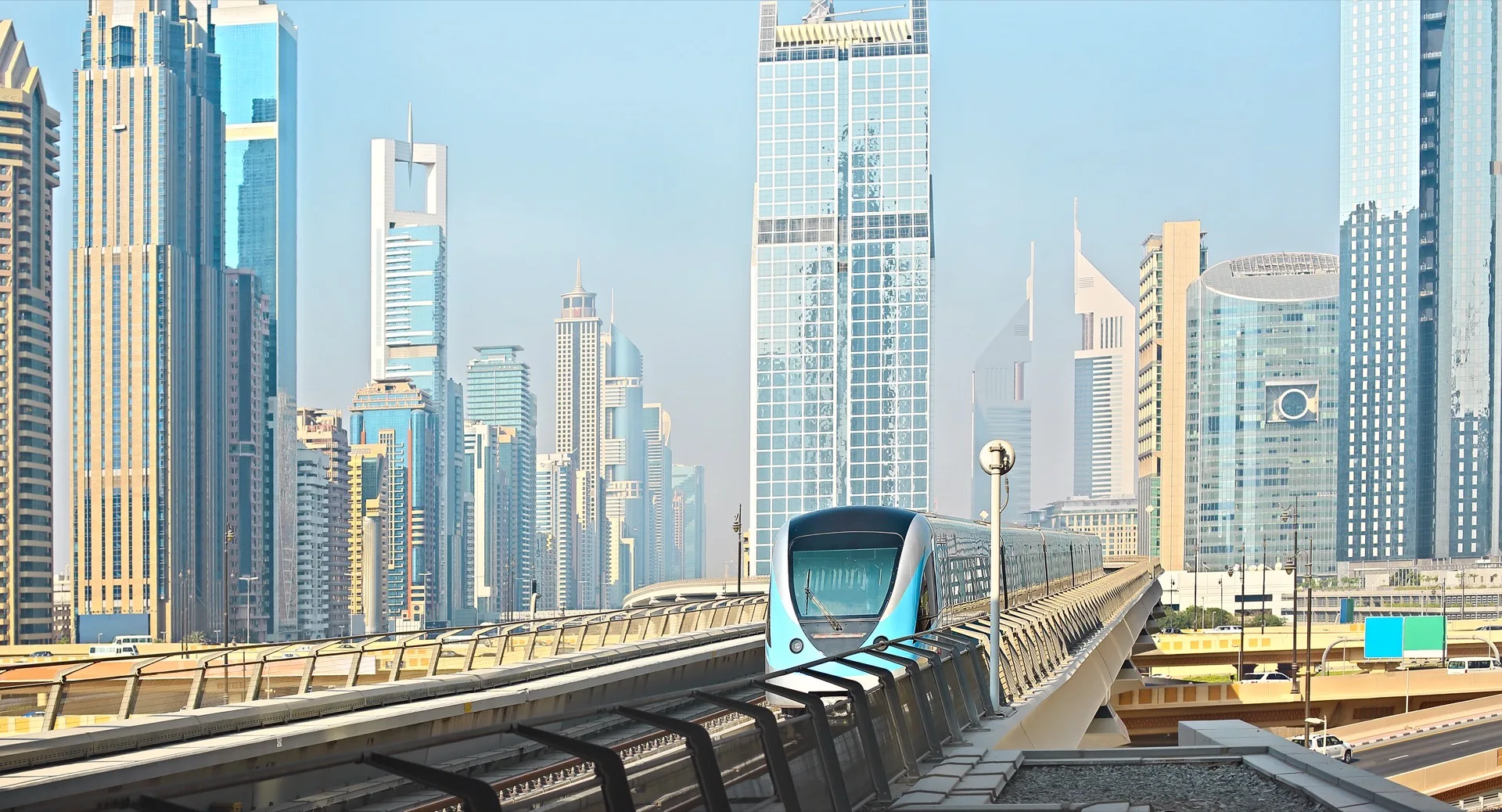
Connectivity is Barsha Heights' strongest single argument. The Dubai Internet City metro station on the Red Line sits inside the community, giving residents a direct rail link toward Dubai Marina, the Burj Khalifa/Downtown corridor and onward to the airport lines, without needing a car for a commute along Sheikh Zayed Road. F31 and F35 feeder buses supplement the station, and most towers include basement parking with additional paid public parking available.
Road access improved materially in 2026. The Roads and Transport Authority opened a 4.5-kilometre upgrade of Hessa Street between Sheikh Zayed Road and Al Khail Road in April 2026, expanding the corridor from two to four lanes in each direction, per Gulf News. The RTA said capacity on the stretch doubled from 8,000 to 16,000 vehicles per hour in both directions, and travel time along the upgraded section fell from around 15 minutes to about 4 minutes. The project also added a new two-lane ramp above the Metro Red Line at Sheikh Zayed Road and widened bridges at First Al Khail Street and Al Asayel Street. Barsha Heights sits directly among the districts the RTA named as beneficiaries, alongside JLT, Al Barsha South, Dubai Science Park, Arjan, JVC, Jumeirah Islands, The Greens and Emirates Hills — a corridor the RTA projects will serve a surrounding population of more than 640,000 people by 2030. A second phase, extending Hessa Street a further 3 kilometres toward Sheikh Mohammed bin Zayed Road, was under way as of mid-2026, targeting a similar doubling of capacity on that stretch.
Practically, this addresses the community's most consistently cited drawback: congestion at the entry and exit points during evening peak hours. It does not eliminate rush-hour traffic on Sheikh Zayed Road itself, but it materially eases the immediate approach roads that residents actually use to get in and out of the towers.
New Investment Signals: Development Still Active
Barsha Heights is not a finished, static community — new commercial and mixed-use development continues alongside the older residential stock. In March 2026, National Properties, the real estate arm of National Bonds Corporation, announced the launch of a new commercial tower in Barsha Heights valued at AED 500 million, per Gulf News, part of a broader wave of March 2026 project launches across Dubai. New commercial floor space adjacent to an established residential base is generally a supportive signal for area amenity and daytime footfall, though it is not, on its own, evidence of future capital appreciation — treat it as one data point among several rather than a reason to buy.
For a community this dense, that kind of continued investment matters for a different reason than it would in a newer master-planned district: Barsha Heights has no greenfield land left to develop, so growth here comes almost entirely from redeveloping or upgrading existing plots rather than adding new residential towers on open land. That makes the area's long-term trajectory more dependent on infrastructure (roads, metro capacity) and commercial vitality (offices, retail, hospitality) than on a pipeline of new handovers — a genuinely different risk-and-reward profile from Dubai's off-plan-heavy growth corridors in Dubailand or Dubai South.
Service Charges and Ongoing Costs
Service charges in Barsha Heights vary widely by building age, amenity level and management company, as they do across most of Dubai's older mixed towers. Published per-building rates are managed through the DLD's Mollak system rather than a single area-wide figure, so the only reliable way to underwrite a specific purchase is to pull that unit's actual Mollak service-charge history before making an offer — do not rely on an area average. As a general rule, older towers with basic amenities (pool, gym, no chiller-free cooling) tend to sit toward the lower end of Dubai's typical apartment service-charge range, while newer or amenity-heavy buildings sit higher; confirm whether a building is chiller-free or chiller-paid, since that materially affects the true annual cost of ownership. For the mechanics of how this system works, see our guide to the Mollak service-charge transparency system.
A buyer with an AED 1 million budget is choosing between a one-bedroom in Barsha Heights and a smaller one-bedroom in JLT. The Barsha Heights unit costs roughly AED 499,000–650,000 depending on tower and rents around AED 82,000, while a comparable JLT one-bed typically starts closer to AED 900,000–1,100,000 and rents around AED 95,000. On price alone, Barsha Heights offers a meaningfully lower entry point and a comparable or better gross yield once JLT's higher service charges and DMCC-linked premium are factored in. JLT's edge is liquidity and a stronger lake-facing lifestyle draw for tenants who will pay up for the address. For a pure numbers-first buy-to-let with a lower entry ticket, Barsha Heights wins; for a unit likely to hold value better in a downturn because of stronger brand recognition, JLT has the edge. Neither answer is universal — it depends on the specific tower, floor and whether the buyer prioritises yield or resale liquidity.
Who Should — and Shouldn't — Buy or Rent Here
Barsha Heights suits single professionals and couples who work in or near Internet City and Media City, want a metro-first commute, and are prioritising value over polish. It also suits investors chasing yield on smaller units, provided they underwrite net returns rather than headline gross figures and confirm each building's specific service-charge and freehold/leasehold status before committing.
It suits families and larger households less well. There is no villa stock, school options within the immediate community are limited compared with Dubai Hills Estate, Arabian Ranches or Mirdif, and the tower stock skews toward smaller layouts. Buyers who need consistent, predictable capital appreciation over a short holding period should also be cautious: the area's building-by-building freehold/leasehold split and wide vintage range make it a market where due diligence on the specific unit matters more than the area label. For a broader framework on where to buy for family-first priorities, see our guide to the best Dubai areas for families, and for the wider investment case across Dubai see our Dubai real estate investment guide.
How Barsha Heights Fits the Wider Dubai Map
Geographically, Barsha Heights is a connector community — it sits between Al Barsha's family-suburb stock, JLT and Dubai Marina's waterfront premium, and the Greens & The Views' mature mid-range apartments to its immediate west. That positioning is its core value proposition: shorter commutes to two major office clusters than almost any comparably priced community, at rents that undercut every immediately adjacent waterfront or premium district. If your priority list runs commute time, metro access and entry price — in that order — Barsha Heights belongs on the shortlist alongside The Greens & The Views and JLT. If your priority list runs school proximity, villa living or long-term family stability, look instead toward the family-community guides on our full Dubai areas hub.
Frequently Asked Questions
Is Barsha Heights (Tecom) freehold?
It is a mixed community — some towers are freehold and open to full foreign ownership, while others remain leasehold. There is no single area-wide answer, so always verify the specific building's tenure with the developer, your broker and the Dubai Land Department before making an offer.
What is the average price of a studio apartment in Barsha Heights?
Entry-level studio pricing in 2026 typically starts from around AED 370,000, though actual prices vary by tower age, floor and view. Always check current listings and recent DLD-registered comparables for the specific building rather than relying on an area-wide figure.
Is Barsha Heights on the Dubai Metro?
Yes. The Dubai Internet City metro station on the Red Line sits inside the Barsha Heights community, giving direct rail access toward Dubai Marina and the Downtown/Burj Khalifa corridor without needing a car.
What rental yield can I expect in Barsha Heights?
Gross yields calculated from entry-level prices and average rents can look very high for studios and one-beds — often in the mid-teens percentage range — but that flatters the cheapest units against average rents. After service charges, void periods and management costs, a more realistic net yield for smaller units is roughly 9–11%, with two- and three-bedroom units more typically in a 7–9% gross range. Always underwrite a specific unit rather than an area average.
Are there villas in Barsha Heights?
No. Barsha Heights is an apartment and hotel-apartment market exclusively — studios through four-bedroom apartments and penthouses, with no standalone villa stock. Buyers wanting villas should look at neighbouring communities such as Emirates Hills or further out to Arabian Ranches and Dubai Hills Estate.
How has the Hessa Street upgrade affected Barsha Heights?
The RTA's April 2026 upgrade widened a 4.5-kilometre stretch of Hessa Street between Sheikh Zayed Road and Al Khail Road from two to four lanes each way, doubling capacity from 8,000 to 16,000 vehicles per hour and cutting travel time on that stretch from around 15 minutes to about 4 minutes. Barsha Heights was named directly among the beneficiary districts, easing the entry/exit congestion residents have historically flagged as the community's main drawback.
How does Barsha Heights compare to Al Barsha and JLT for renting?
Rents in Barsha Heights sit consistently above Al Barsha and below JLT across every unit size, per Property Finder's mid-2026 area data. A one-bed averages roughly AED 82,000 in Barsha Heights versus AED 71,000 in Al Barsha and AED 95,000 in JLT — reflecting Barsha Heights' better office-corridor connectivity than Al Barsha but a lower profile than the lake-facing JLT market.
What is the closest beach to Barsha Heights?
Al Sufouh Beach is about seven minutes away by car, and Kite Beach is roughly 15 minutes away, making beach access straightforward despite Barsha Heights itself being an inland community.
Is Barsha Heights a good area for investors?
It can be, particularly for investors targeting smaller units for rental income given its relatively low entry prices and strong tenant demand from the nearby Internet City/Media City workforce. The trade-offs are a mixed freehold/leasehold landscape that requires building-by-building verification, an older average building stock than newer competing communities, and service charges that vary widely — all of which make unit-level due diligence more important here than in more uniformly newer developments.
Read our JLT area guide and Al Barsha area guide for the direct comparisons, and run any unit through our rental yield calculator before you offer. Inside the REC community, members who already own in Barsha Heights and Tecom share real Mollak service-charge figures, building-by-building freehold status and current rent comparables — the detail that decides whether a specific tower is a good buy, not just the area.
Have Questions?
Get personalized advice from our Dubai real estate team.
Thank You!
We'll get back to you within 24 hours.
Real Estate Agencies in Dubai
Explore providers from our business directory
Still have questions?
Ask a follow-up, or get connected with a vetted Dubai professional.
Join our Telegram channel
Handover alerts, new launches & DLD data — first, in real time.