Dubai South & Al Maktoum Airport: Property Investment Before the World's Largest Airport Opens

- Al Maktoum International Airport is being expanded into the world's largest airport — AED 128 billion investment, 260 million passenger capacity, 5 runways, targeted completion 2028-2030
- Dubai South is a 145 sq km master-planned city around the airport with residential, logistics, aviation, commercial, and expo districts
- Current property prices (AED 800-1,200/sqft) mirror where Dubai Marina and Downtown sat 8-10 years before their infrastructure matured
- Rental yields currently range 7-9%, with projections of 8-11% once the airport reaches operational capacity
- Key risks include timeline delays, temporary oversupply, and distance from the current city centre — this is a 5-10 year play, not a quick flip
Introduction: The Mega-Project That Will Reshape Dubai's Geography
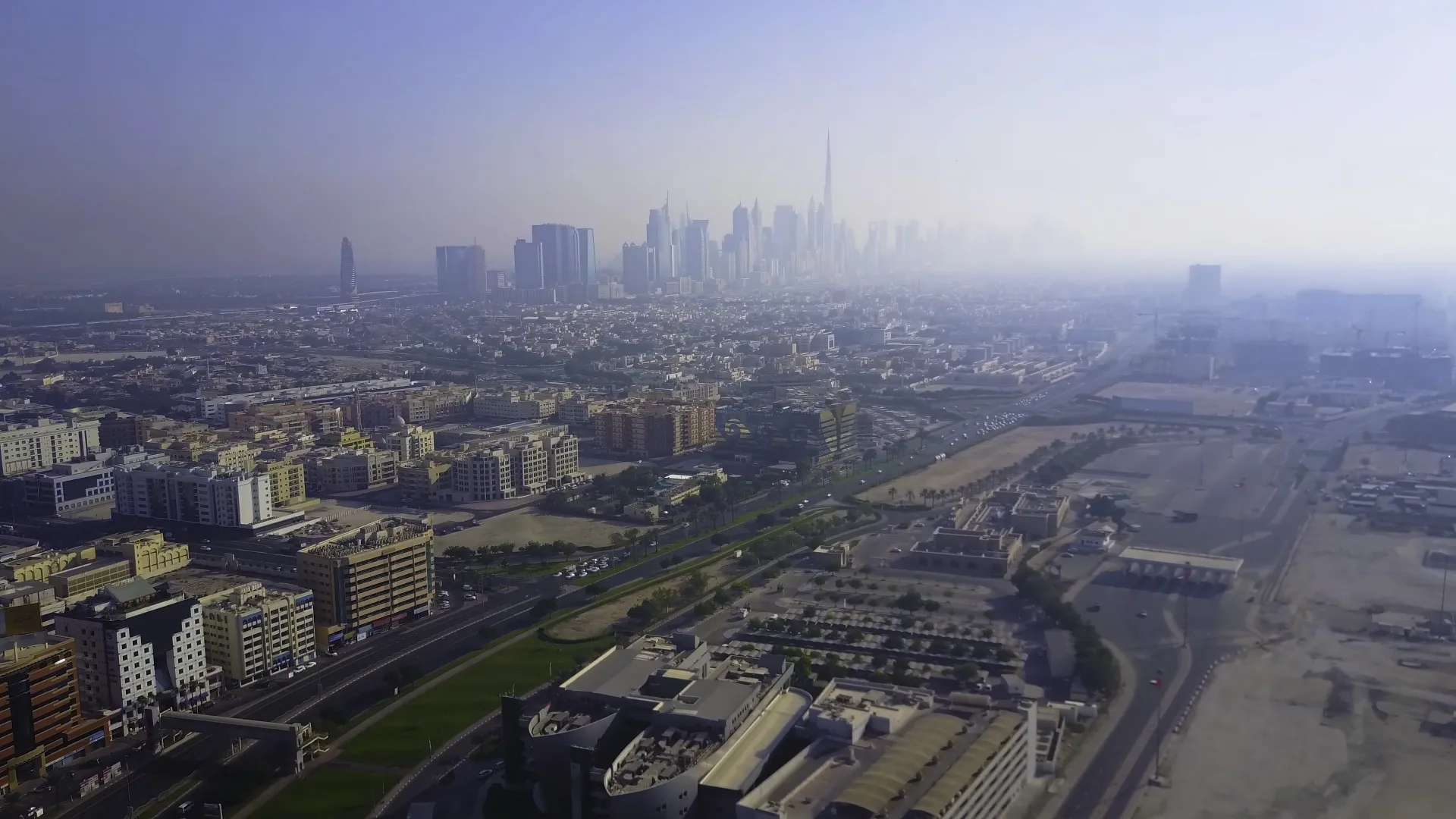
Every decade or so, Dubai makes a bet so audacious that it redraws the city's centre of gravity. In the early 2000s, it was the Palm Jumeirah and Dubai Marina — artificial islands and a skyline that turned a quiet coastline into the world's most photographed waterfront. In the 2010s, it was Downtown Dubai and the Burj Khalifa district, pulling the city's commercial heart inland. Now, in the mid-2020s, the next gravitational shift is underway — and it is pointing firmly south.
Al Maktoum International Airport, already operational for cargo and limited passenger flights at Dubai World Central (DWC), is undergoing an expansion that will make it the largest airport on the planet. Not incrementally larger. Not marginally bigger. Five times the capacity of Dubai International (DXB), the airport that currently ranks as the world's busiest for international passengers. The numbers are staggering: 260 million passengers annually, five parallel runways, and an investment exceeding AED 128 billion.
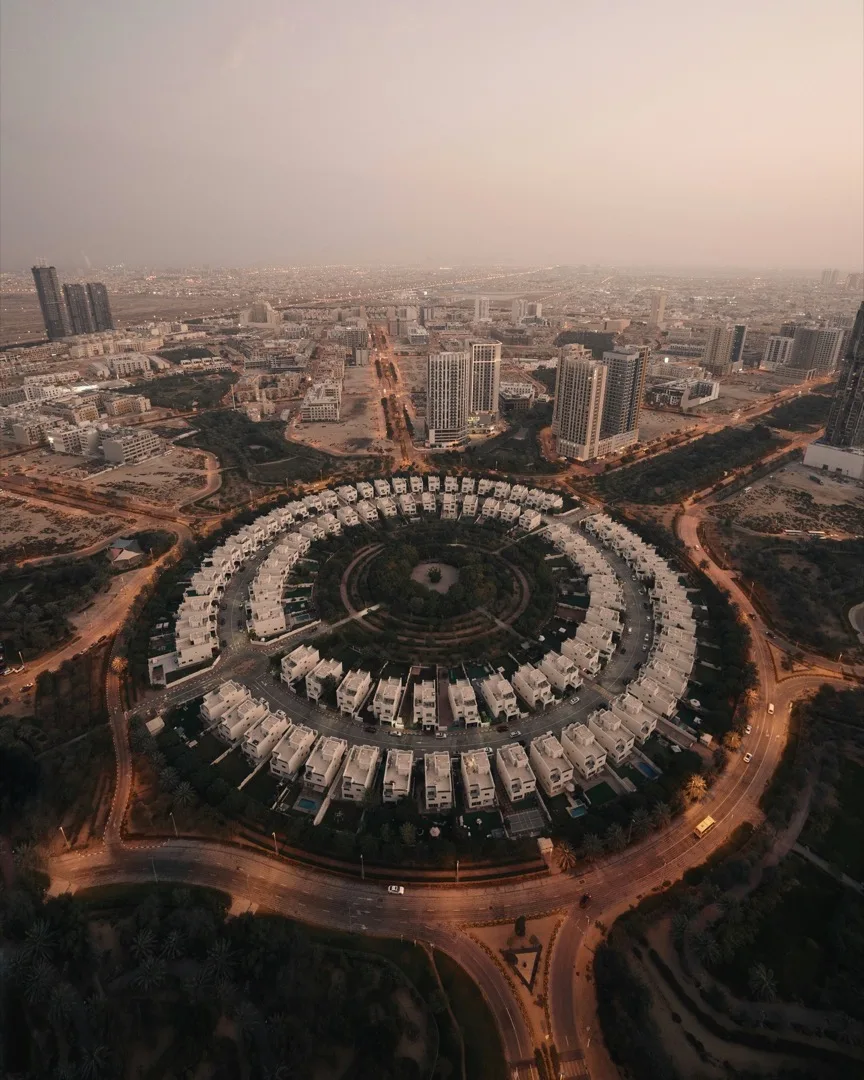
Surrounding this airport is Dubai South — a 145-square-kilometre master-planned city designed to house over one million residents and create 500,000 jobs. It is not a neighbourhood. It is an entirely new urban centre, roughly the size of the entire existing developed footprint of Dubai Marina, JLT, Downtown, and Business Bay combined.
For property investors, the question is straightforward: is this the next Dubai Marina moment — a chance to buy into a district before infrastructure transforms it from empty plots into a premium address? Or is it a speculative gamble on a timeline that could stretch and a location that may remain peripheral for years? This guide examines both sides with data, historical parallels, and honest risk assessment.
Al Maktoum Airport Expansion: What Is Actually Being Built
Let us start with the hard facts. Al Maktoum International Airport's expansion was formally announced by Sheikh Mohammed bin Rashid Al Maktoum in early 2024, with detailed plans released throughout 2024 and 2025. The project is not a concept or a feasibility study — contracts have been awarded, earthworks are underway, and the timeline is public.
| Specification | Details |
|---|---|
| Total Investment | AED 128 billion (~USD 35 billion) |
| Ultimate Passenger Capacity | 260 million passengers/year |
| Runways | 5 parallel runways (currently 1 operational) |
| Terminal Area | Multiple terminals totalling over 3 million sqm |
| Phase 2 Completion Target | 2028-2030 (initial expanded operations) |
| Full Build-Out | 2040-2045 (complete 260M capacity) |
| Cargo Capacity | 12 million tonnes annually |
| Current DXB Capacity (comparison) | ~90 million passengers/year |
The phased approach is important for investors. Phase 2, targeting 2028-2030, will bring the first major passenger terminal online and begin the transition of airlines from DXB. The full 260-million capacity is a longer-term vision extending to 2040-2045. This means the airport will create economic activity and employment in waves — not a single overnight transformation, but a steady, multi-year ramp-up that should support sustained property demand rather than a single spike.
For reference, DXB handled approximately 87 million passengers in 2023 and is physically constrained — landlocked by Deira and Garhoud with no room for additional runways. The move south is not optional; it is an operational necessity for Dubai's aviation ambitions. This gives the Al Maktoum expansion a level of inevitability that pure speculative projects lack.
Dubai South Master Plan: A City Within a City
Dubai South is not just an airport with some housing tacked on. It is a fully planned urban district spanning 145 square kilometres, divided into purpose-built zones designed to function as a self-contained city. Understanding these zones is critical for investors because each one generates different types of employment and, consequently, different rental demand profiles.
The Six Districts
Aviation District: Directly surrounding the airport, this zone houses MRO (maintenance, repair, overhaul) facilities, airline offices, cargo operations, and aviation services. It is the employment engine — tens of thousands of aviation professionals will work here, and they will need housing within reasonable commute distance.
Residential District: The primary housing zone, featuring apartments, townhouses, and villas across various price points. This is where most investor-relevant properties are located. Communities like The Pulse, Emaar South, and Expo Valley sit within this district.
Logistics District: Adjacent to the airport and connected to Jebel Ali Port via the E311 highway, this district is designed for warehousing, distribution, and e-commerce fulfilment. It already hosts major logistics operators and generates blue-collar and mid-management employment.
Business Park: A commercial zone for SMEs and regional headquarters, offering free zone and non-free zone options. Companies based here create white-collar demand for nearby residential units.
Expo District (Expo City Dubai): The legacy development of Expo 2020, now repurposed as a permanent exhibition, events, and innovation hub. It includes the iconic Al Wasl Plaza, sustainability pavilion, and growing commercial tenancies.
Commercial District: Retail, hospitality, and entertainment facilities serving the broader Dubai South population.
The scale is worth emphasising: 145 square kilometres is larger than the combined footprint of Dubai Marina, JBR, JLT, Downtown, DIFC, Business Bay, and City Walk. This is not an infill project — it is urban expansion on a scale Dubai has only attempted once before, when it built the Marina/JLT corridor in the mid-2000s.
Current Property Prices: Where Does Dubai South Sit?
One of the most compelling aspects of Dubai South for investors is its pricing relative to established areas — and relative to where those established areas were priced before their infrastructure matured. The numbers paint a clear picture of the opportunity window:
| Area | Current Price (AED/sqft) | Price 8-10 Years Ago (AED/sqft) | Growth |
|---|---|---|---|
| Dubai South (2026) | 800 - 1,200 | N/A (emerging) | — |
| Dubai Marina | 1,800 - 2,800 | 900 - 1,300 (2016) | +100-115% |
| JLT | 1,200 - 1,800 | 650 - 900 (2016) | +85-100% |
| Downtown Dubai | 2,200 - 3,500 | 1,400 - 2,000 (2016) | +57-75% |
| Dubai Hills Estate | 1,500 - 2,200 | 850 - 1,100 (2018 launch) | +76-100% |
| Jumeirah Village Circle | 1,000 - 1,500 | 500 - 750 (2016) | +100% |
The pattern is unmistakable. Every major Dubai district that received significant infrastructure investment — metro stations, malls, schools, road upgrades — saw prices double or more over an 8-10 year period. Dubai South's current pricing sits squarely where Dubai Marina and JVC were before their transformation. If you are looking for the best areas for capital appreciation in Dubai, the historical trajectory data makes a strong case for Dubai South.
What You Can Buy: Off-Plan and Ready Projects
Dubai South offers a range of property types from major developers, many with government-backed payment plans that reduce entry barriers. Here is what the current market offers:
Major Developer Projects
Emaar South (Emaar Properties): Golf-course community with apartments, townhouses, and villas. Studios from AED 550,000, 1-beds from AED 750,000, townhouses from AED 1.2 million. Post-handover payment plans available on select phases.
The Pulse (Dubai South Properties): The government-backed residential district offering apartments and townhouses. Studios from AED 400,000, 1-beds from AED 580,000. Strong rental demand from Expo City and logistics workers. One of the most affordable entry points in Dubai's freehold market.
Expo Valley (Expo City): Premium townhouses and villas positioned as the residential component of the Expo legacy development. 3-bed townhouses from AED 1.8 million. Positioned as an upscale family community.
DAMAC Projects: Multiple tower developments within Dubai South offering competitive pricing and aggressive payment plans — often 1% monthly post-handover. Studios from AED 480,000.
Nakheel Communities: Villa and townhouse developments leveraging Nakheel's expertise in community master planning. Priced competitively against established Nakheel communities in Jumeirah and Al Furjan.
For buyers navigating off-plan purchases, understanding how Dubai's off-plan payment plans work is essential. Most Dubai South projects offer 60/40 or 70/30 construction-linked plans, with some offering extended post-handover terms up to 3-5 years.
Infrastructure Timeline: What Is Coming and When
Infrastructure delivery is the single most important factor in Dubai South's investment thesis. Properties appreciate when roads, transit, schools, hospitals, and retail arrive — not before. Here is the current timeline based on announced and contracted projects:
| Infrastructure | Status | Expected Completion |
|---|---|---|
| E311 / Sheikh Mohammed bin Zayed Road access | ✅ Complete | Operational |
| Expo Road / Route 2020 highway | ✅ Complete | Operational |
| Dubai Metro Route 2020 (Expo station) | ✅ Complete | Operational |
| Metro extension into Dubai South Residential | 🔄 Planned | 2028-2030 |
| Internal road network (Phase 1) | ✅ Complete | Operational |
| Internal road network (Phase 2) | 🔄 Under construction | 2027 |
| Retail & F&B (The Pulse Boulevard) | 🔄 Partially open | Full completion 2027 |
| Schools (GEMS, Taaleem) | 🔄 Under construction | 2027-2028 |
| Healthcare facility (hospital) | 🔄 Announced | 2028-2029 |
| Al Maktoum Airport Phase 2 (passenger ops) | 🔄 Under construction | 2028-2030 |
| Etihad Rail connection | 🔄 Planned | 2030+ |
The infrastructure story is two-phased. Phase 1 (already complete) provides basic connectivity — you can drive to Dubai South, take the metro to Expo, and access the E311. Phase 2 (2027-2030) brings the amenities that convert an area from "affordable and remote" to "desirable and connected." This is the window investors are targeting: buy during Phase 1 accessibility, hold through Phase 2 delivery, and benefit from the price re-rating that follows.
Historical Parallel: How Infrastructure Built Dubai's Premium Addresses
The strongest argument for Dubai South is not theoretical — it is historical. Dubai has a clear, repeatable pattern: announce infrastructure, build it, and watch property values follow. Let us trace three examples that mirror Dubai South's current position.
Dubai Marina (2003-2015)
In 2003, Dubai Marina was a construction site surrounded by desert. Properties sold off-plan at AED 400-600/sqft. The Marina Mall opened in 2008, the tram launched in 2014, and by 2015, prices had reached AED 1,200-1,600/sqft. Today, prime Marina units trade at AED 2,000-2,800/sqft. Early investors saw 4-5x returns over 15 years, with strong rental yields throughout as the population grew.
Downtown Dubai (2004-2016)
Before the Burj Khalifa opened in 2010, Downtown was an ambitious concept with limited retail and no metro connection. The Dubai Mall (2008), Burj Khalifa (2010), and Downtown metro station transformed it into the city's most prestigious address. Off-plan prices of AED 800-1,200/sqft in 2004-2006 became AED 2,000-3,500/sqft by the mid-2020s.
Dubai Hills Estate (2017-2026)
The most recent example and the most instructive. Dubai Hills launched in 2017 at AED 850-1,100/sqft with no mall, no metro, and limited road access. Dubai Hills Mall opened in 2022, and the area's prices surged past AED 1,500-2,200/sqft by 2026. The pattern repeated in under a decade. Investors who analyse the highest ROI areas in Dubai consistently find that infrastructure-led growth areas outperform established districts in percentage terms.
Dubai South is following the same playbook — but with a catalyst (the world's largest airport) that dwarfs any previous infrastructure project in the city's history.
Investing in Dubai?
Get Weekly Investment Insights
ROI analysis, rental yields, off-plan opportunities, and data-driven market updates.
✓ You're in! Check your inbox.
Rental Yield Projections: Current vs. Future
Rental yields are where Dubai South already outperforms most established areas, and projections suggest this advantage will grow as the airport ramps up employment.
| Area | Current Gross Yield | Projected Yield (2030) |
|---|---|---|
| Dubai South (studios & 1-beds) | 7-9% | 8-11% |
| Dubai Marina | 5-6.5% | 5-6% |
| Downtown Dubai | 4.5-6% | 4.5-5.5% |
| JVC | 7-8.5% | 6.5-7.5% |
| Dubai Hills Estate | 5.5-7% | 5-6.5% |
The yield advantage comes from two factors: low purchase prices (the denominator) and surprisingly strong rental demand from logistics, aviation, and Expo City workers who want to live close to their employment. Studios and 1-bedroom apartments in The Pulse and Emaar South are currently renting at AED 30,000-50,000 per year, which against purchase prices of AED 400,000-750,000 delivers compelling yields. For investors comparing rental income across Dubai, the Airbnb and short-term rental yield data for 2026 provides useful benchmarks across all major districts.
As the airport scales operations and tens of thousands of additional workers need housing, rental demand will intensify. Unlike established areas where yields compress as purchase prices rise faster than rents, Dubai South has the advantage of growing rents (from population influx) combined with still-moderate purchase prices — a dynamic that typically produces the strongest yield windows in emerging areas.
Risks: What Could Go Wrong
No honest investment guide omits the risks, and Dubai South has several that investors must weigh carefully.
1. Timeline Execution Risk
Dubai has a strong track record of delivering infrastructure, but mega-projects of this scale can face delays. The airport's Phase 2 target of 2028-2030 is ambitious, and a 1-2 year delay would not be unusual for a project of this magnitude. If completion slips to 2031-2032, investors holding properties need the financial resilience to carry costs through the delay.
2. Oversupply Risk
Multiple developers are launching projects simultaneously in Dubai South. If absorption rates do not keep pace with handovers — particularly in 2027-2028 when several large projects are scheduled for completion — temporary oversupply could suppress both rental yields and resale values. This is the same risk that hit JVC in 2019-2020 before demand caught up with supply.
3. Distance from Current City Centre
Dubai South is approximately 40 km from Downtown Dubai and 35 km from Dubai Marina. Until the metro extension and additional road infrastructure are complete, this distance creates a perception of remoteness. Tenants working in DIFC, Downtown, or Media City may prefer closer alternatives, limiting the rental pool to those employed within Dubai South or along the E311 corridor.
4. Infrastructure Lag
Residential units are being delivered before schools, hospitals, and retail reach critical mass. This creates a chicken-and-egg problem: families hesitate to move without amenities, but amenities struggle to justify investment without population. The 2027-2028 wave of school and retail openings should break this cycle, but the next 18-24 months will be the most uncomfortable period for investors seeking tenants.
5. Global Economic Sensitivity
Aviation-dependent economies are sensitive to global downturns, pandemics, and geopolitical disruptions — as the 2020-2021 COVID period demonstrated. While Dubai's diversification reduces this risk, the airport-centric thesis means investors are inherently more exposed to aviation sector volatility than those investing in, say, Downtown or DIFC where demand is driven by finance and professional services.
Who Should Invest in Dubai South
Dubai South is not for every investor. The risk-reward profile suits specific strategies and timelines. Based on current market conditions and the infrastructure delivery schedule, here is a breakdown of who stands to benefit most:
Long-term investors (5-10 year hold): This is the primary audience. If you can purchase now at AED 800-1,200/sqft and hold through the airport's operational ramp-up, historical parallels suggest 80-120% capital appreciation is achievable. You will collect 7-9% rental yields while you wait. This mirrors the returns achieved by early investors in Dubai Marina, JLT, and Dubai Hills. The comprehensive area ranking for 2026 provides a framework for comparing Dubai South against other long-hold opportunities.
Budget-conscious first-time investors: With studios available from AED 400,000 and 1-bedrooms from AED 580,000, Dubai South offers the lowest entry point for freehold property in a master-planned community backed by a government-developer. For buyers priced out of Marina, Downtown, or Dubai Hills, this is accessible exposure to Dubai's property market with strong fundamentals.
Investors betting on airport-driven employment growth: If your thesis centres on the employment multiplier of the world's largest airport — and the rental demand that follows — Dubai South is the most direct expression of that thesis. Airports are proven employment generators, and the aviation, logistics, and hospitality sectors collectively create 3-5 indirect jobs for every direct airport role.
Who should NOT invest: Short-term flippers expecting 12-18 month returns, investors who cannot carry holding costs through potential delays, and anyone uncomfortable with the current amenity gap. Dubai South is a patience play, not a momentum trade.
Expo City Connection: The Overlooked Catalyst
While the airport dominates headlines, Expo City Dubai is an equally important demand driver that often receives less attention. The former Expo 2020 site has been repurposed into a permanent urban district that is already operational and growing.
Expo City sits at the northern edge of Dubai South, connected by metro and road. It hosts the Museum of the Future-style sustainability pavilion, Terra — The Sustainability Pavilion, corporate offices (Siemens has relocated its regional HQ there), event venues, and a growing F&B and retail scene. Government entities are also consolidating offices at the site.
The significance for property investors is immediate demand: Expo City employees and visitors need housing now, not in 2030. This creates a rental floor under Dubai South properties — even before the airport expansion delivers its full impact. Residents of The Pulse, Emaar South, and Expo Valley are the natural catchment for this employment cluster.
Moreover, the shared infrastructure between Expo City and Dubai South — roads, utilities, metro, landscaping — means that investment in one benefits the other. The government's commitment to Expo City's success (given its high-profile legacy status) provides an implicit guarantee that infrastructure investment in the area will continue regardless of airport timeline fluctuations.
Development Activity: What Developers Are Signalling
Developer behaviour is one of the most reliable leading indicators for an area's trajectory. When Emaar, Nakheel, DAMAC, and government-backed developers simultaneously commit capital to a district, they are signalling confidence backed by market research and pre-sales data.
In 2025-2026, Dubai South has seen a marked acceleration in project launches. Emaar expanded its Emaar South master plan with additional phases, indicating strong sell-through on initial phases. Dubai South Properties (the government developer) launched new phases of The Pulse and announced premium villa communities. DAMAC committed to multiple tower developments, and several boutique developers have entered the market with mid-rise apartment buildings.
Critically, construction is visible and progressing. Unlike speculative announcements that sometimes precede actual building activity by years, cranes are active across multiple sites in Dubai South. Handovers are occurring — The Pulse Phase 1 and 2 are occupied, Emaar South's initial phases are handing over, and the occupancy rate is climbing steadily.
The government itself is the largest signal. Dubai South is a government initiative — the master developer is a government-owned entity, the airport is a government project, and the infrastructure is publicly funded. This alignment of government investment and private developer activity is the same combination that built Dubai Marina, Downtown, and every other successful district in the city.
The Market Context: Where Dubai South Fits in 2026
Understanding Dubai South requires placing it within the broader Dubai property market context for 2026. The overall market is in a mature growth phase — established areas like Marina, Downtown, and Palm Jumeirah are trading at or near all-time highs, compressing yields and raising the entry barrier for new investors.
This creates a natural rotation: investors seeking value and yield are systematically exploring emerging areas where the gap between current prices and future fundamentals is widest. Dubai South, with the world's largest airport as its anchor, represents the most significant gap in the market — a district with AED 800-1,200/sqft pricing that is backed by AED 128 billion in government infrastructure investment.
Frequently Asked Questions
When will Al Maktoum International Airport start full passenger operations?
Phase 2 of the expansion, which brings the first major passenger terminal online, is targeted for 2028-2030. Airlines will gradually transition from DXB to Al Maktoum over a multi-year period. Full capacity of 260 million passengers is a longer-term vision extending to 2040-2045. For investors, the key inflection point is the commencement of significant passenger operations, which will trigger the largest employment growth wave.
Is Dubai South freehold for foreign buyers?
Yes. Dubai South is a designated freehold area where non-UAE nationals can purchase property with full ownership rights. All major residential communities (The Pulse, Emaar South, Expo Valley) offer freehold title. Foreign buyers also qualify for residency visas based on property value — AED 750,000 for a 2-year visa and AED 2 million for a 10-year Golden Visa.
What are the service charges in Dubai South?
Service charges currently range from AED 10-16 per square foot annually, depending on the community and developer. This is significantly lower than established areas like Dubai Marina (AED 18-25/sqft) or Downtown (AED 20-30/sqft). Lower service charges directly improve net rental yields and reduce holding costs during the pre-infrastructure maturity period.
How long does it take to reach Dubai Marina or Downtown from Dubai South?
Currently, the drive takes 25-40 minutes via the E311 (Sheikh Mohammed bin Zayed Road) depending on traffic. The Dubai Metro Route 2020 provides a rail connection to the Expo station, with interchange to the Red Line for Marina and Downtown access — total metro journey is approximately 50-60 minutes. Once the planned metro extension into Dubai South Residential is completed (2028-2030), commute times will improve by an estimated 10-15 minutes.
Should I buy ready or off-plan in Dubai South?
Both strategies have merit. Ready properties in The Pulse and early Emaar South phases offer immediate rental income at 7-9% yields — you start earning from day one. Off-plan purchases from AED 400,000 with 60/40 or 70/30 payment plans require less upfront capital and offer potential for capital appreciation during the construction period (typically 2-3 years). For a deeper understanding of payment structures, read our guide to off-plan payment plans in Dubai.
Final Word: Timing, Patience, and the Airport Thesis
Dubai South is not a speculative punt on an empty desert — it is a calculated bet on the most heavily funded infrastructure project in the Middle East, backed by a government with a 25-year track record of delivering ambitious urban developments on time and on scale. The airport is not optional; DXB is physically maxed out, and the transition south is an operational necessity, not a nice-to-have.
The investment thesis rests on a simple premise: buy at AED 800-1,200/sqft today, collect 7-9% rental yields while holding, and sell or hold at AED 1,500-2,200/sqft when the airport reaches meaningful operational scale. The historical parallels with Dubai Marina, Downtown, and Dubai Hills support this trajectory. The risks — timeline delays, temporary oversupply, distance — are real but manageable for investors with a 5-10 year horizon and adequate holding capital.
If you are evaluating where to allocate capital in Dubai's property market in 2026, Dubai South deserves serious consideration — not as your only bet, but as the highest-asymmetry opportunity on the board. The world's largest airport is being built. The question is whether you want to be positioned before it opens, or after prices have already adjusted.
Need Investment Advice?
Get personalized analysis for your Dubai property investment.
Thank You!
We'll get back to you within 24 hours.
Real Estate Agencies in Dubai
Explore providers from our business directory
Still have questions?
Ask a follow-up, or get connected with a vetted Dubai professional.
Follow us on LinkedIn
Dubai market analysis and industry insight for professionals.