The Sustainable City Area Guide 2026: Net-Zero Living, Prices, ROI

- The Sustainable City is a 500-villa, net-zero community on Al Qudra Road developed by Diamond Developers (SEE Holding), completed between 2015 and 2016 — one of the first operational net-zero residential communities in the Middle East.
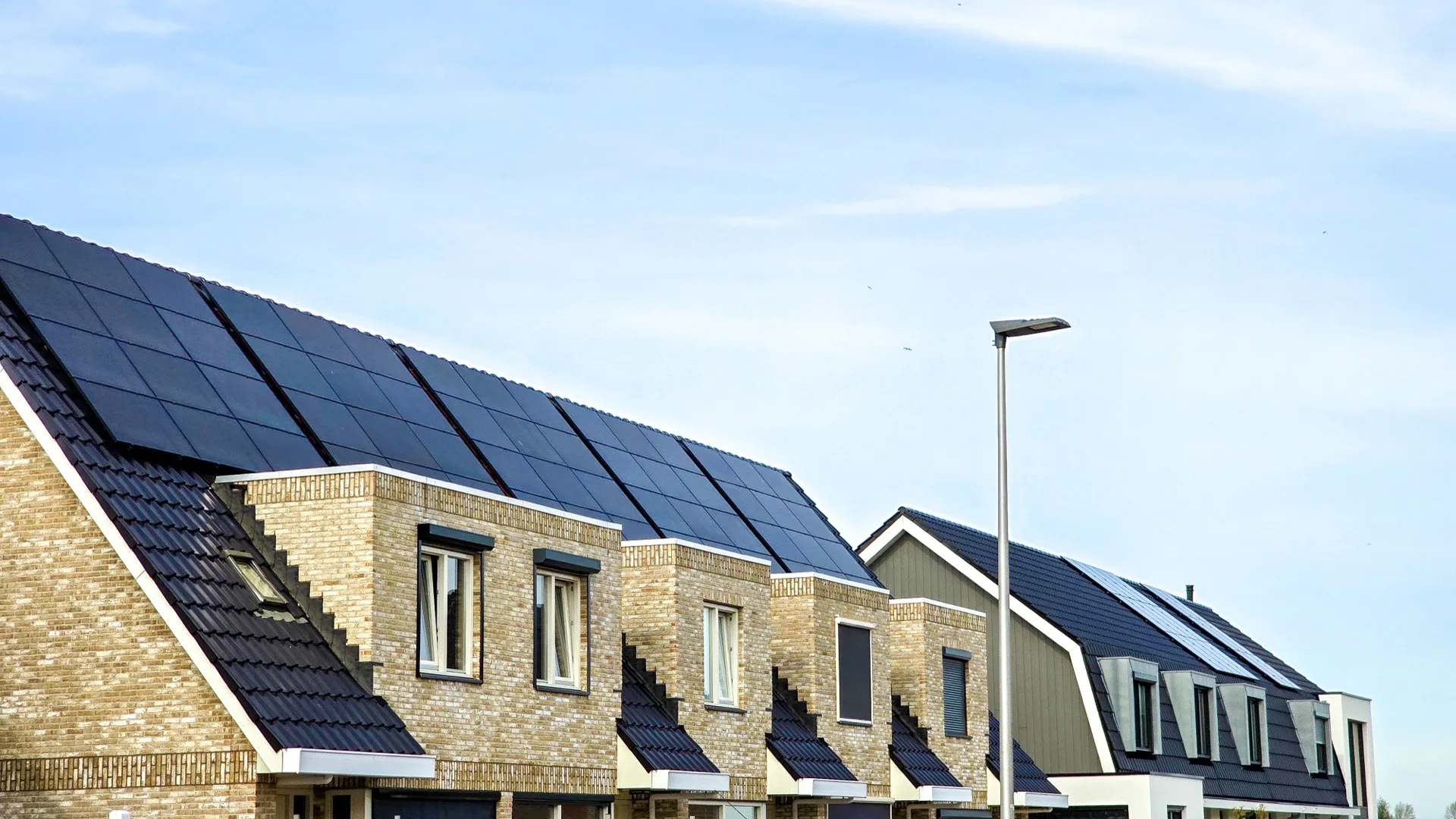
- Approximately 50,000 sqm of solar panels installed on shaded car parks generate clean energy for the community, while greywater is treated on-site and reused for landscape irrigation and the community's biodome urban farms.
- The interior of the community is car-free — residents park at the perimeter and walk, cycle, or use electric buggies to get around. Five residential clusters surround a central spine of schools, mosque, church, Buddhist temple, retail, and amenities.
- Villa prices in 2026 range from AED 2.5M for a 3-bedroom townhouse to AED 7M for a 5-bedroom signature villa. Gross rental yields run 5-6% — lower than yield-focused communities like JVC, but with longer tenant retention and a strong lifestyle premium.
- Residents typically report DEWA and cooling bills 40-60% lower than comparable villas in Arabian Ranches or Dubai Hills, thanks to solar generation, energy-efficient design, and recycled water use.
- Diamond Developers is now replicating the model with The Sustainable City Yas Island (Abu Dhabi) and a Ras Al Khaimah project — the brand is expanding regionally, which supports long-term recognition and resale narrative.
Where The Sustainable City Sits on the Map
The Sustainable City is located on Al Qudra Road (D63), south-west of Dubai's main urban core, sitting between Arabian Ranches 2 and the desert that opens up toward the Al Qudra cycling track and the Dubai-Al Ain corridor. It is approximately 20-25 minutes by car from Downtown Dubai outside peak hours, 25-30 minutes from Dubai Marina, and roughly 30-35 minutes from DXB International Airport. Al Maktoum International Airport (DWC) is closer — around 20 minutes — which matters as DWC scales up over the next decade.
The location places residents on the edge of Dubai's villa belt. To the north sits Arabian Ranches with its golf-course communities. To the east lies Dubai Hills Estate's expansion. To the south, the desert and the Al Qudra lakes. This is unmistakably suburban — Sheikh Mohammed Bin Zayed Road and Al Qudra Road are your two main routes in and out, and life here assumes you have a car, even if the community itself is designed to discourage one. For families relocating to Dubai who want green space, schools, and a calmer pace, this is the kind of address that wins out over a high-rise apartment. For an investor buying purely on yield, areas closer to the metro line typically deliver higher returns — see our highest ROI areas in Dubai 2026 ranking for the comparison.
Diamond Developers and the Net-Zero Vision
The Sustainable City was conceived and built by Diamond Developers, the real estate arm of SEE Holding (Sustainable Square Holding). Master-planning began in 2013, ground broke in 2014, and the first residents moved in by late 2015. The full community handed over through 2016. Unlike most Dubai master-plans where sustainability is a marketing label applied to a few solar-ready rooftops, The Sustainable City was built from day one as an integrated environmental experiment — one of the first net-zero operational communities in the region and the first of its kind in the GCC residential market.
The development won multiple awards in its early years and became a reference case study for sustainable urbanism. Diamond Developers have since announced and broken ground on The Sustainable City Yas Island in Abu Dhabi, a project in Ras Al Khaimah, and international expansions in Oman and Sharjah. The brand recognition factor matters for owners — when a developer becomes synonymous with a category (net-zero living, in this case), the original asset typically retains relative value better than generic suburban inventory.
How the Sustainability Concept Actually Works
The community's environmental design is not a slogan — it is built into the physical layout. Five practical systems do most of the work:
Solar Generation on Shaded Car Parks
Approximately 50,000 square metres of photovoltaic panels are installed on covered parking structures at the perimeter of the community. Cars stay shaded, panels generate clean electricity, and the panels feed power to common areas, the urban farms, the community amenities, and the biodomes. Total installed capacity is reported at around 10 MW peak. Surplus generation is fed back to DEWA through net-metering arrangements.
Water Recycling and the Biodomes
Greywater from villa showers, sinks, and laundry is collected, treated on-site, and reused for landscape irrigation and the climate-controlled biodome urban farms that grow leafy greens, herbs, and vegetables for residents. Black water is treated separately. The result is a closed water loop that significantly reduces dependence on Dubai's desalinated municipal water supply — for context on typical Dubai water and electricity costs, see our complete guide to utilities and monthly bills in Dubai.
Car-Free Interior
The most distinctive feature for first-time visitors is the interior layout. Residents park their cars at the edge of each cluster and walk, cycle, or use electric buggies inside the community. Children play in the streets between villas without traffic risk. The community provides a free electric buggy shuttle service for residents getting from clusters to the central school, mosque, or retail strip. Bicycles are everywhere — the community supplies a bike to every villa on handover.
Energy-Efficient Villa Design
Villas are built to higher thermal-insulation standards than the Dubai municipality minimum. Walls, roofs, and windows reduce heat ingress, which compounds the solar advantage by lowering AC load. Smart meters provide real-time consumption data, and the developer's app shows residents how their household compares against community averages — a soft nudge toward conservation.
Recycling and Composting
Each cluster has integrated recycling stations, and organic waste from villas is composted on-site for use in the biodomes and the community's outdoor edible landscaping. The community publishes annual sustainability reports detailing waste diversion, energy generation, and water reuse figures.
Inventory: What You Can Buy in The Sustainable City
The community contains 500 villas distributed across five residential clusters, plus a central commercial-and-school zone. Inventory mixes townhouses and semi-detached villas in 3-, 4-, and 5-bedroom configurations. There are no apartment buildings — this is purely a low-rise villa community. Each cluster shares a private pool and shaded play area for cluster residents only.
| Villa Type | Built-Up Area (approx.) | Sale Price Range (2026) | Annual Rent Range |
|---|---|---|---|
| 3-Bedroom Townhouse | 2,400-2,700 sqft | AED 2.5M-3.5M | AED 165K-210K |
| 4-Bedroom Semi-Detached | 3,200-3,800 sqft | AED 3.5M-5M | AED 220K-290K |
| 5-Bedroom Signature Villa | 4,500-5,500 sqft | AED 5M-7M | AED 320K-420K |
Resale supply is consistently tight — the community has a strong tenant-to-owner conversion rate, and many original buyers still hold their villas. When stock comes to market, well-presented units typically transact within 30-45 days. Off-plan inventory in the original Sustainable City is closed (the project is fully built), so all transactions are secondary market. For a comparison with neighbouring villa communities, our Dubai Hills vs Arabian Ranches vs Damac Hills family-community comparison sets the context.
Pricing in 2026 and Historical Appreciation
Villa prices in The Sustainable City have moved upward steadily rather than dramatically. The community is not a speculation play — it does not see the boom-and-bust cycles that some off-plan-heavy areas exhibit. What you get instead is a steady appreciation curve underpinned by genuine end-user demand and limited supply.
| Year | 3BR Avg. Price | 4BR Avg. Price | Gross Yield (Mid-Range) |
|---|---|---|---|
| 2018 | AED 1.9M | AED 2.6M | ~6.0% |
| 2020 | AED 1.8M | AED 2.5M | ~6.3% |
| 2022 | AED 2.2M | AED 3.1M | ~6.0% |
| 2024 | AED 2.7M | AED 3.8M | ~5.7% |
| 2026 | AED 3.0M | AED 4.2M | ~5.5% |
Appreciation from 2020 to 2026 sits around 60-65%, broadly in line with Dubai's overall villa-segment recovery, but with less volatility along the way. Yields have compressed slightly as values rose faster than rents — a normal pattern for maturing villa communities. Transaction data is publicly verifiable through the Dubai Land Department's open-data portals.
Rental Yields: Why 5-6% Is the Honest Number
Investors comparing The Sustainable City to a JVC apartment will notice the yield gap immediately — JVC studios and 1-bedrooms can generate 7.5-8.5% gross, while a 4-bedroom Sustainable City villa lands around 5.5-6%. This is not an underperformance; it is a structural feature of the asset class.
Villa rental yields in Dubai are categorically lower than apartment yields because tenants pay a premium for outdoor space, schools, and lifestyle but not in the same multiple as the capital cost. Within the villa segment, however, The Sustainable City compares favourably against Arabian Ranches (~5%) and Dubai Hills Estate (~5.5%). The lifestyle proposition keeps tenants in place longer — average tenancy length here is reported above three years, versus closer to two years in many comparable communities — which lowers void costs, agent re-let fees, and turnover risk. For the broader picture on villa returns, our highest ROI areas guide ranks every area by yield.
Free Weekly Insights
Get Dubai Market Updates in Your Inbox
Expert analysis, market data, and practical tips — trusted by Dubai professionals.
✓ You're in! Check your inbox.
Utility Savings: The Real Financial Edge
The Sustainable City's environmental design produces a measurable financial benefit for owner-occupiers and tenants alike. Solar generation, energy-efficient construction, and recycled greywater all flow through to the monthly DEWA bill. Residents we have spoken with consistently report bills 40-60% lower than what they paid in similar-sized villas in Arabian Ranches, Mudon, or Dubai Hills.
| Cost Item (Monthly Avg.) | Sustainable City 4BR | Comparable 4BR (Hills/Ranches) | Approximate Saving |
|---|---|---|---|
| DEWA electricity | AED 600-900 | AED 1,500-2,200 | AED 800-1,300 |
| DEWA water | AED 150-250 | AED 350-500 | AED 200-250 |
| District cooling | N/A (split AC) | AED 600-1,200 | Variable |
| Service charges (annual / sqft) | AED 3.50-4.50 | AED 4.00-6.50 | Marginal-to-significant |
| Estimated Annual Total Savings | — | — | AED 12,000-25,000 |
For a household holding the villa for 10 years, that is AED 120,000-250,000 in cumulative utility savings. Capitalised at the area's 5.5% yield, that is the equivalent of AED 2.2M-4.5M of additional asset value over the holding period — which materially closes the gap with higher-yield areas when total cost of ownership is the metric. DEWA tariff structures are published by the Dubai Electricity and Water Authority and include slab-tier pricing where reduced consumption produces compounding savings.
Demographics: Who Lives Here
The Sustainable City attracts a distinctive resident profile. The dominant group is professional expat families with school-age children — typically aged 35-50, dual-income, with at least one earner in finance, technology, healthcare, education, or sustainability-adjacent industries. European, North American, and Arab expat families are well represented; the community has a strong British, Dutch, Scandinavian, and Lebanese-Jordanian-Palestinian presence in particular.
The second cohort is what you might call "values-aligned" residents — people who actively wanted to live somewhere that aligned with environmental beliefs, regardless of the price-yield mathematics. Many are professionals in renewable energy, ESG, climate-tech, and the broader sustainability sector; some moved in specifically because they were already advocates of low-carbon urbanism.
The third group is empty-nesters and older couples who downsized from larger villa communities and were drawn by the walkability, low utility costs, and quieter pace. Across all groups, the community skews more permanent than transient — many residents have been here since handover.
Lifestyle: A Day in The Sustainable City
The lived experience is unlike most Dubai communities. Mornings start with cyclists rolling out toward Al Qudra cycling track, joggers running the inner loops, and parents walking children to Fairgreen International School in the centre of the community. The school is an International Baccalaureate (IB) curriculum institution, and being able to walk to school is one of the community's strongest pull factors — KHDA-registered, transparent, with fees published on the KHDA portal. For a wider view of school choice across Dubai, see our best international schools in Dubai by area guide.
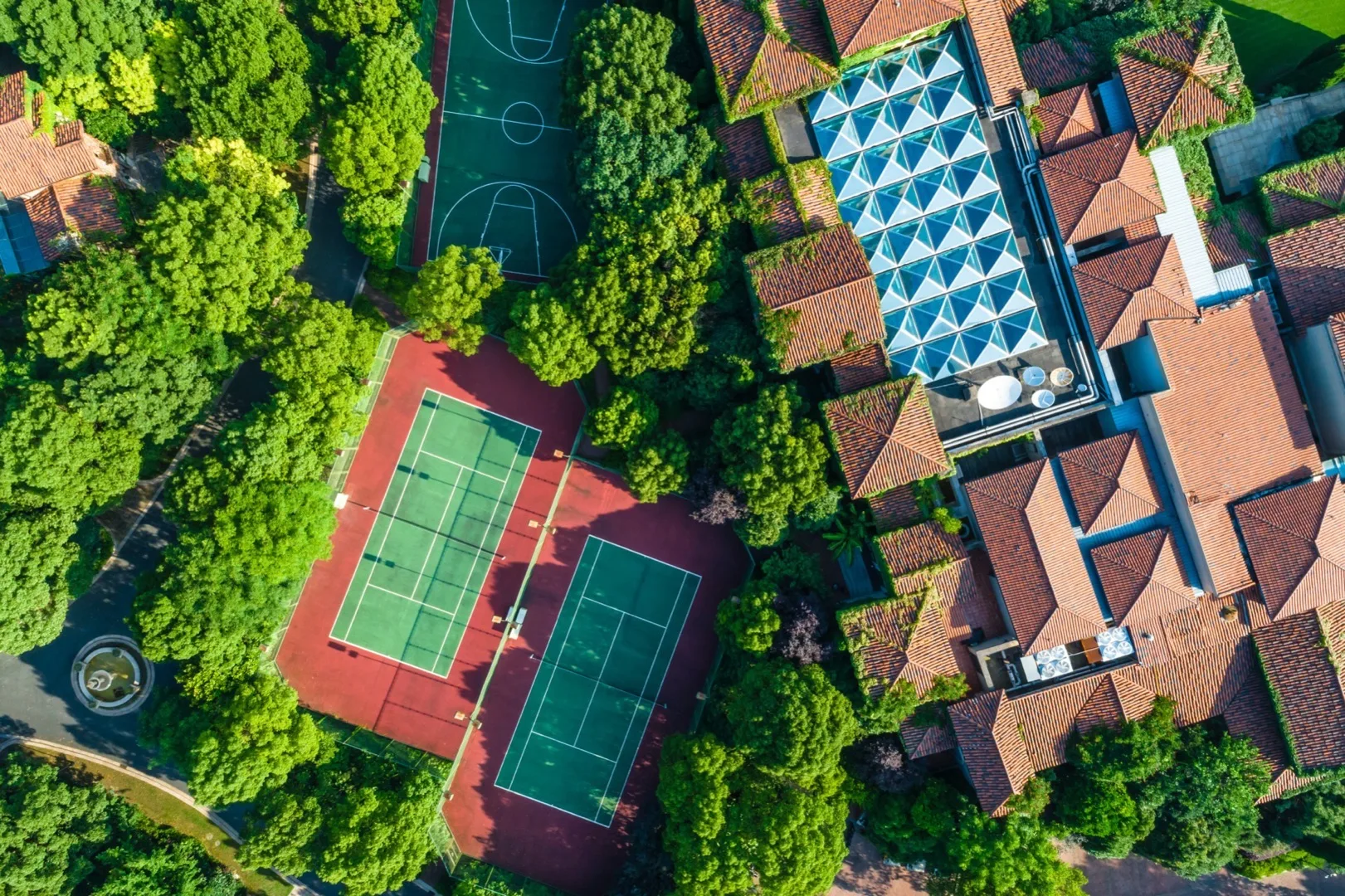
The central plaza is the social heart. The Diamond Sports Club hosts swimming, padel, tennis, gym, and group classes. There is a community bistro for casual dining, a small organic supermarket, a vet, and a few service-oriented retailers. The mosque sits at the northern end of the central spine; a non-denominational chapel and a Buddhist meditation hall are also present, reflecting the community's deliberate inclusivity.
The biodomes and equestrian centre give the community a rural feel that is unusual for Dubai. Residents can pick up community-grown vegetables on certain mornings, take horse-riding lessons, and use the dedicated buggy paths for evening rides. Weekends often involve cycling out to the Al Qudra lakes or the Last Exit roadside food trucks ten minutes south.
What you do not get is nightlife on your doorstep. There are no clubs, no licensed bars inside the community, and no large-format retail. For dining variety, weekend brunches, or after-work drinks, residents drive 20-25 minutes to Mall of the Emirates, Dubai Hills Mall, or Downtown. This is a feature, not a bug — for the families who choose this community, the absence of urban density is the point.
Pros and Cons: An Honest Balance Sheet
Pros
- Genuine community feel. The car-free interior creates real social interaction — neighbours know each other, children play freely, and tenant retention reflects this.
- Significantly lower utility bills. AED 12,000-25,000 saved annually versus comparable villas in conventional communities is real cash that compounds over a decade-long hold.
- School inside the community. Fairgreen International School means no school-run traffic for resident families — a quality-of-life factor that Dubai parents will recognise as enormous.
- Walkable and bike-friendly. Few Dubai communities deliver this; once you experience it, returning to car-dependent suburbia feels like a downgrade.
- Brand and ESG resilience. As Diamond Developers expand the model regionally, the original Sustainable City retains pioneer status — useful for resale narrative and increasingly relevant as ESG-aware buyers grow as a segment.
Cons
- Remote location. 20-25 minutes from Downtown is fine for residents; for tenants who work in DIFC or Business Bay, the daily commute is a real consideration. Less appealing for renters who prioritise central locations.
- Finishes are functional, not luxurious. Villas were built to perform, not to wow. If you are coming from Emirates Hills or a Palm signature villa, the finishes will feel modest. This is part of why prices are accessible — but it does cap the premium ceiling.
- Limited resale comparables. Because of low transaction volume and a single developer, valuations rely heavily on a small dataset. Working with experienced valuers and brokers familiar with the community is essential.
- Lower yield than alternatives. If pure cash-on-cash yield is your only metric, JVC apartments or Dubai South villas will outperform on paper. The Sustainable City wins on total-cost-of-ownership and lifestyle, not headline yield.
- Limited dining and retail inside. One bistro, one organic supermarket, and a few service shops. You will be driving for variety.
What's Coming Next: The Sustainable City Brand Beyond Dubai
Diamond Developers have moved beyond the original Dubai community in a series of expansions that strengthen the brand. The Sustainable City Yas Island in Abu Dhabi launched in 2022 as a 1,000+ unit follow-on, replicating the net-zero principles at larger scale. A Ras Al Khaimah project broke ground in 2023, an Oman master-plan was announced, and a Sharjah expansion is in the planning phase.
For owners of original Sustainable City villas in Dubai, the regional expansion creates two effects. First, brand recognition rises — buyers searching for "sustainable city" find a well-defined product across multiple emirates, anchoring the original community as the prototype. Second, supply pressure stays low — none of the new projects are in Dubai itself, so the original 500-villa stock remains the only Dubai-located product with this specific positioning.
Combined with broader trends — UAE's net-zero 2050 commitment, increasing institutional ESG-mandate buying, and rising tenant willingness to pay premium for low-carbon homes — the long-term outlook for the original community is structurally supported. For an investor view of the broader sustainability narrative in Dubai property, see our best areas in Dubai for capital appreciation 2026 analysis.
Buying In: Practical Considerations
Anyone considering a purchase in The Sustainable City should plan for the following:
- Inventory scarcity. Resale stock typically ranges between 15-30 active listings at any time across all villa types. Be ready to act when the right unit appears — well-priced 4BR units sell within 4-6 weeks.
- Verify solar and water systems. When inspecting a villa, ask for recent DEWA bills, solar generation reports, and any maintenance history on the household heat-recovery and ventilation systems. Most original equipment is now 8-11 years old; service condition matters.
- Service charge transparency. Check the latest Mollak-published service charges for the year. Sustainable City charges are competitive but include allocations for the community's environmental infrastructure.
- Mortgage availability. All major UAE banks lend on Sustainable City villas. Standard non-resident and resident LTV rules apply — see our UAE LTV rules guide for the current limits.
- Golden Visa eligibility. A 4BR or 5BR purchase comfortably crosses the AED 2M Golden Visa property threshold, qualifying the buyer for the 10-year residence visa.
Frequently Asked Questions
Is The Sustainable City freehold for foreign buyers?
Yes. The Sustainable City sits within Dubai's designated freehold zone, so foreign nationals can purchase any villa with full ownership rights. The Dubai Land Department issues a freehold title deed in the buyer's name on completion of transfer, identical to any other freehold area in Dubai.
How much can I really save on DEWA bills?
Residents typically report electricity bills 40-60% below comparable villas in Arabian Ranches, Mudon, or Dubai Hills, and water bills 50-65% lower thanks to greywater recycling. Total annual savings versus a similar 4BR villa in a conventional community are usually AED 12,000-25,000, depending on family size, AC habits, and pool usage.
Are rental yields lower than other Dubai areas?
Yes, gross yields here run 5-6%, lower than yield-focused areas like JVC (7-8%) or Dubai South (6.5-7.5%). The trade-off is longer tenant retention (3+ years versus ~2 years elsewhere), lower void costs, and meaningful utility savings that most yield calculations ignore. On a total-cost-of-ownership basis, the gap narrows considerably.
Is the school inside the community any good?
Fairgreen International School operates an IB curriculum and is rated by KHDA. Many families specifically choose The Sustainable City because their children can walk to school — a quality-of-life advantage that comparison surveys often understate. Fees are published on the KHDA portal and are mid-range for IB schools in Dubai.
Can I park my car inside the community?
No — that is the point. All resident parking is at the perimeter of each cluster. From there, residents walk, cycle, or use electric buggies inside. Visitor parking is also at the perimeter. Service vehicles and emergency access have permitted routes, but day-to-day car traffic inside the community is essentially zero.
Is The Sustainable City a good investment for non-residents?
It works well for non-resident buyers seeking lower volatility, predictable tenants, and a long-term hold thesis aligned with sustainability. It is less suited for short-term flippers chasing rapid capital uplift. For a deeper view on remote investing into Dubai property, see our complete non-resident buyer's guide.
How does it compare with Arabian Ranches or Dubai Hills?
Arabian Ranches and Dubai Hills offer larger plots, golf-course living, and more polished retail-and-dining within the community. The Sustainable City offers walkability, dramatically lower utility bills, integrated school, and a tighter community feel. Pricing per square foot is typically 10-20% below Dubai Hills and broadly comparable to Arabian Ranches 2.
What happens if I want to short-term rent (Airbnb) my villa?
Short-term rentals are subject to the community's HOA rules and Dubai's broader DET licensing regime. The community generally favours long-term tenancies that match its lifestyle ethos, and in practice most owners run annual leases. If you are exploring short-term rental as an investment, our DET licence and short-term rental guide sets out the legal framework.
Whether you are weighing a family relocation into a villa community, evaluating Sustainable City as a long-hold investment, or comparing it head-to-head against Arabian Ranches or Dubai Hills, our REC team can help you cut through the marketing and look at real numbers. Reach out through our community for a no-pressure conversation about whether this community fits your goals.
Have Questions?
Get personalized advice from our Dubai real estate team.
Thank You!
We'll get back to you within 24 hours.
Real Estate Agencies in Dubai
Explore providers from our business directory
Still have questions?
Ask a follow-up, or get connected with a vetted Dubai professional.
Join our Telegram channel
Handover alerts, new launches & DLD data — first, in real time.