Best Dubai Communities for EV Owners in 2026: Charging Infrastructure Compared

- Dubai's public network passed 1,860 DEWA EV Green Charger points by early 2026, up from under 740 at the end of 2024 — but public charging is not what decides your day-to-day experience as an owner.
- What actually matters is home charging: a private villa driveway with a dedicated meter, or an apartment tower with a "managed" basement charging system already installed.
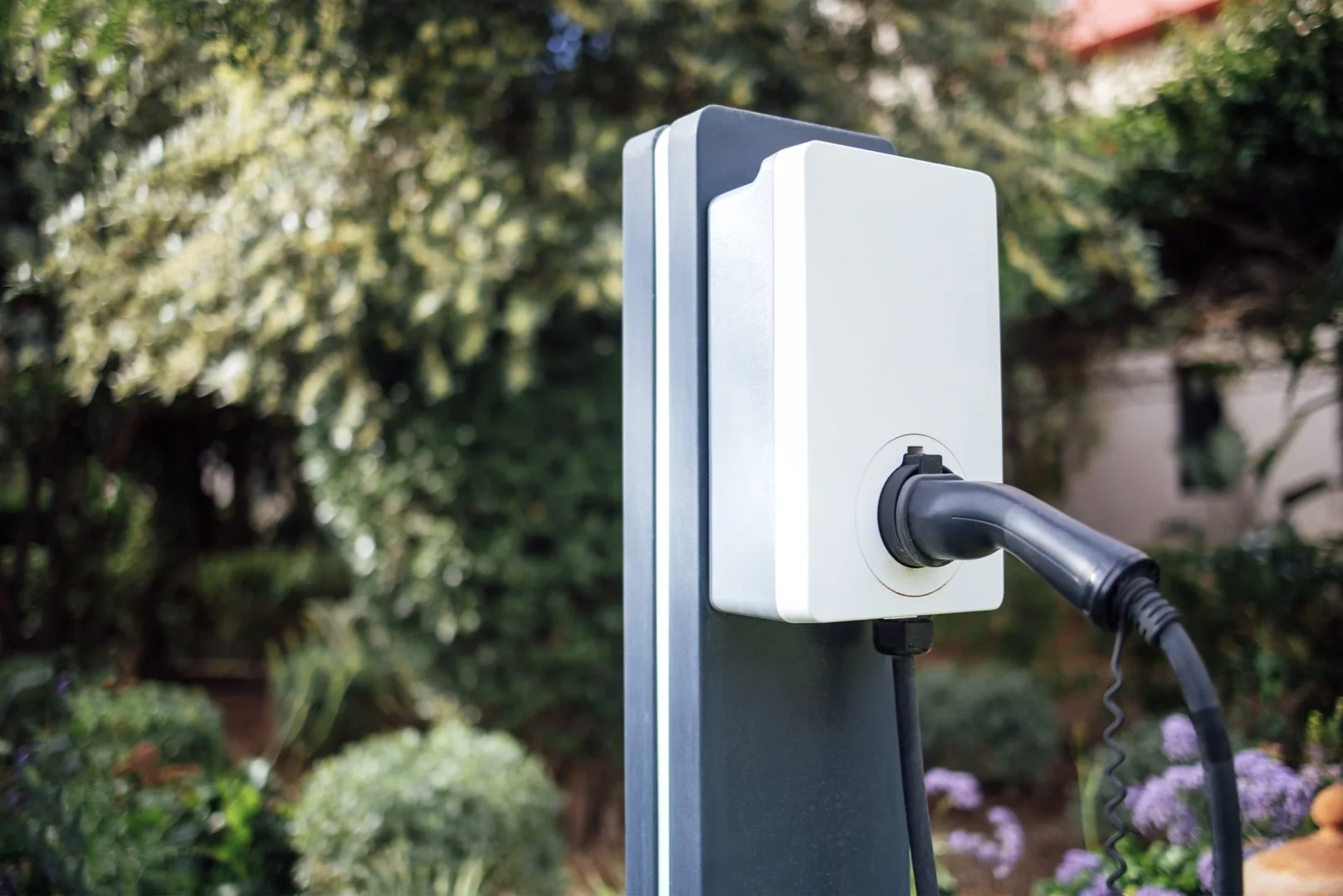
- Villas almost always win on charging convenience — most take a DEWA-approved 7kW wallbox with no shared infrastructure to negotiate. Standalone-villa communities such as Arabian Ranches, Tilal Al Ghaf, Dubai Hills Estate and the MBR City villa clusters are the easiest starting points.
- Apartment towers vary enormously. Newer buildings from Emaar and other major developers increasingly install managed AC charging bays; older stock — especially pre-2014 towers built before Dubai's Green Building Regulations — often has none, and retrofitting needs an owners' association or developer sign-off.
- A standard villa wallbox install typically runs AED 1,200–4,000 all-in depending on cable run and panel capacity, done by a DEWA-approved electrician, usually within a few hours.
- Registered EV owners get a free 5-year Salik tag from the RTA; a parallel free-parking exemption for EVs in green-marked bays was a time-limited 2020–2022 scheme, so confirm current validity with RTA before assuming it still applies citywide.
- Since September 2024, all public charging infrastructure in Dubai — including in residential communities — falls under a formal DEWA licensing regime, which is why charger availability is becoming a genuine differentiator between otherwise similar buildings.
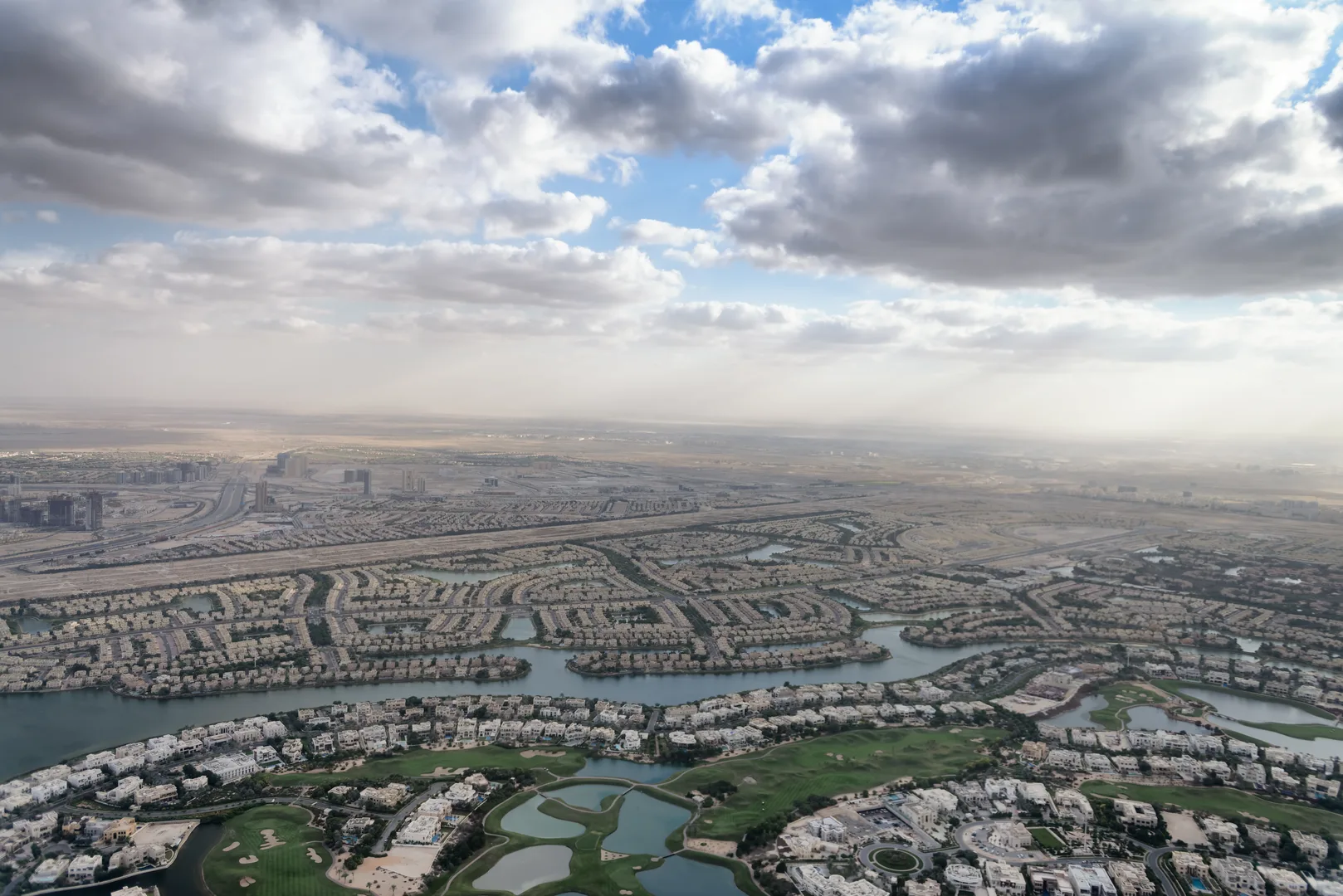
Ask most people what "EV-friendly" means in Dubai and they will point you to the public charging map. That is the wrong place to look if you are buying property. The public DEWA network matters for road trips and top-ups, but the thing that actually determines whether owning an electric car in Dubai is convenient or a daily headache is what happens at home — whether your villa driveway can take a 7kW wallbox without a fight, or whether your apartment building's basement parking has a managed charging bay with your name on it. This guide works through both sides: the citywide infrastructure numbers so you understand the direction of travel, and the community-by-community and building-type differences that should actually inform where you buy or rent if you drive — or plan to drive — an EV. Last updated: July 2026.
Why EV Charging Infrastructure Now Matters When You Buy in Dubai
Electric vehicle ownership in Dubai has moved from a niche choice to a mainstream one in a short window. The number of electric vehicles registered in the emirate reached 47,944 by the end of 2025, up from 37,486 a year earlier — growth of nearly 28% in twelve months, according to DEWA's own figures reported via Zawya in February 2026. That is roughly one in every twenty new car registrations, and the trajectory is accelerating rather than plateauing.
The practical consequence for property buyers is straightforward: charging capability is starting to function like a utility, not a novelty. In the same way that a building's cooling system (see our guide to setting up DEWA and district cooling) or fibre connectivity became a baseline expectation over the past decade, dedicated EV parking is becoming one of the questions serious buyers ask before they view a unit. Developers and owners' associations that got ahead of this — installing managed charging infrastructure proactively — are starting to have a measurable edge with a specific, growing buyer segment. Developers and buildings that did not are facing retrofit costs and resident friction precisely at the moment demand is rising fastest.
This is not a uniquely Dubai phenomenon, but Dubai's mix of villa communities and dense apartment towers makes the divide unusually stark. A villa owner in a low-density community can typically install a home charger with minimal fuss. An apartment owner in an older tower may find that even wanting to install one triggers a building-wide conversation about shared electrical capacity, parking allocation and who pays for what. Understanding which side of that divide a specific building or community sits on is the point of this guide.
Dubai's EV Charging Network in Numbers
Start with the public backbone, because it shapes expectations even if it is not where most charging actually happens. DEWA's EV Green Charger initiative — the emirate's flagship public charging programme — has grown from a standing start of 14 stations in 2015 to more than 1,860 charging points by early 2026, according to DEWA's own reporting cited by Zawya. Growth has been rapid in just the past eighteen months: DEWA's own press materials referenced over 740 points at the end of 2024, and roughly 1,270 points by mid-2025, before crossing 1,860 in early 2026. Registered users of the network stood at 23,600 as of mid-January 2026.
DEWA is not building this alone. Recent partnerships reported alongside the February 2026 network update include a deal with Dubai Taxi Company to deploy 208 ultra-fast charging points, an agreement with Parkin Company to install 100 chargers at key public parking locations with further phases planned, and an expanded fast-charging tie-up with ENOC at its fuel station network across the city. The direction is clear: charging infrastructure is being layered into existing mobility and retail infrastructure, not built as a separate system.
On tariffs, the free-charging promotional period DEWA ran when the Green Charger programme first launched ended some years ago. As of the current framework — set under Cabinet Decision No. 81 of 2024 and effective from 30 September 2024 — registered users pay AED 0.70 per kWh plus VAT for AC charging and AED 1.20 per kWh plus VAT for DC (fast) charging at public stations, with a separate "Guest Mode" package pricing structure available to non-registered drivers via QR code at the charger. Budget accordingly rather than assuming public charging is free — it no longer is.
None of this public-network detail should be the deciding factor in where you buy, though. Survey after survey of EV owners globally finds that the large majority of charging happens at home overnight, not at public stations. The public network is your backup and your road-trip infrastructure; your driveway or basement bay is where the ownership experience actually lives.
The Rules Behind the Chargers — What Changed in 2024–2025
Two regulatory shifts explain why charging infrastructure is now something buyers should actively check rather than assume.
First, Dubai Municipality's Green Building Regulations and Specifications (GBR&S) — mandatory for all new developments across the emirate since 2014 — require that a minimum of 5% of parking spaces in new buildings be dedicated to green or low-emission vehicles. This is why anything built from the mid-2010s onward is far more likely to have EV-ready parking bays than older stock, even before a charger is physically installed. If you are comparing an older tower against a newer one, this single regulatory date — roughly 2014 onward — is a useful proxy for whether EV infrastructure was even considered in the original design.
Second, and more recently, Dubai introduced a formal EV Charging Infrastructure Regulation on 30 September 2024, which brought all public and quasi-public EV charging under a DEWA licensing regime. Independent charge point operators — the companies that install and run chargers in residential communities, malls and commercial car parks — now need a DEWA licence to operate, with two licence types: one for operators offering free charging and one for operators who charge end users. The transitional compliance window closed on 31 March 2025, and DEWA has already issued its first Independent Charge Point Operator licences, including to Tesla and UAEV, according to Gulf Today's reporting on the regulation. In practical terms, this means the managed charging systems now appearing in newer towers and communities are operating under a defined legal framework rather than an informal arrangement — which should give buyers more confidence that a "charging-ready" building marketing claim reflects a real, compliant installation rather than a single unlicensed unit in the basement.
Villa vs Apartment: Two Very Different Charging Realities
The single most important distinction for an EV owner buying in Dubai is not which community you choose — it is whether you are buying a villa or an apartment. The two paths diverge almost completely.
In a villa, you own the driveway and, in most cases, control your own DEWA meter and electrical panel. Installing a wallbox is fundamentally a private transaction between you and a DEWA-approved electrician, similar to installing any other home appliance — no owners' association vote required, no shared infrastructure to negotiate. The constraint is usually just your panel's spare capacity and the cable run from the meter to where you park.
In an apartment, you are one of dozens or hundreds of owners sharing a basement or podium car park with a single building electrical infrastructure. Whether you can charge at home depends entirely on whether the building already has a managed charging system — and if it does not, retrofitting one requires developer or owners' association buy-in, because it typically means running new cabling through shared risers and allocating shared electrical capacity across multiple units.
| Factor | Villa / townhouse | Apartment / tower |
|---|---|---|
| Who decides on a charger | The owner, directly | Developer (new-build) or owners' association / management company (existing building) |
| Typical hardware | Private 7kW (occasionally 22kW) wallbox on the owner's own meter | Shared managed AC system, 7–22kW per bay, Type 2 connector, billed separately per unit |
| Installation timeline | Days to weeks — book a DEWA-approved electrician | If not already installed: months, and dependent on OA/developer approval and shared electrical capacity |
| Cost borne by | The individual owner, in full | Varies — sometimes the building/CPO installs and bills usage; sometimes the owner pays for their own bay retrofit |
| Biggest risk | Panel capacity insufficient for a fast charger (rare, usually fixable) | No managed system exists and OA has no near-term plan to install one |
| Where to verify before buying | Ask the seller/agent to confirm spare panel capacity | Ask the building management or OA directly whether a licensed CPO system is installed and how billing works |
The practical takeaway: if home charging convenience is a priority, a villa removes almost all of the uncertainty. An apartment can work just as well — plenty of newer towers now install managed charging as standard — but it is a question you need to actively ask rather than assume, in a way a villa buyer generally does not.
Living in Dubai?
Dubai Living Tips Weekly
Cost-of-living data, neighborhood guides, and practical expat tips — every week.
✓ You're in! Check your inbox.
Best Dubai Communities for EV Owners in 2026
No developer publishes a definitive, verified count of EV charging bays per community, and treat any specific number you see quoted online with scepticism unless it is sourced to the developer or DEWA directly — this is an area where marketing claims regularly outrun installed reality. What follows is a qualitative comparison based on housing stock type, build date and what is publicly documented about each community's parking and charging provision, so you know what to verify before you commit.
| Community | Housing type | EV charging notes |
|---|---|---|
| Dubai Hills Estate (Emaar) | Villas, townhouses and apartment clusters | Private driveways on villa plots make wallbox installs straightforward; Dubai Hills Mall already lists public EV charging among its facilities, so day-to-day top-ups are on-site. Newer apartment blocks are more likely to include managed parking than older ones — confirm per building. |
| Arabian Ranches (I & II) and Tilal Al Ghaf | Standalone villas and townhouses | Almost entirely private-driveway villa stock post-dating the 2014 Green Building Regulations, which makes wallbox installation the simplest case in this guide — an individual owner decision with no shared-building negotiation involved. |
| MBR City villa clusters (Sobha Hartland, District One, Meydan) | Villas and mansions with dedicated covered parking | Villas here typically come with multiple covered parking bays on private driveways, which is the ideal starting point for a wallbox install — check with the specific project's HOA on any communal restrictions before assuming an unrestricted install. |
| Dubai Marina, JBR, Business Bay | High-density apartment towers, mixed build dates | Highly variable by building. Pre-2014 towers often have no EV provision at all; newer developments increasingly install managed AC charging. This is the segment where you must ask the building management directly — never assume. |
| JVC, Dubai South, Town Square | Mixed apartments and townhouses, newer stock | Generally younger developments than the marina corridor, so more likely to fall under the post-2014 green parking requirement — but individual building compliance still needs to be verified rather than assumed from the community's overall age. |
| The Sustainable City and similar eco-focused communities | Villas and townhouses built around sustainability branding | Communities marketed explicitly on sustainability credentials are the most likely to have EV charging built into the original design rather than retrofitted — a natural shortlist starting point if this is a priority alongside broader green-living features. |
The pattern across this table is consistent: build date and housing type predict EV-readiness far more reliably than brand or price point. A 2024-completed apartment tower in an "unfashionable" area is more likely to have proper managed charging than a prestigious but decade-old building in a prime waterfront district. Always ask the specific question of the specific building rather than assuming a community's overall reputation for quality translates into EV infrastructure.
A family relocating from Europe with a Tesla already on order shortlists a four-bedroom townhouse in Arabian Ranches over a comparably priced apartment in an older Marina tower. The reasoning is entirely about the charger: the townhouse comes with a private covered driveway and an individual DEWA meter, meaning a wallbox install is a same-week job booked directly with a DEWA-approved electrician, with no owners' association process involved. The Marina apartment, by contrast, is in a building completed before 2014, has no managed charging system, and the management company can give no firm timeline for installing one. The family buys the townhouse and has the charger running within ten days of moving in.
Installing a Home Wallbox — Cost, DEWA Approval and the Process
For villa owners, installing a home charger in Dubai is a well-established, fairly quick process. DEWA regulates all electrical work in the emirate, so any wallbox installation needs to be carried out by a DEWA-approved or DEWA-certified electrician — this is a safety and compliance requirement, not just best practice. Most standard villa and townhouse installs, where the existing electrical panel has adequate spare capacity, do not require a separate DEWA No Objection Certificate and can be completed within a few hours once scheduled.
Cost depends mainly on two variables: the length of cable run from your meter/panel to where you park, and whether your panel needs any upgrade work to support the additional load. Installers active in the Dubai market quote villa installations starting from roughly AED 1,199–1,599 for a standard setup, with an additional charge — commonly cited around AED 150 per extra metre — for longer cable runs. Once you factor in the charger unit itself, most owners should budget a realistic all-in range of AED 2,000–4,000 for a straightforward 7kW villa wallbox install; larger properties opting for a 22kW unit, or installs requiring panel upgrades, will sit above that range. These are vendor-quoted market figures rather than a regulated price list, so always get at least two quotes from DEWA-approved installers before committing.
| Step | What happens | Typical cost / note |
|---|---|---|
| 1. Site assessment | DEWA-approved electrician checks panel capacity and cable run distance | Often free or bundled into the installation quote |
| 2. Charger selection | Choose a 7kW (standard) or 22kW (fast) unit, typically Type 2 connector | Unit cost varies by brand; included in most installer packages |
| 3. Installation | DEWA-certified electrician runs cabling and mounts the wallbox | From ~AED 1,199–1,599 base + ~AED 150 per extra metre of cable |
| 4. DEWA sign-off | Most standard villa installs with adequate panel capacity proceed without a separate NOC; edge cases (panel upgrades, shared infrastructure) may need one | Confirm with your installer whether your case needs formal DEWA approval |
| 5. Registration (optional) | Register as an EV owner with DEWA's Green Charger programme if you also want access to the public network at registered-user rates | Separate from the home installation itself |
For apartment owners, the process is a different conversation entirely — it runs through the building's management company or owners' association rather than a direct booking. If the building already has a licensed CPO-managed system installed, getting connected is usually just a matter of registering your unit and vehicle with the operator. If it does not, you are effectively asking the OA to sponsor a capital project, which involves shared electrical capacity, potential structural work in the parking podium, and a cost-sharing conversation among owners who may not all want or need EV charging. This is a materially slower and less certain path, and it is exactly why checking a building's existing charging status before you buy matters more than most other apartment-buying due diligence items people remember to do.
An investor viewing a two-bedroom unit in a newer Business Bay tower asks the listing agent a question most buyers skip: does the building have a licensed EV charging operator installed in the basement parking, and if so, what does registering a bay cost? The agent doesn't know and has to check with building management. It turns out the tower installed a managed AC system as part of its original 2023 fit-out, with a small number of dedicated bays available on a first-come basis and usage billed separately from the service charge. The buyer proceeds with confidence that home charging is available from day one — a five-minute question that would have been a multi-month unknown in an older building nearby that has no such system and no confirmed plan to add one.
RTA Perks for EV Drivers — Salik, Parking and What's Actually Still Active
Beyond charging infrastructure itself, the Roads and Transport Authority runs a set of incentives specifically for registered electric vehicle owners, and it is worth being precise about which of these remain active rather than repeating outdated claims that circulate widely online.
The clearest ongoing benefit is the free Salik tag: owners of 100% electric vehicles can obtain a Salik tag at no cost, valid for five years, from any of the 13 Salik customer service centres across the UAE by presenting the vehicle's registration card. This waives the one-off tag cost only — toll charges through Salik gates still apply to EVs at standard rates once the tag is active.
Free parking for EVs is more nuanced. RTA introduced green-marked, EV-reserved parking bays with a time-limited free-parking exemption for Dubai-licensed electric vehicles, originally framed as a two-year scheme starting July 2020. Multiple general-audience sites continue to describe this as an active, ongoing perk, but the original programme window has technically lapsed, and we could not verify a current, dated RTA confirmation that blanket free EV parking citywide remains in force in 2026 rather than being scaled back to specific zones or superseded. If free parking factors into your decision to buy an EV, confirm the current rules directly with RTA before relying on it — do not assume older press coverage still applies unchanged.
What is unambiguous is the direction of policy: Dubai continues to expand designated EV parking bays (marked with green paint and supplementary signage) in high-traffic public locations, and the broader "Green Mobility Strategy" that underpins these perks is an active, funded priority rather than a one-off promotion. Expect incentive details to keep evolving — treat any specific perk you read about as something to verify at the point of purchase rather than a fixed, permanent entitlement.
What To Check Before You Buy If You Drive an EV
A short, practical checklist for viewings, whether you are looking at a villa or an apartment:
- For a villa: confirm spare capacity on the existing electrical panel, and ask whether any prior owner or the developer already ran conduit for future EV charging — some newer villa communities pre-install the ducting even if no charger is fitted, which cuts your install cost.
- For an apartment: ask building management directly whether a licensed charge point operator system is installed, how many bays exist relative to the number of units, how bays are allocated (assigned vs first-come), and how usage is billed.
- For any property built before roughly 2014: assume no EV provision exists in the original design under Dubai's Green Building Regulations, and budget mentally for a longer, less certain retrofit path if buying an apartment specifically.
- For any property built after 2014: the building should, in principle, have set aside at least 5% of parking for green/low-emission vehicles — but a parking bay reserved on paper is not the same as a bay with a working charger, so verify the physical installation, not just the zoning.
- Community-wide: check proximity to a public DEWA Green Charger point or ENOC fast-charging station as a fallback, even if you plan to charge at home — useful for guests, second vehicles, or days when your home charger is unavailable.
- Financially: get at least two quotes from DEWA-approved installers before assuming a specific villa wallbox price, and for apartments, ask whether ongoing charging costs are billed by the CPO directly or folded into service charges.
None of this needs to be a dealbreaker either way — plenty of good properties in both categories will work fine for an EV owner. The point is simply that it is now a due-diligence item worth its own question at every viewing, the same way you would ask about service charges or cooling costs, both covered in our broader Dubai utilities setup guide. If you are relocating from a market where EV charging infrastructure is already mature and assumed, treat Dubai as a market that is moving fast in the right direction but not yet uniform — our broader moving to Dubai guide and the full Dubai area guides directory are good starting points for narrowing down a shortlist before you factor in this specific question.
Frequently Asked Questions
How many EV charging points does Dubai have in 2026?
DEWA's public EV Green Charger network passed 1,860 charging points by early 2026, up from over 740 at the end of 2024, according to DEWA's own reporting cited by Zawya in February 2026. This is the public network only — it does not include private home chargers or managed systems installed inside individual residential buildings, which is where most day-to-day charging actually happens.
Is public EV charging free in Dubai?
No, not anymore. DEWA's original free-charging promotional period for registered Green Charger users ended some years ago. Under the current framework, effective from 30 September 2024 under Cabinet Decision No. 81 of 2024, registered users pay AED 0.70 per kWh plus VAT for AC charging and AED 1.20 per kWh plus VAT for DC fast charging at public stations.
Is it easier to charge an EV in a villa or an apartment in Dubai?
Villas are almost always easier. As the individual owner, you control your own DEWA meter and electrical panel, so a wallbox installation is a private, fairly quick job with a DEWA-approved electrician. Apartments depend entirely on whether the building already has a managed charging system installed — if it does not, adding one requires developer or owners' association approval and shared electrical capacity, which can take months rather than days.
How much does it cost to install a home EV charger in Dubai?
For villas, installers active in the Dubai market quote standard installations from roughly AED 1,199–1,599, plus around AED 150 per additional metre of cable run for longer distances. Including the charger unit, most owners should budget a realistic AED 2,000–4,000 all-in for a straightforward 7kW install; get at least two quotes from DEWA-approved electricians, since these are market rates rather than a fixed regulated price.
Do I need DEWA approval to install a home EV charger?
All electrical installation work in Dubai must be carried out by a DEWA-approved or DEWA-certified electrician — this is a compliance requirement. Most standard villa and townhouse installations, where the existing panel has adequate spare capacity, proceed without a separate formal DEWA No Objection Certificate, but confirm this with your installer, since panel upgrades or shared-infrastructure cases may require one.
Which Dubai communities are best set up for EV owners?
Standalone villa communities with private driveways and individual DEWA meters — such as Arabian Ranches, Tilal Al Ghaf, Dubai Hills Estate's villa clusters and the MBR City villa developments — offer the simplest charging setup, since installation is a private owner decision with no shared-building process. For apartments, build date matters more than brand: developments completed after Dubai's 2014 Green Building Regulations are more likely to have EV-ready parking bays, and newer towers increasingly install managed charging systems as standard, though this must be verified building by building rather than assumed.
Do electric vehicle owners get free parking or toll perks in Dubai?
Registered owners of 100% electric vehicles can obtain a free Salik tag, valid for five years, from any of the 13 Salik service centres — though standard toll charges still apply once the tag is active. A separate free-parking exemption for EVs in green-marked bays was introduced as a time-limited scheme from mid-2020; because that original window has technically lapsed and current, dated RTA confirmation of unchanged citywide rules was not available at the time of writing, confirm current parking rules directly with RTA rather than relying on older coverage.
What happens if my apartment building doesn't have EV charging?
You would need to raise it with building management or the owners' association, since adding a managed charging system involves shared electrical capacity and typically some capital cost shared among owners — a process that can take months rather than days. In the meantime, DEWA's public Green Charger network and DEWA-licensed operators like Tesla and UAEV at other locations remain a fallback, though relying entirely on public charging is far less convenient than home charging.
Are new Dubai developments required to include EV charging?
Since 2014, Dubai Municipality's Green Building Regulations and Specifications have required new developments to dedicate a minimum of 5% of parking spaces to green or low-emission vehicles. Separately, since September 2024, any company operating public or shared EV charging infrastructure in Dubai — including within residential communities — needs a DEWA licence under the EV Charging Infrastructure Regulation. Together these mean newer buildings are far more likely to have both the physical space and a properly licensed charging system than older stock, though a reserved parking bay is not automatically the same as an installed, working charger.
Charging infrastructure is one of dozens of practical questions worth working through before you commit to a Dubai community — alongside schools, commute times and, increasingly, sustainability credentials, which we cover in our ranking of Dubai's greenest, most sustainable communities. Inside the REC community, members who have already gone through a villa or apartment EV install share real DEWA-approved installer contacts, actual quotes and building-specific charging experiences — the kind of on-the-ground detail that saves you from finding out the hard way after you've signed.
Settling into Dubai?
Ask us anything about living here — or get matched with trusted local services.
Thank You!
We'll get back to you within 24 hours.
Home Maintenance & Cleaning in Dubai
Explore providers from our business directory
Still have questions?
Ask a follow-up, or get connected with a vetted Dubai professional.
Join our Telegram channel
Handover alerts, new launches & DLD data — first, in real time.