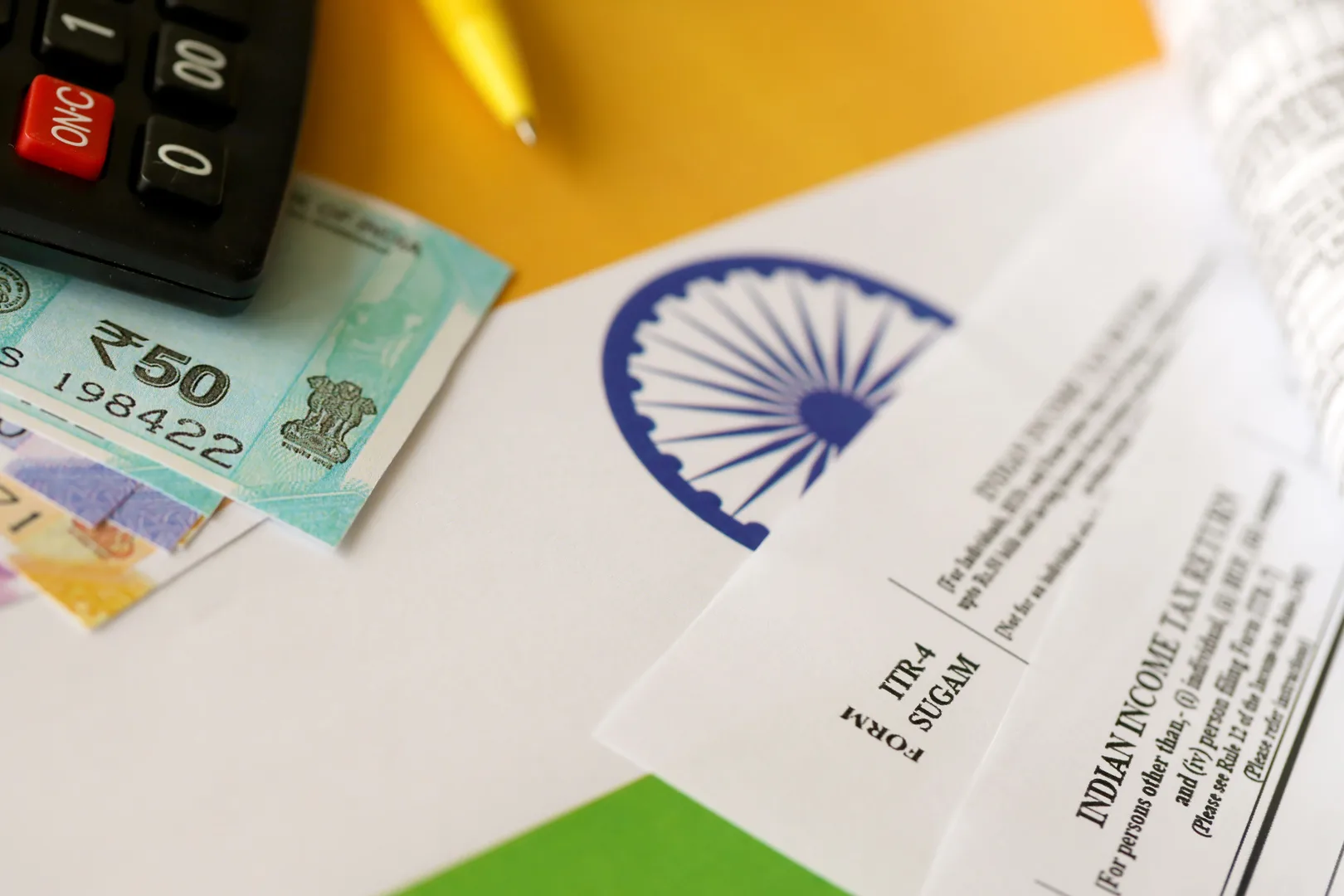
How to Sell Your Indian Property from Dubai 2026: NRI TDS, RBI & Repatriation

- Because you are an NRI, the buyer must deduct TDS on the whole sale price under Section 195 — not just on your profit. For a long-term property (held over 24 months) the base rate is 12.5% plus surcharge and 4% cess, so the effective deduction usually lands around 14.95% and rises higher on large deals.
- That default TDS is almost always far more than your real tax. The fix is a Lower / Nil TDS Certificate (Section 197), where the Assessing Officer authorises the buyer to deduct only on your actual capital gain — often cutting cash blocked from lakhs to a fraction.
- Your gain is taxed in India, not the UAE. Under the India–UAE tax treaty, gains on Indian immovable property are taxable in India; the UAE levies no personal capital gains tax, so there is no second tax bill in Dubai.
- Sale proceeds land in your NRO account first. From there, RBI lets you repatriate up to USD 1 million per financial year out of NRO balances — that ceiling covers property proceeds plus all other NRO outflows combined.
- To remit, you file Form 15CA yourself and obtain Form 15CB from a Chartered Accountant certifying the tax position. The bank will not release funds without them.
- Reinvestment exemptions (Section 54 into another Indian home, Section 54EC into specified bonds) can legally reduce the gain — but they tie the money to India, which may defeat the point if you want it in Dubai.
- Once converted, proceeds arrive in your UAE account in AED at the prevailing rate; there is no UAE tax or reporting on receiving your own repatriated capital.
- Realistic timeline: 6–12 weeks if you plan the lower-TDS certificate and CA paperwork in advance; much longer (and more cash blocked) if you do not.
You moved to Dubai years ago, and a flat or plot back in India has been sitting there — rented, empty, or held "just in case." Now you want to sell it and bring the money to where you actually live. On paper it sounds simple: find a buyer, sign, get paid. In practice, the moment you are classified as a Non-Resident Indian (NRI), Indian tax and RBI rules change the mechanics completely. The buyer can no longer just hand you the full amount, your bank cannot just wire it abroad, and a few missing forms can freeze your money in India for months.
This guide is written specifically for the NRI living in the UAE who is selling property located in India and wants the proceeds repatriated to Dubai in AED — with no assumption that you are buying anything in Dubai with it. We cover the TDS the buyer must deduct, the certificate that slashes it, how the capital gain is actually computed, the RBI/FEMA repatriation cap, the Form 15CA/15CB filings, NRO versus NRE accounts, the India–UAE treaty, the documents, and a realistic timeline. Every tax and regulatory figure below is sourced; market-variable items are flagged as such.
Last updated: June 2026. Tax rates and FEMA limits change — confirm the current position with a qualified Indian Chartered Accountant before you transact.
Why selling as an NRI is fundamentally different from a resident sale
The single difference that drives everything else is this: when a resident sells property, the buyer deducts TDS only if the sale price is above a threshold, and only at a low flat rate on the sale value. When an NRI sells, the buyer deducts TDS under Section 195 on the entire consideration, at capital-gains tax rates plus surcharge and cess — regardless of how small your actual profit is.
So if you bought a flat for ₹80 lakh and sell it for ₹1.2 crore, a resident seller would face TDS of around ₹1.2 lakh (1% of the value). As an NRI you face TDS computed at long-term capital gains rates on the full ₹1.2 crore, which can run to ₹17–19 lakh before you ever reconcile your real liability — money that sits with the tax department until you file a return and claim a refund, sometimes a year later.
That is the core problem this article solves. The rest is detail: how the rate is built up, how to legally reduce it upfront, and how to get the net proceeds out of India and into your Dubai account.
Three other consequences flow from NRI status:
- The buyer takes on a compliance burden. They must obtain a tax deduction account number (TAN) for now, deposit the TDS, and file Form 27Q (the NRI version of the TDS return). Many resident buyers do not know this, and getting it wrong is their liability — which is why your buyer may be nervous.
- Proceeds are credited to an NRO account, not a normal savings account, and moving them abroad is governed by FEMA, not just by your bank.
- You must prove your tax is settled before the bank repatriates anything, via the Form 15CA/15CB pair.
If you are still earlier in your journey and want the wider picture of NRI banking and money movement, our moving to Dubai from India guide covers NRE/NRO conversion and remittance basics.
The TDS rate, built up piece by piece
For property held more than 24 months it is a long-term capital asset, and TDS is deducted at the long-term rate; held 24 months or less it is short-term and taxed at your slab rates. The holding period for land and buildings was reduced to 24 months for transfers from 23 July 2024 (previously 36 months), per the 2024 changes summarised by Tax2win.
The headline long-term rate itself changed in 2024. For properties acquired on or after 23 July 2024, long-term capital gains are taxed at 12.5% without indexation. Properties bought before that date generally retain the option of 20% with indexation (adjusting the purchase cost for inflation), and you take whichever is lower — a meaningful choice for older properties where decades of indexation can shrink the taxable gain. This dual regime is explained by ClearTax.
On top of the base rate, two add-ons apply to NRI TDS:
- Surcharge — a percentage of the tax, stepped up by the size of the income: typically 10%, 15% or 25% as the gain rises into higher bands.
- Health & education cess — a flat 4% on top of tax plus surcharge.
Stacking these together gives the effective rate the buyer actually deducts. The table below shows the build-up for a long-term sale under the 12.5% regime, using the surcharge tiers described by Policybazaar.
| Component | Lower band | Higher band (15% surcharge) |
|---|---|---|
| Base LTCG rate (post-July 2024, no indexation) | 12.5% | 12.5% |
| + Surcharge on the tax | 10% | 15% |
| + Health & education cess | 4% | 4% |
| Effective TDS rate (approx.) | ~14.30% | ~14.95% |
For short-term sales (held 24 months or less), the position is much harsher: the gain is taxed at your applicable slab rate, and NRI short-term TDS is commonly deducted at the top rate plus surcharge and cess. Either way, remember the deduction is applied to the full sale price unless you obtain the certificate described next — which is precisely why nearly every informed NRI seller applies for one.
The Lower / Nil TDS Certificate — the single most important step
This is the move that separates a smooth sale from a painful one. Left alone, the buyer deducts TDS on your gross sale price. But your actual tax is only on the gain, not the whole price — and with reinvestment or indexation it may be far lower still. The gap is your money, blocked with the tax department for up to a year.
The remedy is to apply, before the sale completes, for a certificate under Section 197 directing the buyer to deduct at a lower (or nil) rate. The application is made on Form 13 via the TRACES / income-tax portal, and the Assessing Officer issues a certificate stating the exact reduced rate based on your computed gain. As NoBroker's NRI guide notes, the certified rate can fall to a small single-digit percentage — or nil — when the real liability is low.
What this changes in cash terms is dramatic. Consider the ₹1.2 crore sale from earlier:
| Scenario | TDS basis | Approx. cash deducted upfront |
|---|---|---|
| No certificate (default Section 195) | ~14.95% of full ₹1.2 cr price | ~₹17.9 lakh |
| With Section 197 certificate | ~14.95% of the actual ₹40 lakh gain | ~₹6.0 lakh |
| With certificate + Section 54 reinvestment | Gain exempted; near-nil rate certified | Close to ₹0 |
The figures are illustrative arithmetic on the stated assumptions, not quotes from a source — but the structure is exactly how the certificate works. The difference (around ₹12 lakh of cash freed in this example) is why you should start the Form 13 application the moment you decide to sell, ideally before signing the agreement to sell. Processing takes time and the certificate is property- and buyer-specific.
One administrative note worth flagging: the system is mid-transition. Today the buyer needs a TAN and files Form 27Q; reforms are moving toward letting buyers deposit NRI-sale TDS through a simpler PAN-based challan, with the older TAN route operating in parallel during the changeover, as discussed by Assetly. Confirm the exact current process with your CA, because what the buyer must do affects how quickly you get paid.
How your capital gain is actually computed
The TDS is a withholding; your real tax is settled when you file your Indian return. Computing the gain correctly is what makes the lower-TDS certificate (and any refund) work in your favour.
Long-term gain, post-July 2024 regime: Sale price minus the cost of acquisition minus eligible transfer expenses (brokerage, legal) = the gain, taxed at 12.5% without indexation. Simple, but you lose inflation relief.
Long-term gain, pre-July 2024 property: You may instead index the original cost using the Cost Inflation Index, then tax the smaller indexed gain at 20%. For a property bought in, say, 2008, indexation can lift the deductible cost substantially, often making the 20%-with-indexation route cheaper than 12.5%-flat. Run both; pick the lower.
Two reinvestment exemptions can reduce or eliminate the long-term gain, summarised in the table below and confirmed by ClearTax:
| Exemption | Reinvest into | Window |
|---|---|---|
| Section 54 | Another residential property in India | Buy 1 year before / 2 years after, or build within 3 years |
| Section 54EC | Specified capital-gains bonds (e.g. NHAI/REC) | Within 6 months of sale; lock-in applies |
The catch for a Dubai-based seller: both exemptions keep the money in India — in another Indian flat or in Indian bonds for a lock-in period. If your goal is to consolidate your wealth in the UAE, claiming Section 54 to dodge tax on a property you are deliberately exiting can be self-defeating. Many NRIs in this position simply pay the (modest) long-term tax and repatriate freely. Model it both ways with your CA before deciding.
A useful sense-check on the size of the gain versus what you would net in Dubai is to compare it against local yields — our invest in Dubai real estate guide sets out 2026 rental returns, the highest-ROI areas ranking shows where those returns are strongest, and the relocation cost estimator helps frame what the repatriated capital actually buys you here.
Anjali bought a 2-BHK in Pune for ₹62 lakh in 2017 and sells it in 2026 for ₹1.05 crore (~AED 460,000 at the prevailing rate). Held nine years, it is long-term. Her CA computes the gain after indexation under the pre-2024 route at roughly ₹28 lakh and confirms 20%-with-indexation beats 12.5%-flat for her. Tax with surcharge and cess works out near ₹5.9 lakh.
Without a certificate, the buyer would have withheld ~₹15.7 lakh (≈14.95% of ₹1.05 cr). With a Section 197 certificate based on her ₹28 lakh gain, only ~₹4.2 lakh is deducted at source. She pays the small balance on filing, then repatriates the net — comfortably within one financial year's USD 1 million ceiling — landing roughly AED 435,000 in her Emirates NBD account after tax and conversion.
RBI and FEMA: how much you can actually send to Dubai, and when
Even after the buyer pays you and the tax is settled, the money does not automatically flow abroad. Foreign exchange movement out of India is governed by FEMA and administered by the Reserve Bank of India, and the proceeds must route through the correct account.
Sale proceeds of property you owned as a resident, or any property whose purchase RBI rules tie to non-repatriable funds, are credited to your NRO (Non-Resident Ordinary) account. From the NRO balance, RBI permits repatriation of up to USD 1 million per financial year (1 April to 31 March), as set out in RBI's FEMA framework and summarised by Policybazaar and India For NRI.
Three features of this limit matter for a Dubai seller:
- It is per person, per financial year — not per property or per transaction. The USD 1 million pools all your NRO outflows that year: property proceeds, rent, dividends, interest, inheritance. A husband and wife who co-own can each use their own USD 1 million ceiling, effectively doubling capacity on a jointly held property.
- It is automatic within the cap. No prior RBI approval is needed up to USD 1 million; the bank processes it on the strength of your documents. Only amounts above the ceiling in a single year need special RBI permission.
- If your net proceeds exceed USD 1 million, you split the repatriation across financial years — send up to the cap before 31 March, the balance after 1 April. The leftover sits safely in your NRO account meanwhile.
| Account | What goes in | Repatriable? |
|---|---|---|
| NRE (Non-Resident External) | Foreign earnings remitted into India | Freely repatriable, no USD 1m cap |
| NRO (Non-Resident Ordinary) | India-source income: rent, property sale, dividends | Repatriable up to USD 1m / financial year |
This is why the NRE-versus-NRO distinction trips people up. Many assume "I'll just move it to my NRE account and send it freely." You can transfer NRO to NRE, but that transfer itself counts against the same USD 1 million ceiling and needs the same Form 15CA/15CB tax certification, as explained by xFlow's NRO-to-NRE guide. There is no shortcut around the cap by hopping accounts.
Investing in Dubai?
Get Weekly Investment Insights
ROI analysis, rental yields, off-plan opportunities, and data-driven market updates.
✓ You're in! Check your inbox.
Form 15CA and Form 15CB — the paperwork that releases your money
This is the gate between "money in my Indian NRO account" and "money in my Dubai account." No bank will execute the outward remittance without it.
Form 15CB is a certificate issued by a practising Indian Chartered Accountant. It certifies the nature of the remittance, that the applicable tax has been correctly determined and paid, and the rate/amount of any TDS — including treaty positions. It is the bank's and the tax department's assurance that you are not exporting untaxed income.
Form 15CA is a self-declaration you file electronically on the income-tax portal, confirming the remittance complies with the Income-tax Act and FEMA. It draws on the 15CB. For most property-proceed remittances of this size, both forms are required, as goinri and your bank will confirm.
The practical sequence:
- Tax on the gain is paid (via the TDS already deducted, plus any balance on filing or advance tax).
- Your CA reviews the computation and issues Form 15CB.
- You file Form 15CA online referencing the 15CB.
- You submit both, plus the sale deed, TDS proof and the bank's remittance form (commonly called an A2 form), to your bank.
- The bank converts INR to your target currency and remits to your UAE account.
Budget for the CA's fee for the 15CB and, if used, the Section 197 certificate work — this is professional advice you genuinely need, not an optional extra. A good cross-border CA who handles UAE NRIs routinely will also confirm whether the India–UAE treaty improves your position, covered next.
The India–UAE treaty: you are taxed once, in India
A frequent worry is double taxation — paying in India and in the UAE. For property gains, that worry is misplaced, for two independent reasons.
First, the UAE imposes no personal capital gains tax. An individual selling an asset and receiving the proceeds in Dubai faces no UAE tax on that gain and no UAE filing for receiving their own capital. So even without a treaty, there is no second tax layer here.
Second, the India–UAE Double Taxation Avoidance Agreement allocates taxing rights. Under its Article 13 (capital gains), gains from the sale of immovable property may be taxed in the country where the property is situated. Since your property is in India, India taxes the gain — and the UAE, as your country of residence, does not tax it again. This allocation is summarised by Tax2win's India–UAE DTAA guide.
Where the treaty actively helps NRIs is on other India-source income (notably interest and certain capital gains on financial assets), where treaty rates can beat the domestic NRI rate. To claim any treaty benefit you must hold two documents:
- A Tax Residency Certificate (TRC) from the UAE Federal Tax Authority, proving you are a UAE tax resident; and
- Form 10F, filed electronically with the Indian income-tax department.
For a straightforward immovable-property sale the treaty does not lower the Indian rate (India keeps the taxing right regardless), but having your TRC and Form 10F in order makes the 15CB certification cleaner and is essential if any part of your India income mix qualifies for treaty relief. If you are weighing whether to keep capital in India or move it to Dubai property, our foreign-buyer eligibility guide and non-resident mortgage guide show what the same money does on this side.
Documents you will need — assemble these early
Delays almost always trace back to a missing document, often one that takes weeks to procure from India while you are in Dubai. Gather these before you list, not after you have a buyer waiting:
| Category | Documents |
|---|---|
| Identity & status | Passport, UAE residence visa, PAN card, overseas address proof |
| Property & title | Original sale/title deed, prior chain of title, encumbrance certificate, latest property tax receipts, society/builder NOC |
| Acquisition cost proof | Original purchase deed/agreement, payment proofs, proof of improvement costs (for indexation) |
| Tax & banking | NRO account, Form 13 / Section 197 certificate, TDS challan + Form 16A from buyer, Form 15CA/15CB, TRC + Form 10F (for treaty) |
| If selling remotely | Power of Attorney (properly attested/apostilled in the UAE and adjudicated in India) |
If you cannot travel to India to sign, a Power of Attorney to a trusted relative or lawyer is the standard route, but it must be executed correctly: signed before the relevant authority, attested at the UAE end, and then stamped/adjudicated in India. A defective PoA is one of the most common causes of a collapsed remote sale, so have a lawyer draft it specifically for property transfer, not a generic template.
Rohit, based in Business Bay, sold an inherited Bengaluru villa for ₹2.4 crore (~AED 1.05m) in a hurry, without applying for a Section 197 certificate. The buyer, playing safe, deducted TDS at ~14.95% on the full price — about ₹35.9 lakh withheld, far above Rohit's true tax of roughly ₹9 lakh on the gain.
The ~₹27 lakh excess became a refund he could only claim by filing his Indian return the following year, with the cash idle in the meantime. Because his net proceeds exceeded USD 1 million, he also split repatriation across two financial years. Total drag from skipping the certificate: roughly AED 117,000 of his capital frozen for a year, plus extra CA time. The certificate would have cost a fraction of that.
Step-by-step: the full sell-and-repatriate sequence
Putting it all together, here is the order that minimises both tax leakage and time:
- Confirm your residential status and account setup. Ensure you have an operative NRO account and your PAN is active and linked.
- Compute the likely gain with a CA. Decide pre/post-July-2024 regime and whether any exemption makes sense given your goal of moving money to Dubai.
- Apply for the Section 197 lower-TDS certificate (Form 13) early — ideally before signing the sale agreement. This is the highest-leverage step.
- Agree the sale and document the buyer's TDS duties. The buyer obtains a TAN (or uses the PAN-based route as it rolls out), deducts at the certified rate, deposits TDS, and gives you Form 16A; they file Form 27Q.
- Complete registration and receive net proceeds into your NRO account.
- Settle the final tax via your Indian return; reconcile against TDS already deducted.
- Obtain Form 15CB from your CA and file Form 15CA.
- Instruct the bank to repatriate, within the USD 1 million annual ceiling, with the A2 form and supporting documents.
- Receive AED in your UAE account. No UAE tax, no UAE filing on your own repatriated capital.
Done in this order, with the certificate and CA paperwork lined up in advance, the whole cycle commonly runs 6–12 weeks from agreed sale to funds landing in Dubai. Skip the certificate and you still get your money — but more of it sits blocked, and the refund cycle can stretch past a year.
Common mistakes Dubai NRIs make (and how to avoid them)
Most painful outcomes come from a short list of avoidable errors:
- Letting the buyer deduct default TDS. Always pursue the Section 197 certificate first. The cash difference dwarfs the CA fee.
- Assuming a resident's 1% TDS applies. It does not — NRI TDS is on the full price at capital-gains rates. A buyer who deducts only 1% leaves themselves exposed, which can derail your deal late.
- Crediting proceeds to the wrong account. Property proceeds belong in NRO; a misrouted credit complicates both compliance and later repatriation.
- Forgetting the USD 1 million cap is shared. Rent, dividends and other NRO outflows eat into the same ceiling — plan the timing if you are near the limit.
- Treating Section 54 as a free win. It saves tax only by locking money back into India — the opposite of your goal if you want capital in Dubai.
- Leaving the PoA to the last minute. Cross-border attestation and adjudication take weeks; a flawed PoA collapses remote sales.
For the broader context of consolidating Indian wealth into the UAE — including what the repatriated capital can buy and the yields available — our Dubai investment pillar is the natural next read, the Golden Visa through property guide shows how an AED 2m deployment can secure 10-year residency, and the relocation cost estimator helps you plan the monthly side of life here.
Frequently Asked Questions
How much TDS will the buyer deduct when I sell my Indian property as an NRI?
For property held more than 24 months (long-term), TDS is deducted at the long-term capital gains rate — 12.5% under the post-July-2024 regime — plus surcharge (10%/15%/25% by income band) and 4% cess, giving an effective rate around 14.30%–14.95% for most sales and higher on very large gains. Crucially, this is applied to the full sale price, not just your profit, unless you obtain a Lower/Nil TDS Certificate under Section 197.
How do I reduce the TDS on my NRI property sale?
Apply for a Lower or Nil TDS Certificate under Section 197 using Form 13 on the income-tax/TRACES portal, ideally before you sign the sale agreement. The Assessing Officer certifies a rate based on your actual capital gain rather than the gross price, which can cut the upfront deduction from lakhs to a fraction. Without it, you recover the excess only as a refund after filing your Indian return, often a year later.
Do I have to pay capital gains tax in both India and the UAE?
No. The UAE has no personal capital gains tax, so there is no second tax bill in Dubai. Under the India–UAE tax treaty, gains on Indian immovable property are taxable in India (the country where the property is located), and the UAE does not tax them again. You are effectively taxed once, in India.
How much money can I send from India to Dubai after selling property?
RBI permits repatriation of up to USD 1 million per financial year (1 April–31 March) from your NRO account. This ceiling is per person and pools all your NRO outflows for the year — property proceeds, rent, dividends, interest. Joint owners each have their own USD 1 million limit. If net proceeds exceed the cap, you split the remittance across financial years; the balance stays safely in your NRO account meanwhile.
What are Form 15CA and Form 15CB and why do I need them?
They are the paperwork that releases your money for repatriation. Form 15CB is a certificate from an Indian Chartered Accountant confirming the tax position on the remittance; Form 15CA is your online self-declaration that the transfer complies with the Income-tax Act and FEMA. Your bank will not execute the outward transfer to Dubai without both, so factor in CA time when planning your timeline.
Should the proceeds go into my NRE or NRO account?
Proceeds from selling property you held in India are credited to your NRO account. NRE accounts are for foreign earnings remitted into India and are freely repatriable; NRO holds India-source income and is repatriable only up to USD 1 million per year. You can transfer NRO to NRE, but that transfer counts against the same USD 1 million cap and needs the same Form 15CA/15CB — there is no shortcut around the limit by moving between accounts.
Can I sell my Indian property without travelling from Dubai?
Yes, by giving a Power of Attorney to a trusted relative or lawyer in India. The PoA must be executed correctly — signed before the relevant authority in the UAE, attested/apostilled there, and stamped or adjudicated in India for property transfer. Because cross-border attestation takes weeks and a defective PoA frequently collapses remote sales, have a lawyer draft it specifically for the property transfer well in advance.
Is claiming a Section 54 exemption a good idea if I live in Dubai?
Only if you genuinely want to keep the money in India. Section 54 exempts the long-term gain by reinvesting in another Indian residential property (and Section 54EC into specified Indian bonds with a lock-in). Both keep your capital tied to India, which defeats the purpose if your goal is to consolidate wealth in the UAE. Many Dubai-based sellers simply pay the modest long-term tax and repatriate freely instead.
What is the realistic timeline to sell and get the money to Dubai?
With the Section 197 certificate and CA paperwork lined up in advance, the full cycle from agreed sale to funds arriving in your UAE account commonly runs 6–12 weeks. Skip the lower-TDS certificate and you still complete the sale, but more cash is withheld and the refund cycle can stretch beyond a year. Front-loading the certificate application and document gathering is what compresses the timeline.
Do I need a UAE Tax Residency Certificate to sell my Indian property?
Not for the sale itself, but it helps. A TRC from the UAE Federal Tax Authority, together with Form 10F filed in India, is required to claim India–UAE treaty benefits. For a straightforward immovable-property sale the treaty does not lower the Indian rate, but having your TRC and Form 10F ready makes the Form 15CB certification cleaner and is essential if other parts of your India income (such as interest) qualify for treaty relief.
Selling property in India and moving the proceeds to the UAE is mostly a sequencing problem: get the Lower-TDS certificate first, keep the Form 15CA/15CB paperwork ready, and respect the USD 1 million repatriation cap. Once the AED lands, the question becomes what to do with it. Explore our Invest in Dubai Real Estate guide for 2026 yields and areas, model your monthly costs with the relocation cost estimator, and bring your specific numbers to the REC community — including NRIs who have already run this exact sell-and-repatriate playbook.
Need Investment Advice?
Get personalized analysis for your Dubai property investment.
Thank You!
We'll get back to you within 24 hours.
Real Estate Agencies in Dubai
Explore providers from our business directory
Still have questions?
Ask a follow-up, or get connected with a vetted Dubai professional.
Follow us on LinkedIn
Dubai market analysis and industry insight for professionals.