JVC vs Arjan vs Dubai Silicon Oasis: Which Affordable Area Gives the Best Rental Yield in 2026?

- JVC leads on rental yield (7.5–8.2%) and liquidity — best for pure income investors.
- Arjan offers the lowest entry price per sqft and strong capital appreciation potential as Dubailand matures.
- Dubai Silicon Oasis (DSO) delivers the best value for families and tech professionals, with larger units and established infrastructure.
- All three areas outperform Dubai's average rental yield of 6.1% — but the "best" depends on your investment profile.
Dubai's affordable investment corridors have become the darlings of the 2025–2026 market cycle. With villa prices in prime areas breaching AED 2,500/sqft and Downtown apartments sitting above AED 2,800/sqft, investors are flocking to communities where entry tickets are lower and rental yields are higher.
Three areas consistently top the "affordable high-yield" conversation: Jumeirah Village Circle (JVC), Arjan, and Dubai Silicon Oasis (DSO). But lumping them together does a disservice to each. They differ in maturity, tenant profiles, infrastructure, and long-term trajectory.
This guide breaks down the JVC vs Arjan vs Dubai Silicon Oasis investment decision with real 2026 data — pricing, yields, service charges, tenant demand, and infrastructure — so you can match the right area to your investment goals. For a broader look at yields across Dubai, see our complete rental yield breakdown by area.
Quick Comparison: JVC vs Arjan vs DSO at a Glance
Before diving deep, here's how the three areas stack up on key investor metrics in Q1 2026:
| Metric | JVC | Arjan | DSO |
|---|---|---|---|
| Avg. Price/sqft (Apartment) | AED 1,050–1,200 | AED 900–1,050 | AED 850–1,000 |
| Avg. Studio Rent (Annual) | AED 38,000–45,000 | AED 32,000–38,000 | AED 30,000–36,000 |
| Avg. 1-BR Rent (Annual) | AED 55,000–68,000 | AED 45,000–55,000 | AED 42,000–52,000 |
| Avg. 2-BR Rent (Annual) | AED 80,000–95,000 | AED 65,000–78,000 | AED 60,000–75,000 |
| Gross Rental Yield | 7.5–8.2% | 7.0–7.8% | 6.8–7.5% |
| Service Charges (AED/sqft) | 12–18 | 10–15 | 11–16 |
| Metro Access | No (bus links) | No (bus links) | Yes (DSO Metro) |
| Community Maturity | Mature | Developing | Established |
| Primary Tenant Profile | Young professionals, couples | Budget-conscious singles | Families, tech workers |
Want to run your own numbers? Use our ROI calculator to model specific units in each area.
Jumeirah Village Circle (JVC): Dubai's Yield King
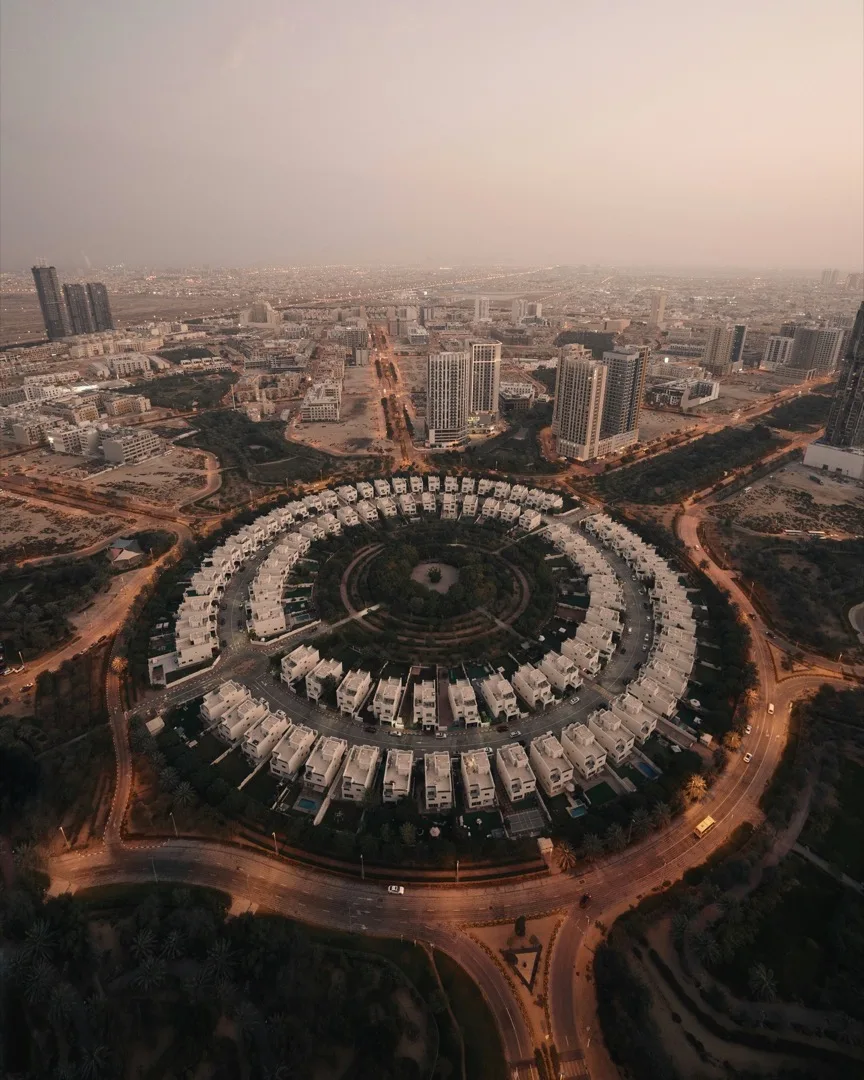
JVC has been the volume leader in Dubai's affordable segment for years, and 2026 is no different. It consistently ranks in the top three areas by transaction count, and its rental yields remain among the highest in the emirate.
Why JVC Delivers Strong Yields
The math is straightforward: JVC's central location between Al Khail Road and Sheikh Mohammed Bin Zayed Road keeps it accessible to major employment hubs (Media City, Internet City, JLT, DIFC within 15–25 minutes), while prices remain 40–50% below neighbouring JLT and Dubai Marina.
This price gap creates a structural advantage. Tenants who work in these corridors choose JVC for affordability; investors benefit from rents that are proportionally higher relative to purchase prices.
JVC: The Numbers in 2026
- Average studio purchase price: AED 420,000–520,000
- Average 1-BR purchase price: AED 650,000–850,000
- Average 2-BR purchase price: AED 1,000,000–1,350,000
- Occupancy rate: 88–92%
- Capital appreciation (2024–2026): 18–22%
JVC Pros
- Highest gross rental yield among the three (7.5–8.2%)
- Massive tenant pool — high demand, fast leasing
- Central location with SZR, Al Khail, and Hessa Street access
- Circle Mall and expanding retail/F&B scene
- Strong resale liquidity — easy exit strategy
JVC Cons
- Traffic congestion at peak hours, especially Al Khail exits
- No metro connectivity (reliant on buses and cars)
- Oversupply risk — significant new handovers in 2026–2027
- Service charges vary wildly between buildings (check before buying)
- Limited green space compared to DSO
Learn more about how service charges impact your net yield — they can swing returns by 1–2% in JVC depending on the building.
Arjan: The Value Play with Upside
Arjan sits along the Dubai Miracle Garden/Dubailand corridor, and it's the youngest of the three communities. That youth translates to the lowest entry prices — but also higher uncertainty. For investors with a 3–5 year horizon, Arjan offers compelling risk-reward dynamics.
Why Arjan Is Gaining Traction
Arjan's appeal is driven by three factors: price, newness, and the Dubailand master plan. Most buildings in Arjan were handed over between 2020 and 2025, meaning tenants get modern finishes and layouts at prices 15–25% below JVC. As Dubailand's surrounding infrastructure matures — including the IMG Worlds expansion, new schools, and retail — Arjan is positioned for capital appreciation that could outpace both JVC and DSO.
Arjan: The Numbers in 2026
- Average studio purchase price: AED 350,000–430,000
- Average 1-BR purchase price: AED 550,000–700,000
- Average 2-BR purchase price: AED 850,000–1,100,000
- Occupancy rate: 82–87%
- Capital appreciation (2024–2026): 22–28%
Arjan Pros
- Lowest entry price per sqft — best for budget-constrained investors
- Newer building stock (modern amenities, lower maintenance)
- Strong capital appreciation trajectory as the area matures
- Lower service charges on average (AED 10–15/sqft)
- Proximity to Miracle Garden and upcoming attractions
Arjan Cons
- Lower occupancy rates compared to JVC — takes longer to lease
- Limited retail and F&B within walking distance
- No metro access, and bus connectivity is still developing
- Less proven resale market — liquidity is thinner
- Some buildings have small unit sizes that may not sustain long-term rental premiums
Dubai Silicon Oasis (DSO): The Established All-Rounder
DSO is a free zone and a self-contained community rolled into one. Unlike JVC and Arjan, which are primarily residential, DSO integrates commercial, educational, and tech-park elements into its master plan. It's the most "complete" community of the three — and that completeness comes with slightly lower yields but significantly stronger tenant retention.
Why DSO Attracts Long-Term Tenants
DSO's free zone status means many tech companies and SMEs are headquartered here. Their employees often choose to live in DSO to eliminate commute times entirely. Add schools (GEMS, DPS), supermarkets (Carrefour, Spinneys), a metro station, and abundant green corridors, and you get a community where tenants stay for 2–3 lease cycles — reducing your vacancy and turnover costs.
DSO: The Numbers in 2026
- Average studio purchase price: AED 320,000–400,000
- Average 1-BR purchase price: AED 500,000–650,000
- Average 2-BR purchase price: AED 780,000–1,050,000
- Occupancy rate: 90–94%
- Capital appreciation (2024–2026): 14–18%
DSO Pros
- Metro connectivity (Green Line extension) — a major differentiator
- Highest occupancy rates — tenants stay longer, less vacancy
- Self-contained: schools, retail, tech park, parks all within the community
- Larger unit sizes for the price — attracts families willing to pay more
- Free zone benefits for business owners (live and work in one location)
DSO Cons
- Lower gross yields than JVC (6.8–7.5% vs 7.5–8.2%)
- Slower capital appreciation compared to Arjan
- Further from "central" Dubai — 25–35 min to DIFC/Downtown
- Ageing building stock in some sections (Axis, Sapphire Residence)
- Higher competition from neighbouring Academic City and International City
Deep Dive: Service Charges and Net Yield Impact
Gross yield gets the headlines, but net yield is what hits your bank account. Service charges are the biggest controllable drag on returns in all three areas. Here's how they compare for a typical 1-bedroom apartment (750 sqft):
| Cost Component | JVC | Arjan | DSO |
|---|---|---|---|
| Annual Rent | AED 60,000 | AED 50,000 | AED 47,000 |
| Service Charges (Annual) | AED 11,250 | AED 9,375 | AED 10,125 |
| Insurance + Maintenance | AED 2,500 | AED 2,000 | AED 2,200 |
| Net Annual Income | AED 46,250 | AED 38,625 | AED 34,675 |
| Purchase Price (1-BR avg) | AED 750,000 | AED 625,000 | AED 575,000 |
| Net Yield | 6.17% | 6.18% | 6.03% |
Notice how the net yield gap narrows significantly once costs are factored in. JVC's yield advantage shrinks because its service charges and purchase prices are higher. Arjan nearly matches JVC on a net basis, making it a stronger contender than gross yield alone suggests. For a full breakdown of what owners pay, read our service charges guide.
Investing in Dubai?
Get Weekly Investment Insights
ROI analysis, rental yields, off-plan opportunities, and data-driven market updates.
✓ You're in! Check your inbox.
Location and Connectivity Comparison
Connectivity directly impacts tenant demand and rental premiums. Here's how each area connects to Dubai's major employment and lifestyle hubs:
| Destination | From JVC | From Arjan | From DSO |
|---|---|---|---|
| DIFC / Downtown | 18 min | 22 min | 28 min |
| Dubai Marina / JBR | 15 min | 20 min | 30 min |
| DXB Airport | 25 min | 25 min | 18 min |
| Mall of the Emirates | 12 min | 15 min | 22 min |
| Metro Station | 8 min drive | 10 min drive | Within community |
Key takeaway: JVC wins on centrality. DSO wins on metro access and airport proximity. Arjan sits in the middle but lacks strong transit links — a factor that may limit rent growth until infrastructure catches up.
Who Should Invest Where? The Verdict
There is no universally "best" area. The right choice depends on your investor profile. Here's our recommendation framework:
Choose JVC If:
- Your primary goal is maximum rental income with fast tenant turnover
- You want high liquidity — the ability to sell quickly if needed
- You prioritize location centrality over community amenities
- You can stomach higher entry prices for proven, stable returns
- You're buying studios or 1-BRs for the young professional market
Choose Arjan If:
- You're a first-time investor with a limited budget (under AED 500K)
- You're comfortable with a 3–5 year hold for capital appreciation
- You want new building stock with minimal maintenance in early years
- You believe in the Dubailand growth story and want early-mover pricing
- You're okay with slightly longer vacancy periods between tenants
Choose DSO If:
- You want stable, long-term tenants (families, tech professionals)
- Metro access is a non-negotiable for you
- You prefer a self-contained community with schools, parks, and retail
- You're buying 2-BR or larger units for the family rental market
- You value lower risk and steady returns over maximum yield
If you're still unsure which area fits your goals, check our guide on the best areas to buy your first property in Dubai for a wider comparison.
2026 Market Outlook: Supply Risks and Opportunities
All three areas face new supply in 2026–2027, but the impact varies:
- JVC: Approximately 8,000–10,000 new units expected by end of 2027. This is the biggest supply risk — yields could compress by 0.3–0.5% if absorption lags. Focus on buildings with strong management and distinctive amenities to maintain premium rents.
- Arjan: Roughly 4,000–5,000 new units in the pipeline. Supply is meaningful but balanced by genuinely new demand as the area gains recognition. Off-plan buyers from 2022–2023 are now entering the rental market, testing real demand.
- DSO: Limited new supply (2,000–3,000 units) given the area's maturity. This supply constraint supports rental growth — DSO rents have been climbing 5–8% annually and the trend should continue.
Bottom line: DSO has the least supply risk. Arjan has the most upside if demand materializes. JVC requires more careful unit selection to avoid the oversupply drag.
Frequently Asked Questions
Which area has the best rental yield in Dubai — JVC, Arjan, or DSO?
JVC leads with gross rental yields of 7.5–8.2% in 2026, followed by Arjan at 7.0–7.8% and DSO at 6.8–7.5%. However, when you account for service charges and vacancy rates, the net yield gap between JVC and Arjan narrows to nearly zero. Your actual ROI depends on the specific building, unit type, and management quality.
Is Arjan a good investment for first-time buyers in 2026?
Yes, Arjan is one of the most accessible entry points for first-time Dubai property investors. Studios start below AED 400,000 and 1-bedrooms around AED 550,000. The key risk is lower liquidity — it may take longer to sell compared to JVC. If you have a 3–5 year horizon and don't need an immediate exit option, Arjan offers strong value. Read our first property buyer's guide for more details.
Does Dubai Silicon Oasis have a metro station?
Yes. DSO is connected to the Dubai Metro Green Line, giving residents direct access to Deira, Bur Dubai, and Healthcare City without a car. This is a significant competitive advantage over JVC and Arjan, neither of which has metro stations within walking distance. Metro proximity supports both higher occupancy and longer tenant retention.
How do service charges compare between JVC, Arjan, and DSO?
Arjan generally has the lowest service charges at AED 10–15 per sqft, followed by DSO at AED 11–16/sqft and JVC at AED 12–18/sqft. However, charges vary significantly between buildings — even within the same community. Always verify the actual RERA-registered service charge index for a specific building before purchasing. Our service charges guide explains what these fees cover and how to evaluate them.
Final Thoughts
The JVC vs Arjan vs Dubai Silicon Oasis investment debate doesn't have a single winner — it has three different winners for three different investor profiles. JVC rewards income-focused investors with the highest yields and best liquidity. Arjan rewards patient, value-seeking investors with the lowest entry prices and strongest appreciation potential. DSO rewards conservative, long-term investors with stable tenants, metro access, and minimal supply risk.
Whichever area you choose, the fundamentals of smart Dubai property investing remain the same: buy in a well-managed building, verify service charges before signing, calculate your net yield (not just gross), and match your investment timeline to the area's maturity cycle.
Ready to explore specific opportunities in JVC, Arjan, or DSO? Get a free consultation with our Dubai property specialists — we'll match you with vetted units that fit your budget and goals.
Need Investment Advice?
Get personalized analysis for your Dubai property investment.
Thank You!
We'll get back to you within 24 hours.
Real Estate Agencies in Dubai
Explore providers from our business directory
Still have questions?
Ask a follow-up, or get connected with a vetted Dubai professional.
Follow us on LinkedIn
Dubai market analysis and industry insight for professionals.