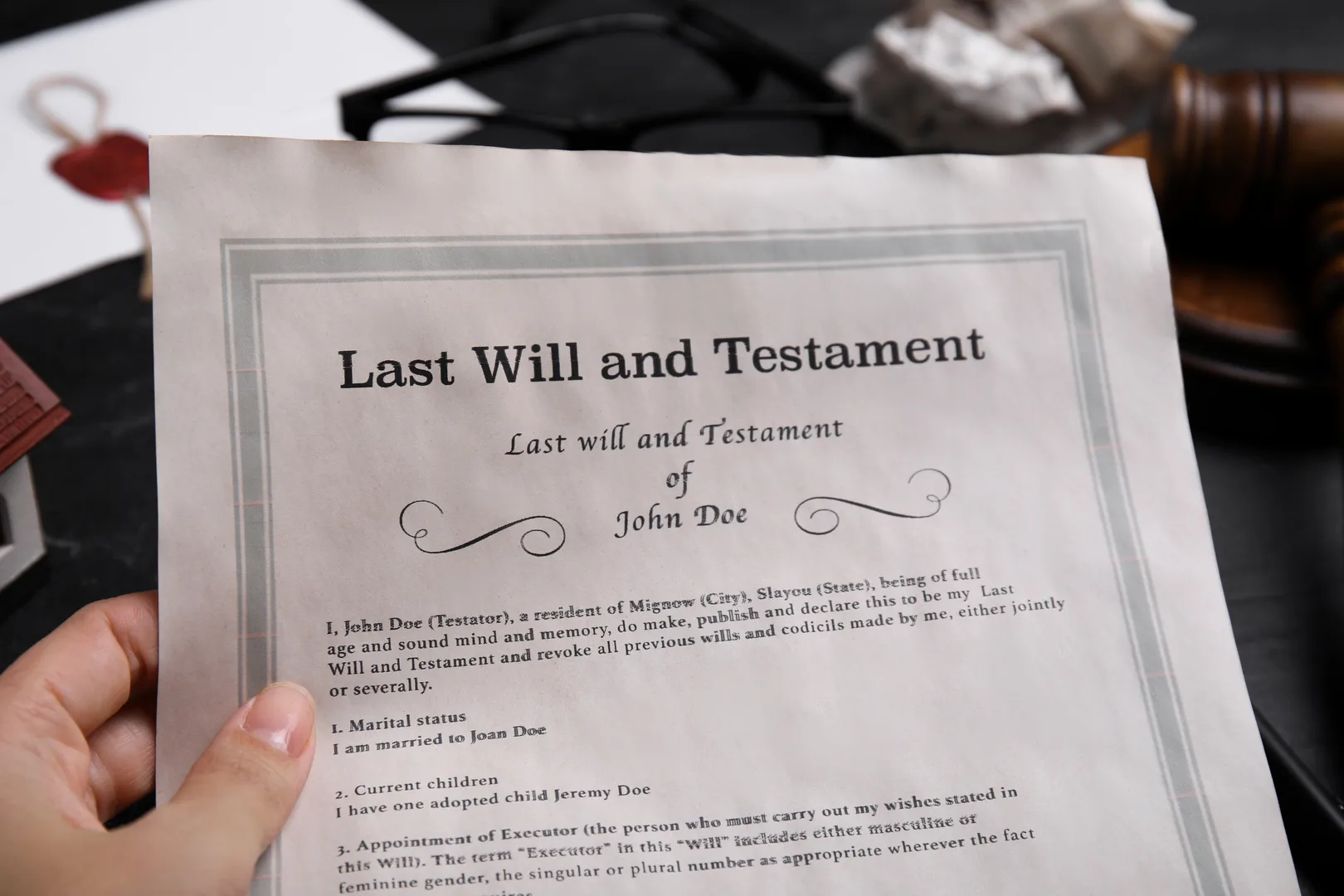
Dubai Property Inheritance & DIFC Wills: What Every Expat Owner Must Know (2026)

- Without a registered will, UAE courts apply Sharia inheritance rules to your Dubai property — regardless of your nationality or religion.
- The DIFC Wills Service Centre lets non-Muslim expats register wills that cover Dubai assets (including property, bank accounts, and company shares).
- A DIFC property will costs from AED 10,000; a full will covering all Dubai assets starts at AED 15,000.
- Jointly owned property does NOT automatically pass to the surviving owner in the UAE — a will is essential.
- The probate process through DIFC Courts typically takes 4–8 weeks with a registered will, versus 6–18 months without one.
- If your property is mortgaged, the bank can demand full repayment before transfer — life insurance is strongly recommended.
Dubai's property market attracts investors and homeowners from over 200 nationalities. Yet a surprisingly large number of expat property owners — estimated at over 70% — have no registered will covering their UAE assets. The consequences of this oversight can be devastating for surviving family members: frozen bank accounts, inaccessible property, and inheritance distribution that may contradict the deceased's wishes entirely.
This guide covers everything you need to know about Dubai property inheritance in 2026, with a particular focus on the DIFC Wills Service Centre, the most widely used succession planning tool for non-Muslim expats in the emirate.
What Happens Without a Will in the UAE
The UAE is a civil law jurisdiction, but personal status matters — including inheritance — have historically been governed by Sharia (Islamic) law. Under Federal Law No. 28 of 2005 (the Personal Status Law), the default position is that all assets located in the UAE are distributed according to Sharia principles when the owner dies without a valid will.
Under Sharia inheritance rules, the distribution follows a fixed formula:
- Surviving spouse (wife): Receives 1/8 of the estate if there are children, or 1/4 if there are no children.
- Surviving spouse (husband): Receives 1/4 of the estate if there are children, or 1/2 if there are no children.
- Sons: Receive double the share of daughters.
- Parents of the deceased: Entitled to a mandatory share (typically 1/6 each).
- No testamentary freedom: You cannot disinherit a Sharia heir or leave more than 1/3 of your estate to non-heirs.
In practical terms, when an expat dies without a will in Dubai, here is what typically happens: bank accounts are frozen immediately upon notification of death, the property title deed cannot be transferred, the surviving spouse and children may be unable to access funds for months, and the family must petition the Dubai Personal Status Court to appoint an estate administrator — a process that can take 6 to 18 months, requires extensive documentation (often translated, attested, and apostilled), and frequently costs more in legal fees than a will would have cost to register.
UAE Personal Status Law for Non-Muslims (2023 Amendments)
Federal Decree-Law No. 41 of 2022, which came into effect in February 2023, introduced a dedicated chapter on non-Muslim personal status matters, including inheritance. Under this law, non-Muslim expats can now opt to have their home country's inheritance laws applied to their UAE-located assets.
However, there are significant practical limitations:
- The home country law only applies if no valid UAE-registered will exists and if the family members petition the court to apply it.
- The court process is conducted through the Personal Status Courts (not DIFC), which operate primarily in Arabic.
- The burden of proof falls on the applicant to demonstrate what their home country law prescribes.
- Processing times remain longer than the DIFC route — typically 3 to 12 months.
- If there is any dispute among heirs, the process can extend significantly.
What Is the DIFC Wills Service Centre?
The DIFC Wills Service Centre (DWSC) was established in 2015 within the Dubai International Financial Centre — a common-law jurisdiction operating independently within Dubai. The DWSC allows non-Muslim residents and property owners in Dubai to register wills under a common-law framework that is familiar to those from the UK, Australia, Canada, the US, and most other common-law countries.
Key features of the DIFC Wills Service Centre:
- Common-law jurisdiction: Wills are interpreted and enforced under DIFC Law No. 4 of 2014 (the DIFC Wills and Probate Registry Law), not Sharia or UAE civil law.
- Dedicated court: Probate applications are heard by the DIFC Courts, which operate in English with internationally trained judges.
- Speed: Probate grants are typically issued within 4 to 8 weeks of application.
- Jurisdiction: Covers assets located in Dubai only — not Abu Dhabi, Sharjah, or other emirates.
- Eligibility: Available to all non-Muslim residents and non-resident property owners in Dubai aged 21 or over.
Types of DIFC Wills
| Will Type | Covers | Best For | Starting Cost (AED) |
|---|---|---|---|
| Full Will | All Dubai assets + guardianship of minor children | Expats with multiple asset types and/or minor children | 15,000 |
| Property Will | Dubai real estate only | Property investors with no minor children | 10,000 |
| Guardianship Will | Guardianship of minor children only | Parents wanting to appoint guardians | 7,500 |
| Financial Assets Will | Bank accounts, investments, insurance | Professionals without property | 10,000 |
| Business Owners Will | Company shares, business interests | Entrepreneurs with company shares | 10,000 |
DIFC Will Registration: Step-by-Step Process
Step 1: Choose Your Will Type and Gather Documents
Required documents include: valid passport, Emirates ID (if resident), UAE visa page, title deed(s), beneficiary details (full names, passport numbers, dates of birth), guardian details (if appointing for minor children), executor details, and two witness details (must be over 21, not beneficiaries).
Step 2: Draft Your Will Online
The DWSC provides an online will-drafting platform. You can use the self-service option (guided templates) or engage a DWSC-approved legal consultant (additional AED 2,000–5,000).
Step 3: Review and Approve the Draft
The DWSC legal team reviews the will for compliance. This takes 3–7 working days.
Step 4: Book an Appointment for Signing
You must attend the DIFC Wills Service Centre in person (Gate Village, Building 6, DIFC, Dubai) with your two witnesses. Remote video witnessing is available for testators outside the UAE.
Step 5: Sign and Register
A DWSC registrar verifies your identity, confirms the will contents, and oversees signing. The will is officially registered in the DIFC Wills Registry. The entire process takes 2 to 4 weeks from application to registered will.
Costs and Fees Breakdown
| Fee Type | Amount (AED) | Notes |
|---|---|---|
| Property Will registration | 10,000 | Dubai real estate only |
| Full Will registration | 15,000 | All Dubai assets + guardianship |
| Will amendment (minor) | 2,500 | Adding/removing beneficiary, changing executor |
| Probate application (DIFC Courts) | 8,000–15,000 | Filed after death by executor |
| Mirror will (couples discount) | ~20% off | When both spouses register simultaneously |
DIFC Courts vs Abu Dhabi vs Dubai Personal Status Courts
| Feature | DIFC Wills (Dubai) | ADJD (Abu Dhabi) | Dubai Personal Status Court |
|---|---|---|---|
| Legal framework | Common law | Civil law | Civil / Sharia law |
| Language | English | Arabic and English | Arabic |
| Probate timeline | 4–8 weeks | 2–6 months | 6–18 months |
| Typical cost | AED 10,000–15,000 | AED 5,000–10,000 | AED 15,000–50,000+ |
Jointly Owned Property: A Critical Misconception
This catches many British, Australian, and American expats off guard, as joint ownership in their home countries would typically mean automatic transfer to the survivor.
Navigating Dubai Law?
Get Legal & Tax Updates
Property law changes, tax guidance, and compliance updates for Dubai investors.
✓ You're in! Check your inbox.
Property Held in a Company Name
If your property is held in a company name, the succession question shifts from the property itself to the shares in the company. You need to bequeath the company shares, not the property directly. Check the shareholders' agreement for death provisions. A DIFC will can cover company shares if the company is registered in Dubai.
Mortgage Implications on Death
When the property owner dies, the outstanding mortgage does not disappear. The bank retains its security interest and may demand full repayment. The property cannot be transferred until the mortgage is settled. Most UAE banks require decreasing term life insurance as a condition of the mortgage — verify your coverage is current and adequate.
The Probate Process: What Happens After Death
- Obtain the death certificate. If death occurred abroad, the certificate must be attested and apostilled.
- Notify the DIFC Wills Service Centre. The executor contacts the DWSC.
- File a probate application. The executor files with the DIFC Courts (fee based on estate value).
- Court review and grant. Grant of Probate issued within 4–8 weeks if no challenges.
- Asset distribution. Executor uses the Grant to approach banks, DLD, and other institutions.
- DLD transfer. The DLD charges only 0.125% of property value for inheritance transfers (vs 4% for sales).
When and How to Update Your Will
Review your DIFC will whenever: you purchase or sell property, get married/divorced, have a child, a beneficiary or executor dies, you change residency status, or you set up/close a company. Minor amendments cost AED 2,500; major rewrites cost AED 5,000–7,500.
Common Mistakes Expats Make
- Assuming home country will covers UAE assets: A UK or US will does not automatically apply to UAE-located assets.
- Relying on joint ownership: Joint ownership does not confer automatic succession rights in the UAE.
- Naming minors without a guardian: Always pair asset bequests to minors with guardianship appointment.
- Not telling anyone the will exists: The DWSC does not proactively notify anyone upon your death.
- Ignoring the mortgage: Leaving a mortgaged property without life insurance creates a liability, not an asset.
- Creating conflicting wills: Home country will should explicitly exclude UAE assets.
- Procrastinating: The cost of a DIFC will is a fraction of the cost of dying intestate.
Final Thoughts: Protecting Your Family and Your Investment
Dubai property inheritance planning is not optional — it is an essential responsibility for every expat who owns real estate in the emirate. The DIFC Wills Service Centre provides a clear, efficient, and legally robust mechanism to ensure your property passes to the people you choose, on the terms you set, without subjecting your family to months of court proceedings.
The registration process takes a few weeks and costs a fraction of what your property is worth. If you have not yet registered a DIFC will covering your Dubai property, start the process today. Your family will be grateful you did.
Frequently Asked Questions
What happens to my Dubai property if I die without a will?
Without a registered will, UAE courts historically applied Sharia inheritance rules to your Dubai property regardless of your nationality or religion. Bank accounts are frozen, the title deed cannot be transferred, and the family must petition the Dubai Personal Status Court to appoint an estate administrator — a process that can take 6 to 18 months.
What is the DIFC Wills Service Centre?
The DIFC Wills Service Centre, established in 2015, allows non-Muslim residents and property owners in Dubai to register wills under a common-law framework. Wills are enforced under DIFC Law No. 4 of 2014 and probate is heard by the DIFC Courts in English. It covers assets in Dubai only — not Abu Dhabi, Sharjah, or other emirates.
How much does a DIFC will cost?
A Property Will covering Dubai real estate only starts from AED 10,000, while a Full Will covering all Dubai assets plus guardianship of minor children starts from AED 15,000. A Guardianship Will is AED 7,500. Minor amendments cost AED 2,500, and couples registering simultaneously get roughly 20% off via a mirror will.
Does jointly owned property automatically pass to my spouse in Dubai?
No. UAE law does not recognise joint tenancy or the right of survivorship. If you co-own a Dubai apartment 50/50 and one owner dies without a will, the deceased's share is distributed under Sharia law — not automatically transferred to the surviving spouse. Both co-owners must each have their own registered will.
Can non-Muslim expats use their home country's inheritance law for UAE assets?
Yes, since the 2023 amendments under Federal Decree-Law No. 41 of 2022, non-Muslim expats can opt to have their home country's inheritance laws applied to UAE assets. However, this only works if no UAE-registered will exists, the process runs through the Arabic-language Personal Status Courts, and it typically takes 3 to 12 months — slower and less certain than a DIFC will.
How long does the DIFC probate process take?
With a registered DIFC will, the probate process through the DIFC Courts typically takes 4 to 8 weeks, compared with 6 to 18 months without a will. The executor obtains the death certificate, notifies the DIFC Wills Service Centre, files a probate application, and receives a Grant of Probate to distribute the assets.
What happens to a mortgaged Dubai property when the owner dies?
The outstanding mortgage does not disappear — the bank retains its security interest and may demand full repayment before the property can be transferred. Most UAE banks require decreasing term life insurance as a condition of the mortgage, so verify your coverage is current and adequate, especially after any refinancing.
How long does it take to register a DIFC will?
The entire registration process takes 2 to 4 weeks from application to a registered will. You choose your will type and gather documents, draft the will online, have the DWSC legal team review it (3 to 7 working days), then attend the DIFC Wills Service Centre in person with two witnesses to sign and register.
Related Articles
Need Professional Help?
Connect with vetted lawyers and finance experts in Dubai.
Thank You!
We'll get back to you within 24 hours.
Real Estate Lawyers in Dubai
Explore providers from our business directory
Still have questions?
Ask a follow-up, or get connected with a vetted Dubai professional.
Follow us on LinkedIn
Dubai market analysis and industry insight for professionals.