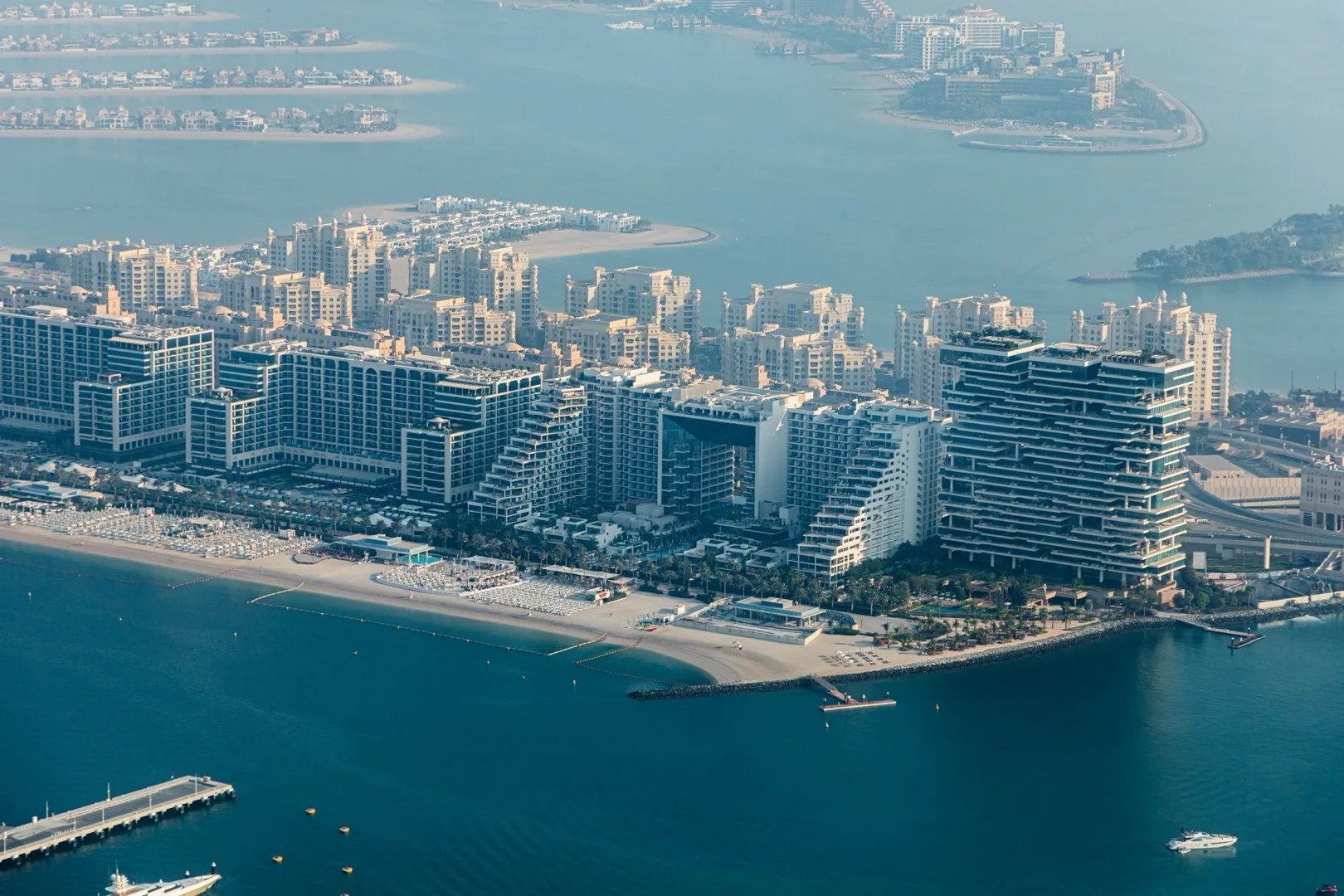
Dubai Villa vs Apartment 2026: The Price and Yield Gap Is Widening — Here's the Data

- Dubai villa prices rose 9.86% year on year to April 2026, against 5.49% for apartments — nearly double the growth rate, per REIDIN data cited by Global Property Guide.
- The gap runs the other way on income: citywide gross rental yields sit around 6.68–6.76%, but apartments average roughly 7.15% versus villas at just 4.98% — a spread of more than two full percentage points.
- Villas already carry a price-per-sqft premium of around 13.8% over apartments (AED 2,241 vs AED 1,969 per sq ft, per Engel & Völkers' 2026 data), and that premium is arithmetically widening given the current growth split.
- ValuStrat's 2026 outlook forecasts villas and townhouses appreciating 17.7% for the year against 7.4% for apartments — more than double, and consistent with the trend already visible in the data.
- Supply explains most of it: ValuStrat's 2026 pipeline of 131,234 units is roughly 81% apartments and only 19% villas and townhouses, while CBRE's Q1 2026 review found about 66% of upcoming units are studios and one-bedrooms.
- Rents mirror the sales story — Property Finder data shows the villa-to-apartment rent ratio widened from 2.41x in April 2025 to 2.52x in April 2026, even as villa demand share grew from 25% to 29% year on year.
- The takeaway: villas are the growth trade, apartments are the income trade, and 2026 is the year that split became too wide to ignore in either direction.
For most of Dubai's post-2021 boom, villas and apartments moved together — different price points, same direction, same story. That stopped being true somewhere around early 2025. By April 2026, villa prices had climbed 9.86% year on year while apartments managed 5.49%, and the income side of the ledger flipped in the opposite direction: apartments now yield noticeably more than villas do. This is a market-divergence story, not a buying-decision one — for the "which should I buy" comparison, see our villa vs apartment investment guide and our 10-year cost of ownership comparison. Here, the question is narrower and more mechanical: why is the gap widening, and what does the data say about how far it can go. Last updated: July 2026.
The Headline Split: Two Numbers Moving in Opposite Directions
Start with price growth. Per Global Property Guide's analysis of REIDIN-sourced index data, Dubai's residential sales price index was up 6.09% year on year as of April 2026 — but that blended figure hides a real split underneath it. Villas rose 9.86% year on year over the same period, while apartments rose 5.49%. Villas are appreciating at nearly double the apartment rate.
Now flip to income. Villas cost more to buy and have grown faster in value, yet they earn less as a percentage of that value. Citywide gross rental yields sit around 6.68–6.76% as of April 2026, but the segment breakdown is what matters here: apartments average roughly 7.15% gross, villas around 4.98%. That is a spread of more than two full percentage points — an apartment buyer is earning close to 44% more yield, proportionally, than a villa buyer on the same capital.
| Metric (as of April 2026) | Apartments | Villas | Gap |
|---|---|---|---|
| Price growth, YoY | 5.49% | 9.86% | +4.37 pts to villas |
| Gross rental yield | ~7.15% | ~4.98% | +2.17 pts to apartments |
| Average price per sq ft | AED 1,969 | AED 2,241 | +13.8% to villas |
| Share of 2026 delivery pipeline | ~81% | ~19% | 4.3x more apartment supply |
Price growth per REIDIN data via Global Property Guide; yields per citywide market data (see yield section below); price per sq ft per Engel & Völkers 2026 market data; supply pipeline per ValuStrat's 2026 outlook.
None of this is a coincidence, and it isn't new information about Dubai — it's the same land-versus-density story every mature city eventually tells. What is new is the speed at which it is compounding in 2026, and that's what the rest of this piece unpacks, segment by segment.
Price Growth: Villas Are Pulling Away
The REIDIN-sourced numbers above are a single snapshot, so it helps to see the trend rather than one month. Villa price growth has consistently outpaced apartment growth through the current cycle, and the gap has held even as overall market momentum cooled from its 2024–2025 peak. On a month-on-month basis, both segments softened into spring 2026 — apartments down 1.87% and villas down 1.08% in April alone — which tells you villas are not just growing faster, they are also more resistant to the citywide cooling that has affected the mid-market apartment segment hardest.
| Price growth measure | Apartments | Villas |
|---|---|---|
| YoY growth (to April 2026) | +5.49% | +9.86% |
| MoM change (April 2026) | -1.87% | -1.08% |
| ValuStrat 2026 full-year forecast | +7.4% | +17.7% |
| Off-plan citywide average (Q1 2026) | AED 2,030/sq ft, +12.22% YoY (blended, all types) | |
The forecast row is the one worth sitting with. ValuStrat's 2026 Real Estate Outlook projects villas and townhouses appreciating 17.7% for the full year against 7.4% for apartments — more than double, and a wider gap than the trailing 12-month figures already show. If that forecast holds, the villa premium over apartments doesn't just persist through 2026, it accelerates. ValuStrat's citywide blended forecast is a sustainable 10% for the year, which only works arithmetically if apartments — roughly four-fifths of transaction volume — undershoot that average while villas overshoot it substantially.
Even the softer, more cautious reads point the same direction. Dubai Land Department data confirmed Q1 2026 transactions at AED 252 billion, up 31% year on year — but CBRE's read on that same quarter found residential price growth moderating to around 9.1% citywide, a figure that sits between the apartment and villa segment numbers rather than matching either. Blended citywide averages are increasingly misleading in 2026; the segment split is the number that actually describes what's happening on the ground.
Price-Per-Sqft: How the Villa Premium Is Widening
Villas have always commanded a premium per square foot over apartments in Dubai — land, privacy and lower density cost money everywhere. What's changed is the size of that premium and its trajectory. As of mid-2026, apartments average AED 1,969 per sq ft against AED 2,241 per sq ft for villas, a gap of AED 272, or roughly 13.8%, per market data compiled by Engel & Völkers.
That 13.8% figure is a snapshot, not a trend line on its own — but combine it with the growth-rate data above and the direction is unambiguous. If villas continue compounding at anything close to 9.86% annually while apartments grow at 5.49%, the absolute AED-per-sq-ft gap widens every single year even before accounting for ValuStrat's more aggressive 17.7%-vs-7.4% forecast. A gap that starts at 13.8% and grows at roughly double the apartment rate does not stay at 13.8% for long; it compounds toward 20%+ within a few years if the current split persists.
| Reference point | Apartments | Villas | Villa premium |
|---|---|---|---|
| Average price per sq ft (2026) | AED 1,969 | AED 2,241 | +13.8% |
| Citywide average, 2020 (for context) | AED 872/sq ft (blended, all types) | — | |
| Citywide average, May 2026 (for context) | AED 1,658/sq ft (blended, all types), ~90% up since 2020 | — | |
The citywide blended figures put the segment premium in context: the overall market has nearly doubled since 2020, but that growth has not been distributed evenly across property types — villas have captured a disproportionate share of it, which is exactly why the per-sq-ft premium keeps widening rather than staying flat as the market matures. For a look at how this compares to the separate prime-versus-mainstream price story — a related but distinct divergence along the luxury axis rather than the villa/apartment axis — see our piece on prime vs mainstream property divergence in 2026.
The Yield Inversion: Why Apartments Out-Earn Villas Despite Lower Prices
Here is the part that surprises first-time investors: the asset that is appreciating faster and costing more per square foot is also the one earning less income, proportionally, on that capital. Citywide gross rental yields have been compressing through 2026 — we cover that trend in full in our rental yield compression analysis — but the compression has not hit both segments equally.
| Yield measure | Value |
|---|---|
| Citywide gross yield (Apr 2026) | ~6.68–6.76% |
| Apartment gross yield | ~7.15% |
| Villa gross yield | ~4.98% |
| Mid-market apartment gross yield | ~9% (select areas) |
| Prime (Downtown-type) gross yield | ~6% |
The mechanics are straightforward once you separate capital value from rental value. A villa's land component appreciates on scarcity — there is a hard ceiling on how many more standalone villas Dubai can physically build inside its 2040 master-plan footprint, so capital values climb even when the rental market for that specific villa doesn't climb at the same pace. An apartment, by contrast, sits on a fraction of the land per unit, so its capital value grows more slowly — but rental demand for apartments is deep, constant and driven by a much larger renter pool of young professionals and smaller households, which keeps rents (and therefore yield, since yield is rent divided by price) comparatively high relative to the purchase price.
Put simply: villas are priced like scarce assets and yield like scarce assets — investors accept lower income for a shot at outsized capital appreciation. Apartments are priced like commodities and yield like commodities — steady income, more moderate appreciation. Neither is "better"; they are different trades, and 2026's data makes the distinction sharper than it has been at any point in the current cycle.
An investor with AED 2 million to deploy compares a mid-market apartment against a small villa in a family-end community. The apartment, bought at roughly the AED 1,969/sq ft average, generates gross yield around 7.15% — about AED 143,000 a year in rent — but its capital value is forecast to grow near ValuStrat's 7.4% apartment case for 2026. The villa, at the AED 2,241/sq ft premium, buys noticeably less floor area for the same AED 2 million and yields closer to 4.98% — about AED 99,600 a year — but sits in the segment ValuStrat forecasts at 17.7% appreciation for the year. Run both scenarios five years forward with our ROI calculator: the apartment wins on cumulative rental income by year three or four; the villa's capital-gain case, if the forecast holds, can overtake it by year five — but only if the villa growth premium persists, which is precisely the assumption this article is stress-testing with data rather than assuming.
Why Villa Supply Can't Keep Up
The scarcity side of the story is a planning and land-use fact, not a marketing line. Dubai's 2040 Urban Master Plan concentrates new development within the existing urban footprint rather than unlimited outward sprawl, and standalone villas are the most land-intensive residential product there is — a single villa plot can hold what a mid-rise apartment building would deliver in dozens of units. Every hectare a developer allocates to low-density villa clusters is a hectare not delivering the unit volumes that off-plan apartment launches depend on for their economics.
That shows up directly in the delivery pipeline. Per ValuStrat's 2026 outlook, the total residential pipeline for the year stands at 131,234 units, and villas and townhouses account for under a fifth of it — roughly 19%, against apartments at about 81%. Villas and townhouses already represent less than 20% of Dubai's total residential stock, so the new supply pipeline is not correcting that imbalance; if anything, it is holding it steady while apartment stock keeps growing on top of an already much larger base.
The demand side reinforces the supply story rather than offsetting it. Post-pandemic buyer preference shifted decisively toward space, privacy and family-oriented layouts — the villa-and-townhouse product Dubai has structurally under-built relative to demand for years. Established villa communities with finished infrastructure, schools and green space are the closest thing this market has to a fixed-supply asset class, which is exactly the condition under which prices climb fastest when demand holds or grows. We map how this scarcity dynamic interacts with the 2026–2027 delivery calendar area by area in our delivery-wave analysis — villa-heavy districts are, almost without exception, the ones flagged as lowest oversupply risk.
Following the Market?
Get Market Data in Your Inbox
DLD transaction data, price trends, and quarterly forecasts — before everyone else.
✓ You're in! Check your inbox.
The Apartment Glut: Off-Plan Supply and the Studio/1BR Wall
On the other side of the ledger, apartment supply is not just larger in proportion — it is concentrated in the segment least able to absorb it without pressure on both price and rent. Per CBRE's UAE Real Estate Market Review for Q1 2026, around 55,000 residential units are scheduled for delivery across Dubai in 2026, rising to roughly 75,000 in 2027 — and CBRE's own breakdown found that approximately 66% of upcoming units are studios and one-bedroom apartments. Close to 45% of all under-construction stock sits across just five districts: Jumeirah Village Circle/Jumeirah Village Triangle, Dubai South, MBR City, Business Bay and Dubailand Residence Complex — every one of them an apartment-dominant, off-plan-led community.
This is not a citywide oversupply story — CBRE itself frames the volume "in the context of sustained population growth and economic expansion" rather than as a crash signal, and delivery slippage historically softens the peak (only around 56% of the roughly 174,000 units projected for 2022–2024 completion were actually delivered on schedule, based on historical tracking of Dubai handover slippage). But it is a segment-specific supply story, and the segment absorbing the bulk of it is small-format apartments, not villas. That concentration is precisely why apartment price growth (5.49% YoY) trails villa growth (9.86% YoY) even in a market where overall demand remains healthy: apartments are competing against a much deeper and faster-growing supply pool for the same buyer and tenant demand.
Rents Tell the Same Story: The 2.41x to 2.52x Ratio
If sales prices were the only evidence, you could argue it reflects a temporary capital-markets quirk. Rents make the case harder to dismiss, because they track real occupier demand rather than investor sentiment. Per Property Finder data reported by Gulf Business, the villa-to-apartment rent ratio — how many times more a typical villa rents for compared to a typical apartment — widened from 2.41x in April 2025 to 2.52x in April 2026.
| Rental metric | Apartments | Villas |
|---|---|---|
| Average annual rent (April 2026) | AED 90,940 | AED 229,000 |
| QoQ change from Q1 2026 | -4.6% (from AED 95,293) | +3.3% |
| YoY change | softening | +9.1% |
| Share of tenant demand | 71% (down from 75% YoY) | 29% (up from 25% YoY) |
The most counterintuitive line in that table is the last one. Villas are getting relatively more expensive to rent — the ratio widened, not narrowed — and yet villa demand share still grew, from 25% to 29% of the tenant pool year on year, while apartments' share eased from 75% to 71%. That is not what economics textbooks predict when a product's relative price rises; it is what happens when a segment of the market (families, larger households, end-users who no longer want to compete for space in a smaller apartment) is willing to pay the widening premium because villa stock — like villa sales inventory — simply is not expanding fast enough to meet that demand at the old ratio.
Who's Buying What: End-Users vs Investors
The buyer profile behind each segment explains why the divergence is structural rather than cyclical. Villa demand skews heavily toward end-users and family buyers — people prioritising space, privacy, schools and community amenities over rental yield, often paying cash or financing a smaller proportion of the purchase relative to their equity. Investors chasing income, by contrast, are more concentrated in the apartment segment, where smaller unit sizes, lower entry prices and deeper rental demand from young professionals and smaller households produce more reliable, more liquid yield.
This split matters for how each segment behaves under stress. End-user-driven villa demand tends to be less sensitive to short-term financing costs or headline market sentiment — families buying a home to live in are not typically flipping it based on a quarter's transaction data. Investor-driven apartment demand is more sensitive to yield compression, financing rates and rental growth expectations, which is exactly why apartment price growth has moderated faster than villa growth through 2026's broader cooling. It's also why, even as overall transaction volumes softened through the first half of the year, villa transactions have held up disproportionately well relative to their much smaller share of total supply.
A Dubai-based investor with an existing two-apartment portfolio is deciding where to deploy fresh capital in H2 2026. Her apartments have delivered dependable ~7% yields but modest capital growth over three years. Rather than treating "villa or apartment" as a single either/or choice, she reads the data as two separate allocations serving two separate goals: she keeps her apartments for cash flow (apartment yields still comfortably beat villa yields, and rental demand from young professionals remains deep) and adds a single villa or townhouse in a supply-constrained, family-oriented community as a capital-growth position, accepting the lower running yield in exchange for exposure to the segment ValuStrat forecasts growing at more than double the apartment rate in 2026. The point isn't which asset is "better" — it's that the data increasingly rewards holding both for different reasons rather than picking one philosophy citywide.
Could This Gap Narrow? What Would Have to Change
Widening gaps don't widen forever, so it's worth stating plainly what could close this one. On the supply side, a genuine policy shift toward releasing more land for low-density villa development — a departure from the 2040 master plan's infill-focused approach — would ease villa scarcity over a multi-year horizon, though nothing currently published points to that happening in the near term. On the demand side, if population growth slows meaningfully (some 2026 forecasts flagged growth as low as 1% against a historical norm closer to 4% under adverse regional scenarios), family-driven villa demand could soften faster than the deep, broad-based rental demand that supports apartment yields, narrowing the price-growth gap even without any change in supply.
The more likely near-term scenario, based on everything currently published, is that the gap persists or widens further through the rest of 2026: the supply pipeline for the year is already substantially built and skewed toward apartments (81% of 131,234 units), villa scarcity cannot be resolved within a single delivery cycle given multi-year construction timelines, and ValuStrat's own forecast assumes the divergence continues rather than closes. Investors and buyers should treat the current spread — not last cycle's more evenly matched growth rates — as the baseline planning assumption for the next 12–18 months.
What This Means for Buyers and Investors
If you're buying to live in it, the data is largely background noise — buy the villa or apartment that fits your household, budget and commute, and let the ownership-cost comparison in our 10-year cost of ownership guide do the heavy lifting on total cost rather than headline price growth.
If you're buying for yield, the apartment segment's 7.15% average — and pockets of the mid-market reaching closer to 9% in specific areas — is difficult for villas to match at their current 4.98% average. Income-focused investors have little reason to fight this trend; the data says lean into apartments for cash flow and check the numbers on our ROI calculator before committing to any specific building.
If you're buying for capital growth, villas' structural scarcity — under a fifth of new supply, under a fifth of total stock, and a 2040 master plan that concentrates development rather than expanding land — is the strongest fundamentals-based case for continued outperformance that this market currently offers. The trade-off is liquidity and yield: villas take longer to transact and earn less along the way, so this is a multi-year position, not a short-cycle flip.
If you're tracking the market generally, stop reading blended citywide price and yield figures as if they describe one market. Dubai in 2026 is functionally two markets sharing a currency and a land department — treat the villa and apartment segments as separate data series, because that is how the market itself is now behaving. Our continuously updated Dubai real estate statistics page tracks both segments monthly.
Frequently Asked Questions
Are Dubai villa prices really growing faster than apartment prices?
Yes. Per REIDIN data cited by Global Property Guide, Dubai villa prices rose 9.86% year on year to April 2026, against 5.49% for apartments — nearly double the growth rate. ValuStrat's 2026 forecast widens that further, projecting 17.7% villa and townhouse appreciation against 7.4% for apartments for the full year.
Why do apartments have higher rental yields than villas in Dubai if villas are appreciating faster?
Because yield and capital growth are driven by different forces. Villas are scarce, land-intensive assets that appreciate on limited supply even when rental demand for that specific unit doesn't grow proportionally. Apartments sit on far less land per unit, so capital growth is more moderate, but rental demand from a much larger renter pool of professionals and smaller households keeps yields — rent as a percentage of price — comparatively high, around 7.15% versus roughly 4.98% for villas.
Is the villa vs apartment price gap actually widening, or is this just one data point?
Multiple independent data sources point the same direction. REIDIN-sourced growth rates already show villas outpacing apartments by roughly 4.4 percentage points; ValuStrat's forward-looking 2026 forecast widens that to a 10.3-point gap (17.7% vs 7.4%); and Property Finder's rental data shows the villa-to-apartment rent ratio increasing from 2.41x to 2.52x between April 2025 and April 2026. Three separate metrics — sales growth, sales forecast, and rents — all move the same way.
Why is villa supply in Dubai so limited?
Dubai's 2040 Urban Master Plan concentrates development within the existing urban footprint rather than expanding outward, and standalone villas are the most land-intensive residential product available — one villa plot can occupy the land a mid-rise apartment building would use to deliver dozens of units. Per ValuStrat's 2026 outlook, villas and townhouses make up only around 19% of the year's delivery pipeline (roughly 131,234 total units) and already represent less than a fifth of Dubai's total residential stock.
Is there an apartment oversupply problem in Dubai in 2026?
Not citywide, according to CBRE's Q1 2026 review, which frames the roughly 55,000 units scheduled for 2026 (rising to about 75,000 in 2027) in the context of sustained population growth. But supply is concentrated: around 66% of upcoming units are studios and one-bedroom apartments, and about 45% of under-construction stock sits in five apartment-dominant districts. That concentration is a segment-specific pressure point, not evidence of a market-wide glut.
Should I buy a villa or an apartment in Dubai for investment in 2026?
It depends on the goal. The current data favours apartments for rental income (yields around 7.15% versus 4.98% for villas) and favours villas for capital appreciation (price growth nearly double the apartment rate, with an even wider forecast gap for the rest of 2026). For a full side-by-side on lifestyle and numbers together, see our villa vs apartment investment comparison.
How does this villa-apartment divergence relate to Dubai's prime vs mainstream property split?
They're related but distinct trends along different axes. The villa/apartment divergence covered here is about property type and land scarcity. The prime/mainstream divergence — covered in our separate analysis — is about price tier and location, with prime areas forecast to outperform mainstream areas by a similar multiple. The two trends overlap (many prime areas are villa-heavy) but are not the same phenomenon and shouldn't be conflated.
Will the villa price premium over apartments keep growing?
Based on currently published data, the trend is more likely to continue than reverse through the rest of 2026. The 2026 delivery pipeline is already substantially fixed and skewed roughly 81% toward apartments, villa scarcity cannot be resolved within a single construction cycle, and ValuStrat's own forecast assumes the gap widens further. A meaningful slowdown in population growth, or a change in land-release policy for villa development, are the two scenarios that could narrow it — neither is currently indicated in published forecasts.
Where can I model the numbers for my own villa or apartment purchase?
Use our ROI calculator to compare rental yield and projected returns across both property types using your own budget and target area, and cross-check against our Dubai real estate statistics page for the latest monthly price and yield data as it's published.
This divergence is exactly the kind of decision our members work through together inside the REC community — apartment owners comparing real net yields against villa owners tracking actual resale premiums in their communities, in real time rather than from a single headline number. Start with our rental yield compression analysis for the income side of this story, or the 2026–2027 delivery wave map to see exactly which areas carry the supply risk behind these numbers — then bring your own numbers into the community and pressure-test them against people making the same call.
Want a Data-Backed Second Opinion?
Tell us your plans — we'll share what the data says about your timing.
Thank You!
We'll get back to you within 24 hours.
Real Estate Agencies in Dubai
Explore providers from our business directory
Still have questions?
Ask a follow-up, or get connected with a vetted Dubai professional.
Follow us on LinkedIn
Dubai market analysis and industry insight for professionals.