The 2026-2027 Delivery Wave: Which Dubai Areas Face Oversupply Risk and Where the Bargains Are

- 100,000+ residential units are scheduled for delivery in 2026, with another 75,000 in 2027 — the largest supply wave since 2009.
- Historically, only ~48% of scheduled units deliver on time. Expect 47,000–52,000 actual completions in 2026.
- 66% of pipeline units are studios and 1-bedrooms — these segments face the highest oversupply pressure.
- The five most concentrated districts — JVC/JVT, Dubai South, MBR City, Business Bay, and Dubailand — account for 45% of all incoming supply.
- Cash-ready buyers can find "below OP" assignments at 10–25% discounts in oversupplied corridors starting Q3 2026.
- Premium, land-constrained areas (Palm Jumeirah, Downtown, DIFC, Bluewaters) remain insulated from oversupply.
Introduction: The Largest Supply Wave in 17 Years
Dubai's real estate market is heading into a supply cycle that will test the boundaries of demand absorption. According to data compiled from the Dubai Land Department (DLD), REIDIN, and Cushman & Wakefield's Q1 2026 UAE Market Report, over 100,000 residential units are scheduled for completion in 2026, with approximately 75,000 more in 2027. This represents the largest delivery pipeline since the post-2008 glut that reshaped Dubai's property landscape.
But raw pipeline numbers tell only half the story. Historical data from JLL and Property Monitor shows that only approximately 48% of scheduled units historically deliver on time. Developer delays, regulatory holdups, and construction bottlenecks consistently thin the pipeline. This means the actual delivery in 2026 is likely to fall between 47,000 and 52,000 units — still the highest annual completion figure since 2010, but far from the headline 100,000 number.
For investors, the implications are clear: this is not a market to approach with blanket optimism or blanket pessimism. The oversupply risk is hyper-localised — concentrated in specific districts, specific unit types, and specific developer tiers. Understanding exactly where the pressure points are, and where the insulated pockets of value exist, is the difference between a bargain purchase and a capital trap.
This analysis breaks down the delivery wave district by district, unit type by unit type, and presents the data you need to make informed decisions. If you're evaluating an off-plan purchase, this is required reading.
The Numbers: What's Coming in 2026 and 2027
Let's start with the raw pipeline data. These figures are drawn from DLD registration records, developer disclosures, and third-party tracking platforms as of Q1 2026.
2026 Scheduled Completions
- Total scheduled units: ~103,000
- Off-plan units launched 2021–2023 reaching handover: ~72,000
- Delayed units from 2024–2025 rolling into 2026: ~31,000
- Estimated actual deliveries (based on 48% historical rate): 47,000–52,000
2027 Scheduled Completions
- Total scheduled units: ~75,000
- Off-plan units launched 2022–2024: ~58,000
- Estimated rollover from 2026: ~17,000
- Estimated actual deliveries: 34,000–38,000
The critical insight: even after applying the historical delivery discount, the combined 2026–2027 period will add an estimated 81,000–90,000 units to Dubai's existing housing stock of approximately 720,000 residential units. That's a 11–12.5% increase in total housing supply over 24 months. Dubai's population growth — currently running at approximately 5% annually — can absorb a significant portion of this supply, but not all of it, and certainly not evenly across all areas.
Historical Delivery Rates: Why 100,000 Won't All Arrive
The gap between scheduled and actual delivery is one of the most important — and most consistently overlooked — dynamics in Dubai real estate. Here's the data by developer tier:
| Developer Tier | Examples | On-Time Rate | Avg Delay | 2026 Pipeline Share |
|---|---|---|---|---|
| Tier 1 (Master Developers) | Emaar, Nakheel, Dubai Properties, Meraas | 68–75% | 3–6 months | 22% |
| Tier 2 (Major Private) | Damac, Sobha, Azizi, Danube | 45–55% | 6–14 months | 41% |
| Tier 3 (Mid-Size) | Samana, Binghatti, Vincitore, Imtiaz | 30–42% | 10–24 months | 28% |
| Tier 4 (New/Small) | First-project developers, SPVs | 15–25% | 18–36+ months | 9% |
The weighted average comes to approximately 48%. This figure has been remarkably consistent over the past decade — ranging from 44% to 52% — regardless of market conditions. Even in bull markets, construction timelines, permit processes, and contractor availability create an irreducible delivery gap.
For a deeper analysis of developer track records and delay patterns, see our off-plan handover delays guide.
The 5 Most Concentrated Districts
Not all areas are equally exposed. The supply wave is concentrated in a handful of high-activity corridors where developers have been most prolific during the 2021–2024 launch cycle. These five districts account for 58% of the total 2026–2027 pipeline:
1. Jumeirah Village Circle / Jumeirah Village Triangle (JVC/JVT)
Pipeline: ~18,500 units (2026–2027 combined)
JVC has been Dubai's single busiest construction zone since 2022. The area attracted developers because of relatively low land costs, established infrastructure, and strong rental demand. But the sheer volume of simultaneous launches — particularly by Tier 2 and Tier 3 developers — has created a concentration risk. With approximately 28,000 existing units already in JVC/JVT, adding 18,500 represents a potential 66% increase in housing stock. Even with a 48% delivery rate, the actual influx of ~8,900 units would increase stock by roughly 32%.
The primary risk is in studios and 1-bedroom apartments, which comprise approximately 74% of JVC pipeline. Rental yields in JVC have already compressed from 8.2% in 2023 to 6.8% in early 2026 as supply has increased. For a comparison of JVC with similarly priced communities, see our JVC vs Dubai South vs Town Square analysis.
2. Dubai South / Expo City Corridor
Pipeline: ~14,200 units (2026–2027 combined)
Dubai South's pipeline is tied closely to the Al Maktoum International Airport expansion and the Expo City development. The long-term thesis is compelling — this is where Dubai's next major growth hub is being built. But the infrastructure is still developing, and current absorption rates suggest the market cannot digest 14,000 units in 24 months. The actual delivery rate in Dubai South is likely even lower than the citywide average (estimated 35–40%) due to the high proportion of newer developers active in the area.
Investors with a 5–7 year horizon may find genuine value here, particularly in projects near the airport expansion zone. For the full investment thesis, see our Dubai South investment deep-dive.
3. Mohammed Bin Rashid (MBR) City
Pipeline: ~11,800 units (2026–2027 combined)
MBR City's supply is more diversified than JVC or Dubai South, with a meaningful proportion of 2- and 3-bedroom apartments and townhouses. The area also benefits from proximity to Downtown Dubai and Meydan, giving it a premium positioning advantage. However, several mega-projects (particularly by Azizi and Damac) have concentrated supply in the affordable-to-mid-range segment, creating pockets of oversupply risk alongside genuine premium developments.
4. Business Bay
Pipeline: ~9,400 units (2026–2027 combined)
Business Bay is one of Dubai's most established communities with approximately 45,000 existing units. The incoming 9,400 units represent a more modest 21% potential increase. However, the area is already one of the most densely supplied in Dubai, and the new pipeline skews heavily toward studios and compact 1-bedrooms marketed to yield-seeking investors. Competition for tenants in the lower-rent segments of Business Bay is expected to intensify significantly.
5. Dubailand / Dubai Sports City / Motor City Corridor
Pipeline: ~8,600 units (2026–2027 combined)
The Dubailand corridor has historically been one of the most delay-prone areas in Dubai, with actual delivery rates averaging 30–35%. Multiple projects originally scheduled for 2023–2025 continue to roll over. While the headline pipeline number is large, the realistic delivery estimate is considerably lower. The area's distance from core employment centres (DIFC, Media City, JAFZA) remains a structural demand constraint.
Unit Type Breakdown: The Studio and 1-Bed Overhang
Perhaps more important than the geographic distribution is the unit type concentration. The 2021–2024 off-plan boom was overwhelmingly focused on smaller, lower-ticket units — driven by developers seeking volume sales and investors chasing yield on minimum capital.
| Unit Type | 2026 Pipeline | 2027 Pipeline | % of Total | Oversupply Risk |
|---|---|---|---|---|
| Studios | 22,000 | 18,000 | 23% | HIGH |
| 1-Bedroom | 33,000 | 24,000 | 32% | HIGH |
| 2-Bedroom | 28,000 | 19,000 | 27% | MEDIUM |
| 3-Bedroom+ | 14,000 | 9,000 | 13% | LOW |
| Townhouses / Villas | 6,000 | 5,000 | 6% | LOW |
The numbers are striking: 55,000 studios and 1-bedrooms are scheduled for 2026, and another 42,000 in 2027. Even after applying delivery rate discounts, the actual influx of small units will substantially exceed organic absorption in several areas. Studios and 1-beds in JVC, Business Bay, and Dubai South face the highest concentration risk.
Meanwhile, the townhouse and villa segment remains structurally undersupplied. With only 6% of the pipeline, and persistent end-user demand driven by families upgrading from apartments, this segment is likely to see continued price appreciation even during the delivery wave.
Area-by-Area Risk Assessment
This matrix combines pipeline data, current vacancy rates, demand drivers, and infrastructure maturity to assess oversupply risk and investment opportunity across key Dubai districts:
| Area | Pipeline Units (2026–27) | Current Demand | Risk Level | Opportunity Score |
|---|---|---|---|---|
| JVC / JVT | 18,500 | Moderate | HIGH | 7/10 (distressed deals) |
| Dubai South | 14,200 | Low–Moderate | HIGH | 6/10 (long-term play) |
| MBR City | 11,800 | Moderate–Strong | MEDIUM | 7/10 (selective buys) |
| Business Bay | 9,400 | Strong | MEDIUM | 6/10 (yield compression) |
| Dubailand Corridor | 8,600 | Low | HIGH | 5/10 (proceed with caution) |
| Dubai Marina | 3,200 | Strong | LOW | 5/10 (limited discount) |
| Downtown Dubai | 2,800 | Very Strong | LOW | 4/10 (premium pricing) |
| Palm Jumeirah | 1,400 | Very Strong | LOW | 3/10 (trophy assets) |
| Dubai Hills Estate | 5,600 | Strong | MEDIUM | 6/10 (family segment) |
| DIFC / Za'abeel | 1,800 | Very Strong | LOW | 4/10 (institutional demand) |
The "Below OP" Phenomenon: What It Is and Why It's Happening
"Below OP" — below original purchase price — is the term used in Dubai's secondary market when a property is offered for sale at less than the price the current owner paid the developer. This phenomenon, relatively rare during the 2022–2025 boom, is expected to become increasingly common from Q3 2026 onwards as the delivery wave forces handovers on investors who are unable or unwilling to complete.
Why Investors Sell Below OP
There are several converging pressures that push investors into below-OP territory:
- Handover payment pressure: Most off-plan units sold in 2021–2023 followed 60/40 or 70/30 payment plans — 60–70% during construction, 40–30% on handover. As handover approaches, investors who purchased multiple units face a lump-sum cash requirement they may not have planned for.
- Overleveraged portfolios: The ease of off-plan purchase — with minimal documentation and aggressive payment plans — led many investors to acquire 3, 5, or even 10+ units across different projects. When multiple projects reach handover simultaneously, the combined financial obligation becomes unmanageable.
- Market reassessment: Some investors purchased at peak 2022–2023 prices on the assumption of continued appreciation. As price growth moderates in oversupplied areas, the math no longer works, and cutting losses becomes the rational choice.
- Rental yield compression: With more supply hitting the market, rental rates in saturated areas soften. An investor who projected 8% yield now facing 6% may decide the capital is better deployed elsewhere.
For context on how flipping economics work in the current market, see our 2026 flipping guide.
The 60/40 Payment Plan Squeeze Effect
The payment plan structure of Dubai's off-plan market creates a predictable pressure point at handover. Here's why:
An investor who purchased a 1-bedroom apartment in JVC in 2022 for AED 850,000 on a 60/40 plan has paid AED 510,000 over the construction period. At handover, they owe AED 340,000 — typically due within 30–90 days of receiving the completion notice from the developer.
If the investor cannot or does not want to pay that remaining 40%:
- They must find a buyer willing to take over the contract (assignment/novation)
- They may accept a price below their total cost to exit quickly
- If they fail to complete, the developer can retain payments under RERA Law No. 13 of 2008 (up to 40% of paid amounts for projects over 60% complete)
This 60/40 squeeze creates a time-pressure dynamic that favours cash-ready buyers. The closer to the handover deadline, the more motivated the seller becomes. In previous cycles (notably 2009–2010 and 2018–2019), this dynamic produced discounts of 10–25% below original purchase price on distressed assignments.
Following the Market?
Get Market Data in Your Inbox
DLD transaction data, price trends, and quarterly forecasts — before everyone else.
✓ You're in! Check your inbox.
Areas Protected from Oversupply
Not every area is vulnerable. Several districts are structurally insulated from oversupply due to one or more of these factors:
Limited Land Availability
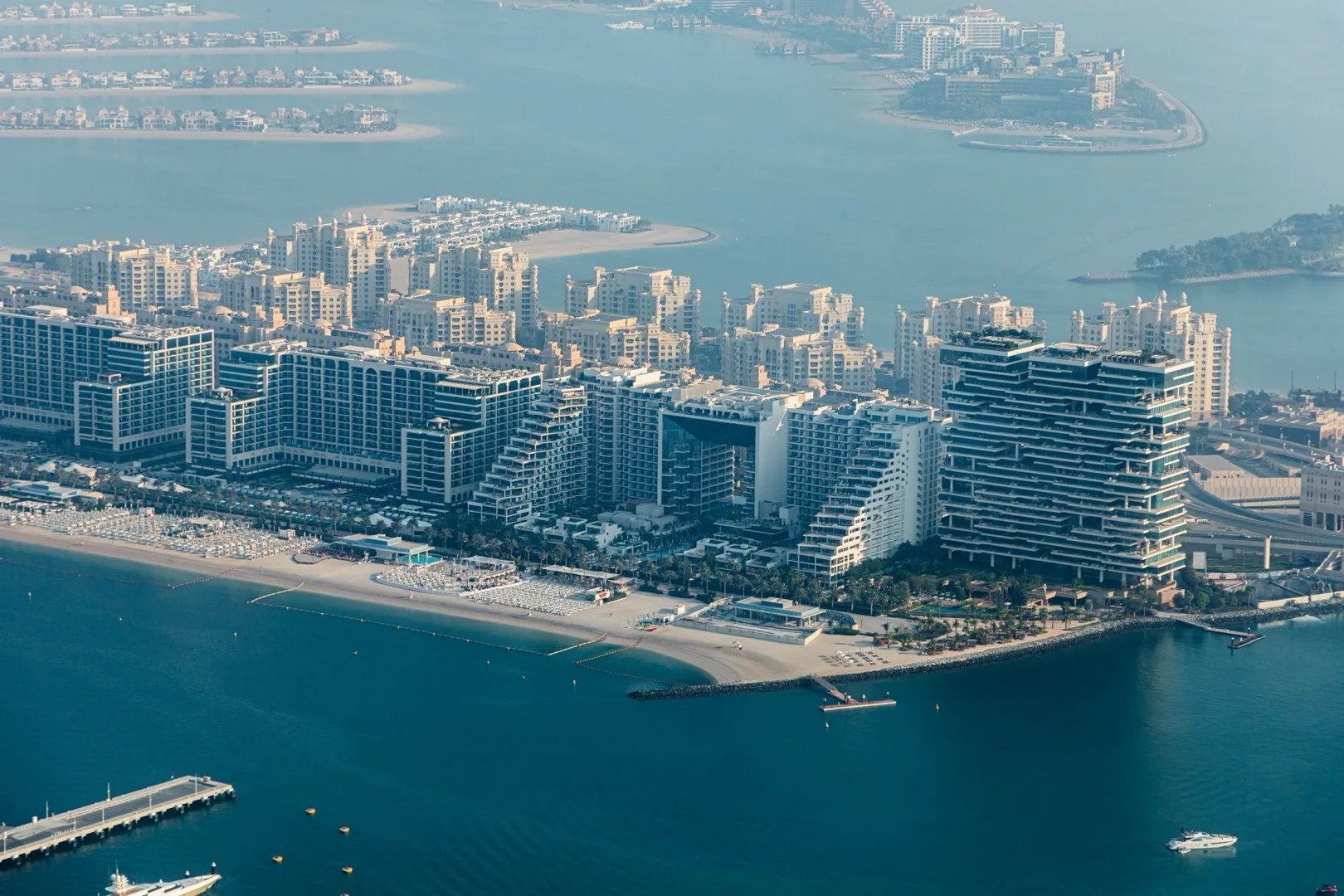
Palm Jumeirah, Bluewaters, La Mer: These are island or waterfront developments where physically there is no land left to build on. New supply can only come from redevelopment of existing buildings — which is extremely rare and expensive in Dubai. The Palm Jumeirah pipeline of ~1,400 units consists almost entirely of ultra-premium projects (Omniyat, Alpago, Select Group) targeting a buyer profile that is entirely different from the volume market.
Regulatory and Zoning Constraints
Downtown Dubai, DIFC, Za'abeel: These districts have stringent zoning regulations and limited available plots. Downtown has been built out for years; the remaining pipeline consists of a handful of premium towers on the last available plots. DIFC's residential pipeline is controlled by DIFC Authority and limited to high-end offerings that serve the district's financial sector workforce.
Premium Positioning
Dubai Marina (established towers), Emirates Hills, Jumeirah Bay Island: These areas attract a fundamentally different buyer — typically end-users, UHNW families, and long-term residents who are not buying for flip or yield. The demand is driven by lifestyle, not speculation, making it far more resilient to supply-side pressure.
The key takeaway: geography is destiny in this cycle. A studio in JVC and an apartment on Palm Jumeirah are technically both "Dubai real estate," but they operate in entirely different markets with entirely different risk profiles.
Distressed Assignment Transfers: How They Work Legally
An assignment transfer (also called a novation) is the legal mechanism by which an off-plan buyer transfers their purchase contract to a new buyer before the unit is registered with the Dubai Land Department. Here's the process:
Legal Framework
- Developer NOC: The original buyer must obtain a No Objection Certificate from the developer. Most developers charge 2–5% of the original purchase price as an assignment fee (Emaar: 2%, Damac: 3–5%, Azizi: 2%).
- RERA approval: The transfer must be registered through the Oqood system (for off-plan) or DLD transfer (for completed units). The standard 4% DLD transfer fee applies at registration, though it may be split between buyer and seller by negotiation.
- Payment status verification: The new buyer assumes the remaining payment obligations. The developer must confirm the payment status and outstanding balance.
- Contract novation: A new Sale and Purchase Agreement (SPA) is executed between the developer and the new buyer, replacing the original contract.
Cost Breakdown for the Buyer
- Purchase price: Negotiated (potentially 10–25% below current market or original OP)
- Developer assignment fee: 2–5% of original purchase price
- DLD registration fee: 4% of purchase price
- Admin/trustee fees: AED 2,000–5,000
- Agent commission (if applicable): 2% of purchase price
Even with all fees factored in, a below-OP assignment can still represent a meaningful discount compared to buying directly from the developer or purchasing a comparable ready unit. The key is ensuring the legal paperwork is airtight and the developer's financial position is sound. For a complete breakdown of off-plan mechanics, see our off-plan vs ready comparison.
How to Negotiate Below-OP Deals
Securing the best price on distressed or motivated-seller assignments requires a disciplined approach:
1. Identify Motivated Sellers
Look for listings where:
- The asking price is at or below the developer's original price list (verify through the Oqood system or the developer directly)
- The listing mentions "assignment" or "investor resale"
- The project is within 3–6 months of completion (maximum handover pressure)
- The same agent or seller has multiple units listed in the same project
2. Verify the Numbers
Before negotiating:
- Obtain the original SPA or at minimum the developer's price confirmation
- Calculate the total cost including all transfer fees
- Compare against current market value for similar ready units in the same area
- Assess the rental market to validate projected yield
3. Use Time Pressure Tactically
The closer to handover, the more negotiating leverage you hold. Sellers facing a 30-day handover deadline will accept steeper discounts than those with 6 months of runway. Be patient — the best deals come to those who can wait for the right moment and close quickly.
4. Always Have Cash or Pre-approved Finance
Distressed sellers need certainty and speed. A buyer who can demonstrate immediate funds — either cash or a pre-approved mortgage — commands a significant negotiating advantage over one who says "subject to finance." In the 2018–2019 cycle, cash buyers consistently secured 5–8% better prices than financed buyers on the same assignments.
Opportunities for Cash-Ready Buyers
If you have liquidity and can move quickly, the 2026–2027 delivery wave presents genuine opportunities that haven't existed in Dubai since 2019–2020:
Ready Units Below Replacement Cost
In oversupplied areas, newly completed units may trade below what it would cost to build them today. With construction costs up 18–22% since 2022 (steel, concrete, and labour have all risen), a below-OP assignment on a completed unit can represent a built-in margin of safety. You're buying at yesterday's prices but getting today's construction quality.
Negotiating Power with Developers
Developers sitting on unsold inventory post-completion face carrying costs — maintenance fees, service charges, and financing costs on the project. Some Tier 2 and Tier 3 developers will offer direct discounts of 5–15% on remaining inventory, or enhanced payment terms (post-handover plans, DLD fee waivers, furniture packages) that effectively reduce the net price.
Yield Plays in Established Areas
While yields compress in oversupplied areas, they can actually improve in adjacent, established communities that benefit from the new infrastructure without the new supply. Areas like Al Furjan, Al Barsha South, and Arjan may see rental demand increase as tenants priced out of newly completed (and newly priced) buildings in JVC and Business Bay look for nearby alternatives.
What to Watch: Leading Indicators of Oversupply
You don't have to wait for oversupply to be announced — the data tells you in advance. Here are the leading indicators to monitor:
- Days on market (DOM): When average listing duration exceeds 60 days in a given area, supply is outpacing demand. Currently, JVC and Business Bay are already at 55–65 days for studios.
- Rental listing growth: A sharp increase in rental listings (20%+ quarter-on-quarter) without corresponding population growth signals incoming vacancy.
- Incentive packages: When developers start offering post-handover plans, DLD fee waivers, or furniture packages, they're struggling to move inventory.
- Assignment listing volume: A surge in assignment listings on platforms like Property Finder and Bayut — particularly for projects 3–6 months from completion — indicates investor capitulation.
- Rental rate softening: A 5–10% decline in achieved rental rates (not asking rates) quarter-on-quarter is an early warning of oversupply affecting occupancy.
- DLD transaction volume: Watch for a divergence between off-plan transaction volume (which may remain high due to new launches) and secondary/ready transaction volume (which slows when buyers become cautious).
Timeline: When the Pressure Peaks
Based on developer completion schedules and historical patterns, here's the expected timeline:
- Q1–Q2 2026 (NOW): Early signs. Assignment listings increasing 15–20% in JVC, Business Bay, and Dubai South. Rental growth slowing to 2–3% after years of 10–15% increases.
- Q3 2026 (July–September): First major pressure point. An estimated 18,000–22,000 units reach completion, triggering the 60/40 squeeze for the largest cohort of 2022-vintage purchases. Below-OP assignments begin appearing regularly.
- Q4 2026 (October–December): Peak pressure. Another 15,000–18,000 completions combine with year-end budget constraints. The best below-OP deals historically appear in November–December as sellers face year-end financial settlements.
- Q1–Q2 2027: Secondary wave. Delayed 2026 projects begin completing alongside scheduled 2027 deliveries. The cumulative effect may push rents down 5–10% in the most oversupplied areas.
- Q3–Q4 2027: Market begins to stabilise. The absorption rate catches up as population growth continues and the worst of the delivery wave passes. Developers slow new launches in response to market signals.
Frequently Asked Questions
Will Dubai property prices crash because of the 2026–2027 delivery wave?
A broad market crash is unlikely. The oversupply risk is concentrated in specific areas (JVC, Dubai South, Dubailand) and specific unit types (studios and 1-beds). Premium areas with limited land and strong end-user demand remain insulated. The more likely outcome is a 5–15% price correction in oversupplied segments, with stable or rising prices in protected areas. Dubai's population growth of ~5% annually provides a demand floor that didn't exist in 2009.
What is a "below OP" deal and how do I find one?
"Below OP" means below original purchase price — a seller is offering a property for less than they paid the developer. These deals appear on Property Finder, Bayut, and through specialised assignment brokers. Look for listings tagged as "assignment" or "investor resale" in projects nearing completion. The best below-OP deals typically appear 1–3 months before handover deadlines, when financial pressure on sellers peaks.
Which areas are safest from oversupply in 2026–2027?
Areas with limited developable land and premium positioning are safest: Palm Jumeirah, Downtown Dubai, DIFC, Bluewaters, La Mer, Emirates Hills, and Jumeirah Bay Island. Dubai Marina, while having some new supply, is mature enough with strong demand to absorb it. Townhouse and villa communities (Arabian Ranches, Tilal Al Ghaf) also face minimal oversupply due to the pipeline being overwhelmingly apartments.
Should I buy off-plan or wait for ready property during the delivery wave?
During a delivery wave, ready property — particularly distressed assignments on newly completed units — often offers better value than new off-plan launches. You can see exactly what you're buying, negotiate from a position of strength, and avoid the 2–3 year construction risk. New off-plan launches during 2026–2027 are still priced aggressively by developers, meaning the discount on the secondary market for nearly-identical products can be significant. See our off-plan vs ready guide for a full comparison.
How do assignment transfers work in Dubai and what are the costs?
An assignment transfer moves the original buyer's SPA to a new buyer before DLD title registration. The process requires: developer NOC (fee: 2–5% of original price), RERA/Oqood registration, and a novation agreement. Total costs include the negotiated purchase price, developer assignment fee, 4% DLD registration fee, admin fees (AED 2,000–5,000), and optional agent commission (2%). Despite these costs, a below-OP assignment can still represent a 10–20% net saving versus buying the same unit directly or purchasing a comparable ready property.
When is the best time to buy during the delivery wave?
Based on historical patterns and the expected delivery schedule, the optimal buying window is Q4 2026 through Q1 2027. This is when: (1) the largest cohort of 60/40 handover payments comes due, creating maximum seller pressure; (2) year-end financial settlements add urgency; (3) rental market data provides clarity on actual oversupply severity. Buyers who can commit capital during this window — particularly with cash — will have the strongest negotiating position.
Conclusion: Strategy for the Delivery Wave
The 2026–2027 delivery wave is neither a crisis nor a non-event — it's a structural rebalancing that will create distinct winners and losers across Dubai's property market. The data points to three strategic takeaways:
- Avoid the crowded trades. Studios and 1-bedrooms in JVC, Dubai South, and Dubailand face genuine oversupply pressure. Unless you're buying at a significant below-OP discount with a clear rental demand thesis, these segments carry elevated risk.
- Watch for the squeeze. The Q3–Q4 2026 handover window will produce distressed assignment opportunities that haven't been available since 2019. Cash-ready buyers with pre-approved deals who can close in 30 days will capture the deepest discounts.
- Premium is protected. If your strategy is capital preservation with moderate appreciation, land-constrained premium areas continue to offer the safest profile. They're expensive, but they're expensive for a reason — scarcity is the ultimate hedge against oversupply.
The investors who perform best in delivery-wave cycles are not those who sit on the sidelines, nor those who buy indiscriminately. They are the ones who understand — at a granular, area-by-area, unit-type-by-unit-type level — exactly where the pressure is, and exactly where the value is. This analysis gives you the map. The execution is up to you.
Disclaimer: This article is for informational purposes only and does not constitute financial, legal, or investment advice. Property investments carry risk, including the risk of capital loss. Past performance does not guarantee future results. Pipeline data is sourced from publicly available developer disclosures, DLD records, REIDIN, JLL, Cushman & Wakefield, and Property Monitor as of Q1 2026. Actual delivery volumes, pricing, and market conditions may differ materially from projections. Always conduct independent due diligence and consult qualified professionals before making investment decisions. Real Estate Club Dubai and its contributors are not licensed financial advisors.
Want a Data-Backed Second Opinion?
Tell us your plans — we'll share what the data says about your timing.
Thank You!
We'll get back to you within 24 hours.
Real Estate Agencies in Dubai
Explore providers from our business directory
Still have questions?
Ask a follow-up, or get connected with a vetted Dubai professional.
Follow us on LinkedIn
Dubai market analysis and industry insight for professionals.