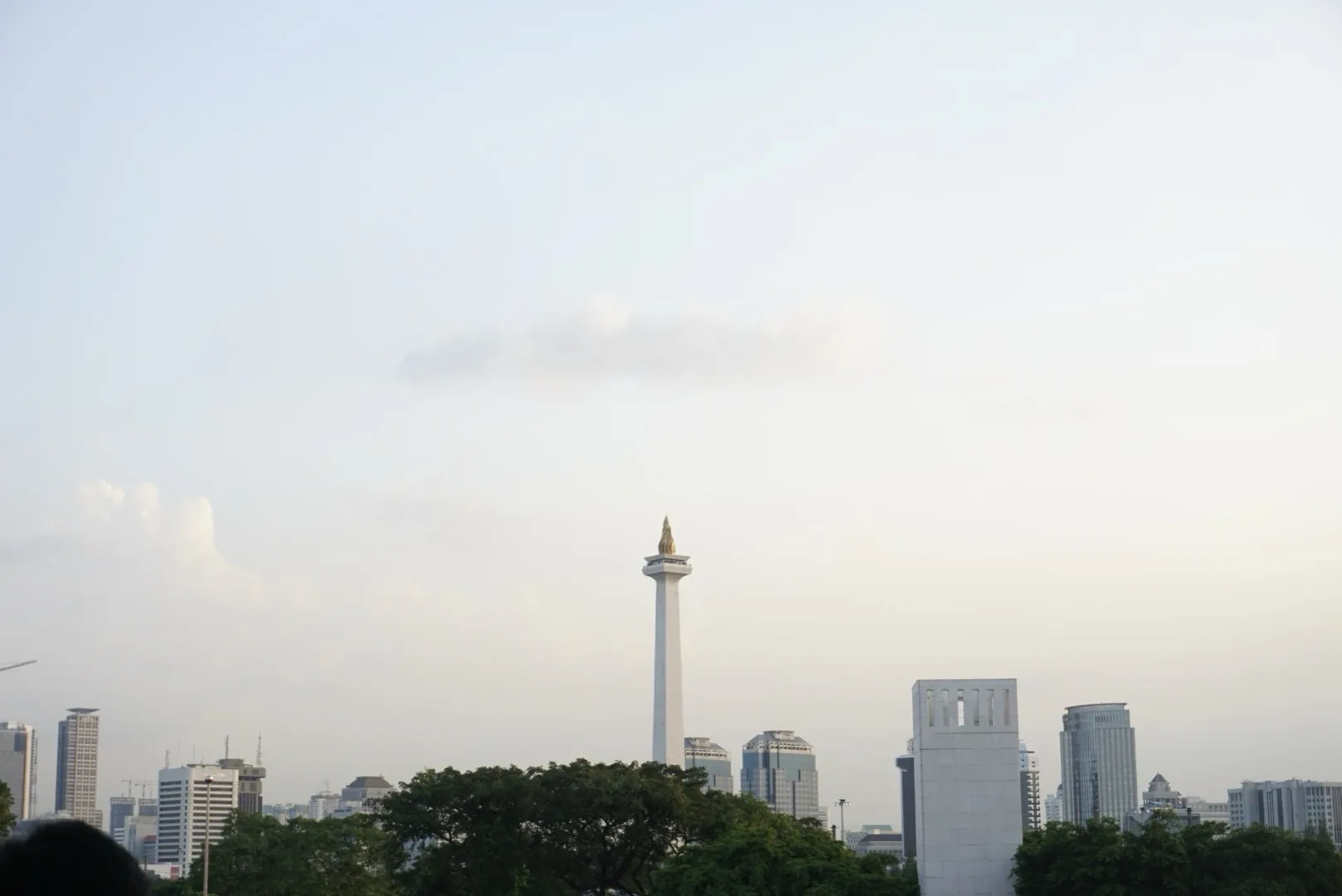
Moving to Dubai from Indonesia: Visa, Property, Banking & Halal Living 2026

- An estimated 30,000+ Indonesian nationals live in the UAE — a mix of professionals, healthcare workers, hospitality staff, tech specialists, and domestic workers — making it one of the larger Southeast Asian communities in Dubai.
- Indonesian passport holders receive a 30-day visa-on-arrival at Dubai International Airport. Long-term options include employment visas, freelance permits, business setup, and the 10-year Golden Visa via AED 2 million property investment.
- Indonesia taxes residents on worldwide income at 5–35% plus 11% VAT. The UAE has 0% personal income tax. Spending 183+ days outside Indonesia and establishing UAE tax residency flips your position dramatically.
- Dubai is fully halal-compatible — halal-certified supermarkets everywhere, mosques in every neighbourhood, Ramadan officially observed, and prayer-friendly workplaces. For Muslim Indonesian families, the cultural fit is far closer than relocation to Europe or East Asia.
- Indonesians have full freehold property rights in Dubai's designated areas. No nationality restrictions, no special approvals — the same buying process as any other foreign investor.
- Dubai does not have an Indonesian-curriculum school. Most Indonesian families choose IB, British, or American curriculum schools. The Asian International School Dubai is a popular option for younger children.
- Indonesia and the UAE signed a Comprehensive Economic Partnership Agreement (IUAE-CEPA) — strengthening bilateral trade, business mobility, and investment ties between the two countries.
Why Indonesians Are Moving to Dubai
Indonesia is the world's largest Muslim-majority country and Southeast Asia's largest economy. Yet for ambitious professionals, entrepreneurs, and young families, Dubai has emerged as one of the most compelling relocation destinations of the 2020s. The reasons are concrete: career advancement, better tax efficiency, business opportunities anchored by the IUAE-CEPA agreement, and a fully halal-friendly daily environment.
The Indonesian community in the UAE has grown to roughly 30,000 people, concentrated heavily in Dubai. The makeup is diverse: hospitality and aviation professionals (Emirates, Etihad, and major hotel groups have long recruited from Indonesia), healthcare workers (nurses and physiotherapists), tech specialists, business owners in trading and F&B, and a significant population of domestic workers serving expat households. You are joining an established community with mosques, restaurants, business associations, and informal networks already in place.
Beyond the push factors, Dubai offers tangible pull. The Indonesia-UAE Comprehensive Economic Partnership Agreement (IUAE-CEPA), which came into force in 2023, has accelerated trade, simplified business setup, and signalled that the UAE is open for serious commercial engagement. Direct flights between Jakarta or Bali and Dubai run daily on Emirates, Garuda Indonesia, and Etihad — eight to nine hours flight time, only a three-hour time difference.
Visa Options for Indonesian Citizens
Indonesian passport holders receive a 30-day visa-on-arrival at Dubai International Airport, extendable per current ICP rules — verify the latest at the Federal Authority for Identity & Citizenship (ICP) before travel. This makes scouting trips, property viewings, and interviews simple. For long-term residence, several pathways exist.
Employment Visa
The most common route. Your UAE employer sponsors a 2–3 year residence visa, handles the application, medical examination, Emirates ID, and visa stamping. Indonesians are well represented in hospitality, aviation, healthcare, and tech. You can sponsor spouse and children once you meet the minimum salary threshold (typically AED 4,000 per month plus accommodation).
Freelance Permit
Independent professionals can obtain a freelance permit through several free zones, which includes a residence visa. Dubai Media City and Internet City packages start around AED 7,500 per year. Lower-cost alternatives include Ajman Free Zone and Sharjah's SHAMS from approximately AED 5,500 annually — a strong fit for remote-working Indonesian creators.
Investor / Business Owner Visa
Indonesian entrepreneurs benefit significantly from IUAE-CEPA. Setting up a UAE company — mainland or free zone — includes residence visa allocation. Free zones offer 100% foreign ownership and simplified setup. For trading businesses connecting Southeast Asia with the GCC, Jebel Ali Free Zone or DMCC are often the optimal launchpad.
Golden Visa (10-Year Residence)
The UAE Golden Visa offers 10-year renewable residence to property investors, entrepreneurs, and specialised talent. For property investors the threshold is AED 2 million — and the property can be under mortgage, with the full purchase price counting toward eligibility. See our Golden Visa 2026 guide for full details.
Property Visa (2-Year Residence)
If your property investment is between AED 750,000 and AED 2 million, you qualify for a 2-year renewable residence visa linked to the asset. The property must be completed (not off-plan), and you must maintain valid health insurance.
Visa Pathway Summary
| Visa Type | Duration | Key Requirement | Best For |
|---|---|---|---|
| Visa-on-arrival | 30 days | Indonesian passport, return ticket | Scouting trips, interviews |
| Employment visa | 2–3 years | UAE employer sponsorship | Hospitality, healthcare, tech, aviation |
| Freelance permit | 2 years | Free zone freelance package (AED 5,500–7,500/yr) | Designers, developers, creators, consultants |
| Investor / business setup | 2–3 years | UAE company formation | Trading, F&B, services, IUAE-CEPA-linked businesses |
| Property visa | 2 years | AED 750K–2M completed property | Smaller-ticket investors |
| Golden Visa | 10 years | AED 2M+ property OR specialised talent | Long-term settlers, family planning |
Tax Considerations: Indonesia and the UAE
This is one of the largest financial differences between life in Jakarta and life in Dubai, and it deserves careful planning before you move.
Indonesia's Worldwide Income Tax
Indonesia taxes residents on worldwide income at 5% (first IDR 60 million) up to 35% (above IDR 5 billion). On top of that, an 11% VAT applies on most goods and services. The combined drag materially reduces take-home wealth accumulation.
UAE's Zero Personal Income Tax
The UAE has no personal income tax, no capital gains tax on individual investments, and no inheritance tax. A 5% VAT applies on most goods and services. The federal corporate tax of 9% (introduced 2023) applies only to business profits above AED 375,000 and does not affect individual employment income.
The 183-Day Rule
You are considered an Indonesian tax resident if you spend more than 183 days in Indonesia in a 12-month period, or if Indonesia is the centre of your economic and personal life. To genuinely benefit from UAE 0% tax:
- Spend fewer than 183 days per year in Indonesia.
- Establish UAE tax residency — residence visa, Ejari tenancy contract, and ideally a UAE Tax Residency Certificate from the Federal Tax Authority after 183 days of UAE presence.
- Notify the Indonesian tax office (Direktorat Jenderal Pajak) of your status change and keep entry/exit records.
Indonesia and the UAE have a Double Tax Treaty preventing double taxation on most income types — but Indonesian-source income (e.g. rental from a Jakarta apartment) remains taxable in Indonesia. Always consult a qualified cross-border tax adviser before relocating.
Property Investment for Indonesian Buyers
Indonesians have full freehold property ownership rights in Dubai's designated freehold zones — no nationality restrictions, no special approvals, no surcharge. The buying process is regulated by the Dubai Land Department and significantly simpler than buying property in Indonesia (where foreign buyers face Hak Pakai limitations rather than full Hak Milik freehold).
Financing is available as both a resident and non-resident. Resident mortgages reach 75–80% LTV at rates of 4.0–5.0%; non-resident mortgages cap closer to 50–60% LTV. Our non-resident mortgage guide covers documentation and eligible banks. Total transaction costs run 7–8% including the 4% DLD fee, agency commission, NOC and admin fees. See our step-by-step buying process for a complete walkthrough.
The Indonesian Community in Dubai
Indonesians in Dubai number roughly 30,000, drawn from across the archipelago — Jakarta, Surabaya, Bandung, Bali, Yogyakarta, and beyond. Indonesian professionals are visible in hospitality (front-of-house and culinary roles at Dubai's five-star hotels), aviation (cabin crew at Emirates and Etihad), healthcare (nursing, physiotherapy), and increasingly in tech. Senior business owners run trading firms, F&B concepts, and consulting practices. A significant portion of Dubai's domestic workforce also comes from Indonesia.
The Indonesian Embassy in Abu Dhabi and Consulate General in Dubai run consular services, cultural events (notably 17 Agustus Independence Day celebrations), and welfare programmes. Cultural and religious associations like Permai (Persatuan Masyarakat Indonesia di Uni Emirat Arab) host regular gatherings and family events. Active WhatsApp, Telegram, and Facebook groups — "Indonesia di Dubai", "WNI UAE", and area-specific networks — help newcomers settle in.
Halal Living: Why Dubai Fits Indonesian Muslim Families
For the majority of Indonesian families, who are Muslim, daily life in Dubai is materially closer to home than relocating to Europe, East Asia, Australia, or the United States. Halal certification is the default rather than the exception, prayer life is integrated into the city's rhythm, and the entire calendar is structured around the Islamic year.
| Halal-Living Amenity | Availability in Dubai | Notes for Indonesian Families |
|---|---|---|
| Halal-certified supermarkets | All major chains (Carrefour, Lulu, Spinneys, Union Coop, Choithrams) | Default standard — non-halal items are clearly segregated, often in separate enclosed sections |
| Mosques (masjid) | Hundreds across the city — typically a mosque per residential cluster | Adhan audible throughout most neighbourhoods; many malls have prayer rooms |
| Prayer rooms in workplaces and malls | Standard — segregated male/female prayer rooms in malls, offices, airports | Workplaces accommodate prayer breaks naturally; no negotiation required |
| Ramadan observance | Officially recognised — reduced working hours, iftar tents, public observance | Full cultural alignment with Indonesian Ramadan traditions; vibrant iftar and tarawih scene |
| Halal restaurants | Vast majority of restaurants are halal by default | Including Indonesian restaurants — soto, nasi padang, sate, bakso available |
| Islamic schooling options | Many schools offer Islamic studies and Arabic; dedicated Islamic curriculum schools available | Compatible with continuing your child's Quranic education and akhlaq formation |
| Hijab and Islamic dress | Fully accepted; widespread | No social or workplace barriers — visibly Muslim presentation is normalised |
| Islamic banking | Major banks (Emirates Islamic, Dubai Islamic Bank, ADIB) offer Sharia-compliant products | Sharia-compliant mortgages (Ijarah, Murabaha) for property purchase available |
Roughly 75% of Dubai's population is expatriate, with substantial Asian Muslim populations from Indonesia, Pakistan, Bangladesh, India, Malaysia, and the Philippines. Your children will not be a religious or cultural outlier, and daily routines around prayer, halal food, and modest dress are simply normal.
Relocating to Dubai?
Get Your Relocation Checklist
Cost of living, visa requirements, housing tips, and everything you need to plan your move.
✓ You're in! Check your inbox.
Schools for Indonesian Families
One important practical reality: Dubai does not have an Indonesian-curriculum school recognised by the Indonesian Ministry of Education and Culture (Kemendikbud). For Indonesian families with school-age children, this means choosing among international curriculum options. The most common paths are International Baccalaureate (IB), British (Cambridge / Pearson Edexcel / Oxford AQA), and American.
International Baccalaureate (IB)
IB is widely respected and recognised by Indonesian universities through equivalency procedures. Schools like Dubai International Academy, GEMS World Academy, and Raffles World Academy run full IB programmes. Annual fees range from approximately AED 50,000 to AED 95,000.
British Curriculum
The British curriculum (IGCSE + A-Levels) is the most widespread choice in Dubai with the largest school selection — value-tier from around AED 25,000–40,000 to premium AED 90,000+. British qualifications are accepted by Indonesian universities and major global universities.
American Curriculum
American-curriculum schools — Dubai American Academy, American School of Dubai, Universal American School — are popular among families targeting US universities. Fees run AED 60,000–100,000 per year.
Asian International Schools
For younger Indonesian children, Asian International School Dubai is a popular option — culturally familiar, with many Southeast Asian families and a more affordable fee tier (around AED 20,000–35,000 per year). Often the entry choice for primary years before transitioning to IB or British curriculum at secondary level. See our complete Dubai schools guide for a deeper comparison.
Banking Setup and IDR-AED Transfers
UAE banks accept Indonesian passport holders without difficulty once you hold a residence visa and Emirates ID. The major banks — Emirates NBD, ADCB, FAB, Mashreq, RAK Bank, and Dubai Islamic Bank — all serve Indonesian residents. Required documentation: passport, residence visa, Emirates ID, Ejari tenancy contract, and proof of income. Account opening typically takes 3–7 working days.
For Indonesian Muslim families, Emirates Islamic, Dubai Islamic Bank, and ADIB offer fully Sharia-compliant banking — no riba, Murabaha-based financing, and Islamic deposit products. A complete Islamic banking ecosystem is ready to use.
Transferring Money from Indonesia (IDR to AED)
The spread between providers is significant. Main options:
| Transfer Method | Speed | Typical Fee | Exchange Rate |
|---|---|---|---|
| Wise (TransferWise) | 1–2 business days | 0.5–1.5% of transfer amount | Mid-market rate (best value) |
| Bank SWIFT (BCA, Mandiri, BNI) | 2–5 business days | USD 25–50 + intermediary fees | Bank's rate (1.5–3% markup) |
| UAE exchange houses (Al Ansari, LuLu Exchange) | Same day | Built into the rate | Competitive cash rates; less so for transfers |
| Remittance corridors (Western Union, MoneyGram) | Minutes to 1 day | Variable; high for small amounts | Marked-up rate (2–4%) |
For larger transfers (e.g. property down payments), Wise or SWIFT through your Indonesian bank are typical choices. Banks may require source-of-funds documentation for transfers above USD 50,000 — keep your records organised.
Cost of Living: Jakarta vs Dubai
One of the most asked questions: is Dubai actually more expensive than Jakarta? The honest answer is nuanced. Headline rents and schooling are higher in Dubai. But the absence of income tax, lower VAT (5% vs 11%), and the higher salary ceiling mean a Dubai-based professional often comes out materially ahead.
| Expense Category | Jakarta (Monthly IDR / USD) | Dubai (Monthly AED / USD) | Notes |
|---|---|---|---|
| Rent (1BR, central area) | 12–25M IDR / $750–1,550 | 5,000–8,000 AED / $1,360–2,180 | Dubai rents higher in absolute terms but include modern build quality and amenities |
| Utilities (electric, water, cooling) | 1.5–3M IDR / $90–185 | 600–1,200 AED / $165–325 | Dubai AC costs significant May–October; Jakarta humidity adds to electric bills year-round |
| Groceries (couple) | 4–7M IDR / $250–435 | 1,800–2,800 AED / $490–760 | Indonesian fresh produce far cheaper; Dubai imports drive cost up |
| Dining out (mid-tier meal) | 100–250K IDR / $6–16 per meal | 60–150 AED / $16–41 per meal | Dubai casual dining 2–3x Jakarta; warung-equivalent cheap eats limited |
| Transport (car or transit) | 2–5M IDR / $125–310 | 800–2,000 AED / $220–545 | Jakarta has Gojek/Grab + Transjakarta cheap; Dubai requires car for most lifestyles |
| School fees (per child, mid-tier intl) | 100–250M IDR/yr / $6,200–15,500 | 35,000–70,000 AED/yr / $9,500–19,000 | Premium schools higher in both cities; Dubai average above Jakarta average |
| Health insurance | BPJS + private add-on (1–4M IDR) | 600–1,800 AED / $165–490 | Dubai mandates private insurance; usually employer-provided |
| Income tax | 5–35% progressive + 11% VAT | 0% income tax + 5% VAT | Single largest financial swing in favour of Dubai |
Bottom line: a senior professional earning USD 4,000–5,000 net in Jakarta typically needs USD 5,500–7,000 in Dubai for an equivalent lifestyle — but with 0% income tax and lower VAT, the required gross salary is much lower. Run your own numbers using our Relocation Cost Estimator or review our Dubai cost of living guide.
Cultural Fit and Healthcare
Beyond economics, Indonesian families adapt to Dubai unusually well. Salah, halal food, modest dress, Ramadan observance, and Eid celebrations are the architecture of daily life rather than accommodations. With roughly 75% of Dubai's population being expatriate — including substantial Asian populations from Indonesia, Pakistan, India, Bangladesh, and the Philippines — Indonesian families are not visible outsiders. Indonesian restaurants serve nasi padang, gado-gado, soto, and bakso, and Indonesian language teachers and weekend Quran classes are available through community networks.
UAE health insurance is mandatory and entirely private — your employer is legally required to provide it. Major hospital networks include Mediclinic, Aster, NMC, Saudi German Hospital, and Cleveland Clinic Abu Dhabi for tertiary care. Wait times are dramatically shorter than Jakarta's private hospitals, and language access is excellent. Self-employed and freelance visa holders pay roughly AED 5,000–7,000 per year for basic plans, AED 10,000–25,000 for comprehensive coverage. See our Dubai healthcare guide for expats for full detail.
Practical Moving Checklist: Indonesia to Dubai
Before You Leave Indonesia
- Secure your visa pathway first. Do not ship belongings or terminate your Jakarta lease until your UAE residence is confirmed.
- Document apostille and legalisation. Indonesia joined the Apostille Convention in 2022 — birth, marriage, and education certificates can be apostilled through the Ministry of Law and Human Rights (Kemenkumham). Some UAE authorities still request additional MOFA legalisation; check with your sponsor.
- Tax residency planning. Notify the Indonesian Directorate General of Taxes of your departure, deregister where appropriate, and document the transition clearly to support future UAE Tax Residency Certificate applications.
- Shipping. Sea freight from Tanjung Priok (Jakarta) or Surabaya to Jebel Ali takes approximately 25–35 days. International movers like Asian Tigers, Crown Worldwide, and Santa Fe Relocation operate Indonesia-to-UAE routes.
- Driving licence. Indonesia is currently not on the UAE's approved driving licence transfer list. You will need to obtain a UAE driving licence through driving school lessons and tests after arrival. Plan for AED 5,000–7,500 in costs and 2–3 months of part-time training. See our Dubai driving licence guide for details.
- Notify your Indonesian bank. Inform BCA, Mandiri, BNI or your bank about overseas relocation to avoid unexpected account restrictions.
First Two Weeks in Dubai
- Medical examination. Required for residence visa — blood tests and chest X-ray at DHA-approved centres.
- Emirates ID. Apply via ICP. Biometrics captured at an authorised centre. The card arrives within 2–3 weeks. Verify all status updates at u.ae, the official UAE Government portal.
- Bank account. Open as soon as you have your Emirates ID. Indonesian Muslim families may want Dubai Islamic Bank or Emirates Islamic for fully Sharia-compliant accounts.
- Mobile plan. Postpaid with du or Etisalat (requires Emirates ID); prepaid SIM available immediately on arrival with passport.
- Tenancy contract (Ejari). Register your rental contract on the Ejari system — required for your residence visa, school enrolment, and utility connection.
- Connect with the community. Indonesian Embassy in Abu Dhabi, Consulate General in Dubai, and Permai community group are immediate first contacts.
For full residency cost planning see our Dubai residency visa costs guide.
Returning Home: Considerations
Some Indonesian families come to Dubai for a 2–5 year posting and return home; others settle long term. If a return is on your horizon, plan for it from day one:
- Maintain Indonesian property for re-entry stability.
- BPJS contributions. Consider voluntary continued contributions to preserve pension and health benefit eligibility.
- Education continuity. IB or Cambridge curriculum students transition more smoothly to Indonesian universities than American-curriculum graduates.
- Financial planning. Funds accumulated tax-free in the UAE can be transferred back, but Indonesian source-of-funds and reporting rules apply. Document the savings trail.
- Tax re-registration. Re-register as an Indonesian tax resident on return and disclose foreign assets under standard taxpayer obligations.
Frequently Asked Questions
Do Indonesian citizens need a visa to visit Dubai?
Indonesian passport holders receive a 30-day visa-on-arrival at Dubai International Airport. Always verify the latest entry rules with the ICP before travel, as visa-on-arrival policies are reviewed periodically. For stays beyond 30 days, you need either an extension or a residence visa via employment, business, or property.
Can Indonesians buy property in Dubai?
Yes — fully and freely. Indonesians have the same freehold ownership rights as any other foreign buyer in Dubai's designated freehold zones. There are no nationality restrictions, no special approvals required, and no extra fees. You can buy with or without holding a UAE residence visa.
How is daily Muslim life in Dubai compared to Indonesia?
For practical purposes, Dubai is fully aligned with daily Muslim life — halal-certified food everywhere, mosques in every neighbourhood, prayer rooms in workplaces and malls, Ramadan officially observed with reduced working hours, and modest dress fully accepted. The cultural fit is closer to home than relocations to Western or East Asian destinations.
Is there an Indonesian-curriculum school in Dubai?
No, Dubai does not currently have an Indonesian-curriculum school recognised by Kemendikbud. Indonesian families typically choose IB, British, or American curriculum schools. For younger children, Asian International School Dubai is a popular intermediate option. IB and British qualifications are recognised by Indonesian universities through equivalency procedures.
How does Indonesian tax treatment work after I move to Dubai?
Indonesia taxes residents on worldwide income at 5–35% plus 11% VAT. To genuinely benefit from UAE 0% income tax, you must spend fewer than 183 days a year in Indonesia, establish UAE tax residency (visa, Ejari, ideally a Tax Residency Certificate), and notify the Indonesian tax authority. Indonesian-source income (e.g. Jakarta rental property) remains taxable in Indonesia under the bilateral tax treaty.
What is the best way to transfer money from Indonesia to the UAE?
For most transfers, Wise (TransferWise) offers the best combination of mid-market exchange rates and 0.5–1.5% fees. Bank SWIFT through BCA, Mandiri, or BNI works for larger amounts but carries 1.5–3% rate markups. UAE exchange houses are competitive for cash, less so for transfers. Document source of funds for transfers above USD 50,000 equivalent.
Is there a strong Indonesian community in Dubai?
Yes. An estimated 30,000+ Indonesians live in the UAE, with a strong concentration in Dubai across hospitality, aviation, healthcare, tech, and trading sectors. The Indonesian Embassy, Consulate General, and community groups like Permai run regular cultural and religious events. Active WhatsApp and Telegram networks help newcomers settle in quickly.
Can I get a Sharia-compliant mortgage in Dubai?
Yes. Emirates Islamic, Dubai Islamic Bank, and ADIB offer fully Sharia-compliant home financing using Murabaha and Ijarah structures — no riba (interest), with clearly defined profit margins instead. These are widely available to Indonesian residents, and rates are competitive with conventional mortgages. Documentation requirements are similar to conventional banking.
Every relocation has its own shape — family size, profession, career stage, and tax situation all matter. If you are an Indonesian professional or family planning a move to Dubai and want tailored guidance on visa pathways, property investment, halal-friendly neighbourhoods, or schooling options, our REC Lifestyle Specialists are here to help. Reach out through the community or send us a message — we have helped Indonesian families across the spectrum settle into Dubai smoothly.
Planning Your Move?
Get personalized relocation advice from our Dubai team.
Thank You!
We'll get back to you within 24 hours.
Moving & Relocation Companies in Dubai
Explore providers from our business directory
Still have questions?
Ask a follow-up, or get connected with a vetted Dubai professional.
Join our Telegram channel
Handover alerts, new launches & DLD data — first, in real time.