How to Sell Your Property in Dubai: Complete Resale Process Guide (2026)

- Dubai has zero capital gains tax — you keep every dirham of profit from your sale.
- The standard agent commission is 2% of the sale price plus 5% VAT on the commission.
- Key steps: valuation → listing → offer → MoU (Form F) → NOC from developer → DLD transfer at the trustee office.
- Budget AED 15,000–25,000 in fixed fees (NOC, DLD trustee, admin) on top of agent commission.
- The entire process typically takes 4–8 weeks from accepted offer to title deed transfer.
- Preparing your property properly and pricing it correctly are the two biggest factors in achieving a fast, profitable sale.
Why 2026 Is a Strong Time to Sell Property in Dubai
Dubai's real estate market has sustained remarkable momentum into 2026. Transaction volumes continue to set records, driven by population growth exceeding 100,000 new residents per year, ongoing infrastructure expansion ahead of major global events, and sustained demand from international investors seeking tax-efficient jurisdictions.
Several factors make this an attractive window for sellers. Rental yields remain among the highest globally at 5–8% depending on the area, which keeps investor demand strong. Freehold areas such as Dubai Marina, Downtown, JVC, and Dubai Hills have seen capital appreciation of 15–40% since 2023. Meanwhile, new supply coming online in 2026–2027 means some buyers are eager to secure existing properties in established communities rather than wait for off-plan handovers.
If you have been considering selling, understanding the complete process before you begin will help you maximise your return and avoid costly mistakes. This guide walks you through every step of how to sell property in Dubai — from initial preparation to collecting your funds after transfer.
Step 1: Preparing Your Property for Sale
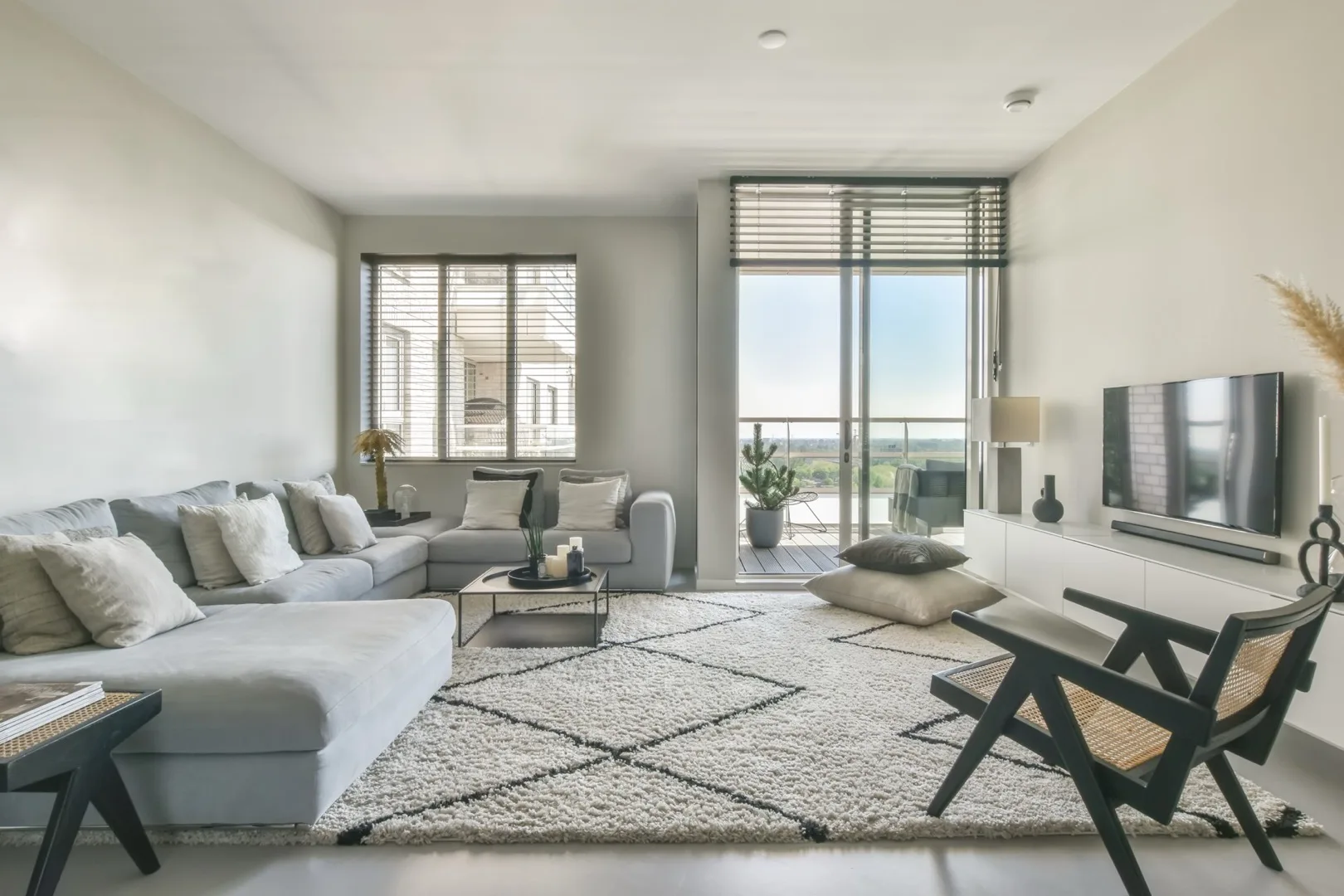
First impressions drive property sales. Before you list, invest time and a modest budget into making your property as appealing as possible to prospective buyers.
Essential Preparation Checklist
- Deep clean: Professional deep cleaning including AC ducts, grout, balconies, and windows. Budget AED 500–1,500 depending on property size.
- Minor repairs: Fix leaky taps, chipped paint, broken handles, stained walls. These small issues signal neglect and give buyers negotiation ammunition.
- Declutter and depersonalise: Remove excess furniture, personal photos, and clutter. Buyers need to imagine themselves living in the space.
- Fresh paint: A fresh coat of neutral paint (white or light grey) costs AED 1,500–4,000 for an apartment and can add tens of thousands to perceived value.
- Landscaping: For villas, ensure the garden is maintained, pool is clean, and exterior is presentable.
- Staging: For vacant properties, consider professional staging. Furnished units photograph and show significantly better than empty shells.
Gather Your Documents Early
Having paperwork ready from day one prevents delays once a buyer is found. Collect the following documents before listing:
| Document | Where to Get It | Notes |
|---|---|---|
| Title Deed | DLD / Dubai REST app | Original or digital copy |
| Passport Copy | Your records | Valid, not expired |
| Emirates ID | Your records | If UAE resident |
| Mortgage Payoff Letter | Your bank | If property is mortgaged — shows outstanding balance |
| Service Charge Receipts | Building management | Must be paid up to date |
| DEWA Final Bill / Clearance | DEWA | Required before transfer |
| Power of Attorney | Notary Public | Only if someone else will sign on your behalf |
Step 2: Getting an Accurate Valuation
Pricing your property correctly is the single most important factor in achieving a successful sale. Overpricing leads to stale listings that eventually sell below market value. Underpricing leaves money on the table.
How to Determine the Right Price
- Comparative Market Analysis (CMA): Ask 2–3 reputable agents to provide a CMA based on recent sold prices (not asking prices) for similar properties in your building or community.
- DXBinteract.com: The Dubai Land Department's official portal shows actual transaction prices. Cross-reference your agent's valuation against real data.
- Price per square foot: Calculate your property's price per square foot and compare it against recent transactions. This normalises differences in unit size.
- RERA Index: Check the RERA rental index to understand yield metrics, which many investor-buyers use to evaluate purchases.
Step 3: Choosing the Right Real Estate Agent
While it is legally possible to sell property in Dubai without an agent (a private sale), the vast majority of transactions go through licensed brokers. A good agent earns their commission through market knowledge, buyer access, negotiation skill, and transaction management.
What to Look For
- RERA registration: Every agent must hold a valid RERA broker card. Verify this through the Dubai REST app or DLD website.
- Area specialisation: Choose an agent who specialises in your community and has a track record of recent sales there.
- Marketing plan: Ask how they will market your property — professional photography, video tours, portal listings (Property Finder, Bayut, Dubizzle), social media, and their own database.
- Communication style: You want an agent who provides regular updates, responds quickly, and is transparent about feedback from viewings.
- Commission rate: The standard seller's agent commission in Dubai is 2% of the sale price. Avoid agents who undercut significantly — it often reflects the level of service you will receive.
Signing the Form A (Listing Agreement)
Once you select an agent, you will sign a RERA Form A — the official listing agreement. This document authorises the agent to market and sell your property on your behalf. Key points to understand:
- Specifies the listing price, commission rate, and listing duration (typically 3–6 months).
- Can be exclusive (one agent only) or non-exclusive (multiple agents). Exclusive listings often receive more marketing effort.
- The form is a legally binding contract regulated by RERA.
Step 4: Listing and Marketing Your Property
Effective marketing gets your property in front of the right buyers quickly. Here is what a good listing strategy includes:
- Professional photography: High-quality, wide-angle photos taken in daylight with all lights on. This is non-negotiable — phone photos cost sales.
- Video walkthrough or 3D tour: Increasingly expected by international buyers who may not be in Dubai.
- Compelling listing description: Highlight unique selling points — view, floor level, upgrades, community amenities, proximity to metro or schools.
- Portal presence: Your listing should appear on Property Finder, Bayut, and Dubizzle at minimum, with featured or premium placement if budget allows.
- Agent network: Experienced agents share listings with their network of buyer agents, expanding your reach significantly.
Step 5: Managing Viewings
Viewings are where sales are won or lost. Whether you are present or leave it entirely to your agent, these guidelines help:
- Ensure the property is clean, well-lit, and smells fresh for every viewing.
- If the property is tenanted, coordinate with your tenant and provide reasonable notice (24–48 hours minimum, as a courtesy).
- Remove valuables and personal items.
- For occupied properties, try to be away during viewings — buyers feel more comfortable exploring without the owner present.
- Ask your agent for feedback after every viewing. Consistent negative feedback about the same issue means it needs to be addressed.
Step 6: Receiving and Negotiating Offers
When an offer comes in, your agent will present it to you. Here is how to navigate the negotiation phase:
- Expect negotiation: Most buyers will offer 5–10% below asking price. This is standard practice in Dubai.
- Evaluate the buyer: A cash buyer can close faster than a mortgage buyer. A pre-approved mortgage buyer is more reliable than one who has not yet spoken to a bank.
- Counter-offer strategically: Rather than accepting or rejecting outright, counter at a price you would be happy with.
- Consider the full picture: A slightly lower offer with a faster timeline and fewer conditions may be worth more than a higher offer with uncertainties.
Step 7: Signing the MoU (Form F)
Once both parties agree on price and terms, you sign the Memorandum of Understanding — known as RERA Form F. This is the most critical document in the transaction.
Key Elements of the Form F
- Agreed sale price and payment terms.
- Security deposit: The buyer pays a 10% deposit (typically held by the listing agency or a conveyancer). This deposit is usually non-refundable if the buyer pulls out without valid reason.
- Timeline: Specifies deadlines for obtaining the NOC, mortgage approval (if applicable), and completing the transfer.
- Conditions: Any conditions such as mortgage approval, property inspection, or specific handover requirements.
- Penalties: Consequences for either party failing to complete — typically forfeiture of the 10% deposit.
Both buyer and seller sign the Form F along with their respective agents. All parties receive copies.
Step 8: Obtaining the NOC from the Developer
The No Objection Certificate (NOC) is issued by the master developer of your property. It confirms that you have no outstanding service charges or fees and that the developer has no objection to the transfer of ownership.
NOC Process and Costs
| Developer | Typical NOC Fee | Processing Time |
|---|---|---|
| Emaar | AED 5,000 + VAT | 5–7 business days |
| DAMAC | AED 5,000 + VAT | 5–10 business days |
| Nakheel | AED 5,000 + VAT | 5–7 business days |
| Dubai Properties | AED 5,000 + VAT | 5–7 business days |
| Meraas | AED 5,000 + VAT | 5–7 business days |
| Smaller Developers | AED 500–5,000 + VAT | 3–14 business days |
You must clear all outstanding service charges before the developer will issue the NOC. The NOC typically has a validity period of 30–60 days, so timing the application correctly is important.
Step 9: Mortgage Settlement (If Applicable)
If your property has an existing mortgage, it must be discharged before or during the transfer. There are two common scenarios:
Scenario A: Buyer is Paying Cash
The buyer's funds (or part of them) are used to settle your mortgage directly with your bank. Your bank issues a liability letter showing the outstanding amount. Once paid, the bank releases the mortgage and issues a clearance letter. This process takes 3–7 business days.
Scenario B: Buyer Has a Mortgage Too
This is more complex and involves coordination between both banks. Your mortgage must be cleared before the buyer's new mortgage can be registered. The process typically adds 2–3 weeks to the timeline. In some cases, the buyer arranges a temporary "buyer's mortgage" bridge to clear the seller's existing loan.
Early Settlement Fees
Most UAE banks charge an early settlement fee of 1% of the outstanding loan balance (or 1% of the original loan amount, whichever is lower), capped at AED 10,000 for residential properties. Confirm this with your bank early in the process.
Buying in Dubai?
Get the Smart Buyer Briefing
Fees, processes, pitfalls, and negotiation tips drawn from real transactions.
✓ You're in! Check your inbox.
Step 10: The DLD Transfer at the Trustee Office
The final step is the ownership transfer, conducted at a Dubai Land Department (DLD) approved trustee office. This is the closing day — where the title deed officially changes hands.

What Happens on Transfer Day
- Both buyer and seller (or their authorised representatives via Power of Attorney) attend the trustee office appointment.
- All documents are verified — title deed, NOC, passports, Emirates IDs, mortgage clearance letter.
- The buyer presents payment — typically a manager's cheque made out to the seller for the agreed amount (minus any deposit already paid).
- The trustee processes the transfer with DLD electronically.
- A new title deed is issued in the buyer's name.
- Keys are handed over.
The entire appointment typically takes 30–90 minutes.
Complete Costs Breakdown for Sellers
Understanding the full cost of selling property in Dubai helps you calculate your net proceeds accurately. Here is a comprehensive breakdown:
| Cost Item | Amount | Paid By |
|---|---|---|
| Agent Commission | 2% of sale price + 5% VAT on commission | Seller |
| NOC Fee | AED 500–5,250 (incl. VAT) | Seller |
| DLD Transfer Fee | 4% of sale price + AED 580 admin | Typically Buyer (negotiable) |
| Trustee Office Fee | AED 4,000 + VAT (sales over AED 500K) or AED 2,000 + VAT (under AED 500K) | Buyer (sometimes shared) |
| Mortgage Early Settlement | 1% of outstanding balance (max AED 10,000) | Seller |
| Mortgage Discharge Fee | AED 1,290 (DLD fee) | Seller |
| Conveyancer / Legal Fee | AED 5,000–10,000 (optional) | Seller (if appointed) |
| Capital Gains Tax | Zero — AED 0 | N/A |
Example Cost Calculation
For a property selling at AED 2,000,000 with an existing mortgage of AED 800,000:
| Item | Amount (AED) |
|---|---|
| Sale Price | 2,000,000 |
| Agent Commission (2% + VAT) | -42,000 |
| NOC Fee | -5,250 |
| Mortgage Payoff | -800,000 |
| Early Settlement Fee (1%) | -8,000 |
| Mortgage Discharge (DLD) | -1,290 |
| Net Proceeds to Seller | ≈ 1,143,460 |
Typical Timeline: From Listing to Transfer
Knowing what to expect at each stage helps you plan your finances, living arrangements, and any related moves.
| Stage | Duration | Notes |
|---|---|---|
| Preparation & Listing | 1–2 weeks | Photography, repairs, going live on portals |
| Viewings & Offers | 2–8 weeks | Highly dependent on pricing accuracy |
| MoU (Form F) Signing | 1–3 days | Deposit collected (10%) |
| Buyer Mortgage Approval | 2–3 weeks | Skip if cash buyer |
| NOC Application & Issuance | 5–14 business days | Must clear all service charges first |
| Seller Mortgage Discharge | 3–7 business days | Skip if no existing mortgage |
| DLD Transfer | 1 day | Appointment at trustee office |
| Total (Offer to Transfer) | 4–8 weeks | Cash deals can close in 2–3 weeks |
Tax Implications: Dubai's Zero Capital Gains Advantage
One of the most significant advantages of selling property in Dubai is the complete absence of capital gains tax. Whether you bought your property for AED 1 million and are selling for AED 2 million, or you are disposing of a portfolio of ten units, you pay zero tax on your profit in the UAE.
This stands in stark contrast to most global markets:
- United Kingdom: 18–28% capital gains tax on property profits.
- United States: 15–20% federal capital gains tax plus state taxes.
- Canada: 50% of capital gains included in taxable income.
- India: 12.5% long-term capital gains tax on property.
However, if you are a tax resident of another country, you may still be liable for capital gains tax in your home jurisdiction. Consult a qualified international tax advisor to understand your obligations based on your citizenship and tax residency status.
Selling a Tenanted Property
If your property is currently rented out, you have two options:
Option 1: Sell with Tenant in Place
The existing tenancy agreement transfers to the new owner. This is attractive to investor-buyers who want immediate rental income. It also avoids the complication of vacating a tenant. The buyer simply collects rent from the handover date.
Option 2: Vacant Possession
If the buyer wants vacant possession (or you believe the property will sell for more without a tenant), you must follow Dubai's legal eviction process. Under RERA regulations, landlords must provide a 12-month written notice via notary public to vacate a tenant for the purpose of selling. This means planning well ahead if vacant possession is required.
Common Mistakes Sellers Make
Avoid these pitfalls that cost sellers time and money:
- Overpricing based on emotion: Your property is worth what the market will pay, not what you feel it should be worth. Sentimental value does not translate to market value.
- Poor presentation: Listing a dirty, cluttered property with phone-quality photos is the fastest way to attract lowball offers.
- Choosing the cheapest agent: An agent who charges 1% and provides minimal marketing will cost you far more than the 1% you saved. Good marketing attracts competing buyers and drives the price up.
- Ignoring feedback: If ten buyers visit and none makes an offer, something is wrong — usually the price.
- Delaying document preparation: Scrambling for paperwork after finding a buyer creates delays that can cause deals to fall through.
- Not disclosing issues: Hiding defects or problems (noisy neighbours, pending special assessments, construction nearby) leads to disputes and can unwind transactions.
- Accepting the first offer without testing the market: If your property is priced well and generates strong interest in the first week, you may be underpriced. Give the listing at least 2–3 weeks before accepting an offer.
- Forgetting about service charge arrears: Outstanding service charges must be cleared before the NOC is issued. Unpaid amounts can be a nasty surprise if you have not checked.
Tips to Maximise Your Sale Price
Beyond the basics, these strategies help you achieve the highest possible price when selling property in Dubai:
- Time the market: The September–March period is traditionally the strongest selling season in Dubai, coinciding with the return of residents after summer and the peak tourist season.
- Highlight rental yield: If your property generates strong rental income, include this in the listing. Investor-buyers make decisions based on yield, so AED-per-square-foot rental data is powerful.
- Invest in upgrades that matter: Kitchen and bathroom upgrades deliver the highest ROI. Smart home features (automated lighting, smart locks) are increasingly valued.
- Create competition: A well-priced property that attracts multiple interested buyers simultaneously creates urgency. Your agent can leverage competing interest to negotiate the price upward.
- Be flexible on viewings: Accommodate evening and weekend viewings. The more people who see your property, the faster it sells and the higher the final price.
- Consider a pre-inspection: Commissioning a snagging report before listing allows you to fix issues proactively and present the report to buyers as evidence of the property's condition.
- Offer incentives: In a slower market, offering to cover the buyer's DLD fee or including furniture can differentiate your listing without reducing the headline price.
Selling Off-Plan Properties Before Handover
If you purchased an off-plan property and want to sell before it is completed, the process differs. You are technically assigning your Sales and Purchase Agreement (SPA) to a new buyer, not transferring a title deed.
- Most developers require that you have paid a minimum of 30–40% of the purchase price before allowing a resale.
- The developer charges an assignment or transfer fee, typically 2–5% of the purchase price.
- Both the original buyer and the new buyer must visit the developer's sales office to complete the transfer.
- Capital appreciation on off-plan properties can be substantial, but be aware that the pool of buyers may be smaller since the new buyer must meet the developer's payment plan requirements.
Repatriating Your Sale Proceeds
After the sale, you will receive your funds via manager's cheque or bank transfer. If you plan to transfer the money out of the UAE, keep these points in mind:
- Large transfers: Banks may require documentation proving the source of funds (sale agreement, title deed, bank statements). Have these ready.
- Exchange rates: For large sums, even small exchange rate differences matter. Consider using a foreign exchange specialist rather than your bank's standard rate.
- Tax declarations: If your home country requires declaring the sale or the incoming funds, ensure compliance to avoid penalties.
- UAE bank account: You will need an active UAE bank account to receive the proceeds. If you plan to close your account afterwards, wait until all funds have fully cleared.
Final Checklist Before You List
Before putting your property on the market, confirm the following:
- ✅ Title deed in hand and verified.
- ✅ All service charges paid up to date.
- ✅ Mortgage outstanding balance confirmed (if applicable).
- ✅ Property cleaned, repaired, and presentation-ready.
- ✅ 2–3 agent valuations received and compared against DXBinteract data.
- ✅ Agent selected and Form A signed.
- ✅ Professional photography and listing content prepared.
- ✅ Realistic timeline agreed with your agent.
- ✅ Net proceeds calculated after all costs.
- ✅ Tax advisor consulted (if you have obligations in another jurisdiction).
Selling property in Dubai is a well-regulated, transparent process — but it rewards preparation. Owners who invest time in proper pricing, presentation, and choosing the right agent consistently achieve faster sales at higher prices. With zero capital gains tax and strong buyer demand in 2026, the conditions are favourable for sellers who approach the process with the right strategy.
Thinking About Buying?
Get a free, no-pressure consultation on your Dubai purchase plan.
Thank You!
We'll get back to you within 24 hours.
Mortgage Brokers in Dubai
Explore providers from our business directory
Still have questions?
Ask a follow-up, or get connected with a vetted Dubai professional.
Join our Telegram channel
Handover alerts, new launches & DLD data — first, in real time.