Best Dubai Communities for Cyclists and Runners 2026: Routes, Trails, Bike-Friendly Areas

Last updated: May 22, 2026
- Best cyclist communities: Arabian Ranches, Dubai Hills Estate, The Sustainable City, Mudon, Damac Hills and Meydan — all within 10-20 minutes of Al Qudra or Nad Al Sheba tracks.
- Best runner communities: Dubai Marina/JBR (boardwalk + Kite Beach), Jumeirah/Umm Suqeim (14km Corniche track), The Sustainable City (4km internal loop) and Dubai Hills (jogging trails).
- Al Qudra Cycling Track is a dedicated asphalt loop covering 86 km of routes with a 180 km extended network — officially the world's longest cycling path.
- Nad Al Sheba Cycle Park at Meydan offers 4 km, 6 km and 8 km floodlit loops open 24 hours — the year-round option for heat-strategy training.
- RTA cycling network reached 636 km at end of 2025 and is targeted to hit 819 km by end of 2026 on the way to 1,000 km by 2030.
- The Sustainable City is Dubai's only purpose-built triathlon-friendly community — internal 4 km cycle + 4 km jog loops, pool, and no through-traffic.
- Climate reality: May to September requires either pre-dawn outdoor sessions, the floodlit Nad Al Sheba loop, or indoor alternatives — plan accordingly.
- Dubai placed in the top 100 cycling-friendly cities in the 2025 Copenhagenize Index — the first Middle Eastern city to do so.
- Property premium: villas within 10 minutes of Al Qudra or Nad Al Sheba command a small but visible price/yield premium for active-lifestyle buyers.
Dubai has quietly become one of the world's most serious cities for cyclists and runners. The Al Qudra Cycling Track was officially recognised as the world's longest dedicated cycling path. The Nad Al Sheba Cycle Park gives you a floodlit, 24-hour loop with air-conditioned changing rooms and parking. The Dubai Run pulls over 300,000 participants down a closed Sheikh Zayed Road every November. And the RTA has a credible plan to take the cycling network to 1,000 kilometres by 2030.
But the experience varies enormously by community. Living in Arabian Ranches or Dubai Hills Estate means a 10-minute drive to Al Qudra. Living in JLT or Business Bay means a 30-minute drive at best, or an indoor turbo trainer most of the year. This guide is the practical 2026 answer to "where should I actually live in Dubai if I'm a cyclist or a runner?" — with the routes, the property trade-offs, and the heat-strategy reality.
What "Cyclist-Friendly Community" Actually Means in Dubai
A cyclist-friendly community in Dubai 2026 isn't defined by a single feature — it's a combination of proximity to dedicated tracks, internal road safety, building-level bike storage, and shaded/floodlit options for heat months. Marketing brochures use the word freely; the real definition is narrower.
The first variable is distance to a real training facility. Riding on Dubai's main arteries (Sheikh Zayed Road, Al Khail Road, Mohammed Bin Zayed Road) is not legal for road bikes, and even where shared paths exist, the heat and traffic make it unrealistic for serious training. The two anchor facilities are Al Qudra Cycling Track in the desert south of the city, and Nad Al Sheba Cycle Park next to Meydan Racecourse. Your driving time to one of these is the single biggest quality-of-life input for a road cyclist in Dubai.
The second variable is internal community design. Master-developer communities with internal loops free of through-traffic (Sustainable City, Arabian Ranches, Mudon, Dubai Hills) let you do recovery rides, casual loops, and family rides without leaving the gate. Compare this to a high-rise community like JLT or Business Bay, where leaving the building on a road bike means immediately mixing with cars on a service road.
The third variable is building-level storage and amenities. There is no equivalent of a KHDA mandate for bike storage in residential towers — pet rules and bike-storage rules are set by individual buildings and owners' associations, not by RERA at the community level. This is the most under-discussed pain point for apartment cyclists, and we cover it in detail below.
Finally, heat strategy. From May to September, daytime outdoor sessions are dangerous. The communities that work best in summer are those with either floodlit night options nearby (Meydan) or fully-shaded indoor alternatives (premium gym access, indoor cycling studios). For more on the broader context of outdoor fitness in Dubai, see our companion piece on free gyms, parks and outdoor fitness.
The Top Cycling-Centric Communities and Why
If you ride a road or gravel bike seriously in Dubai, four to six communities dominate the cyclist demographic. They share one thing: they are all within a 20-minute drive of Al Qudra Cycling Track or Nad Al Sheba Cycle Park, and most of them have internal road networks suitable for daily training rides.
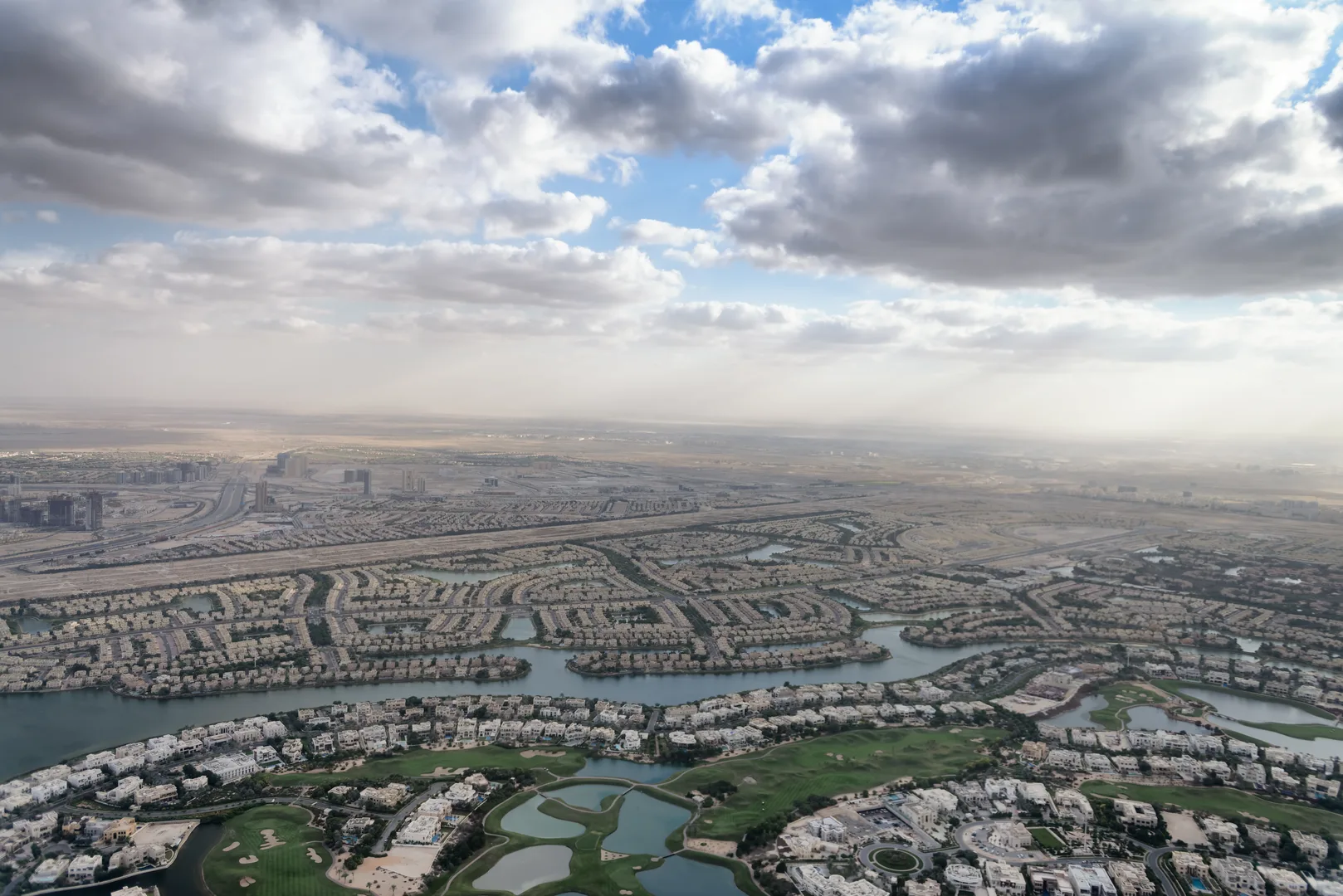
Arabian Ranches is the historical home of the Dubai road cycling scene. The community sits roughly 10-15 minutes from Al Qudra. The internal road layout has wide shoulders and relatively low traffic on weekday mornings, making it possible to roll out of the garage and onto the bike. Property prices are mid-to-high villa range, and the active-lifestyle resale narrative is well-established. See our Arabian Ranches area guide for the broader numbers.
Dubai Hills Estate is the newer-generation equivalent. Emaar designed the community with explicit walkability and cycling intent — internal cycle paths, jogging trails, and a central park. It is slightly further from Al Qudra (15-20 minutes) but closer to Nad Al Sheba (10-15 minutes via Al Khail). Strong for cyclists who also want a major school catchment and short drive to Downtown. See our Dubai Hills Estate area guide.
The Sustainable City is the most cyclist-native community in Dubai. Internal roads ban combustion vehicles in residential clusters, so daily training laps are realistic without leaving the gate. The community sits roughly 10-15 minutes from Al Qudra and is the only Dubai community designed end-to-end around active mobility. The trade-off: smaller villa footprints than Arabian Ranches or Dubai Hills, and a stronger sustainability-first lifestyle that suits some buyers more than others. See the Sustainable City area guide.
Mudon and Damac Hills sit further south, in walking distance of Al Qudra approach roads in some cases. Mudon in particular has a 6 km internal cycling/jogging loop and a strong active-resident demographic. Both communities are typically priced below Arabian Ranches and Dubai Hills, making them the value picks for cyclist buyers.
Meydan (the residential community around Meydan Racecourse) is the closest community to Nad Al Sheba Cycle Park — often a literal 5-minute drive or even walkable from the newer villas. For cyclists who want the year-round floodlit loop option without driving distance, Meydan wins.
| Community | To Al Qudra | To Nad Al Sheba | Internal loop | Cyclist score |
|---|---|---|---|---|
| Arabian Ranches | 10-15 min | 20-25 min | Yes (informal) | 9/10 |
| Dubai Hills Estate | 15-20 min | 10-15 min | Yes (dedicated) | 9/10 |
| The Sustainable City | 10-15 min | 15-20 min | Yes (4 km, traffic-free) | 10/10 |
| Mudon | 10 min | 20-25 min | Yes (6 km) | 9/10 |
| Damac Hills | 15-20 min | 25 min | Yes (internal) | 8/10 |
| Meydan | 25-30 min | 5 min | Limited | 9/10 (night focus) |
| Dubai Marina | 30-35 min | 25-30 min | No (boardwalk only) | 5/10 (runner-leaning) |
The Top Runner-Centric Communities and Why
For runners, the calculus is different. You don't need a dedicated 86 km loop — you need a 5-15 km safe route at the right time of day, ideally with shade or sea breeze. The runner-friendly communities tilt heavily coastal because the seafront tracks are the gold standard for Dubai running.
The most important coastal infrastructure is the Jumeirah and Kite Beach running track, which extends along the coast in a continuous, dedicated soft-rubber surface. Multiple sources put the combined Kite Beach plus Jumeirah Corniche track in the order of 14 kilometres when treated as one continuous beachfront strip, with shorter named segments inside that total. For most runners, the practical takeaway is: if you live in Umm Suqeim, Jumeirah 1, Jumeirah 2, Jumeirah 3, or any of the new Marsa Al Arab / Port de La Mer developments, you have one of the world's better urban running surfaces 5-10 minutes from your door.
The Dubai Marina and JBR boardwalk together form roughly 7 km of pedestrian promenade around the marina canal, plus the 1.7 km JBR strip. The full marina-plus-JBR-plus-Beach loop can be stitched into a 9-10 km run for those who live in the area. The trade-off: heavy foot traffic in the evenings and limited shade midday. For full context on this lifestyle, see our Dubai Marina area guide.
The Sustainable City doubles as a runner-friendly community because the internal 4 km loop is traffic-free, lit, and partly shaded. Combined with the cycle loop, it is the only community where a triathlon training day (swim + bike + run) can be done end-to-end without leaving the gate.
The Track at Meydan Golf is a 9-hole floodlit golf course with a public running and walking track around its perimeter, accessible in the evenings. It is a quieter alternative to the boardwalks for residents of Meydan, Nad Al Sheba and District One.
For broader area lifestyle comparisons, see best Dubai beachfront communities and best neighbourhoods for young professionals.
Tracks and Routes Within 15 Minutes' Drive of Each Community
The honest evaluation of any cyclist or runner community is the inventory of real training facilities within driving distance. Below is the verified-distance matrix to Dubai's major tracks and routes.
| Facility | Length | Surface / type | Hours | Best for |
|---|---|---|---|---|
| Al Qudra Cycling Track | 86 km dedicated (180 km network) | Asphalt, traffic-free | Dawn to dusk (no floodlights) | Road cyclists, long endurance |
| Nad Al Sheba Cycle Park | 4 / 6 / 8 km loops | Asphalt, floodlit | 24 hours | Year-round, night training, summer |
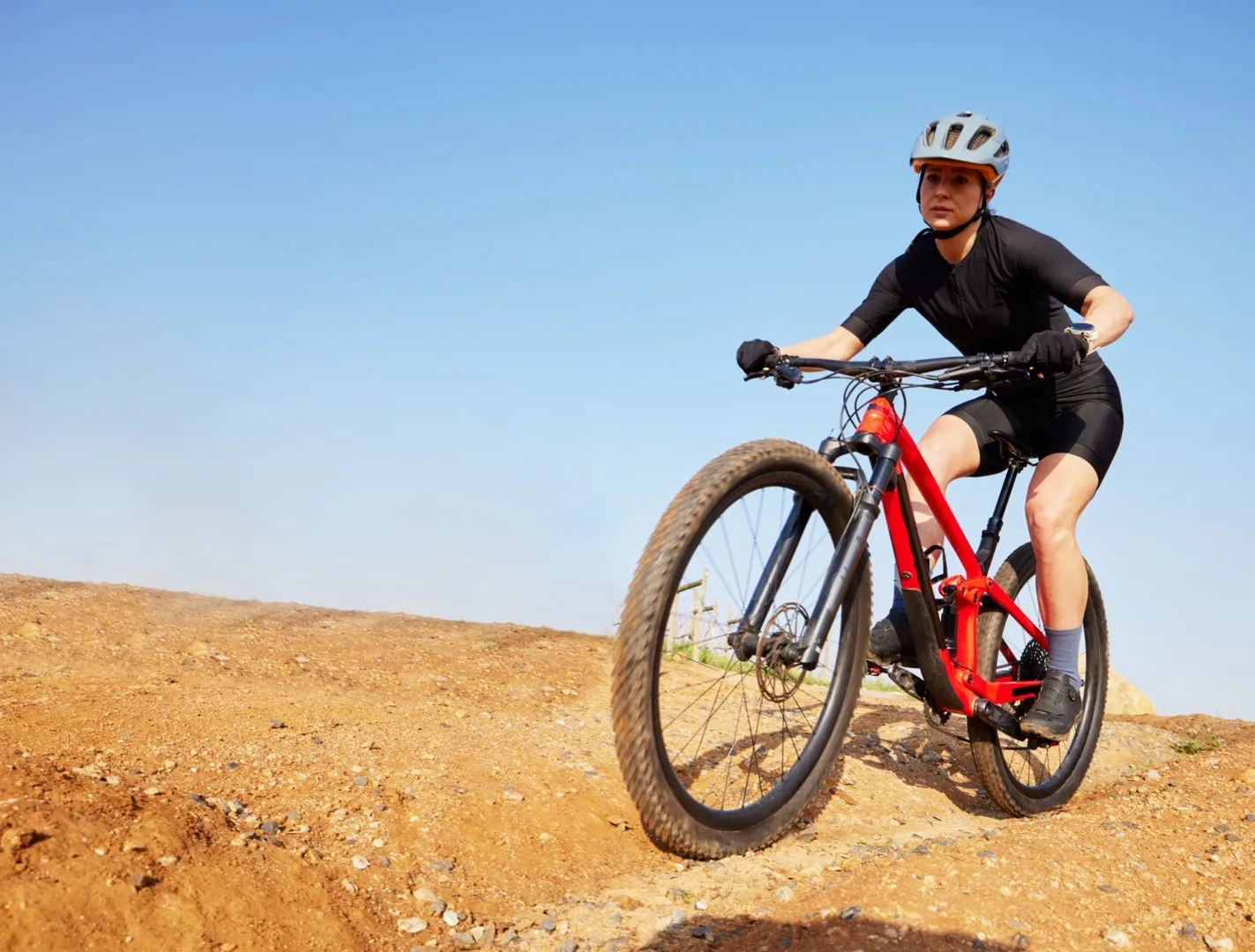
| Mushrif Park MTB | 5-9 km mountain bike trails | Dirt / packed sand | Park hours (entry AED 3 / car AED 10) | MTB, gravel, recreational |
| Jumeirah / Kite Beach track | ~14 km coastal | Soft rubber | 24 hours | Runners, walkers, sunrise/sunset |
| Dubai Marina + JBR boardwalk | ~7 km marina + 1.7 km JBR | Paved promenade | 24 hours | Runners, casual riders |
| The Sustainable City loops | 4 km cycle + 4 km jog | Mixed, traffic-free | 24 hours | Triathletes, residents |
| RTA citywide cycle network | 636 km (end 2025), 819 km target end 2026 | Mixed (lanes, separated, shared) | 24 hours (varies by segment) | Commuting, urban riding |
For context on the network ambition: Dubai's RTA targeted the cycling track network at 819 km by the end of 2026 on the way to a long-term 1,000 km goal, with 13 new tracks completed in early 2026 alone covering 162 km across the emirate. The expansion specifically connects existing tracks from Al Khawaneej to Al Mamzar Beach, from Al Warqa'a to Saih Al Salam, and from DIFC to Jumeirah — meaning more of the city becomes ride-from-home as the network matures.
Climate, Heat Strategy and the May-September Reality
The honest 2026 answer to "is Dubai a runner's city year-round?" is "yes if you change your behaviour by season." From October through April, outdoor conditions are world-class — dry, sunny, mild mornings and evenings. From May through September, the strategy has to shift to pre-dawn, post-sunset, or indoor.
For cyclists, summer realistically means three options: Nad Al Sheba's floodlit loops at night (the most popular summer choice for road cyclists), indoor turbo training at home or a studio, or simply riding before sunrise at the cooler end of the year's hot months. The Al Qudra Track has limited lighting on most stretches, which makes it functionally a winter facility for most riders, not a summer one.
For runners, the calculus is similar but slightly more forgiving. The Jumeirah Corniche track and the Dubai Marina boardwalk are both functional at 5 a.m. or 9 p.m. in summer, when temperatures drop into the low 30s Celsius and humidity is manageable for a 30-45 minute easy run. Longer runs (over 60 minutes) become impractical between June and August even at night.
| Season | Outdoor window | Recommended facility | Strategy |
|---|---|---|---|
| Oct-Apr (cool) | All-day | Al Qudra, Corniche | Train flat-out, race season |
| May (shoulder) | Pre-9am / post-7pm | Al Qudra (early), Nad Al Sheba (night) | Maintain volume, shift to mornings |
| Jun-Aug (peak heat) | Pre-6am / post-9pm only | Nad Al Sheba, indoor | Reduce volume, switch to interval/strength |
| Sep (shoulder) | Pre-7am / post-8pm | Nad Al Sheba, Corniche | Build back, prepare for race season |
A typical Dubai-based age-group road cyclist living in Arabian Ranches: October to April covers ~70% of annual training volume on Al Qudra (early Saturday/Sunday long rides, weekday evenings). May to September shifts to Nad Al Sheba floodlit night loops (Mon/Wed/Fri) plus one indoor turbo session per week. Total annual outdoor volume drops from 12-15 hours/week peak to 5-7 hours/week trough. Race season is essentially mid-Oct to mid-Apr — including Spinneys Dubai 92 in mid-February.
Living in Dubai?
Dubai Living Tips Weekly
Cost-of-living data, neighborhood guides, and practical expat tips — every week.
✓ You're in! Check your inbox.
Community Amenities: Bike Storage, Wash Stations, Cycling Lockers
The under-discussed reality of apartment-based cycling in Dubai is that bike storage is set building by building, not by RERA or any community-level rule. There is no equivalent of a KHDA-style mandate forcing developers to provide bike rooms — it is entirely at the discretion of the building's owners' association or property management company.
In practice, this means three categories of buildings:
- Bike-friendly buildings (typically newer, premium specifications): dedicated bike room in the basement, sometimes with a wash station and tool board. Common in Emaar Beachfront, parts of Dubai Hills Estate apartments, newer Damac and Sobha towers, and most Sustainable City buildings.
- Tolerant buildings: no dedicated bike facility but residents are allowed to use parking space, storage closets, or even bring bikes into apartments. Common in JLT, parts of Marina, JVC, Business Bay.
- Restrictive buildings: bikes are explicitly banned from lifts, balconies, parking spaces, or storage areas. Common in some older towers and specific by-law-strict buildings. Always check the building's owners-association rules before signing — verbal "fine" from a leasing agent is not enforceable.
For villa communities, the question is much simpler: every villa has either a garage, a storage room, or both. The real differentiator is whether the community has shared facilities like wash stations or organised cycling clubs. Sustainable City, Dubai Hills and Arabian Ranches all score well here. Newer Damac and Tilal Al Ghaf phases are also adding cycle-friendly amenities at the master plan level.
If you are renting and bike storage is a deal-breaker, write the pet/bike clause into the tenancy contract before signing. The principles overlap with what we cover in our complete tenancy contract guide.
The Triathlete's Picks (Pool + Bike + Run)
For triathletes, the community choice is constrained by needing all three disciplines accessible. Dubai has no shortage of pools, but the swim-bike-run logistics favour a small number of communities specifically.
The Sustainable City is the unambiguous winner. Internal 4 km cycle and 4 km jog loops are traffic-free. Communal pools provide a base swim option (though most serious triathletes will still use a 25 m or 50 m public pool). The community is ~10-15 minutes from Al Qudra, so the weekend long-ride logistics work. Crucially, the no-through-traffic design means brick workouts (bike-to-run transitions) can be done out the front door.
Meydan / District One works for triathletes who prefer Nad Al Sheba over Al Qudra. The Track at Meydan Golf provides a clean run loop, the cycle park is on the doorstep, and several premium hotels in the area have 25 m+ pools accessible via membership. The trade-off is higher property costs versus Sustainable City.
Dubai Hills Estate is the family-friendly triathlete pick. Internal park trails for running, ~15 minutes to Nad Al Sheba and ~15 minutes to Al Qudra, plus the Hartland International School area and Dubai Hills Park provide a complete ecosystem. Pool access depends on the specific cluster but most include shared facilities.
Arabian Ranches and Mudon work well for cyclist-leaning triathletes who do most run work inside the community and drive to a pool. Less optimal than Sustainable City for transition workouts but more spacious villa stock.
Cycling and Running Clubs in Dubai 2026
The single biggest accelerator for newly-arrived expats who want to take cycling or running seriously in Dubai is the club scene. Dubai's club culture is unusually strong for the city's size — driven by the high expat population, the structured fitness culture, and the limited number of safe training venues which forces riders and runners into shared groups.
On the cycling side, Dubai Roadsters, Cycle Hub, and several British/European-led road clubs run regular Al Qudra group rides on weekends, plus Nad Al Sheba sessions through summer. Most clubs welcome new riders to introductory rides regardless of ability, with structured A/B/C groups at different paces.
On the running side, Dubai Creek Striders, Adidas Runners Dubai, and several Nike/Asics-affiliated groups run weekly track sessions, long runs, and structured marathon training blocks. Most groups are free or near-free to join; brand-sponsored groups (Adidas, Nike) typically run organised programmes around the major race calendar.
Major events anchor the season:
- Spinneys Dubai 92 Cycle Challenge — held 15 February 2026, with 92 km main event and 39 km shorter option, starting from Expo City Dubai. UCI Gran Fondo qualifier.
- Dubai Marathon — held 1 February 2026, with 42 km, 10 km and 4 km options starting from Umm Suqeim Road and finishing at Dubai Police Academy.
- Ras Al Khaimah Half Marathon — the 19th edition held 14 February 2026, one of the world's fastest half marathon courses with multiple world records set in recent years.
- Dubai Run — the annual closed-Sheikh-Zayed-Road community run held every November as part of Dubai Fitness Challenge. The 2025 edition saw over 307,000 participants, making it the world's largest open-entry community run.
Dubai's place in the top 100 cycling-friendly cities in the 2025 Copenhagenize Index — the first Middle Eastern city to make the list — reflects the structural investment in infrastructure plus the active community ecosystem.
Property Premium / Discount for Active-Lifestyle Areas
Does living in a cyclist-friendly community actually cost more? The honest answer is: not in a way that shows up cleanly in transaction data, because the same villa communities that work for cyclists (Arabian Ranches, Dubai Hills, Mudon, Damac Hills) are family communities, golf communities, and school-catchment communities. The cyclist-buyer is one of several demographics paying for the same property.
What is visible in the market:
- Sustainable City premium for active lifestyle is modest but real. The community trades at a small premium per square foot versus directly comparable Dubailand villa communities — partly attributable to the active-lifestyle and net-zero design that appeals to a self-selecting buyer pool.
- Meydan / District One enjoys a "Nad Al Sheba proximity" narrative in marketing materials, but the bigger drivers of the area's premium pricing are the Crystal Lagoon, the Meydan brand and proximity to Downtown.
- Arabian Ranches and Dubai Hills command price levels driven primarily by schools, golf and brand — the cyclist-friendly aspect is a free bonus, not a separately-priced feature.
For a structured view of how active-lifestyle preferences interact with broader area choice and yield, see our highest ROI areas guide and the Buy Property in Dubai pillar for the broader purchase framework. For relocation context, see Moving to Dubai.
The other consideration is the directionality of the city's plan. The RTA's 819 km target by end of 2026 and 1,000 km target by 2030 means that communities currently not well-served by cycling infrastructure may improve materially within a 3-5 year horizon. URB's planned THE LOOP project — a 93 km climate-controlled cycling and walking highway — is a longer-horizon bet that would change the calculation for several inner communities if it progresses.
The Verdict by Buyer Profile
Serious road cyclist, single or couple, no kids: Meydan or Nad Al Sheba area for the year-round floodlit loop, or Sustainable City for the integrated lifestyle. Either choice unlocks year-round outdoor training.
Serious road cyclist with family: Arabian Ranches or Dubai Hills Estate. You sacrifice some training-distance optimisation but gain villa space, schools and family lifestyle. Al Qudra and Nad Al Sheba are both reachable.
Triathlete: Sustainable City. Integrated cycle, run and pool access in one community. Tilal Al Ghaf and District One are second choices.
Runner-first, no bike training: Jumeirah / Umm Suqeim coastal communities for the 14 km Corniche track, Dubai Marina or JBR for the 7-9 km boardwalk loop. Apartment lifestyle works fine here because you don't need bike storage.
Casual cyclist / weekend rider: Any villa community. Distance to tracks matters less when you're doing 1-2 rides per week. Dubai Hills, Mudon, Damac Hills, Tilal Al Ghaf all work.
Apartment-bound urban cyclist: JLT, Marina or Business Bay are workable provided the building tolerates bikes. Use the boardwalks for casual rides and Nad Al Sheba weekly. Always check building bike-storage rules before signing.
Frequently Asked Questions
Where is the best place to cycle in Dubai?
For serious road cyclists, the Al Qudra Cycling Track is the gold standard — a dedicated 86 km asphalt loop in the desert with a 180 km extended network, officially recognised as the world's longest cycling path. For year-round and night cycling, the Nad Al Sheba Cycle Park at Meydan provides 4 km, 6 km and 8 km floodlit loops open 24 hours. The Al Qudra Track suits long weekend rides; Nad Al Sheba suits weekday evening and summer sessions.
How long is the Al Qudra cycling track?
The dedicated Al Qudra Cycling Track covers approximately 86 km of routes including a 50 km main loop, a 35 km bypass option and shorter beginner routes. The extended network including the roadside "horseshoe" route reaches roughly 180 km in total. The track was named the world's longest cycling path. It is open dawn-to-dusk and there are limited floodlights, so most riders treat it as a winter/cool-season facility.
Is the Nad Al Sheba cycle park open at night?
Yes — Nad Al Sheba Cycle Park is open 24 hours and the entire course is floodlit, although for safety you still need lights on your bike. The facility offers 4 km, 6 km and 8 km loops, plus toilets, air-conditioned changing rooms and free parking. It is the main option for year-round cycling in Dubai's hot months because morning and evening sessions become unsafe on unlit tracks once temperatures rise.
How big is Dubai's cycling network in 2026?
Dubai's RTA reported the cycling network reached 636 km by the end of 2025 and is targeted to hit 819 km by the end of 2026, on the way to a long-term goal of 1,000 km by 2030. Thirteen new tracks totalling 162 km were completed in early 2026 alone. Dubai was also named in the top 100 cycling-friendly cities in the 2025 Copenhagenize Index — the first Middle Eastern city to make the list.
What is the best place to run in Dubai?
The Jumeirah Corniche and Kite Beach running track (a continuous soft-rubber beachfront strip of roughly 14 km in total) is the most popular destination for serious runners. The Dubai Marina and JBR boardwalk together form a ~7-9 km loop popular with marina residents. The Sustainable City's internal 4 km jogging loop is the best traffic-free residential option. The Track at Meydan Golf is a quieter floodlit alternative.
Which Dubai community is best for triathletes?
The Sustainable City is the clear leader. Internal traffic-free cycle and jog loops of 4 km each, communal pools, and ~10-15 minutes to Al Qudra cover all three disciplines from one address. Brick workouts (bike-to-run transitions) can be done end-to-end without leaving the community. Meydan / District One and Dubai Hills Estate are strong second choices, especially for triathletes who prioritise property size or schools.
Can I store my bike in my Dubai apartment?
It depends on the building. There is no city-wide rule — bike storage is set by each building's owners' association or property management. Some newer towers have dedicated bike rooms; others tolerate bikes in apartments and storage spaces; some explicitly ban them. Always check the building's by-laws before signing the tenancy contract and get any pet/bike clause written into the agreement, since verbal permission from a leasing agent is not enforceable.
When are the major Dubai cycling and running events?
The 2026 calendar peaks in February with the Dubai Marathon (1 February), the Ras Al Khaimah Half Marathon (14 February) and the Spinneys Dubai 92 Cycle Challenge (15 February). November brings the Dubai Run on a closed Sheikh Zayed Road — the 2025 edition recorded over 307,000 participants as part of the annual Dubai Fitness Challenge.
Is Dubai too hot to run or cycle in summer?
From June to August, midday outdoor training is dangerous. Runners and cyclists shift to pre-dawn (4-6 a.m.) or post-sunset (9 p.m. onwards) windows, or use indoor alternatives. The Nad Al Sheba Cycle Park is the most popular summer option because it is floodlit 24 hours. The Jumeirah Corniche and Marina boardwalk remain functional for shorter (30-45 min) evening runs. Plan to drop weekly outdoor volume by 40-50% during peak heat months.
Do villa communities have dedicated cycling lanes inside?
Most master-developer villa communities (Sustainable City, Mudon, Dubai Hills, Arabian Ranches, Damac Hills) have dedicated internal cycling and jogging paths. The Sustainable City stands out because it bans combustion vehicles from residential clusters, making the internal road network effectively traffic-free. Mudon's internal 6 km loop and Dubai Hills' park trails are the next-best examples. Older villa communities and most apartment communities rely on external roads or boardwalks instead.
The best community for a serious cyclist or runner in Dubai depends on three things: how far you'll really drive to a track, what kind of training mix you need year-round, and whether you're buying or renting. Use the matrix above to shortlist 2-3 communities, then visit each at 6 a.m. on a weekday to see the real cyclist and runner traffic for yourself. For the broader purchase framework, start with our Buy Property in Dubai pillar guide, and for relocation see Moving to Dubai.
Settling into Dubai?
Ask us anything about living here — or get matched with trusted local services.
Thank You!
We'll get back to you within 24 hours.
Home Maintenance & Cleaning in Dubai
Explore providers from our business directory
Still have questions?
Ask a follow-up, or get connected with a vetted Dubai professional.
Join our Telegram channel
Handover alerts, new launches & DLD data — first, in real time.