Self-Storage in Dubai 2026: Best Companies, Prices, Al Quoz, Business Bay

- The major providers are The Box, Easy Storage Dubai, City Storage, Space Hub, and Alto Storage. Most have multiple branches across Al Quoz, Business Bay, JLT, and Al Barsha.
- Typical monthly rates: locker (~1m³) AED 175–250; small (5m³) AED 350–550; medium (10m³) AED 600–950; large (20m³+) AED 1,400–2,200. Prices vary by location, climate control, and contract length.
- Al Quoz is the storage capital of Dubai — lowest per-square-foot prices and the widest selection of warehouse-style facilities. Business Bay, JLT, and Al Barsha trade convenience for higher prices.
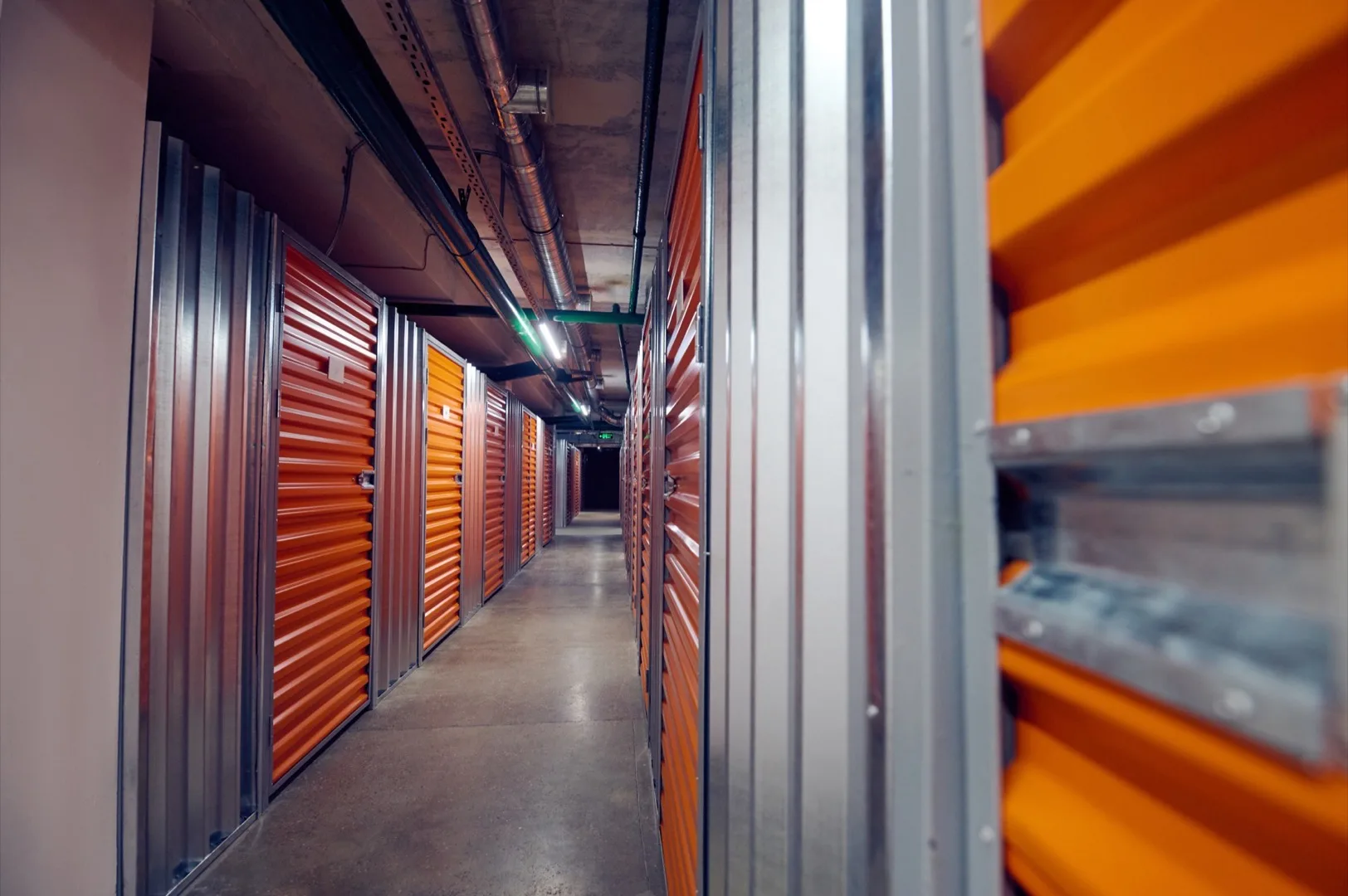
- Climate-controlled units (kept at ~22°C, 55% humidity) cost roughly 30–50% more than ambient units but are essential for electronics, leather, wood furniture, art, photographs, and pharmaceuticals during Dubai summers.
- Common use cases: relocators waiting for property handover, expats spending the summer abroad, business inventory and document archives, Ramadan and seasonal gear storage, and downsizers between properties.
- Self-storage is almost always cheaper than upgrading to a larger apartment or villa. A medium 10m³ unit (~AED 750/mo) is far less than the rent gap between a 1BR and 2BR in central Dubai.
Why Self-Storage Demand Has Boomed in Dubai
Dubai's self-storage industry has grown sharply over the past five years. Several structural shifts drive demand. Apartment sizes have shrunk as developers chase affordability — modern 1BRs in Marina, JVC, and Business Bay average 600–800 sqft, often without dedicated storerooms. Expats with international lifestyles cycle through the city, leaving skis, heavy winter coats, or art collections that don't fit a 700 sqft unit. Off-plan handover delays leave new buyers in serviced apartments while their furniture from previous homes needs somewhere to go. And businesses — particularly e-commerce sellers and consultants — increasingly use self-storage as low-cost warehouse space.
The result is a competitive market with mature providers, transparent pricing, and meaningful choice across price tiers and locations. Whether you need a 1m³ locker for ski boots and a few boxes or a 30m³ container for a full villa's worth of furniture, there is an option that fits.
The Major Self-Storage Providers
The Dubai self-storage market is dominated by a handful of established providers. Each has slightly different positioning on price, location coverage, and service tier.
The Box
The largest and most visible operator in the UAE, with multiple facilities across Dubai including a flagship in Al Quoz. Known for clean, well-managed facilities, 24/7 access at most branches, and full climate control. Pricing sits at the upper-mid range. Strong online booking and a clear, transparent rate card. Good fit for anyone who wants reliability and a full-service feel.
Easy Storage Dubai
A growing competitor with a focus on flexibility — month-to-month contracts, no long lock-ins, and a pickup-and-delivery option that means you don't need to drive your boxes to the facility yourself. Pricing is mid-range; climate control is standard. Particularly popular with younger expats and those storing for shorter periods.
City Storage
Long-established Dubai operator with a strong Al Quoz presence and warehouse-style facilities. Lower price point than The Box, often the most cost-effective for larger units (15m³+). Less polished customer experience but solid for value-focused users.
Space Hub
Mid-size operator with units across multiple Dubai locations. Differentiates on customer service and on offering both personal and business storage with slightly different terms. Pricing is competitive in the medium-unit range.
Alto Storage
Newer entrant, often with promotional pricing and discounts for first-time customers. Worth checking for short-term needs (3–6 months) where introductory rates can save AED 500–1,000 over the contract.
Other notable operators
The market also includes Storextra, Vault, and SpaceLocker among smaller specialist providers. For business-focused storage with logistics integration, Aramex Shop & Ship and other 3PL providers offer storage as part of broader fulfilment services.
Typical Prices by Unit Size
Self-storage pricing in Dubai is typically quoted per month with discounts for longer commitments (3-month, 6-month, or 12-month prepayments). Here are realistic 2026 ranges from the major providers:
| Unit Size | Approx Volume | Ambient AED/mo | Climate-Controlled AED/mo | Typical Use |
|---|---|---|---|---|
| Locker | 1m³ (~36 cu ft) | 175–225 | 220–280 | Documents, ski gear, small boxes |
| Mini | 2–3m³ | 275–375 | 350–450 | 15–20 boxes, suitcases |
| Small | 5m³ | 350–450 | 450–550 | Studio's worth of contents |
| Medium | 10m³ | 600–800 | 800–950 | 1BR apartment contents |
| Large | 15–20m³ | 1,000–1,400 | 1,300–1,700 | 2BR apartment contents |
| Extra Large | 25–30m³ | 1,400–1,900 | 1,800–2,400 | 3BR apartment / small villa |
| Warehouse Bay | 50m³+ | 2,500–4,500 | 3,500–6,000 | Full villa / business inventory |
Discounts of 10–20% are common when prepaying 6 or 12 months. First-month-free promotions appear regularly, especially during summer (when summer-leavers drive demand). Climate-controlled premiums of 20–30% are typical, sometimes more for premium providers.
Locations: Al Quoz, Business Bay, JLT, Al Barsha
Where you store affects both price and convenience. Al Quoz dominates because of its industrial zoning, abundant warehouse space, and central location off Sheikh Zayed Road. Other facilities trade higher per-square-foot prices for proximity to where people actually live.
| Location | Best For | Pricing Tier | Drive Time From |
|---|---|---|---|
| Al Quoz | Best value, biggest selection, large units | Lowest | 10 min from Marina/Business Bay; 15 min from Downtown |
| Business Bay | Convenience for Downtown/Bay/DIFC residents and businesses | Mid–High | 5 min from Downtown; 10 min from DIFC |
| JLT / Tecom | Marina, JLT, JBR residents who value short drive | Mid | 5–10 min from Marina/JLT |
| Al Barsha | Central, easy SZR access, residential proximity | Mid | 10 min from Marina; 15 min from Downtown |
| Dubai Investment Park (DIP) | Bulk storage, business inventory | Lowest | 15 min from Marina; 20 min from JVC |
| Ras Al Khor | Lower-cost large units, businesses | Low | 10 min from Downtown; 15 min from Mirdif |
Rule of thumb: per-square-foot pricing in Al Quoz is roughly 25–40% lower than the same unit in Business Bay or JLT. If you can drive 10–15 minutes for access, Al Quoz is almost always the right financial choice. If you visit your unit twice a year, the convenience premium of a Business Bay or JLT facility rarely pays off.
Climate-Controlled vs Ambient: When You Need It
Dubai's climate is the deciding factor for many storage choices. From May through October, ambient warehouse temperatures regularly exceed 40°C, and humidity can swing from very low (desert dry) to very high (coastal humid). Items vulnerable to heat, humidity, or rapid temperature change need climate-controlled units; everything else can sit in ambient storage and save 30–50%.
Items that need climate control
- Electronics: TVs, computers, cameras, audio equipment — heat damages capacitors and screens.
- Wood furniture: Solid wood warps and cracks under temperature swings; veneers can delaminate.
- Leather: Bags, jackets, sofas — leather dries out and cracks in heat.
- Photographs and documents: Heat causes ink fading and paper brittleness; humidity causes mould.
- Art and antiques: Paintings, sculptures, anything with sentimental or financial value.
- Wine: Climate-controlled wine storage is a separate specialty — most general self-storage is not cool enough for serious wine collections.
- Pharmaceuticals and supplements: Heat degrades active ingredients.
- Musical instruments: Wood-bodied and string instruments suffer in heat and humidity.
Items that are fine in ambient storage
- Tools, sports equipment (excluding leather goods), camping gear.
- Plastic-bodied items, metal furniture, kitchenware.
- Sealed boxes of clothes (winter coats, formal wear) — though humidity-prone areas may benefit from silica gel packets.
- Books in sealed plastic bins (paper handles ambient if not exposed to humidity).
- Outdoor furniture, BBQs, garden equipment.
If in doubt, climate-controlled. The cost difference for a medium unit is typically AED 150–250 per month — meaningfully less than replacing a damaged TV, sofa, or piece of art.
Living in Dubai?
Dubai Living Tips Weekly
Cost-of-living data, neighborhood guides, and practical expat tips — every week.
✓ You're in! Check your inbox.
Common Use Cases
Relocators waiting for property handover
Off-plan delays are common, and many buyers find themselves in temporary serviced apartments while their furniture from a previous home (in Dubai or abroad) needs storage. Self-storage of 6–12 months is standard during this gap. Climate control is recommended for any imported furniture.
Expats spending summer abroad
Many Dubai expats leave for 6–10 weeks in July and August. For those terminating leases or downgrading to short-term accommodation during summer, self-storage holds their full apartment contents until they return. The summer storage market is competitive — providers often discount short-term contracts (2–3 months) to capture this traffic.
Business inventory and document archives
E-commerce sellers, importers, and consultants increasingly use self-storage as low-cost warehouse space. A 10–20m³ unit costs a fraction of even the smallest Dubai office or proper warehouse, and many providers allow business deliveries directly to the unit. For document archives required by UAE law (corporate records, accounting documents, contracts) the small-locker tier is ideal.
Seasonal gear and Ramadan storage
Households accumulate seasonal items — Christmas decorations, Ramadan tents and lights, ski equipment, beach gear, party supplies. A locker or mini unit (AED 175–375/mo) is often cheaper than buying replacements after the inevitable apartment cleanout.
Downsizers between properties
Moving from a villa to an apartment, or from a family home back to a single life, often means temporarily storing furniture you don't have room for but don't want to sell. A medium or large unit for 3–6 months gives you breathing room to decide what to keep, sell, or donate.
New buyers between contracts
If you have sold your existing home and your new property handover is delayed, self-storage bridges the gap. This is especially common for off-plan buyers — see our guide on defect liability period and handover for what to expect when taking possession.
How to Choose: A Practical Checklist
Before signing any contract, evaluate the facility on these criteria:
- Access hours. 24/7 access matters if you need to retrieve items at short notice. Many cheaper facilities have business-hours-only access (typically 9am–9pm).
- Security. CCTV, individual unit alarms, controlled access (PIN code or biometric), and on-site guards. Confirm these in person before signing.
- Insurance. Most facilities require you to insure your contents — either through their offered insurance partner or a stand-alone policy. Standard contents insurance from your home insurer often covers stored items; check before paying for an add-on.
- Climate control. Confirm the actual temperature and humidity setpoints. "Climate controlled" can mean different things — ideal is 20–25°C and 50–60% RH year-round.
- Contract flexibility. Month-to-month vs 3/6/12-month commitment. Discounts for prepayment vs flexibility to leave. Match the term to your real need — if you might leave in 4 months, a 12-month discount can backfire if there's no early-exit refund.
- Move-in support. Some providers offer free or discounted moving services for first-time customers. Easy Storage Dubai's pickup option saves a van rental and the hassle of negotiating loading bays.
- Pricing transparency. Avoid quotes without a clear breakdown — VAT, deposit, lock fee, and any "registration" charges should be itemised.
- Reviews. Check Google Maps and community forums for issues with cleanliness, pest control, response times, or hidden fees.
Self-Storage vs Storing at Home or in a Garage
The most common alternative to self-storage is just leaving things in your apartment, in a building's storeroom (if available), or in a friend's garage. Each has trade-offs:
| Option | Cost | Pros | Cons |
|---|---|---|---|
| In-apartment storage | Free | No cost, no logistics | Eats living space; clutter affects mental space |
| Building storeroom (if available) | Free or low | Convenient, included with some buildings | Often hot/humid, not climate controlled, limited size |
| Friend's garage / parents' house | Free | No cost | Damages relationships; not a long-term solution |
| Upgrade to bigger apartment | Often AED 30,000–60,000+/yr extra rent | More space for living + storage | Far more expensive than self-storage in almost every case |
| Self-storage (medium 10m³) | ~AED 7,200–11,400/yr | Climate-controlled, secure, scalable | Drive time to access; monthly cost adds up |
The financial logic is strong: even at the upper end (~AED 12K/year for climate-controlled medium storage), self-storage is dramatically cheaper than upgrading from a 1BR to a 2BR — which can easily cost AED 40K+ more per year in rent in central Dubai. The break-even is rarely in the bigger apartment's favour unless you genuinely need the extra living space, not just storage.
Booking Process and Move-In
The booking process across most providers is similar:
- Select your unit size online or via phone. Most providers have size-recommendation tools (e.g., "10m³ holds approximately 30 medium boxes plus a sofa").
- Reserve with a small deposit. Typically AED 100–500 to lock in the unit for a few days while you arrange paperwork.
- Provide identification. Emirates ID for residents, passport for visitors. Some providers also request a recent utility bill as proof of address.
- Sign the storage agreement. Standard terms include monthly payment, lock requirements (you may need to bring your own padlock or buy one on-site), insurance declarations, and prohibited items.
- Pay the first month + deposit + lock. Total upfront cost is usually one month's rent, a refundable deposit (often equivalent to one month), and a one-time lock/setup fee (~AED 50–150).
- Move in. Most providers offer free use of trolleys and basic moving aids. Bring your own boxes, tape, bubble wrap, and labels — these are not always included.
Items prohibited in self-storage
Almost universally banned: flammable liquids (petrol, paint thinners), explosives or fireworks, illegal drugs, perishable food, live animals, plants, firearms or ammunition, hazardous chemicals. Some providers also restrict batteries, large quantities of alcohol, or anything emitting strong odours. Read the contract.
Frequently Asked Questions
What is the cheapest self-storage in Dubai?
Per-square-foot pricing is lowest in Al Quoz, Dubai Investment Park, and Ras Al Khor — industrial-zoned areas where warehouse rents are lowest. City Storage and the lower tiers of The Box typically offer the best value for ambient storage; smaller specialist providers and promotional offers from Easy Storage Dubai or Alto Storage can beat these for short-term needs.
Do I need climate control for storage in Dubai?
Yes for electronics, wood furniture, leather, art, photos, documents, pharmaceuticals, and instruments. No for tools, sports equipment, plastic items, metal furniture, and sealed clothes. The climate-controlled premium is typically 20–50% per month — usually worth it for anything that would cost more than a few hundred dirhams to replace.
How much storage do I need for a 1-bedroom apartment?
A 10m³ medium unit comfortably holds the contents of a typical 1BR — sofa, bed, mattress, dining set, fridge, washing machine, plus 20–30 boxes of personal items. If you have a lot of large furniture or a fully-equipped kitchen, size up to 12–15m³.
Can I access my storage 24/7?
Many but not all facilities offer 24/7 access. Confirm before signing — some cheaper facilities limit access to 9am–9pm or business hours only. If you anticipate evening or early-morning access (common for travellers and shift workers), 24/7 is worth the small premium.
What is the minimum contract period?
Most providers offer month-to-month contracts with no minimum commitment. Discounts of 10–20% are common for prepaying 6 or 12 months. Easy Storage Dubai and several smaller operators are particularly flexible on short-term storage of 1–3 months.
Is my insurance from my home contents policy enough?
Often yes, but check your policy. Standard UAE home contents insurance from providers like AXA, Orient, or RSA typically covers items in self-storage up to a sub-limit (often AED 25,000–50,000), provided the storage facility meets minimum security standards. For valuable items, add-on coverage or stand-alone storage insurance is recommended.
Can I receive deliveries directly to my storage unit?
Most providers allow this for business customers, sometimes with prior notice. Personal storage often allows it case-by-case. Confirm with the facility — it can save trips for e-commerce returns or bulky deliveries you don't want at your apartment.
Are there self-storage options with pickup and delivery?
Yes. Easy Storage Dubai pioneered the pickup-and-delivery model in Dubai — you load boxes at home, they collect and store, and deliver back when needed. The Box and several smaller operators now offer similar services. Premium pricing applies but you save on van rental and time.
Whether you are bridging an off-plan handover delay, downsizing into a smaller apartment, or just freeing up space in your current home, self-storage in Dubai is mature, well-priced, and flexible. For a structured approach to your full move, see our cost of living guide and use our relocation cost estimator to plan the full picture.
Settling into Dubai?
Ask us anything about living here — or get matched with trusted local services.
Thank You!
We'll get back to you within 24 hours.
Home Maintenance & Cleaning in Dubai
Explore providers from our business directory
Still have questions?
Ask a follow-up, or get connected with a vetted Dubai professional.
Join our Telegram channel
Handover alerts, new launches & DLD data — first, in real time.