Iranian Investors and Dubai Property in 2026: Banking, Transfers, Golden Visa Realities

- The Iranian community is one of the largest expat groups in Dubai, with an estimated 400,000–500,000 residents and frequent visitors. Trade ties between Iranian merchants and Dubai's creek-side ports stretch back more than a century.
- Iranian nationals have full freehold ownership rights in Dubai's designated areas. The Dubai Land Department (DLD) does not maintain nationality-based restrictions on freehold purchases — the same legal framework that applies to a German or Indian buyer applies to an Iranian buyer.
- The friction in 2026 is not legal — it is operational. UAE banks apply enhanced due diligence (EDD) to Iranian-passport clients under AML/CFT frameworks, and account opening can take 2–6 months with rigorous source-of-funds documentation.
- Direct AED or USD transfers from Iran-domiciled banks are generally not feasible through the international correspondent banking network. Common compliant routes include third-country accounts, dirham purchases via licensed exchange houses, and cross-border arrangements with full KYC paper trails.
- The AED 2 million property threshold for the 10-year Golden Visa applies regardless of nationality — but the funds used must arrive through compliant channels with verifiable source-of-funds documentation.
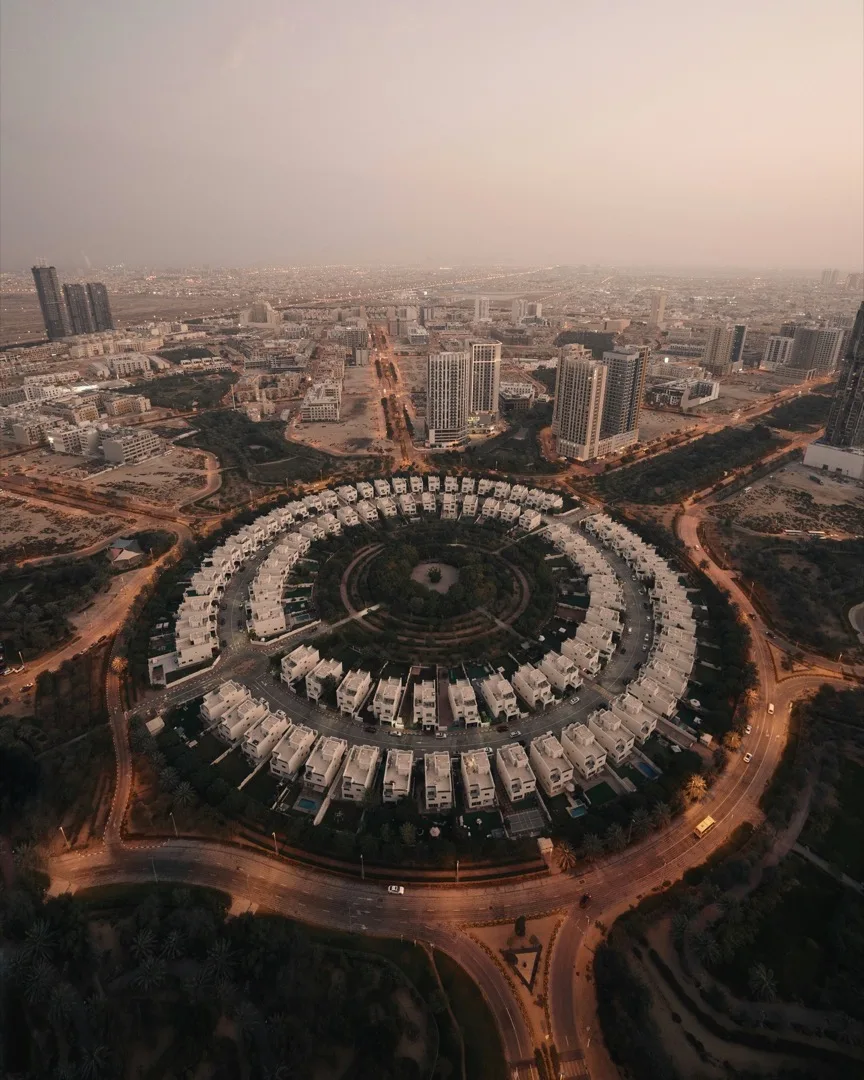
- JVC, Business Bay, Marina, and the historic Bur Dubai/Deira districts remain the most common areas for Iranian buyers, balancing community familiarity with rental yield and capital appreciation.
Historical Context: A Century of Iranian Presence in Dubai
Long before Dubai became a global property market, it was a port city built on cross-Gulf trade. Iranian merchants from Bandar Lengeh, Bushehr, and other southern coastal towns settled along Dubai Creek in the late 1800s and early 1900s, founding trading houses that handled textiles, spices, dried fruits, and pearls. The Bastakiya district in Bur Dubai — today a heritage area — takes its name from the Iranian town of Bastak, whose merchants built the wind-tower houses that still stand near the Creek.
That commercial relationship never broke. Today, the resident Iranian community is estimated at 400,000–500,000 people, with substantial additional flows of investors, students, and frequent visitors. The community supports its own schools, mosques, restaurants, supermarkets, and cultural associations. For a new arrival, the social and commercial infrastructure is already mature.
This article is a factual, analytical look at how Iranian nationals approach Dubai real estate in 2026 — focused on mechanisms, compliance, and practical pathways rather than political commentary. The point is to map the landscape clearly so that buyers and their advisors can make informed decisions.
Property Ownership Rights: What the Law Actually Says
Dubai's freehold property framework, established by Law No. 7 of 2006 and refined through subsequent regulations, defines who can own property in which areas — but it does so by reference to designated freehold zones, not by reference to buyer nationality. The DLD's official position is that any non-GCC foreign national can purchase freehold property in designated freehold areas, with no nationality-based restrictions. Iranian passport holders are treated identically to any other foreign buyer at the registration counter.
The list of designated freehold areas covers the vast majority of new-build Dubai: Dubai Marina, Downtown, Business Bay, JVC, JLT, Palm Jumeirah, Dubai Hills, Dubai South, Arjan, Meydan, MBR City, Dubai Creek Harbour, and dozens more. Older parts of the city — including stretches of Bur Dubai and Deira — sit outside the freehold framework and are subject to different rules, but the modern investment-grade inventory is overwhelmingly inside designated areas. For a deeper look at how freehold differs from leasehold and which neighbourhoods fall into each category, see our freehold versus leasehold guide.
At the transaction level, the DLD process is the same regardless of the buyer's passport: select the property, sign a Memorandum of Understanding (MOU / Form F), pay a 10% deposit, obtain a No Objection Certificate from the developer, and complete the transfer at a DLD trustee office. The 4% DLD registration fee, agency commission, and administrative fees apply uniformly. The verifiable confirmation of nationality-neutral processing is published on the DLD's own service catalogue at dld.gov.ae.
The legal entry point is open. The operational entry point — getting the money there in a compliant way — is where most of the complexity sits.
Banking Onboarding: The Real Bottleneck
Every UAE bank operates under the Central Bank of the UAE's AML/CFT framework, which requires risk-based customer due diligence. For clients from jurisdictions flagged as higher-risk under international guidance, banks apply enhanced due diligence (EDD). For Iranian-passport clients, this means slower onboarding, deeper documentation requirements, and tighter ongoing monitoring than a typical expat opening an account.
Practically, EDD translates into specific operational realities. Account opening is rarely a same-day event. Banks request a detailed source-of-funds dossier covering not just the immediate deposit but the underlying economic activity over multiple years. They cross-check business registrations, beneficial ownership, and counterparty exposure. Some banks have appetite for the segment and run dedicated compliance teams; others decline new Iranian-passport applicants by policy. Both behaviours are within the regulatory framework — banks set their own risk tolerance.
The table below outlines a realistic onboarding timeline and document requirements based on practitioner observation in 2025–2026. These are typical ranges, not commitments — individual outcomes depend on the bank, the client profile, and the documentation quality:
| Stage | Typical Duration | Documentation Expected |
|---|---|---|
| Initial KYC and pre-screening | 2–4 weeks | Passport, UAE residence visa or Emirates ID, proof of address, recent CV or business profile |
| Source of wealth review | 3–8 weeks | Multi-year business financials, audited statements, tax filings, ownership certificates, sale-of-asset records |
| Source of funds review (specific deposit) | 2–6 weeks | Wire instructions, originating bank statements, contracts behind the funds, invoices, board resolutions if corporate |
| Compliance committee approval | 1–4 weeks | Internal — no client-facing documents, but delays here are common |
| Account activation and card issuance | 1–2 weeks | Welcome pack, Emirates ID re-verification, signature card |
| Total realistic timeline | 2–6 months | Plan early; bank onboarding should run in parallel with property search, not after |
A few practical notes. Building a "bank-ready" file before the first meeting dramatically shortens the timeline — disorganised documentation triggers iterative requests and adds weeks. Applicants with a clearly documented business outside Iran (a UK or Turkish trading entity, for example) tend to onboard faster than those whose entire economic life sits inside Iran. Working with a UAE-based broker or wealth advisor who has standing relationships with bank relationship managers materially helps. The Central Bank of the UAE's framework documents are published at centralbank.ae.
Transfer Pathways: How Funds Actually Move
This is the area where misconception is most common, so it deserves careful framing. Direct AED or USD wire transfers from Iran-domiciled banks to UAE banks generally do not clear in 2026. The international correspondent banking network — the system of nostro/vostro accounts that lets a wire from one country's bank reach another's — has limited connectivity to Iran-domiciled institutions, and UAE banks' own compliance policies typically reject such direct flows. This is a network reality, not a property-law restriction.
What works in practice is movement of funds through compliant intermediary channels. Common patterns observed in 2026 transactions include:
- Third-country accounts. Many Iranian families maintain banking relationships in Turkey, Oman, Georgia, Armenia, or other countries with broader correspondent connectivity. Funds already cleared into those accounts — with full documentation — can then be wired to Dubai under standard SWIFT, subject to the UAE bank's source-of-funds checks.
- Licensed UAE exchange houses. Establishments like Al Ansari and UAE Exchange — regulated by the Central Bank — follow strict KYC, transaction reporting, and AML monitoring. For documented, properly originated funds, this can be a faster route for moderate amounts than the bank channel.
- Sale of assets in third jurisdictions. Where the buyer holds property, a business, or investments outside Iran, selling those assets and wiring proceeds is a clean route — the source-of-funds story is anchored to a non-Iran asset.
What does not work — and creates real legal and financial risk — is informal cash carry, undocumented hawala flows, or any structure that obscures the source of funds. UAE banks must file Suspicious Activity Reports on transactions without verifiable economic logic. A property purchase that triggers one can result in frozen escrow, transaction reversal, and account closure. The rule is simple: every dirham used must have a documented origin an auditor could follow.
Transfer planning should start before the property search. Buyers who line up banking and transfer routes first, then shop for property, complete deals on time. Those who flip the order frequently lose deposits to MOU expiration. For a broader view of cost mechanics — DLD fees, agency commission, and the rest — see our complete fees breakdown.
The Golden Visa Route at AED 2 Million
The 10-year Golden Visa is one of the most attractive structural elements of Dubai property investment for any foreign buyer, and the property pathway is open to Iranian nationals on the same terms as everyone else. The headline threshold is straightforward: buy property valued at AED 2 million or more, and you qualify for a renewable 10-year residence visa for yourself and immediate family.
Several mechanics make the AED 2M route more flexible than it sounds at first. The property can be under mortgage — the qualifying figure is the full purchase value, not the equity portion. Multiple properties can be combined to reach the threshold (subject to current rules, which the Federal Authority for Identity, Citizenship, Customs and Port Security periodically updates at icp.gov.ae). Off-plan properties also qualify under defined conditions. For the current state of the rules, including changes that removed the previous 50% paid-up requirement for off-plan, see our 2026 Golden Visa update.
For Iranian buyers, the practical hurdle is not eligibility — it is the source-of-funds compliance that the visa application process implicitly requires through the property purchase. The Golden Visa is granted on the basis of an officially registered property at the DLD. To register the property, the buyer must complete the transfer through escrow. To complete escrow, the funds must arrive through a route the receiving bank or escrow agent will accept. Get the banking and transfer side right, and the visa side becomes a routine application.
| Pathway | Threshold | Visa Duration | Notes for Iranian Applicants |
|---|---|---|---|
| Property visa (basic) | AED 750,000+ | 2 years renewable | Property must be completed (not off-plan); insurance required; same eligibility as all foreign buyers |
| Golden Visa via property | AED 2,000,000+ | 10 years renewable | Off-plan and mortgaged properties qualify under current rules; sponsor family on same visa |
| Golden Visa via investment | AED 2,000,000+ in regulated funds | 10 years renewable | Alternative to property; useful when property timing is wrong but capital is ready |
| Business / entrepreneur visa | Free zone or mainland setup | 2–10 years depending on path | Complementary route — many Iranian families combine company setup with property purchase |
For the full mechanics of the property-based Golden Visa — including processing times, fees, family inclusion rules, and renewal procedures — our complete property Golden Visa guide covers each stage in detail.
Qualify for a Golden Visa?
Do you qualify for a 10-year Golden Visa?
Check your eligibility in 60 seconds, then get it confirmed by a specialist.
Preferred Areas and Typical Entry Budgets
Iranian buyers in Dubai cluster around specific neighbourhoods that combine community familiarity, lifestyle fit, and yield characteristics. The Marina–JBR axis, Downtown and Business Bay, JVC, and the historic Deira/Bur Dubai districts are the most common destinations. Each cluster solves a different problem.
| Area | Typical Entry (Studio/1BR) | Why Iranian Buyers Choose It | Gross Rental Yield |
|---|---|---|---|
| JVC (Jumeirah Village Circle) | AED 500K–950K | Affordable entry, growing community, strong rental demand from young professionals | 7–8.5% |
| Business Bay | AED 900K–1.6M | Central, business-district feel, frequent off-plan deals at the AED 2M Golden Visa threshold | 6–7.5% |
| Dubai Marina | AED 1.1M–2.2M | Established community, high short-term rental demand, sea views, near Iranian-owned F&B cluster | 6–7% |
| JLT (Jumeirah Lake Towers) | AED 750K–1.4M | Cheaper than Marina with similar lifestyle, metro connection, tower variety | 6.5–8% |
| Bur Dubai / Al Mankhool | Mostly older stock; freehold limited | Historical Iranian district, walking distance to Iranian schools, mosques, and bazaar-style commerce | Varies — older buildings |
| Downtown Dubai | AED 1.4M–2.8M | Brand value, Burj Khalifa cluster, strong appreciation history | 5–6.5% |
| Dubai Hills Estate | AED 1.4M–3M (apt) / AED 4M+ (villa) | Family relocation choice, schools, golf, suburban lifestyle | 5.5–6.5% |
JVC stands out as the most common entry point — inventory is plentiful, prices remain accessible, and yields are among the strongest in mid-market Dubai. Our JVC investment guide covers tower-by-tower pricing and yield expectations.
For buyers targeting the AED 2M Golden Visa threshold specifically, Business Bay and select JVC towers offer 2-bedroom configurations that hit the band cleanly. For families relocating with children, Dubai Hills and MBR City offer the suburban configuration many prefer. Our highest-ROI areas ranking for 2026 compares yields across major investment zones.
Tax Position: UAE 0% and the Iran Side
The UAE imposes 0% personal income tax, 0% personal capital gains tax, and 0% inheritance tax on individuals. There is no annual property tax. The only recurring property-related government obligation is the 5% housing fee on rental contracts (paid by the tenant via DEWA, not the owner). For someone who becomes a UAE resident through the Golden Visa or any other residence pathway, the Dubai-side tax position on personal income and property gains is effectively zero.
Corporate tax — introduced in 2023 at 9% on business profits above AED 375,000 — does not apply to natural persons earning rental income from personal property. It does apply to property held inside UAE companies, which is a separate structuring decision; our corporate tax implications guide walks through when company ownership makes sense.
On the Iran side, the picture is different and depends on the buyer's residency status. Iran taxes residents on global income, but the practical enforcement on overseas rental income held in foreign currency through foreign accounts is limited. Iranian nationals who become UAE tax residents — by spending more than 183 days in the UAE, holding a residence visa, and maintaining their centre of vital interests in the UAE — typically take the position that their UAE rental income is sourced and taxed in the UAE (at 0%) and not subject to Iranian tax on remittance. A standard double-tax treaty covering the position does not exist in the form most expat investors are used to from other corridors, so individual tax advice is essential.
The structural tax case for Dubai property is strong for Iranian buyers, but documentation discipline matters. Clear records of UAE residence (Emirates ID, tenancy contract, entry/exit logs) support the residency position if any tax authority asks later.
Practical Advice: Building the Right Team
Iranian buyers who complete deals smoothly in 2026 share a common pattern — they assemble the right team before they start shopping for property. The team is small but specific:
- A compliance-savvy broker. Not every Dubai broker has experience with Iranian buyers. Those who do understand the timeline implications, can introduce bank relationship managers, and structure MOU timelines around realistic transfer windows. Look for brokers who do not promise impossible turnarounds.
- A UAE-licensed lawyer. Especially for the source-of-funds documentation package and any company-structuring decisions. The lawyer's role is not to draft the SPA — that is standard — but to make sure the buyer's overall position holds up under bank and DLD scrutiny.
- An international tax advisor. Someone fluent in both UAE residency and Iran-side considerations. This is rarer than it sounds; the right advisor often has to be sought out specifically.
- A bank relationship manager. Built into the pre-purchase phase, not after. Onboarding a private banking or premier client relationship before signing an MOU avoids the situation where the deposit clock is running and the funds cannot move.
For buyers planning short-term rentals, holiday home licensing through the Department of Economy and Tourism is open to all owners, but the operational compliance — Trakheesi permits, DTCM licensing, fire and safety — is non-trivial. Our holiday home licensing guide covers the full process. For buyers operating remotely from outside the UAE, the non-resident buyer's guide covers power-of-attorney and remote MOU signing.
What Is Changing for 2026
The regulatory environment around AML, beneficial ownership, and cross-border banking continues to evolve. Several themes are visible in 2026 that were less prominent in earlier years:
Stronger beneficial ownership reporting. The UAE has tightened ultimate beneficial owner (UBO) disclosure requirements across both free zone and mainland company structures. For buyers using corporate vehicles to hold property, the UBO declaration is now standard at registration and renewal, with cross-checks against bank KYC.
More structured EDD on real estate transactions. Real estate has been recognised globally as a higher-risk channel for illicit fund flows, and the UAE's Financial Intelligence Unit has issued guidance pushing banks and real estate brokers to apply consistent risk-based controls. For Iranian-passport buyers, this means the documentation bar at transaction time is higher than it was in 2020 — but also more predictable, because the rules are clearer.
Off-plan Golden Visa rule clarifications. The 2024–2025 changes that removed the 50% paid-up requirement for off-plan property to qualify for the Golden Visa have stabilised. Buyers can now plan around the new framework with more confidence — including buyers using the Golden Visa as a residency anchor while paying off a multi-year off-plan plan.
Bank competition for compliant private clients. A few UAE banks have built dedicated desks for higher-EDD-segment private clients, including Iranian families with documented international business activities. The onboarding experience at these banks is materially smoother than at banks without such desks. Identifying which institutions are accommodating in any given quarter is part of the broker and advisor's job.
None of this changes the fundamental picture: ownership rights are open, banking requires patience and paperwork, transfers route through compliant intermediaries, and the AED 2M Golden Visa threshold is reachable for buyers who plan ahead.
Frequently Asked Questions
Can Iranian nationals legally buy property in Dubai?
Yes. The Dubai Land Department does not maintain nationality-based restrictions on freehold property purchases in designated freehold areas. Iranian nationals can purchase property under the same legal framework as any other foreign buyer. The challenge is operational — banking and transfer logistics — not legal.
Why does it take so long to open a UAE bank account on an Iranian passport?
UAE banks apply enhanced due diligence (EDD) under their AML/CFT framework to clients from higher-risk jurisdictions. EDD requires deeper source-of-wealth and source-of-funds review, which extends typical onboarding timelines from days to 2–6 months. Building a complete documentation file before the first meeting and working through a relationship manager rather than walk-in branches helps materially.
Can I wire funds directly from Iran to a UAE bank?
Generally no. The international correspondent banking network has limited connectivity to Iran-domiciled banks, and UAE bank compliance policies typically reject direct flows. Common compliant routes include third-country accounts (Turkey, Oman, Georgia, Armenia), licensed UAE exchange houses operating under Central Bank supervision, and proceeds from sales of assets held in third jurisdictions.
Does the AED 2 million Golden Visa apply to Iranian buyers?
Yes. The Golden Visa property pathway has no nationality restriction. Iranian nationals qualify for the 10-year Golden Visa on the same terms as other foreign buyers — purchase property valued at AED 2 million or more, and apply through the standard ICP process. The property can be mortgaged, off-plan, or a combination of multiple titles, subject to the current rules.
Are there areas in Dubai where Iranian buyers are restricted?
No nationality-based restrictions exist on Dubai's freehold areas. Restrictions on freehold purchase are area-based — only designated freehold zones permit foreign ownership — and apply equally to all non-GCC nationalities. Most modern investment-grade Dubai property sits inside designated freehold zones.
Will my UAE-residence status change my Iranian tax obligations?
This depends on individual circumstances and requires personal tax advice. Becoming a UAE tax resident — typically through 183+ days, residence visa, and centre of vital interests in the UAE — generally allows you to argue that UAE-sourced income is taxed in the UAE (at 0%) rather than in Iran. Documentation discipline matters: keep clear records of Emirates ID, tenancy contract, and entry/exit history.
Should I buy in my own name or through a company?
For straightforward residential investment under the AED 2M Golden Visa pathway, personal-name ownership is usually simpler and avoids 9% UAE corporate tax on rental income. Company ownership becomes useful for portfolios, asset protection, or specific estate-planning structures. Make this decision with a tax advisor before signing any MOU — switching ownership type after registration is expensive.
How do I prove source of funds when the underlying business is in Iran?
Compile a multi-year dossier covering business registration, audited financials (or comparable accounting records), tax filings, ownership certificates, and the chain that connects business profits to the specific funds being deposited. Where possible, anchor the immediate deposit to a non-Iran-domiciled account or a clearly documented third-country sale. Banks and escrow agents accept rigorous documentation; what they reject is missing documentation or inconsistent narratives.
The legal pathway is open, but the banking and transfer architecture takes preparation. If you want a clear, documented plan that lines up the bank account, the source-of-funds package, and the property selection in the right order, our advisors can help structure each stage. Reach out through our community, and we will connect you with brokers, lawyers, and compliance-aware bankers who understand the segment.
Qualify for a Golden Visa?
Get matched with a Golden Visa specialist
We'll connect you with a vetted Dubai visa consultant who handles your 10-year Golden Visa end-to-end — eligibility check, paperwork, and DLD/ICP processing. Transparent fees, no inflated charges.
Request received!
We'll connect you with a vetted Golden Visa specialist shortly.
Real Estate Agencies in Dubai
Explore providers from our business directory
Still have questions?
Ask a follow-up, or get connected with a vetted Dubai professional.
Follow us on LinkedIn
Dubai market analysis and industry insight for professionals.