Jumeirah Village Circle (JVC) Complete Investment Guide 2026: ROI, Prices & Future

Why JVC Dominates Dubai's Affordable Investment Conversation
Jumeirah Village Circle — universally known as JVC — has been the single most searched investment area among budget-conscious Dubai property buyers since 2022. The reasons are straightforward: rental yields that consistently beat city averages, entry prices that remain accessible to first-time investors, and a location that sits at the geographic centre of New Dubai. In 2026, with average studio prices hovering around AED 450,000 and gross yields pushing past 9%, JVC continues to deliver numbers that few other communities can match.
But JVC is no longer just about numbers on a spreadsheet. The community has matured significantly since its early days as a construction site with scattered buildings and limited amenities. Today, JVC houses an estimated 85,000+ residents, boasts Circle Mall as its commercial anchor, offers multiple school and clinic options, and provides the kind of neighbourhood feel that attracts long-term tenants rather than transient renters.
This guide covers everything an investor needs to know about JVC in 2026 — from granular price data and yield calculations to specific building recommendations and honest risk assessment. Whether you are considering your first Dubai investment or adding to an existing portfolio, this is the most comprehensive JVC resource available.
JVC Overview: Location, Developer & Community Structure
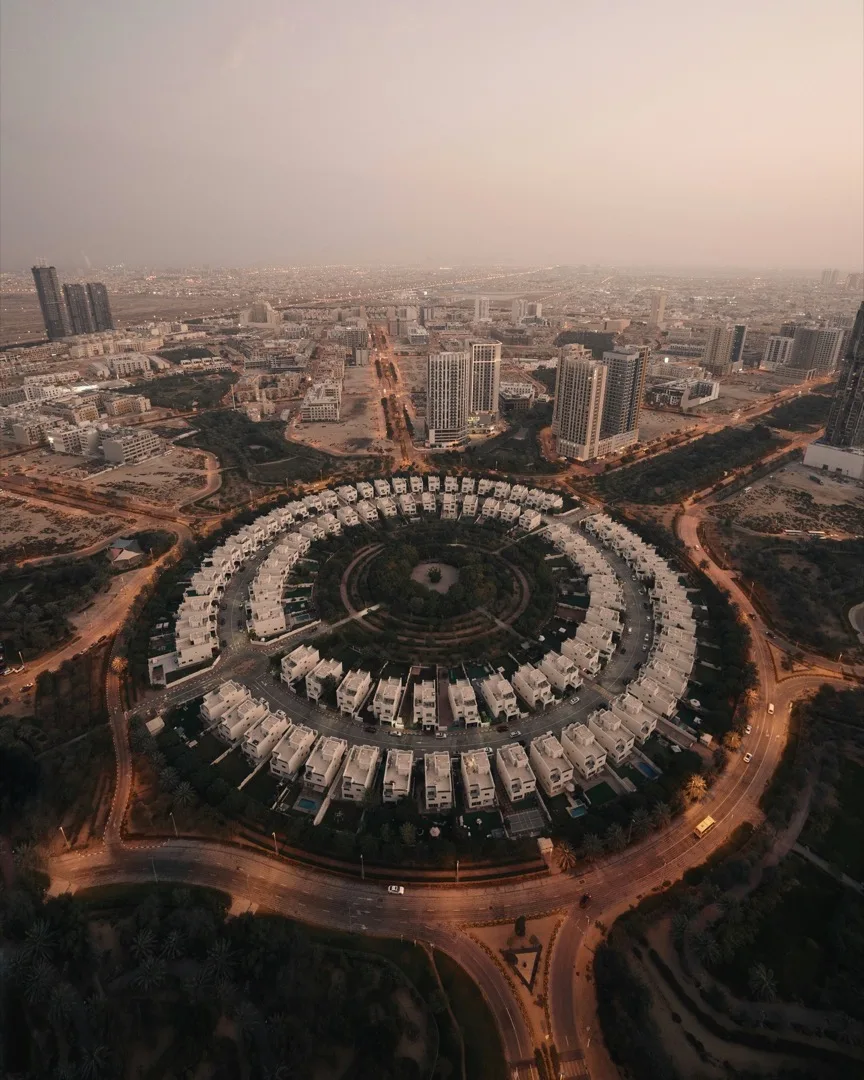
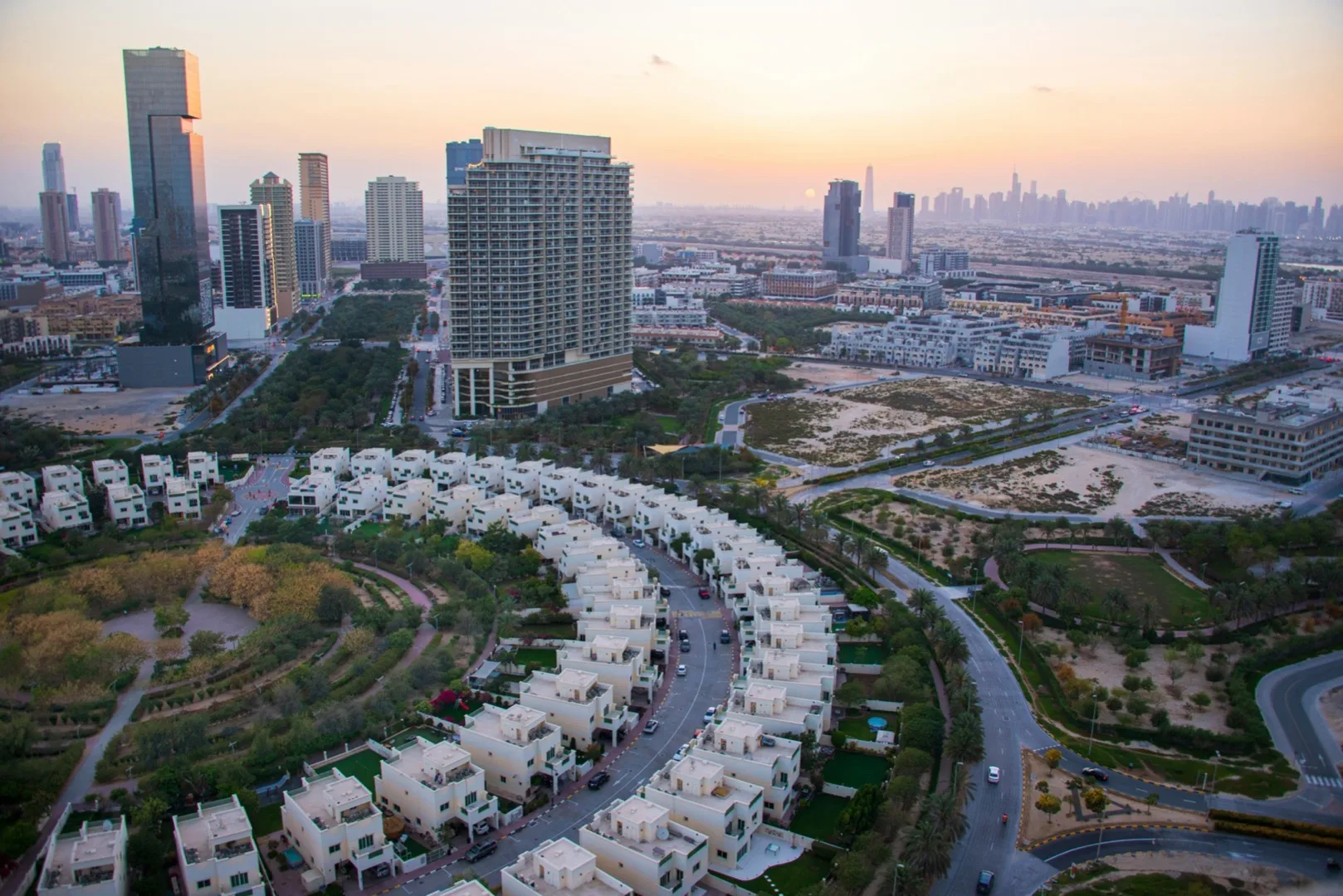
JVC was launched by Nakheel in 2005 as a master-planned mixed-use community. The circular layout — which gives the area its name — spans approximately 870 hectares and was designed to accommodate over 2,000 residential buildings upon completion. The community is divided into numbered districts, each containing a mix of apartment buildings, townhouses, and villa clusters.
Geographically, JVC occupies a strategic position between Sheikh Mohammed Bin Zayed Road (E311) and Al Khail Road (E44), placing it equidistant from Dubai Marina, Downtown Dubai, and Dubai South. This central positioning is one of the community's most underrated advantages — residents can reach virtually any major employment hub within 15–25 minutes during off-peak hours.
Key community facts:
- Master Developer: Nakheel
- Launch Year: 2005
- Total Area: ~870 hectares (circular layout)
- Estimated Population (2026): 85,000–90,000 residents
- Number of Buildings: 1,400+ completed, ~300 under construction
- Primary Demographics: Young professionals (25–40), small families, couples
- Ownership: Freehold for all nationalities
- Community Type: Mixed-use — apartments, townhouses, and limited villas
The community's demographic profile skews younger and more international than many Dubai areas. Residents are predominantly South Asian, European, and Arab professionals working across sectors from tech and finance to hospitality and healthcare. This diverse tenant pool is a structural advantage — demand is not dependent on any single industry or nationality group.
Price History: Capital Appreciation from 2020 to 2026
JVC prices have followed Dubai's broader market trajectory but with amplified gains due to the area's lower base and high demand. The table below shows average price per square foot trends across the community.
| Year | Avg Price/sqft (AED) | YoY Change | Cumulative from 2020 |
|---|---|---|---|
| 2020 | AED 550 | — | — |
| 2021 | AED 610 | +10.9% | +10.9% |
| 2022 | AED 700 | +14.8% | +27.3% |
| 2023 | AED 780 | +11.4% | +41.8% |
| 2024 | AED 850 | +9.0% | +54.5% |
| 2025 | AED 890 | +4.7% | +61.8% |
| Q1 2026 | AED 920 | +3.4% | +67.3% |
The data tells a clear story: JVC experienced aggressive price growth from 2021 to 2023, driven by post-pandemic demand and Dubai's broader market rally. Growth has moderated in 2025–2026, which is actually healthy — it suggests prices are stabilising at sustainable levels rather than entering speculative territory. A 67% cumulative gain over six years, combined with rental yields above 7%, represents exceptional total returns for investors who entered early. For more context on how JVC compares with other high-performing areas, see our best areas to buy property in Dubai 2026 ranking.
Current Prices by Property Type (March 2026)
JVC offers a wide range of property types, from compact studios to spacious townhouses. Here is the current pricing landscape as of March 2026, based on Dubai Land Department (DLD) transaction data and active listings.
| Property Type | Size Range (sqft) | Price Range (AED) | Average Price (AED) |
|---|---|---|---|
| Studio | 350–500 | 380K–520K | 450,000 |
| 1-Bedroom | 600–850 | 580K–800K | 680,000 |
| 2-Bedroom | 900–1,300 | 850K–1.3M | 1,050,000 |
| 3-Bedroom | 1,400–1,800 | 1.3M–1.9M | 1,550,000 |
| Townhouse (3-4 bed) | 1,800–2,800 | 1.8M–3.2M | 2,400,000 |
The sweet spot for pure yield investors remains the studio and 1-bedroom segment, where entry costs are lowest and rental demand is strongest. Family-oriented investors targeting capital appreciation may prefer 2-bedroom units and townhouses, which have shown stronger price growth as JVC's family infrastructure has improved.
Rental Yields: JVC's Core Investment Advantage
JVC's rental yields are the primary reason investors flock to this community. While prime areas like Downtown Dubai and Dubai Marina offer yields of 5–6%, JVC consistently delivers 7–10% gross yields depending on the property type. Understanding how to calculate real rental yield in Dubai is essential before committing to any investment.
| Property Type | Avg Purchase (AED) | Annual Rent (AED) | Gross Yield |
|---|---|---|---|
| Studio | 450,000 | 38,000–45,000 | 8.4–10.0% |
| 1-Bedroom | 680,000 | 48,000–55,000 | 7.1–8.1% |
| 2-Bedroom | 1,050,000 | 65,000–75,000 | 6.2–7.1% |
| 3-Bedroom | 1,550,000 | 90,000–105,000 | 5.8–6.8% |
| Townhouse | 2,400,000 | 130,000–155,000 | 5.4–6.5% |
After deducting service charges, management fees, and maintenance (typically 1.5–2% of property value annually), net yields for studios remain in the 6.5–8% range — still among the highest in Dubai. For a detailed comparison with similar areas, our analysis of JVC vs Arjan vs Dubai Silicon Oasis breaks down the yield differences.
It is worth noting that JVC yields have compressed slightly over the past two years as prices rose faster than rents. In 2023, studio yields above 10% were common. Today, 8–9% is more realistic for new purchases. This yield compression is natural in maturing markets and does not diminish JVC's attractiveness relative to alternatives.
Infrastructure & Amenities
JVC has transformed from a construction-heavy area with limited amenities into a self-sufficient community. Here is the current infrastructure landscape:
Education
- JSS International School — Indian CBSE curriculum, established presence, consistently high enrolment
- Sunmarke School — IB and UK curriculum options, premium facilities, strong KHDA ratings
- Blossom Nurseries JVC — Multiple branches across the community
- Kids World Nursery — FS1/FS2 with EYFS curriculum
- Several additional nurseries and early learning centres within the community
Healthcare
- Aster Clinic JVC — General practice, walk-in consultations
- Mediclinic Parkview Hospital — 5 minutes away, full-service hospital
- NMC Royal Hospital (Al Barsha) — 10 minutes, comprehensive care
- Multiple dental clinics, pharmacies, and specialist practices within JVC
Shopping & Dining
- Circle Mall — JVC's primary retail destination with Carrefour, Homes R Us, cinema, food court, and 200+ retail outlets
- Spinneys, Choithrams, Viva — Multiple supermarket options across different districts
- Restaurant Row (District 10–12) — Growing cluster of independent restaurants and cafés
- Multiple smaller retail strips with salons, laundries, and convenience stores
Recreation
- JVC Community Park — Central green space with jogging tracks and playgrounds
- Multiple pocket parks — Landscaped areas throughout the community
- Fitness First / GymNation — Budget and premium gym options
- Community pools — Available in most mid-to-high-end buildings
Transportation & Connectivity
JVC's road connectivity is one of its strongest selling points. The community sits between two of Dubai's major arterial highways, providing quick access to virtually every major destination.
- Sheikh Mohammed Bin Zayed Road (E311) — Direct access, connects to Abu Dhabi, Sharjah, and Dubai's outer communities
- Al Khail Road (E44) — Direct access, fastest route to Business Bay, DIFC, and Downtown
- Hessa Street — Connects to Dubai Marina, JBR, and Media City
Driving Distances (Off-Peak)
| Destination | Distance | Drive Time |
|---|---|---|
| Dubai Marina | 12 km | 12–15 min |
| Downtown Dubai / Burj Khalifa | 18 km | 18–22 min |
| Dubai Mall | 17 km | 18–22 min |
| Mall of the Emirates | 10 km | 10–14 min |
| Dubai International Airport (DXB) | 30 km | 25–35 min |
| Al Maktoum Airport (DWC) | 28 km | 22–28 min |
| DIFC / Business Bay | 15 km | 15–20 min |
Public transport: JVC is currently served by RTA bus routes (F33, F34, F37) connecting to the nearest metro stations — Mall of the Emirates (Red Line) and Dubai Internet City (Red Line). The area lacks a dedicated metro station, which remains a notable gap. However, RTA's long-term transit plan includes a potential metro extension along the E44 corridor that could bring metro access to JVC by 2030–2032. This would be a significant catalyst for both property values and rental demand.
Investing in Dubai?
Get Weekly Investment Insights
ROI analysis, rental yields, off-plan opportunities, and data-driven market updates.
✓ You're in! Check your inbox.
Top Buildings for Investment in JVC (2026)
Not all buildings in JVC are equal. Service charges, build quality, amenities, and management vary significantly. Based on current market data, tenant feedback, and investment metrics, these are the top buildings to consider. Understanding how service charges work in Dubai is critical when evaluating buildings.
| Building | Developer | Service Charge (AED/sqft) | Key Amenities | Est. Yield |
|---|---|---|---|---|
| Belgravia 2 | Ellington | 16–18 | Pool, gym, landscaped gardens, co-working | 7.0–7.8% |
| Bloom Towers | Bloom | 12–14 | Pool, gym, BBQ area, covered parking | 7.5–8.5% |
| Pantheon Elysee | Pantheon Development | 10–12 | Pool, gym, retail ground floor | 8.0–9.2% |
| Binghatti Stars | Binghatti | 9–11 | Pool, gym, basic amenities | 8.5–9.5% |
| Sobha Hartland (JVC phase) | Sobha | 15–17 | Premium pool, gym, concierge, retail | 6.5–7.2% |
| Samana Greens | Samana | 11–13 | Private pools per unit, gym, smart home | 7.8–8.8% |
| Le Grand Chateau | Lootah | 10–12 | Pool, gym, BBQ, garden | 7.8–8.6% |
| Oxford Tower | Global Group | 8–10 | Pool, gym, parking | 8.8–9.8% |
| Bellavista | Western Group | 9–11 | Pool, gym, retail ground floor | 8.2–9.0% |
| Sydney Tower | Sygma Group | 9–11 | Pool, gym, retail, covered parking | 8.0–9.0% |
Key insight: Buildings with lower service charges (AED 8–12/sqft) tend to deliver higher net yields but may lack premium amenities that attract higher-quality, longer-tenure tenants. Buildings like Belgravia and Sobha command premium rents due to superior finish and management, partially offsetting their higher service charges. The right choice depends on whether you prioritise raw yield or tenant quality and retention.
Off-Plan vs Ready Properties in JVC
JVC remains one of the most active off-plan markets in Dubai, with several major developers currently launching or constructing projects. For buyers considering off-plan, our comprehensive off-plan payment plans guide covers everything you need to know about structuring purchases.
Active Off-Plan Developers in JVC (2026)
- Samana Developers — Multiple projects with private pool concepts (Samana Park Views, Samana Waves), 60/40 payment plans, handover 2027–2028
- Binghatti — Affordable luxury positioning, Binghatti Crescent and Binghatti Onyx, competitive pricing from AED 550K for 1-beds
- Ellington Properties — Belgravia series (premium segment), higher price point but superior build quality and design
- Sobha Realty — Limited JVC presence but premium product, targeting AED 1,100–1,300/sqft
- Danube Properties — Bayz, Diamondz and Opalz projects, aggressive 1% monthly payment plans, targeting first-time investors
Off-Plan vs Ready Comparison
| Factor | Off-Plan | Ready |
|---|---|---|
| Entry Price | 10–20% below ready market | Market rate |
| Payment | 60/40 or 50/50 construction-linked | Full payment or mortgage |
| Rental Income | None until handover (2–3 years) | Immediate |
| DLD Fee | 4% (sometimes 50% waived by developer) | 4% full |
| Risk | Construction delay, market change | What you see is what you get |
| Capital Gain Potential | Higher (if market rises) | Moderate, more predictable |
For investors focused on cash flow, ready properties in JVC are generally the better choice — you start earning rent immediately and can verify the building quality, management, and tenant demand before committing. Off-plan makes sense for investors with a 3–5 year horizon who want capital appreciation and can accept the absence of rental income during construction.
Tenant Demand: Who Rents in JVC?
Understanding tenant demographics is crucial for investment decisions. JVC's tenant profile has distinct characteristics that drive demand patterns.
Primary Tenant Segments
- Young professionals (25–35): Single or couples working in Dubai Marina, Media City, Internet City, or Downtown. They value affordability combined with reasonable commute times. Studios and 1-beds are their primary choice.
- Young families (28–40): Couples with 1–2 children who need more space but cannot afford JBR, Marina, or Arabian Ranches. They target 2-bed apartments and townhouses. School proximity (JSS, Sunmarke) is a key decision factor.
- Mid-career professionals (30–45): Working in free zones (JLT, TECOM, DIC) who want a community feel with parks and amenities at 30–40% below Marina rents.
- Small business owners: Entrepreneurs running businesses from TECOM, JLT, or Business Bay who prefer JVC's value proposition for their family residence.
Demand Metrics
- Average vacancy rate: 3–5% (well below Dubai average of 8–10%)
- Average time to rent (studio/1-bed): 5–10 days after listing
- Average time to rent (2-bed+): 10–18 days after listing
- Average tenancy duration: 1.8 years (many renew for 2–3 cycles)
- Rent payment preference: 60% prefer 4–6 cheques, 30% accept single cheque, 10% monthly (via Ejari-registered contracts)
The consistently low vacancy rate is perhaps the most compelling demand indicator. In a market where some newer communities struggle with 15–20% vacancy, JVC's 3–5% rate demonstrates genuine, sustained demand rather than speculative interest.
Competition: JVC vs Alternative Affordable Areas
Investors often compare JVC with neighbouring affordable communities. Here is how they stack up. For the full detailed analysis, see our JVC vs Arjan vs DSO comparison and our comprehensive ROI area rankings for 2026.
| Factor | JVC | JVT | Arjan | DSO | Town Square |
|---|---|---|---|---|---|
| Avg Studio Price | 450K | — | 420K | 380K | 360K |
| Studio Yield | 8–10% | — | 8–9% | 8–9% | 7–8% |
| Amenities | Excellent | Good (villas) | Developing | Good | Good |
| Vacancy Rate | 3–5% | 5–7% | 6–9% | 5–8% | 4–6% |
| Road Connectivity | Excellent | Excellent | Good | Good | Moderate |
| Metro Access | No (bus) | No (bus) | No | No | No |
| Supply Risk | Medium-High | Low | High | Low | Low |
| Capital Appreciation (5yr) | 67% | 55% | 48% | 52% | 42% |
JVC's primary advantage over competitors is its combination of high yield, strong capital appreciation, excellent amenities, and low vacancy. The main trade-off is higher supply risk — more new units are entering JVC than any comparable community, which could pressure yields if absorption slows.
Future Growth Drivers
Several factors could push JVC values and rents higher over the next 3–5 years:
- Population growth: Dubai targets 5.8 million residents by 2040 (from ~3.7 million today). As prime areas reach capacity, spillover demand flows naturally to well-connected affordable communities like JVC.
- Metro extension potential: RTA's 2040 urban master plan includes transit corridors along Al Khail Road. A metro station in or near JVC would be a transformative catalyst, potentially adding 10–15% to property values based on historical metro-adjacent appreciation patterns.
- Al Maktoum Airport expansion: The new passenger terminal at DWC, expected to begin operations by 2028–2030, will shift the economic centre of gravity southward — directly benefiting JVC's strategic position.
- Expo City Dubai (District 2020): The permanent development at the former Expo site is creating thousands of jobs within 20 minutes of JVC, adding to the tenant pipeline.
- Community maturation: As remaining vacant plots are developed and the community reaches full build-out, the "under construction" stigma fades, attracting higher-quality tenants willing to pay premium rents.
- Price ceiling room: At AED 920/sqft, JVC remains 40–50% below Dubai Marina (AED 1,600–1,800/sqft) and 55–65% below Downtown (AED 2,000–2,500/sqft). There is significant room for price convergence as amenities improve.
For deeper analysis on which Dubai areas offer the strongest appreciation potential, see our best areas for capital appreciation in 2026 guide.
Risks & Challenges: The Honest Assessment
No investment analysis is complete without addressing risks. JVC has genuine challenges that investors must consider:
1. Oversupply Concern
This is JVC's biggest structural risk. With approximately 300 buildings under construction and multiple new off-plan launches monthly, supply absorption is a real concern. If Dubai's population growth slows or economic conditions soften, JVC — as one of the highest-supply communities — would feel the impact early. Current absorption rates remain healthy, but this warrants ongoing monitoring.
2. Construction Noise & Disruption
Unlike fully built communities (e.g., DSO, Motor City), JVC still has active construction across many districts. This affects tenant quality of life, particularly in districts 10–14 where development is densest. Investors should favour districts with minimal remaining development activity or accept short-term disruption for long-term value.
3. Uneven Development
JVC's quality varies dramatically by district. Some areas feature well-maintained buildings with landscaping and retail, while others feel barren with empty plots and limited walkability. Due diligence at the building and district level is essential — area-level averages can be misleading.
4. Parking Pressure
Many JVC buildings were designed with minimal parking ratios (0.5–1 space per unit). As occupancy has increased, parking has become a pain point, particularly in districts with multiple occupied buildings and limited street parking. This affects tenant satisfaction and can influence rental demand for specific buildings.
5. No Metro Access
The absence of a metro station limits JVC's appeal for tenants who rely on public transport. While bus connectivity exists, it is slower and less reliable than metro service. This constrains the tenant pool compared to metro-adjacent communities.
6. Service Quality Variation
Management quality varies enormously across JVC buildings. Some are professionally managed with responsive maintenance and clean common areas; others suffer from neglect. Service charges ranging from AED 8 to AED 18 per sqft reflect this disparity. Investors must verify management track records before purchasing.
Frequently Asked Questions
Is JVC still a good investment in 2026 or have prices peaked?
JVC prices have moderated from the 15%+ annual growth seen in 2022–2023, but a peak is unlikely in the near term. Price growth of 3–5% annually combined with 7–10% yields means total returns of 10–15% per year remain achievable. The oversupply risk is the main threat — monitor quarterly DLD transaction volumes and new project launches to gauge absorption.
Which district in JVC should I invest in?
Districts 10, 11, and 12 offer the best balance of amenities, tenant demand, and maturity. District 13 and 14 are less developed but offer lower entry prices. For townhouses, Districts 1–3 are preferred. Avoid districts with extensive ongoing construction unless you are buying off-plan with a 3+ year horizon.
Can I get a mortgage for a JVC property?
Yes. Most UAE banks offer mortgages for JVC properties, though some buildings may not be approved by all lenders. Typical terms: 70–80% LTV for residents, 50–65% for non-residents, interest rates of 4.5–5.5% (fixed for 1–3 years). Pre-approval before property search is strongly recommended. Registered with RERA properties are required for mortgage eligibility.
What are typical maintenance costs beyond service charges?
Budget AED 3,000–5,000 annually for interior maintenance (AC servicing, minor repairs, appliance wear). For furnished units, add AED 2,000–3,000 for furniture wear and replacement. Total annual holding costs including service charges typically represent 1.5–2.5% of property value.
Is JVC suitable for short-term rental (Airbnb)?
Short-term rentals in JVC are permitted with a DTCM holiday home licence. Studios and 1-beds can generate 20–30% higher income than long-term leases during peak season (November–March). However, occupancy rates during summer months (June–August) drop to 40–55%, and management costs are higher (15–20% of revenue). Net returns after all costs are comparable to long-term leasing for most JVC properties.
How do I verify a JVC property's title deed and developer?
All JVC transactions are registered with the Dubai Land Department (DLD). You can verify title deeds through the DLD REST app, check developer registration through the RERA developer database, and confirm Oqood (off-plan registration) for off-plan units through the same portal. Always conduct verification before making any payment.
Need Investment Advice?
Get personalized analysis for your Dubai property investment.
Thank You!
We'll get back to you within 24 hours.
Real Estate Agencies in Dubai
Explore providers from our business directory
Still have questions?
Ask a follow-up, or get connected with a vetted Dubai professional.
Follow us on LinkedIn
Dubai market analysis and industry insight for professionals.