Russian Capital in Dubai 2026: Sanctions, Banking Realities and Where They're Buying

- Russian nationals have consistently ranked among the top three foreign buyer nationalities in Dubai real estate by transaction volume in many quarters since 2022, alongside Indian and British buyers.
- The UAE is not a member of OFAC or EU sanctions regimes. It applies its own AML and targeted sanctions screening — individuals appearing on UN, UAE or local lists are blocked, but ordinary Russian citizens with valid documentation are not.
- UAE banks accept Russian-passport clients holding valid residency, but onboarding involves enhanced due diligence: detailed source-of-funds documentation, sometimes 2-6 months from application to full account activation.
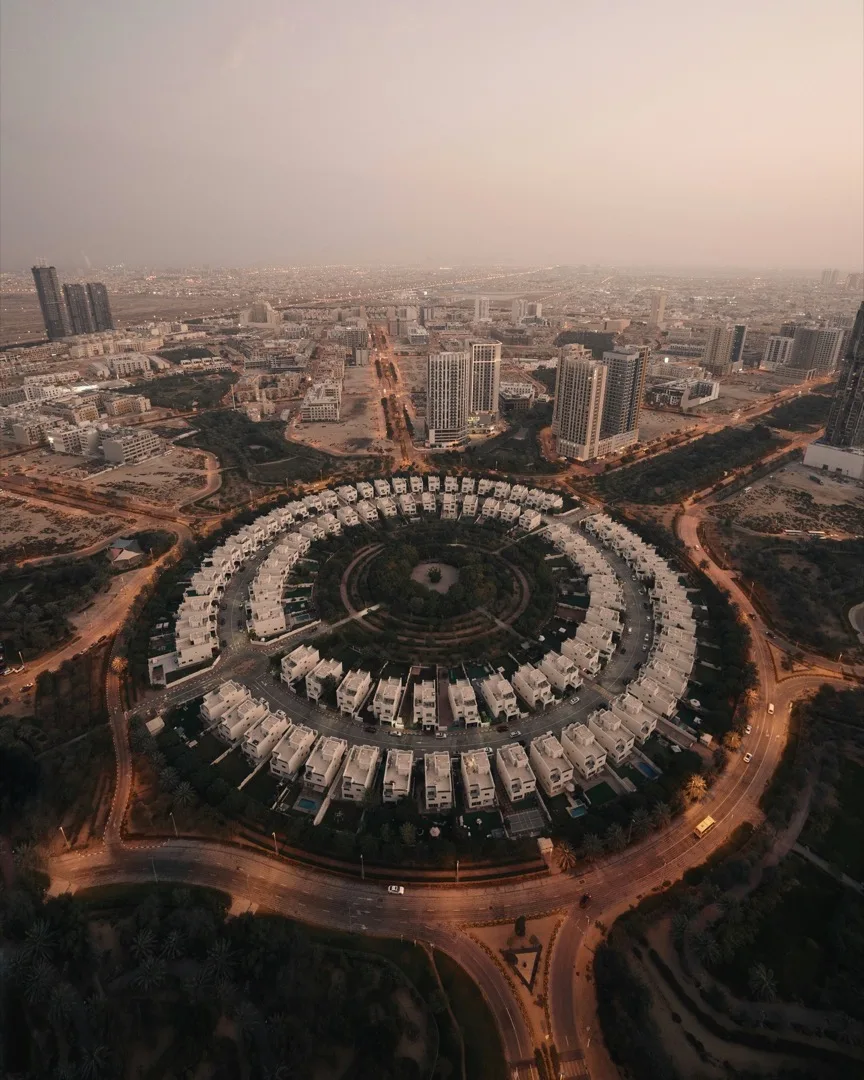
- Preferred areas concentrate in Marina, Palm Jumeirah, Business Bay, Downtown Dubai, JVC and MBR City — a mix of premium beachfront and yield-driven mid-market plays.
- Property purchases of AED 2 million or more open the 10-year Golden Visa pathway, which has become a primary motivator for Russian buyers seeking long-term residence security.
- Direct ruble-to-AED SWIFT transfers from sanctioned Russian banks are largely impractical. Common legal routes include transfers via third-country banks, regulated crypto OTC desks and developer-direct payments to escrow.
- UAE residence (183+ days physically present) generally flips an individual's tax residency to the UAE, which has 0% personal income tax — though Russian-source income remains within Russia's reach under double-tax rules.
Why Russian Buyers Reshaped the Dubai Market After 2022
The shift began in spring 2022. As Western financial sanctions tightened and the ruble's external usability narrowed, capital that had previously flowed to London, Cyprus, Spain and the South of France started looking for jurisdictions that combined safety, transparent property registration, dollar-pegged real estate, no income tax and a politically neutral posture. Dubai checked every box. Within twelve months, Russian-passport holders were appearing in the top three nationalities by transaction volume in many quarterly DLD breakdowns, sitting close to long-time leaders India and the United Kingdom.
This is not a story about a single luxury segment. The Russian buyer base in 2026 is layered — entrepreneurs relocating their operating businesses, salaried tech professionals exiting Moscow and St. Petersburg, families seeking schooling and long-term residence, and a smaller high-net-worth tier deploying capital across multiple villas and penthouses. The challenge for new buyers is no longer whether Dubai works — it is understanding the operational realities of moving capital, opening accounts and structuring purchases correctly so that everything stands up to bank compliance.
The UAE Sanctions Framework: What Actually Applies
Confusion about the UAE's position on sanctions remains widespread. The factual position, as set by the UAE federal government and the UAE Central Bank, is straightforward and worth stating clearly:
- The UAE is not a member of the United States Office of Foreign Assets Control (OFAC) sanctions regime.
- The UAE is not a member of the European Union, and therefore does not directly apply EU sanctions packages.
- The UAE does implement United Nations Security Council sanctions, which are binding under international law.
- The UAE operates its own Local Terrorist List and a Targeted Financial Sanctions framework administered by the Executive Office for Anti-Money Laundering and Countering Financing of Terrorism, working alongside the Central Bank.
- UAE financial institutions are required to perform enhanced due diligence on transactions involving high-risk jurisdictions, and most have voluntarily adopted screening practices that look at OFAC and EU lists as part of their risk-management posture — particularly because they hold correspondent relationships with US and European banks.
The practical effect is twofold. An ordinary Russian citizen who is not personally on any sanctions list is legally permitted to open an account, buy property, set up a company and obtain residence in the UAE. At the same time, every transaction passes through compliance filters that effectively reflect Western sanctions concerns, because UAE banks need to keep their international correspondent relationships intact. Being legal is necessary but not sufficient — the file also needs to be cleanly documented enough to clear bank compliance review. A buyer who cannot document the origin of funds will face delays, document requests, and in some cases refusal to register the title.
Russian Buyer Rankings: 2020 to 2025
Public DLD data does not always disclose nationality breakdowns at the level of individual transactions, and quarterly nationality reporting comes from a mix of brokerage aggregators, developer disclosures and DLD bulletins. The directional picture across 2020 to 2025, however, is clear: Russian buyers moved from a mid-tier position into the top three, and have stayed there.
| Year | Russia (approx. rank) | Typical Top 3 Nationalities | Market Context |
|---|---|---|---|
| 2020 | Outside top 5 | India, UK, Pakistan | COVID-19 dampened cross-border buying; Russian volume modest |
| 2021 | Top 5–7 | India, UK, Saudi Arabia | Recovery year; first signs of higher Russian off-plan interest |
| 2022 | Top 3 | India, UK, Russia | Sharp jump from Q2 2022 onward following sanctions wave |
| 2023 | Top 3 (multiple quarters #1) | Russia, India, UK | Peak Russian transaction share in some quarterly broker reports |
| 2024 | Top 3 | India, Russia, UK | Volume normalised; banking onboarding tightened materially |
| 2025 | Top 3 | India, UK, Russia | Steady high volume; more Golden Visa motivated purchases |
The rankings move quarter to quarter and the precise ordering depends on which broker aggregator or DLD bulletin you reference. The structural conclusion is more useful than any individual rank: since 2022, Russian buyers have ceased to be a niche segment and have become a permanent feature of the top tier of the Dubai real estate market — alongside Indian and British buyers, with strong cohorts also from China, Saudi Arabia, Iran, Egypt and Pakistan.
Banking Realities: Onboarding a Russian-Passport Client in 2026
The single most consistent message from Russian buyers active in Dubai is the same: getting a personal bank account is harder than buying the property. UAE banks have not stopped accepting Russian-passport applicants, but they have built compliance frameworks that are both stricter and slower than what most retail clients are accustomed to anywhere else in the world.
Three structural realities drive this: UAE banks rely on US and EU correspondent banking relationships and over-screen rather than under-screen to protect them; the UAE's AML supervisor has ratcheted up enforcement on banks after the country's 2022 placement on and 2024 removal from the FATF grey list; and Russian-source funds frequently arrive via complex chains — third-country banks, multiple intermediaries, recently established companies — patterns that compliance models flag automatically.
Typical Onboarding Timelines
| Account Type | Approx. Timeline | Typical Documentation Requested | Common Outcome |
|---|---|---|---|
| Personal account, salaried resident | 3–8 weeks | Passport, Emirates ID, residence visa, salary certificate, employment contract, tenancy contract, recent payslips | Approved if employer is reputable and salary is consistent with role |
| Personal account, self-employed / investor visa | 6–16 weeks | All of the above plus 6–24 months of source-of-funds evidence (sale of business, dividends, salary history abroad, inheritance, audited statements) | Often approved with conditions: lower opening balance limits, additional reviews |
| UAE company account (FZ or mainland) | 8–24 weeks | Trade license, MOA, UBO declaration, business plan, expected transaction profile, source of capital, contracts with first clients | High variance by bank; some specialise in entrepreneurial onboarding, others avoid newly formed entities |
| Premium / private banking | 4–12 weeks (often faster) | All of the above plus minimum AUM commitment (commonly AED 1M+); detailed wealth profile | Faster decisions when relationship manager pre-qualifies the file |
Salaried Russian professionals working for established UAE employers have an experience close to other expat nationalities — slower, but workable. Investors and entrepreneurs without a clear UAE income stream face the longest timelines, and their files succeed or fail almost entirely on the quality of the source-of-funds documentation they can produce.
The "UAE Company" Workaround
A common structure in 2024–2026 has been to incorporate a UAE free-zone or mainland company first, build the corporate banking relationship, and then route property purchases either through the company or through a personal account opened against that operating relationship. Whether this is right depends on long-term plans — corporate ownership has tax and inheritance implications that are not always favourable. The trade-offs are covered in our analysis of holding Dubai property in a company.
Where Russian Buyers Are Concentrating
Russian buyer geography in Dubai is not random. The clusters reflect a clear set of preferences: branded waterfront product, high liquidity for resale, walkable lifestyle precincts, and — increasingly — quality schooling within reasonable commuting distance.
| Area | Typical Entry Price | Why Russian Buyers Choose It | Profile |
|---|---|---|---|
| Dubai Marina | AED 1.4M–4M (1–2 BR) | Walkable, beach-adjacent, deep secondary market, established Russian-speaking F&B and services | Lifestyle owners + yield-focused investors |
| Palm Jumeirah | AED 3M–25M+ (apt to villa) | Trophy address, beachfront villas, branded residences, capital preservation focus | High-net-worth families and second-home buyers |
| Business Bay | AED 1M–3M (1–2 BR) | Central location, strong leasing market, branded towers, easy proximity to Downtown | Entrepreneurs working from UAE plus investors |
| Downtown Dubai | AED 1.8M–6M (1–3 BR) | Burj Khalifa skyline, Dubai Mall, prestige addresses with deep tenant pool | Long-term capital preservation |
| JVC (Jumeirah Village Circle) | AED 600K–1.3M (studio to 2 BR) | Yield-driven mid-market entry; Golden Visa pathway via multiple units | First-time investors and yield aggregators |
| MBR City (Mohammed Bin Rashid City) | AED 1.5M–8M+ | Newer master-planned communities, lagoon and villa product, family lifestyle | Relocating families with school-age children |
Two distinct buyer profiles map onto these areas. The lifestyle-and-prestige profile concentrates in Marina, Palm, Downtown and Business Bay — buyers who plan to spend significant time in Dubai or treat the asset as a flagship long-term holding. The yield-and-Golden-Visa profile concentrates in JVC, MBR City and emerging mid-market districts like Dubai South — buyers stacking units to reach the AED 2M Golden Visa threshold while generating rental income. For deeper analysis, see our area guides for Dubai Marina, Palm Jumeirah and Business Bay.
Investing in Dubai?
Get Weekly Investment Insights
ROI analysis, rental yields, off-plan opportunities, and data-driven market updates.
✓ You're in! Check your inbox.
The Golden Visa Pathway: Why It Matters for Russian Buyers
The 10-year Golden Visa programme is the residence permit that has done more than anything else to convert one-off property buyers into longer-term residents. The headline rule is simple: a real estate investment of AED 2 million or more — across one or multiple properties — qualifies the owner for a 10-year renewable Golden Visa, with the ability to sponsor spouse and children. The property can be under mortgage; the full purchase value counts, not only the equity portion. Off-plan and ready property both qualify under the current rules, and the policy was further softened in earlier 2024 announcements covered in our off-plan Golden Visa update.
For Russian buyers, the visa solves three problems at once. First, it severs the dependence on tourist or short-term entries, providing legal long-term residence. Second, it provides a stable platform for opening bank accounts, registering vehicles, sponsoring schooling and accessing local healthcare. Third, it creates a documented basis for tax-residency analysis: 183 days physically in the UAE, with a UAE residence permit and centre-of-vital-interests evidence, supports a switch of tax residency to the UAE under most international treaty frameworks.
The full process — eligibility, costs, timeline, sponsorship rules — is detailed in our Golden Visa 2026 guide and in the dedicated Golden Visa through property investment guide. For a quick eligibility check based on your portfolio, the Golden Visa checker handles the standard cases.
Capital Transfer: How Money Actually Moves
This is where most operational complexity sits in 2026. Several major Russian banks are disconnected from SWIFT, others are subject to secondary sanctions risk, and even technically permitted ruble-to-AED corridor transfers face heavy correspondent-bank screening. Russian buyers typically use a combination of the following legal routes — none exotic, but all requiring careful documentation:
- Third-country bank transfers. Funds first move from a Russian bank to an account the buyer holds in a third country (Armenia, Kazakhstan, Türkiye, Serbia, UAE-friendly Asian jurisdictions), then onward to the UAE. The final UAE bank will still want to see the full chain.
- Non-Russian operating businesses. Russian entrepreneurs who relocated their business operations abroad after 2022 fund UAE purchases out of post-relocation business cash flow, which simplifies compliance because the source is a non-Russian operating company.
- Regulated crypto OTC desks. The UAE has a regulated virtual-asset framework via VARA. Buyers convert capital to USDT or BTC abroad and liquidate via UAE-licensed OTC desks into AED. Legal when conducted through licensed entities, but UAE banks scrutinise crypto-sourced funds heavily.
- Direct payments to developer escrow accounts. Some developers accept inbound funds from foreign banks directly into the project's RERA-registered escrow account. The compliance still happens, but the buyer never needs to first rest the funds in a personal UAE account.
- Existing offshore wealth. Buyers whose pre-2022 wealth was already held outside Russia face the lowest friction — those funds are not flagged as Russian-source and route through normal SWIFT corridors.
What does not work in 2026: cash. UAE AML rules cap cash transactions at AED 55,000 per occurrence, and the DLD will not register transactions outside compliant payment channels. Buyers expecting to settle a property purchase in cash are misinformed about the current regulatory environment.
Tax Residency: Russia, the UAE and the 183-Day Rule
The UAE imposes 0% personal income tax on individuals, regardless of nationality. That fact alone is widely understood. The harder question — and the one that determines actual tax outcomes — is which country has the right to tax a given person's worldwide income in any given year.
Russia taxes its tax residents on worldwide income. The default rule treats an individual as a Russian tax resident if they are physically present in Russia for at least 183 days during a 12-month period. Spending fewer than 183 days in Russia, while building a clear presence in the UAE — residence visa, Emirates ID, tenancy contract, family relocation, schools, day-to-day banking — generally moves tax residency out of Russia. From the UAE side, the Federal Tax Authority can issue a Tax Residency Certificate when the legal tests are met.
Three nuances are worth highlighting. First, Russian-source income remains within Russia's reach: dividends from a Russian company, rent from Russian property and salary from a Russian employer typically remain taxable in Russia under domestic withholding rules — double-tax treaties allocate rights but do not erase Russian-source taxation. Second, a revised Russia–UAE double-tax agreement was signed in 2025 and is on track for implementation; buyers should review the specific provisions with a qualified tax advisor. Third, UAE corporate tax (9%) applies to UAE business profits, not personal income — our landlord tax obligations guide walks through how this applies to property income.
Practical advice for almost every Russian buyer: do not improvise tax residency. Document calendar days in each country, retain travel evidence, retain UAE residence documents, and obtain a UAE Tax Residency Certificate annually if relying on UAE residency for treaty purposes.
Buying Mechanics: What Russian Buyers Should Expect at the DLD
Once the funding route is sorted and a property is selected, the buying mechanics are the same as for any other foreign buyer. The standard sequence is: signed Form F (the official sale and purchase agreement registered through the Dubai Land Department system), 10% buyer deposit held by the broker or trustee, application for No Objection Certificate from the developer (typically AED 500–5,000), and final transfer at a DLD-approved trustee office where the title deed is issued. Total transaction costs run roughly 7–8% on top of the purchase price (4% DLD registration, agency fees, trustee fees, NOC, mortgage registration if applicable). For the full process and costs, see our step-by-step Dubai buying process and complete fee breakdown.
For non-resident purchases — increasingly common as Russian buyers complete transactions before relocating — the process can be done remotely with a registered Power of Attorney, although the bank and source-of-funds steps still need to be cleared. The mechanics are covered in detail in our non-resident buyer's guide.
What Russian Investors Should Expect for 2026
Three structural trends are shaping the rest of 2026 and the early outlook into 2027:
- Compliance is not loosening; it is professionalising. Expect the same level of bank scrutiny, but with more predictable processes — banks have built dedicated Russian-client onboarding workflows, and brokers and developers have aligned their documentation packs to match. The buyers who succeed are the ones who arrive with a clean documentation file rather than expecting to assemble it on the fly.
- Mid-market and Golden-Visa-driven volume will likely continue to dominate. Trophy-asset volume from Russian buyers has stabilised, but yield-and-residence-driven mid-market buying — JVC, Dubai South, MBR City, the secondary-market value pockets — continues to see consistent inflow. The AED 2M threshold remains a primary structural anchor for buying behaviour.
- Geographic dispersal will continue. Marina and Palm remain core, but newer master plans — Dubai Creek Harbour, Expo City, Dubai South — are absorbing a growing share of Russian volume thanks to better launch pricing.
For buyers preparing entry in 2026, the operational picture is clearer than at any point since 2022: the legal framework is settled, banks have built repeatable onboarding processes, and the secondary market is liquid. Execution, not strategy, is where most issues now arise.
Frequently Asked Questions
Can a Russian citizen legally buy property in Dubai in 2026?
Yes. Russian nationals who are not personally listed on UN, UAE or applicable sanctions lists can buy freehold property in Dubai's designated areas with the same rights as any other foreign buyer. The Dubai Land Department does not apply nationality-based restrictions. Source-of-funds documentation will be reviewed at the bank, broker and developer level, but the underlying right to own property is unaffected by Russian citizenship.
Will UAE banks open an account for a Russian-passport holder?
Yes, but with enhanced due diligence. Salaried residents employed by reputable UAE companies typically clear personal-account onboarding in 3–8 weeks. Self-employed and investor-visa holders often face 6–16 weeks of review, and corporate accounts for newly formed companies can take up to 6 months. The decisive factor is the quality of the source-of-funds documentation, not the nationality of the passport.
Are sanctioned individuals able to buy property in Dubai?
No. Individuals listed on UN sanctions, UAE local sanctions or who are subject to UAE counter-terrorism designations are blocked at multiple layers — banks, developers, brokers and the DLD all run screening. The fact that the UAE is not a member of OFAC or EU sanctions regimes does not change this; UAE banks voluntarily screen against those lists as part of correspondent-banking compliance, and any flagged transaction will be stopped.
Can ruble payments be sent directly to a Dubai developer?
Direct ruble-to-AED payments from sanctioned Russian banks are largely impractical because of correspondent-banking constraints. Most Russian buyers use a multi-step route: funds first reach an account in a third country, then move to the UAE in dollars, euros or dirhams. Some buyers fund purchases via UAE-licensed crypto OTC desks. All routes require complete KYC and source-of-funds documentation acceptable to the receiving UAE bank.
Does a Russian buyer pay tax in Russia on rental income from a Dubai apartment?
It depends on tax residency. A Russian tax resident generally remains subject to Russian tax on worldwide income, including rental income from Dubai property, with relief available under the Russia–UAE double-tax treaty. A buyer who has shifted tax residency to the UAE — by spending under 183 days in Russia and meeting UAE residency tests — would generally be outside Russian taxation on Dubai-source rental income. Individual circumstances vary; specialist tax advice is essential.
Does buying property in Dubai automatically grant residence?
Not automatically. Property worth AED 750,000 or more qualifies the owner for a 2-year renewable property-investor visa. Property worth AED 2 million or more qualifies for the 10-year Golden Visa. In both cases the visa is applied for separately through the ICP federal authority after the title deed is issued and other eligibility requirements are met. Owning property without applying for one of these visas does not by itself confer residence rights.
How long does the typical Russian buyer transaction take in 2026?
From signed Form F to title deed issuance, a ready-property cash transaction usually takes 4–8 weeks. Off-plan transactions are governed by the developer payment plan and can run multiple years until handover. The variable element is bank-side: opening accounts and clearing source-of-funds documentation can take longer than the property transaction itself, which is why most experienced Russian buyers begin the banking process before — not after — selecting a property.
Is it safer to buy as an individual or through a UAE company?
Neither option is universally better. Individual ownership is simpler, qualifies directly for the Golden Visa and avoids corporate compliance overhead. Company ownership can simplify multi-investor structures and certain succession scenarios but introduces UAE corporate tax considerations and adds annual administration costs. The right structure depends on the buyer's family situation, total exposure size, business activities in the UAE and inheritance planning. Our corporate ownership analysis walks through the trade-offs in detail.
Every file is different. Source-of-funds shape, residency timing, banking strategy and Golden Visa pathway choices all change the optimal route. The REC community and our investment specialists work with Russian-speaking buyers regularly and can help map your situation against current banking and regulatory realities. Reach out through the community, and we will route you to the right specialist for your file.
Need Investment Advice?
Get personalized analysis for your Dubai property investment.
Thank You!
We'll get back to you within 24 hours.
Real Estate Agencies in Dubai
Explore providers from our business directory
Still have questions?
Ask a follow-up, or get connected with a vetted Dubai professional.
Follow us on LinkedIn
Dubai market analysis and industry insight for professionals.