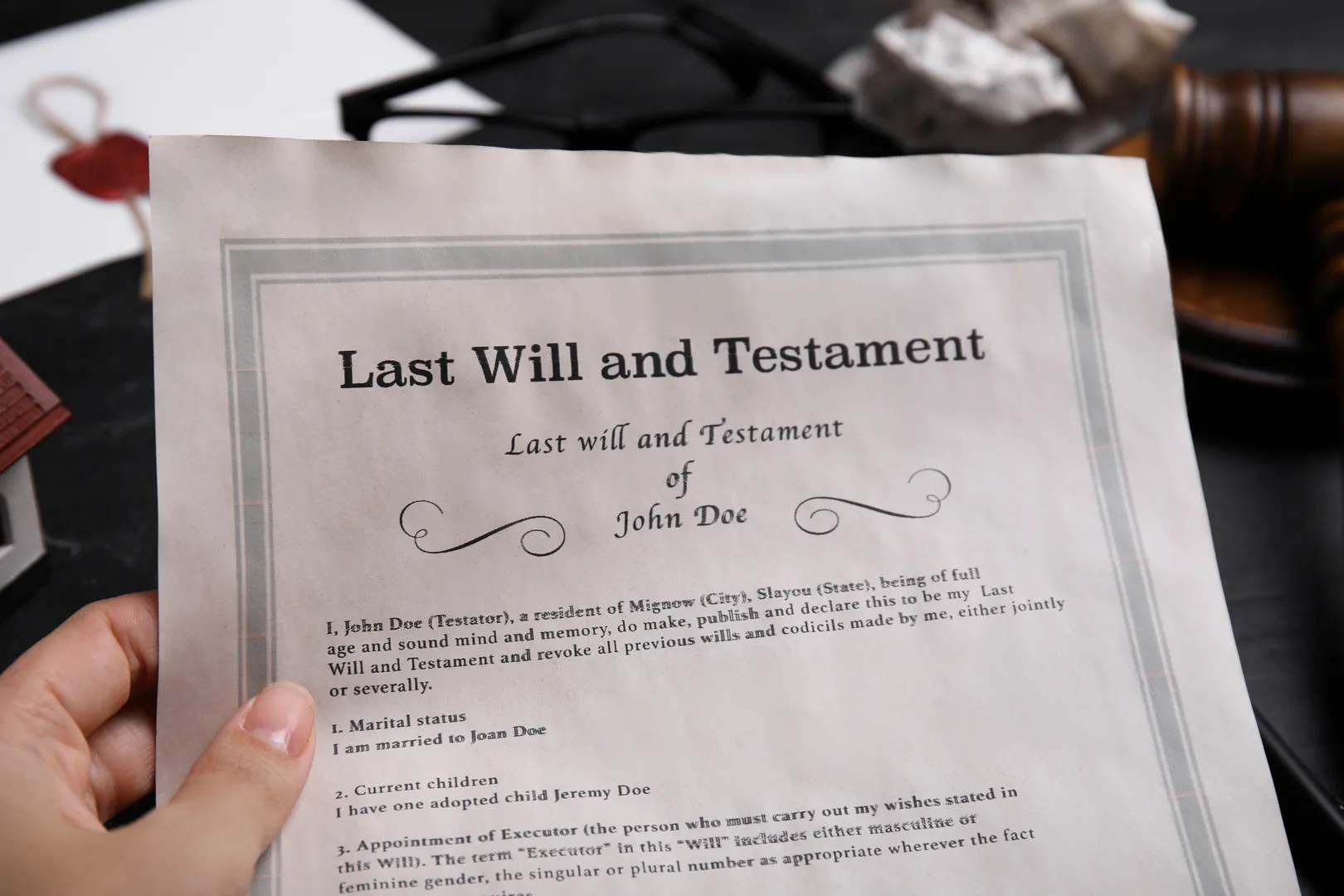
Inheritance Rules for Non-Muslim Property Owners Dubai 2026: With and Without DIFC Will

- If you are a non-Muslim expat with property in Dubai, what happens to that property on your death depends on whether you have a registered will.
- WITH a DIFC Will (or other valid foreign will): Distribution proceeds per the will, typically within 2–6 months of death. Predictable, clean, and the assets remain accessible to your beneficiaries.
- WITHOUT a will: Assets are frozen pending probate (commonly 6–18 months), and Sharia distribution may apply by default — particularly for Dubai-located assets. Federal Law 41 of 2022 (Personal Status for Non-Muslims) gives non-Muslim residents the option to apply their home country's law, but this still requires court process.
- Costs of doing nothing: court fees AED 5,000–30,000+, lawyer fees AED 15,000–50,000+, plus 6–18 months of frozen rent and inaccessible bank accounts.
- Cost of a DIFC Will: roughly AED 10,000–15,000 for a single will, AED 15,000–20,000 for a mirror couple's will. The savings — financial and emotional — are substantial.
- If you own property in Dubai and are non-Muslim, a DIFC Will is the single highest-leverage piece of legal planning available to you.
Why This Matters for Non-Muslim Property Owners
Dubai's property market is built on foreign capital. Hundreds of thousands of expats own freehold property in Dubai, and a meaningful share of them are non-Muslim — Europeans, Indians of varied faiths, Russians, Chinese, Americans, South Africans, Australians, and many others. For all of them, one question matters more than almost any other when planning long-term: What happens to my Dubai property if I die?
The honest answer depends entirely on whether you have made provision in advance. The legal framework changed meaningfully in late 2020 with Federal Decree-Law No. 29 (Personal Status for Non-Muslims), refined by Federal Law 41 of 2022, which created clearer pathways for non-Muslim residents to apply their home country's inheritance law. But the framework only works smoothly if you have set it up while you are alive. Without a will, the default outcome remains messy, slow, and often financially painful for your family.
Scenario A: You Have a Registered DIFC Will
The Dubai International Financial Centre (DIFC) Wills Service Centre operates a registry where non-Muslims can register a common-law will that governs the disposition of their UAE assets. A DIFC Will is recognised by Dubai courts and provides a fast, predictable inheritance process.
What happens after death
- Death certificate issued. Local hospital or Dubai Health Authority issues a death certificate within days.
- Will activated. The named executor presents the death certificate and the registered DIFC Will to the DIFC Courts.
- Probate granted by DIFC Courts. The DIFC Probate Service issues a Probate Order — typically within 4–8 weeks of application.
- Asset transfer. The Probate Order is presented to DLD, banks, and other relevant institutions to transfer assets per the will.
- Distribution complete. Total timeline from death to distribution: typically 2–6 months.
Why this matters in practice
- No asset freeze. The will provides a clear instruction; assets do not need to be tied up while courts determine distribution.
- You choose the beneficiaries. Your spouse can inherit 100%, your children specific shares, charities a portion — whatever you specify.
- You appoint guardians. For families with minor children resident in Dubai, the DIFC Will is the only place where you can legally appoint guardians enforceable in the UAE.
- Multi-jurisdiction coverage. The DIFC Will covers UAE assets only, but it works alongside your home-country will for assets elsewhere.
For a deeper look at the structure, registration, and ongoing administration of a DIFC Will, see our pillar guide: Why every expat property owner needs a DIFC Will.
Scenario B: You Have No Will
If you die without any registered will — neither a DIFC Will nor a recognised foreign will — your Dubai assets fall into the default UAE inheritance process. The current law (Federal Law 41 of 2022 governing Personal Status for Non-Muslims) gives non-Muslim residents the right to elect application of their home country's inheritance law in court. But "the right to elect" is not the same as "automatic application." Someone — typically your surviving family — has to actively pursue this in the Dubai courts.
What happens after death without a will
- Death certificate issued. Same as Scenario A.
- Asset freeze. Bank accounts, investment accounts, and property are frozen pending court determination of heirs.
- Probate application filed. The surviving family applies to Dubai courts for an inheritance certificate. This requires substantial documentation: original death certificate, marriage certificates, birth certificates of all heirs, all attested and translated.
- Court determines applicable law. Under the 2022 law, non-Muslim heirs can request that the deceased's home country law apply. The court reviews the request and supporting documentation. If the request is accepted, distribution follows home country law. If not, Sharia principles may apply by default — particularly relevant for property assets.
- Inheritance certificate issued. Once distribution is settled, courts issue an inheritance certificate. DLD then transfers title accordingly.
- Distribution complete. Total timeline: typically 6–18 months. In contested or document-heavy cases, longer.
The risks of the default process
- Frozen assets. Surviving spouse may be unable to access joint accounts, collect rent on joint property, or pay mortgages — for months or longer.
- Sharia distribution by default. If the home-country law application is not properly pursued, distribution can default to Sharia principles. Under Sharia, a wife typically inherits 1/8 of the estate, sons inherit twice the share of daughters, and parents and siblings may also have claims. This can be radically different from what the deceased intended.
- Heavy documentation burden. Foreign documents must be apostilled (or legalised), translated to Arabic, and attested at the UAE Consulate in the home country and the relevant ministry in Dubai. The process can take months and thousands of dirhams just for paperwork.
- Lawyer fees. Probate lawyers in Dubai for non-Muslim inheritance typically charge AED 15,000–50,000+ depending on complexity.
- Mortgage and bills continue. Service charges, mortgage payments, utilities — all keep accruing while assets are frozen, draining the estate.
For a more detailed breakdown of frozen-asset risks and how to protect against them, see Dubai property inheritance without a will: frozen assets and protection.
Specific Family Scenarios
The abstract framework matters less than concrete scenarios. Here is how the two paths play out for the most common non-Muslim family situations in Dubai.
Scenario 1: Married couple, both non-Muslim, jointly owned property
With DIFC Will: The will typically specifies that the surviving spouse inherits the deceased's share automatically. Title transfer to the survivor's sole name takes 2–3 months. Joint bank accounts can be unfrozen quickly with the death certificate and Probate Order.
Without will: The joint ownership does not automatically pass to the survivor. The deceased's share is part of the estate, and goes through court process. The survivor can apply for home-country law to govern, but until the inheritance certificate is issued (6–18 months), the property cannot be sold and the deceased's share of any rental income is held in escrow.
Scenario 2: Married couple with separate property ownership
With DIFC Will: Each spouse's will specifies distribution of their solely-owned property. Clean and predictable.
Without will: The deceased spouse's solely owned property goes through the full probate process. Surviving spouse has no automatic claim under Sharia default beyond a modest share. Children, parents, and siblings may all be in the distribution.
Scenario 3: Single owner with adult children abroad
With DIFC Will: Children inherit per the will's instructions. They can either appoint a UAE-based representative to manage the property transfer or attend in person to facilitate it.
Without will: Adult children abroad must produce attested birth certificates, marriage certificates (theirs and the deceased's), and travel documentation, all legalised through the UAE Consulate in their home country. Process typically takes 9–18 months. If the deceased had remarried in the UAE, complications multiply.
Scenario 4: Owner with no will and no children
With DIFC Will: The owner specifies — could be siblings, parents, charity, or anyone else. Cleanly executed.
Without will: Under Sharia default principles, parents (if alive) take significant shares; if not, siblings and other agnatic relatives. Distribution can be highly unintuitive — close partners not legally married, for example, would receive nothing.
Scenario 5: Unmarried couple, jointly owned property
With DIFC Will: The will can specify the surviving partner inherits — even though they are not legally a spouse.
Without will: The surviving partner has no inheritance claim. The deceased's share goes to the deceased's legal heirs (parents, siblings, etc.) under whatever law the court applies. The surviving partner could lose their joint home entirely.
The Process Step-by-Step (Without a Will)
To make the practical burden visible, here is what the without-a-will process actually requires:
| Step | What's Required | Typical Timeline | Cost Range (AED) |
|---|---|---|---|
| 1. Death certificate | Hospital / DHA | Days | 100–500 |
| 2. Embassy attestation | Home country embassy in UAE | 2–6 weeks | 500–3,000 |
| 3. Foreign document legalisation | Birth, marriage certs apostilled and attested | 1–3 months | 2,000–10,000 |
| 4. Court probate application | Dubai Court / Notary | 3–9 months | 5,000–30,000 |
| 5. Lawyer fees | Probate counsel | Throughout | 15,000–50,000+ |
| 6. Inheritance certificate | Court issues final order | After above complete | Included in court fees |
| 7. DLD title transfer | DLD with inheritance certificate | 2–4 weeks | DLD inheritance fee 0.125% of property value |
| Total | — | 6–18 months | AED 25,000–100,000+ |
Navigating Dubai Law?
Get Legal & Tax Updates
Property law changes, tax guidance, and compliance updates for Dubai investors.
✓ You're in! Check your inbox.
Cost Comparison: DIFC Will vs No Will
The financial case for a DIFC Will is straightforward. Here is the side-by-side:
| Item | With DIFC Will | Without Will |
|---|---|---|
| Setup cost (during life) | AED 10,000–15,000 (single) / AED 15,000–20,000 (mirror couple) | AED 0 |
| Probate timeline after death | 2–6 months | 6–18 months |
| Court fees + lawyer | ~AED 5,000–15,000 | AED 25,000–100,000+ |
| Asset freeze impact | Minimal | Significant — months of frozen rent and accounts |
| Distribution certainty | Per your wishes | Court-determined; possible Sharia default |
| Net total cost | AED 15,000–30,000 lifetime + post-death | AED 25,000–100,000+ post-death (no advance cost) |
The math is unambiguous: the will is cheaper, faster, and more certain. The only barrier is the upfront effort of having the conversation with your family and registering the document.
How to Register a DIFC Will
The DIFC Wills Service Centre offers four standard will types: Full Will, Property Will (UAE real estate only), Financial Assets Will, and Business Owner's Will. Most non-Muslim property owners need either the Full Will or the Property Will.
- Choose your will type. The Property Will is the cheapest and covers up to five UAE properties; the Full Will covers all UAE assets including bank accounts and movable assets.
- Complete the questionnaire. The DIFC Wills website has a guided questionnaire. You can also use a registered Will Draftsperson (private lawyer) to handle the wording.
- Book the registration appointment. Conducted in person at the DIFC Wills Service Centre or remotely via video link.
- Sign and witness. The will is signed in the presence of the DIFC Wills Registry officer and witnesses.
- Pay the registration fee. Fees range from approximately AED 5,000 (Property Will) to AED 10,000+ (Full Will). Mirror wills (couples) cost less per person than two individual wills.
- Will is registered. Original held by DIFC; certified copy provided to you.
You can update or replace your DIFC Will at any time. Major life events (marriage, divorce, new child, new property purchase, change of guardian wishes) should always trigger a will review.
Common Misconceptions
"My home country will is enough"
A foreign will may be recognised by Dubai courts, but only after substantial probate process to validate it — typically the same 6–18 month timeline as having no will at all. A DIFC Will is registered in advance with Dubai-recognised authority, eliminating that validation step.
"My spouse will automatically inherit everything"
False. There is no automatic spousal inheritance in the UAE without a will. Surviving spouses without a will face the same probate process as any other heir, and under Sharia default principles, the spouse's share can be as low as 1/8 of the estate.
"It's too expensive for my situation"
A DIFC Property Will costs AED 5,000–7,500 — significantly less than even a single year of a frozen rental income on a typical Dubai investment property. It is genuinely the highest-leverage legal expense most non-Muslim Dubai owners can make.
"I'm young and healthy"
The point of a will is to handle the unexpected. A DIFC Will protects your family in scenarios that have nothing to do with your current health.
"The new 2022 law means I don't need a will anymore"
The 2022 Personal Status Law for Non-Muslims is a meaningful improvement — it gives non-Muslim residents the legal right to apply home-country law. But it still requires court process to invoke that right, and your family still needs to know your wishes. A registered will is the cleanest way to make that happen.
Practical Action Items
If you are a non-Muslim with property in Dubai and no registered will:
- This week: Visit the DIFC Wills website and review the will types. Talk with your spouse or family about your wishes.
- This month: Request quotes from 2–3 DIFC-registered Will Draftspersons or use the DIFC Wills questionnaire directly.
- Within 60 days: Complete and register your will. Store the certified copy somewhere accessible to your executor.
- Inform your executor. They cannot act on a will they do not know exists.
- Review every 3–5 years or after any major life event.
For a complete look at the consequences of dying intestate (without a will) in Dubai, our inheritance without a will guide walks through the courts, costs, and protection options in more depth.
Frequently Asked Questions
Do non-Muslims need a DIFC Will if they already have a will from their home country?
Strongly recommended. A foreign will can be recognised but requires lengthy court validation in Dubai. A DIFC Will is pre-registered with Dubai-recognised authority and bypasses that delay.
What is the cost of a DIFC Will in 2026?
Approximately AED 5,000–7,500 for a Property Will (covers up to 5 UAE properties), AED 10,000–15,000 for a Full Will (all UAE assets). Mirror wills for couples cost less per person than two individual wills. Lawyer drafting fees may add AED 2,000–5,000.
Will Sharia inheritance apply to me as a non-Muslim?
Federal Law 41 of 2022 gives non-Muslim residents the right to apply their home country's inheritance law via the Dubai courts. However, this requires active legal pursuit. Without a will, courts default may still result in Sharia-pattern distribution, particularly for property assets, if the home-country law application is not properly pursued.
Can I appoint guardians for my children in a DIFC Will?
Yes. The DIFC Wills Service includes a Guardianship Will specifically for appointing guardians for minor children resident in Dubai. This is the only legally enforceable mechanism in the UAE for guardian appointment.
How long does probate take with a DIFC Will?
Typically 4–8 weeks for the DIFC Probate Order, plus another 4–8 weeks for asset transfers (DLD, banks). Total from death to distribution: 2–6 months in standard cases.
What happens to my property if I die without a will in Dubai?
Property is frozen pending a court-issued inheritance certificate. The process typically takes 6–18 months and costs AED 25,000–100,000+ in legal and court fees. Your family chooses (via the courts) between home-country law and default UAE rules. During the freeze, rental income is held in escrow, mortgages still need to be paid, and bank accounts may be inaccessible.
Can a DIFC Will cover assets outside the UAE?
No. DIFC Wills cover UAE-based assets only. You should maintain a separate home-country will for assets outside the UAE. The two wills must be drafted to work together — your DIFC drafter or a cross-border estate lawyer can ensure they do not conflict.
Do I need to update my DIFC Will if I buy a new property?
If your will lists specific properties (a Property Will), yes — you should update it to include new acquisitions. If your will is a Full Will referring to "all my UAE assets," updates are less urgent but still recommended after any significant change. Updates are simpler and cheaper than the original registration.
Real Estate Club Dubai's network includes DIFC-registered Will Draftspersons and estate planning lawyers who specialise in non-Muslim expat wills. If you have been putting this off, drop a message into our community — we can connect you with vetted professionals and walk you through the questionnaire so it stops being a daunting task.
Need Professional Help?
Connect with vetted lawyers and finance experts in Dubai.
Thank You!
We'll get back to you within 24 hours.
Real Estate Lawyers in Dubai
Explore providers from our business directory
Still have questions?
Ask a follow-up, or get connected with a vetted Dubai professional.
Follow us on LinkedIn
Dubai market analysis and industry insight for professionals.