Dubai Property and the Red Sea Shipping Disruption: Is There a Real Link in 2026?

- The Bab el-Mandeb strait, gateway to the Suez Canal, normally carries an estimated 12–15% of global maritime trade. Sustained disruption since late 2023 forced many shipping lines to divert around the Cape of Good Hope, adding roughly 10–14 days and significant fuel cost per voyage.
- The UAE is exposed on multiple sides — DP World/JAFZA in Dubai, Khalifa Port in Abu Dhabi, and the bunker hub at Fujairah — but exposure is asymmetric. Reroutes pressure some flows while strengthening Fujairah's position as an Indian Ocean alternative.
- For construction, the relevant mechanism is input cost: steel rebar, glass, finishes, MEP electricals, and joinery sourced from Asia and Europe travel further and cost more. That margin pressure flows to developers first, buyers second.
- Dubai property prices have remained relatively insulated through the disruption window, supported by strong domestic and foreign demand, pre-bought materials, and large developers' ability to absorb temporary cost spikes.
- Off-plan launches with long construction runways — Palm Jebel Ali, Dubai Reef, Dubai South, Marasi Bay — are the most exposed if the disruption persists, because their build cost base is still being assembled.
- This article frames mechanisms, not politics. We avoid speculation on specific events and focus on what investors can reasonably watch and act on in 2026.
Why the Red Sea Matters to Dubai Real Estate
The Red Sea–Suez corridor is one of the most concentrated chokepoints in global trade. Traffic flowing through the Bab el-Mandeb strait at the southern entrance — the narrow gap between Yemen and Djibouti — fans out into the Suez Canal at the northern end and connects Asia, the Middle East, and Europe in a single, efficient route. Industry estimates place 12–15% of global maritime trade volume on this corridor, including a meaningful share of containerised consumer goods, finished building materials, and energy products.
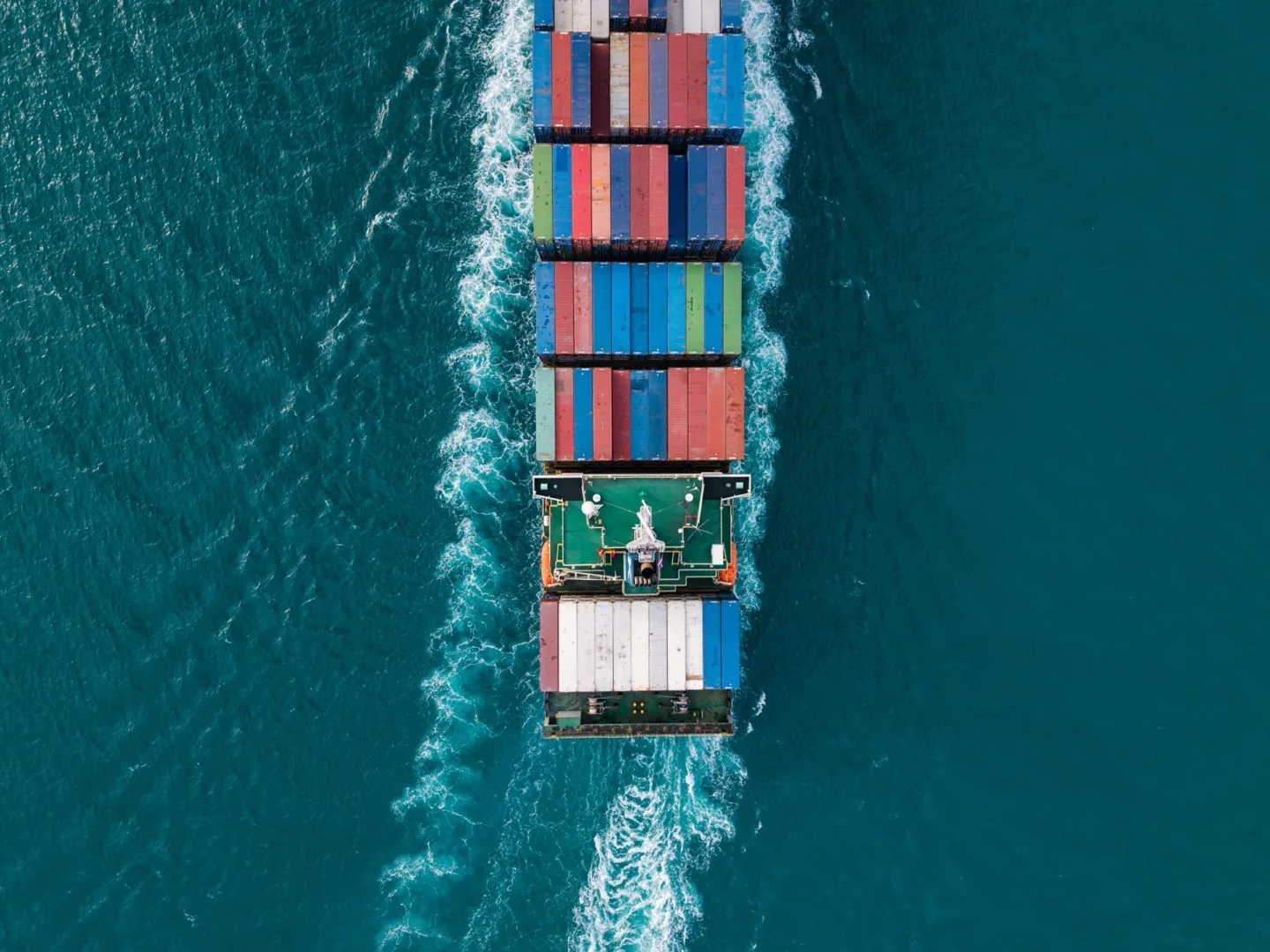
Since attacks attributed to Houthi forces escalated in late 2023, that calculus changed. Major shipping lines progressively rerouted vessels around the Cape of Good Hope, adding roughly 10–14 days to a typical Asia–Europe sailing and pushing fuel and crew costs up sharply. Spot container freight rates spiked, contract rates renegotiated higher, and insurance premiums for the remaining Red Sea transits widened. The disruption did not pause global trade — it relocated and repriced it.
For Dubai property, the connection is not direct. Buyers do not put deposits on apartments because of shipping news. But Dubai is a city built from imported inputs. Steel rebar, structural glass, aluminium curtain wall systems, finishes, sanitaryware, MEP electricals, lifts, and joinery all arrive by sea — much of it from China, India, Turkey, and the EU. When that supply chain stretches, the developer's input cost stack stretches with it. The question is how much of that stretch reaches the buyer, and over what timeframe.
The UAE's Maritime Position: Exposed and Advantaged at Once
The UAE sits at a peculiar intersection. It is a heavy importer of finished goods and construction inputs, which makes longer routes a cost. It is also a major maritime player in its own right, which means the same disruption that pressures import flows can redirect transhipment traffic toward Emirati ports. The two effects do not cancel out cleanly, but they do create a more nuanced picture than headline panic suggests.
Three nodes matter most. DP World and JAFZA in Jebel Ali handle a substantial share of the UAE's containerised throughput and act as a regional transhipment hub. Khalifa Port in Abu Dhabi has expanded rapidly and absorbed both industrial and consumer flows. The Port of Fujairah, on the eastern coast outside the Strait of Hormuz, is the world's second-largest bunkering hub and benefits structurally from any reshuffling that favours Indian Ocean routing over Suez transit. For background on the Emirate-level economic context, the UAE Government portal and Dubai Chamber publish regular updates on trade flows and logistics performance.
For real estate specifically, the practical impact concentrates on Dubai. Construction project pipelines, finishing material imports, and developer logistics all touch Jebel Ali. When a vessel arrives 10 days late or freight rates climb 30–60%, that translates directly into procurement decisions inside developer offices — what to lock in early, what to substitute, what to delay.
The Construction Input Stack: Where the Cost Pressure Lands
To understand the property impact, you need to look at the bill of materials for a typical Dubai apartment or villa. Construction inputs are not uniformly exposed to Red Sea routing. Some categories sit almost entirely on disrupted trade lanes; others are sourced regionally or already pre-positioned in the UAE. The table below maps the rough exposure profile based on industry sourcing patterns.
| Input Category | Typical Origin Mix | Red Sea Routing Exposure | Substitutability |
|---|---|---|---|
| Steel rebar & structural steel | China, Turkey, India, regional GCC mills | Medium — Turkey and EU flows affected; GCC and India less so | High — multiple regional sources |
| Cement & aggregates | UAE domestic, Oman, regional | Low — mostly local production | High |
| Architectural glass & curtain wall | EU, China, regional fabricators | High — EU flows traverse Red Sea | Medium — quality grades vary |
| Aluminium systems & joinery | China, Turkey, Italy, UAE | Medium-High — premium European systems exposed | Medium |
| MEP electricals & cabling | China, EU, India, Korea | High — most flows touch Red Sea | Medium — spec-driven |
| Sanitaryware & tiles | Italy, Spain, Turkey, China, India | Medium-High — Mediterranean origins exposed | High |
| Lifts & vertical transport | Finland, Germany, Switzerland, China | Medium-High — premium European brands exposed | Low — long lead times, spec-locked |
| Finishes, fixtures, kitchens | Italy, Germany, Turkey, China | High for premium tiers; Low for value tiers | Variable |
Two patterns emerge from the table. First, the bulkiest, most cost-heavy categories — steel and cement — are the least exposed because they are sourced regionally or domestically. Second, the categories most exposed to Red Sea routing tend to be specification-sensitive finishes, MEP electricals, and premium European systems. That is where headline freight rate increases translate most directly into a developer's bill of quantities.
What does that mean in aggregate? Industry estimates during the most acute disruption windows pointed to total input cost increases in the range of 5–12% on heavily exposed projects, with the average probably closer to the lower end once regional sourcing and pre-purchased inventory are accounted for. That is meaningful but not catastrophic — and crucially, it sits inside a developer's normal contingency band on a multi-year build.
How Cost Pressure Translates to Property Prices
This is where most analysis goes wrong. There is a long chain between a freight rate spike in the Red Sea and the price you pay for an apartment in Business Bay. Each link in that chain absorbs some of the shock. By the time it reaches the buyer, much of the volatility is gone.
The chain looks roughly like this: shipping cost rises → developer procurement cost rises → developer margin compresses → developer either absorbs, hedges, or passes through → contracted off-plan buyers are typically protected by fixed-price contracts → only new launches carry repriced cost bases → resale and ready market prices respond to demand, not input cost.
Several structural features of the Dubai market further insulate prices from this kind of supply-side shock:
- Demand is the primary price driver, not cost. Dubai property prices in 2024–2025 rose because demand was strong — population growth, foreign capital inflows, Golden Visa expansion. Construction costs did not set the floor; demand set the ceiling.
- Large developers hedge. Major players like Emaar, DAMAC, Sobha, and Nakheel run substantial procurement teams that lock in steel, glass, and MEP supply contracts months or years ahead, smoothing out spot price volatility.
- Pre-bought inventory is a buffer. Materials already in UAE warehouses or in delivery for active projects are not affected by current shipping rates. The lag between a shipping shock and its appearance in a developer's actual cost base can be three to six months.
- Off-plan contracts are fixed-price. Buyers who already signed Sales and Purchase Agreements are not exposed to subsequent input cost increases. The developer's margin moves; the buyer's price does not.
- The ready market is demand-led. Resale prices for completed apartments and villas reflect rental yields, comparable sales, and buyer sentiment, not the freight cost of glass that was installed three years ago.
For investors trying to map this out further, our analysis of capital appreciation drivers in 2026 walks through which factors actually move price ceilings — and shipping cost is well down the list.
Off-Plan Launches: The Most Exposed Segment
If shipping disruption affects Dubai real estate anywhere meaningfully, it is in the off-plan segment — specifically, large multi-phase developments still in the early stages of their build cycle. These projects have years of construction ahead of them, and their cost base is being assembled month by month against current freight rates and material prices. The longer the disruption window persists, the more it overlaps with their critical procurement phases.
The table below maps a sample of major Dubai launches against their build timelines. The point is not to predict delays — developers manage these schedules carefully and rarely announce slippage publicly until late. The point is to show which projects sit inside the disruption window and which sit largely outside it.
| Project / Master Plan | Indicative Handover Window | Build Phase Overlap with Disruption | Exposure Profile |
|---|---|---|---|
| Palm Jebel Ali (early phases) | 2027–2030+ | High — full build runway ahead | Most exposed if disruption persists |
| Dubai Reef (master plan) | Long-horizon (multi-phase) | High — early procurement years | High exposure window |
| Dubai South residential phases | 2026–2029 | Medium-High — mid-build overlap | Sensitive to extended disruption |
| Marasi Bay (Business Bay waterfront) | 2027–2029 | Medium-High — premium finishes phase | Premium spec exposure |
| Dubai Creek Harbour later phases | 2026–2028 | Medium — partial overlap | Lower — major procurement complete |
| Near-term completions (2026) | 2026 | Low — finishes and snagging | Minimal exposure |
For buyers actively evaluating off-plan, the key is not to avoid these projects — they include some of the most attractive launches in the city — but to understand the cushion you are buying with. Larger, well-capitalised developers with established procurement networks have meaningfully more capacity to absorb a 5–10% input cost increase than a smaller boutique developer running a single tower. Our guide to off-plan payment plans covers the contractual side, and the off-plan installment legal framework covers what happens if a project's economics shift.
Following the Market?
Get Market Data in Your Inbox
DLD transaction data, price trends, and quarterly forecasts — before everyone else.
✓ You're in! Check your inbox.
Historical Parallels: What Past Shocks Tell Us
Dubai property has weathered supply-side shocks before. None map perfectly to the current Red Sea situation, but two recent episodes are useful reference points.
2008 commodity surge. In the run-up to the global financial crisis, steel and oil prices spiked sharply. Construction inputs in the GCC rose materially, and several Dubai projects saw timeline slippage. But the price impact on residential property was overwhelmed by the demand shock that followed in late 2008 — supply-side cost pressure became irrelevant once the demand floor moved. The lesson: input cost rarely drives Dubai property prices on its own; it interacts with demand-side conditions.
2020–2021 supply chain crisis. The post-COVID container shortage, port congestion, and shipping rate explosion is the closest recent analogue to the current Red Sea episode. Spot freight rates rose by multiples, lead times stretched, and developers globally saw delivery delays. In Dubai, the period coincided with the early phase of the 2021–2024 demand boom. Despite genuine input cost pressure, residential prices climbed, and project delays were absorbed without major contractual disputes. Demand again dominated.
Neither parallel guarantees that the current disruption will play out the same way. But both suggest that the path from supply chain pressure to residential property price impact is mediated by demand conditions to such an extent that the supply side rarely sets the trend on its own.
Three Scenarios for 2026
Rather than predict a single outcome, the more useful exercise is to map plausible scenarios and consider what each would mean for buyers, investors, and developers. The table below sketches three.
| Scenario | Disruption Path | Construction Cost Impact | Property Market Impact |
|---|---|---|---|
| Base case | Disruption gradually normalises; reroutes continue but freight rates ease | Input cost premium 3–6% remains; large developers absorb | Negligible price impact; minor handover delays on exposed projects |
| Adverse case | Prolonged disruption + sustained freight cost elevation | Cumulative input premium 8–15% on premium specs | New launch pricing edges higher; visible delays on long-runway projects; resale market largely unaffected |
| Optimistic case | Rapid de-escalation; routing normalises within months | Premium unwinds within 6–12 months | No material impact; backlog of pre-bought inventory clears |
What is striking about all three scenarios is how narrow the property price impact band is. Even the adverse case does not point to a major shift in residential prices, only to margin pressure on developers and visible delays on projects with long build runways. That is consistent with the historical pattern: Dubai property is a demand-driven market, and supply-side shocks rarely move the trend on their own.
What Investors Should Actually Watch in 2026
If you are buying or holding Dubai property, the practical question is not whether to watch shipping news — it is which signals actually carry information. A few stand out.
- Material cost indices. The UAE and regional construction cost indices, published by industry bodies and consultancies, are the cleanest read on actual input cost trajectory. They lag spot freight rates by months but reflect what is really hitting developer P&Ls.
- Developer margin commentary. Listed UAE developers — Emaar, DAMAC, Aldar — report financial results regularly. Margin pressure or input cost commentary in those reports is a far better signal than headline shipping news.
- Off-plan handover delay reports. Project-level slippage is the lagging indicator that ties everything together. Watch for patterns across multiple developers, not isolated single-project delays which often have project-specific causes.
- Rental and resale price prints. The Dubai Land Department publishes transaction data continuously. Dubai property prices are tracked through DLD and RERA data; if there is a real shipping-driven impact on prices, it will show up there before it shows up in commentary.
- Freight rate normalisation. Spot container freight rates on Asia–Mediterranean and Asia–North Europe lanes tell you whether the disruption window is closing or extending. Several free indices publish weekly updates.
Conversely, the things not to over-weight: individual incident headlines, social media commentary on geopolitics, and unsourced "Dubai property prices to crash" narratives. None of these correlate cleanly with what actually moves the market.
Practical Takeaways for Buyers in 2026
If you are actively buying Dubai property in 2026 — primary residence, investment, or off-plan — there are a handful of practical adjustments worth considering. None of them suggest avoiding the market. They suggest building a small margin of safety into your decision.
- Lean toward larger, well-capitalised developers for off-plan. Procurement scale and balance sheet depth matter more than usual when input costs are volatile. This is the single biggest risk reduction available to off-plan buyers.
- Read the SPA's handover delay clause carefully. All Dubai off-plan contracts include grace periods and force majeure provisions. Understanding what triggers what — and what your remedies are if a project slips beyond the grace period — is the practical defence against timeline risk. Our non-resident buyer's guide covers SPA basics in detail.
- Build a 5–15% input cost cushion into projections. If you are modelling an off-plan project's economics — particularly post-handover rental yield and resale value — assume the developer's published spec might be delivered with minor substitutions on premium finishes if disruption persists. The structural quality is unaffected; the marketing-brochure marble might become a different marble.
- For ready-market purchases, the disruption is largely irrelevant. If you are buying a completed apartment or villa, the construction is done, the materials are installed, and the price reflects current demand conditions. Run the numbers on rental yield and capital appreciation as you normally would.
- Mortgage buyers: rates matter more than shipping. The single biggest variable in your investment economics is your borrowing cost, not container freight on the Asia–Europe lane. Use our mortgage calculator and the 2026 mortgage rate comparison to ground that side of the analysis.
- Diversify across project stages if you can. A portfolio that mixes a ready-market unit with a single off-plan position is significantly less exposed to any shipping-driven timeline risk than a portfolio concentrated in early-phase off-plan only.
For yield-focused investors, the highest ROI areas analysis remains the more important read than shipping commentary. The areas with the strongest rental fundamentals are the same areas that will absorb input cost shocks most easily, because demand provides the cushion.
Frequently Asked Questions
Will Dubai property prices fall because of Red Sea shipping disruption?
There is no historical or structural basis to expect a price fall driven by shipping disruption alone. Dubai property prices are demand-driven; shipping affects developer input costs, which feed into new-launch pricing and timeline risk, not into ready-market prices. The base case is no material price impact, with isolated delays on long-runway off-plan projects.
Are off-plan handovers being delayed because of the disruption?
Most major Dubai developers have not announced systematic delays attributable to Red Sea routing. Some isolated slippage exists, but project-level delays in 2024–2025 had multiple causes — labour scheduling, contractor capacity, material substitution decisions — and are difficult to attribute to a single factor. Watch for patterns across developers, not single-project announcements.
Has freight cost actually fed into Dubai construction costs?
Yes, but in muted form. Industry estimates point to 3–8% input cost premiums on heavily exposed categories during peak disruption windows. Cement, aggregates, and regionally-sourced steel are largely unaffected; premium European finishes, MEP electricals, and specification-locked components see the most pressure. Total construction cost impact is meaningful but typically inside developer contingency bands.
Should I avoid off-plan in 2026 because of this?
No — but be selective. The reasonable response is to favour larger, well-capitalised developers with established procurement networks, read the SPA's delay clauses carefully, and build a small input-cost cushion into your projections. The off-plan segment as a whole still offers strong investment cases. The disruption argues for selectivity, not avoidance.
Does Fujairah benefit from the disruption?
Structurally, yes. Fujairah's location outside the Strait of Hormuz on the Indian Ocean side of the UAE positions it as a natural alternative for vessels rerouting around the Cape of Good Hope or avoiding Red Sea transit. As a bunkering and storage hub, Fujairah's traffic dynamics tend to strengthen during routing dislocations, though the property impact in Fujairah city is indirect and longer-term.
Are large Dubai developers hedging input costs?
The major listed developers — Emaar, DAMAC, Aldar — operate substantial procurement teams and lock in supply contracts months or years ahead for headline categories like steel, glass, and MEP systems. This smoothing function is one of the main reasons Dubai property prices have remained relatively insulated from spot freight volatility. Smaller developers have less of this cushion.
How do I know if a project I am buying has shipping exposure?
You do not, in any precise sense — developers do not publish procurement breakdowns. But proxies exist: the developer's size and balance sheet, the project's build runway (how many years of procurement remain), the specification grade (premium European finishes are more exposed than mid-tier regional sourcing), and the project's reliance on imported lifts and curtain wall systems versus more substitutable inputs.
Will resale prices fall if input costs stay elevated?
Resale prices reflect demand for completed properties, not the cost of building new ones. If anything, sustained input cost elevation that slows new supply could support resale prices by tightening overall inventory. The stronger driver remains end-user demand, mortgage availability, and rental yield expectations.
Geopolitical and supply chain events generate a lot of noise but only occasionally move the Dubai market in ways that matter to a long-term investor. Our analysts track the signals that actually correlate with price and yield outcomes — and ignore the rest. Reach out through the community if you want a tailored review of how current conditions affect a specific project, neighbourhood, or off-plan position you are evaluating.
Want a Data-Backed Second Opinion?
Tell us your plans — we'll share what the data says about your timing.
Thank You!
We'll get back to you within 24 hours.
Real Estate Agencies in Dubai
Explore providers from our business directory
Still have questions?
Ask a follow-up, or get connected with a vetted Dubai professional.
Follow us on LinkedIn
Dubai market analysis and industry insight for professionals.