Dubai vs Riyadh in the Vision 2030 Race: Which Gulf Market Wins for Investors in 2026?

- Saudi Vision 2030 has deliberately positioned Riyadh as a regional headquarters rival to Dubai — but Dubai has roughly a 30-year head start on freehold property law, foreign ownership, and global capital flow.
- Dubai allows unrestricted freehold ownership for foreigners across 40+ designated communities. Saudi Arabia recently opened limited foreign ownership in specific zones (Diriyah, NEOM, parts of Riyadh) but the framework is still narrower and less tested.
- Both jurisdictions impose 0% personal income tax and 0% capital gains tax on individuals. The differences sit in VAT (UAE 5% vs Saudi 15%) and corporate tax (UAE 9% vs Saudi 20%) — material for landlords using corporate structures.
- Dubai annual transaction volume routinely exceeds AED 500 billion through the Dubai Land Department, giving deep liquidity. Saudi's REGA-regulated market is newer, thinner, and less transparent on price discovery.
- Gross rental yields: Dubai 6–9% in core investor areas, Riyadh 5–8% in emerging zones. Both currencies are pegged to the US dollar, removing FX risk for hard-currency investors.
- Bottom line: Dubai suits investors who want liquid, exit-ready assets and lifestyle for expat tenants. Riyadh suits early-cycle, long-hold investors with Saudi enterprise relationships and patience for a maturing regulatory framework.
The Rivalry: Why Riyadh Suddenly Matters
For most of the last three decades, "Gulf real estate" meant Dubai. The emirate opened freehold ownership to foreigners in 2002, built a Land Department that publishes near-real-time transaction data, and grew into the most liquid property market between London and Singapore. Riyadh, by contrast, was a closed capital-city economy where foreigners could not own residential land outright and where market data was scattered and opaque.
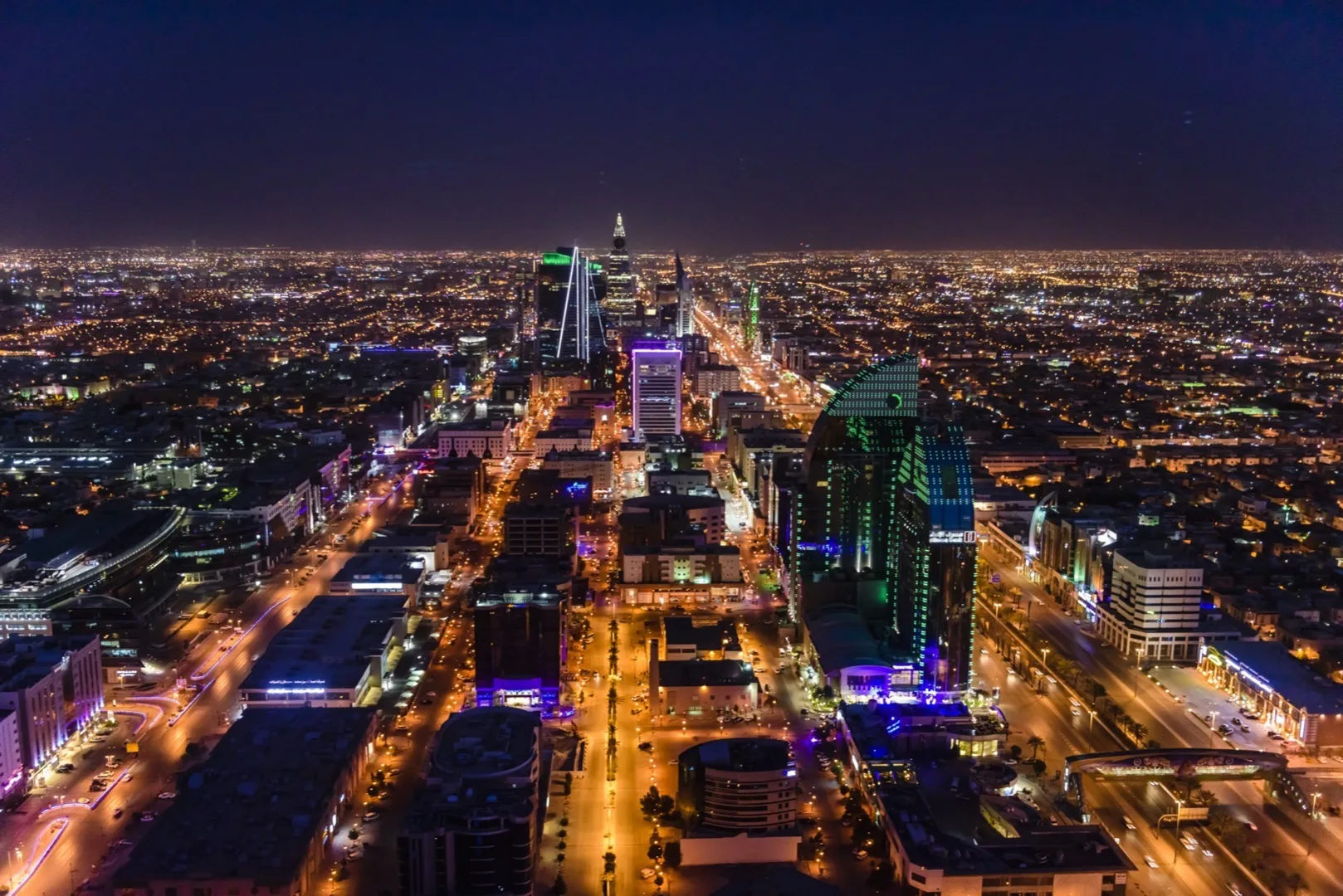
That changed with Saudi Vision 2030. Announced in 2016 and accelerating sharply from 2022 onward, the plan reshapes Saudi Arabia's economy away from oil and toward tourism, technology, finance, and entertainment. A central piece of the strategy is the Regional Headquarters (RHQ) Programme, which from 2024 effectively requires multinational companies bidding for Saudi government contracts above SAR 1 million to base their regional headquarters in Saudi Arabia — most often Riyadh. Hundreds of multinationals have set up RHQs in response.
The competitive intent is explicit. Riyadh is being positioned not just as a national capital but as a regional command centre that competes directly with Dubai for talent, capital, and corporate gravity. For property investors, the question is no longer whether Saudi will matter — it's whether Riyadh's emerging real estate market is investable today, or whether Dubai's depth, regulatory maturity, and lifestyle still win.
This guide answers that question across 11 dimensions: foreign ownership rules, megaproject pipelines, taxes, lifestyle, liquidity, yields, currency, and risk. We stay neutral and factual — both cities have genuine strengths, and the right answer depends entirely on your investment thesis and timeline.
Foreign Ownership: Where You Can Actually Buy
This is the single largest structural gap between the two markets — and the most important factor for any non-resident investor.
Dubai: Open and Mature
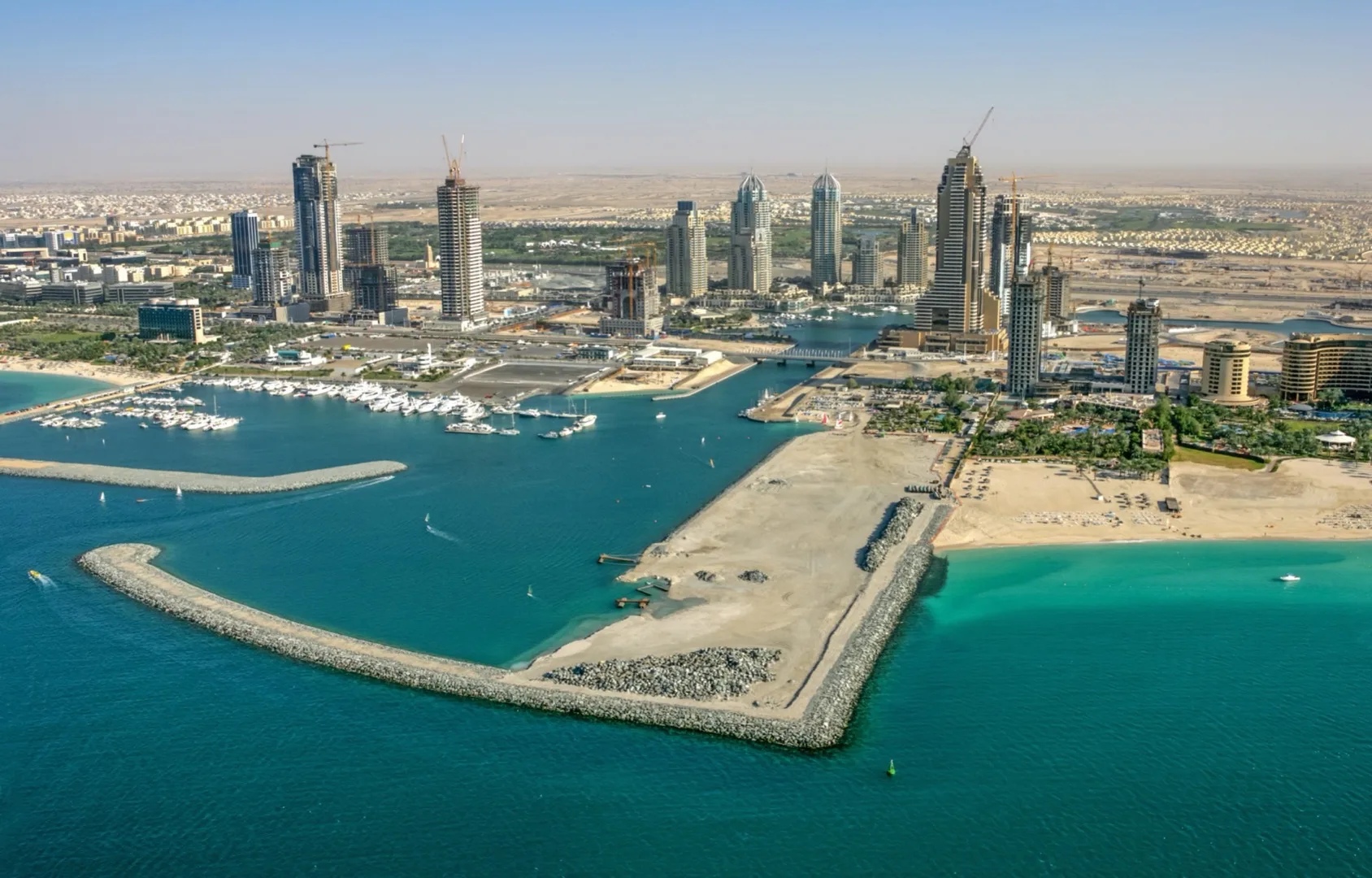
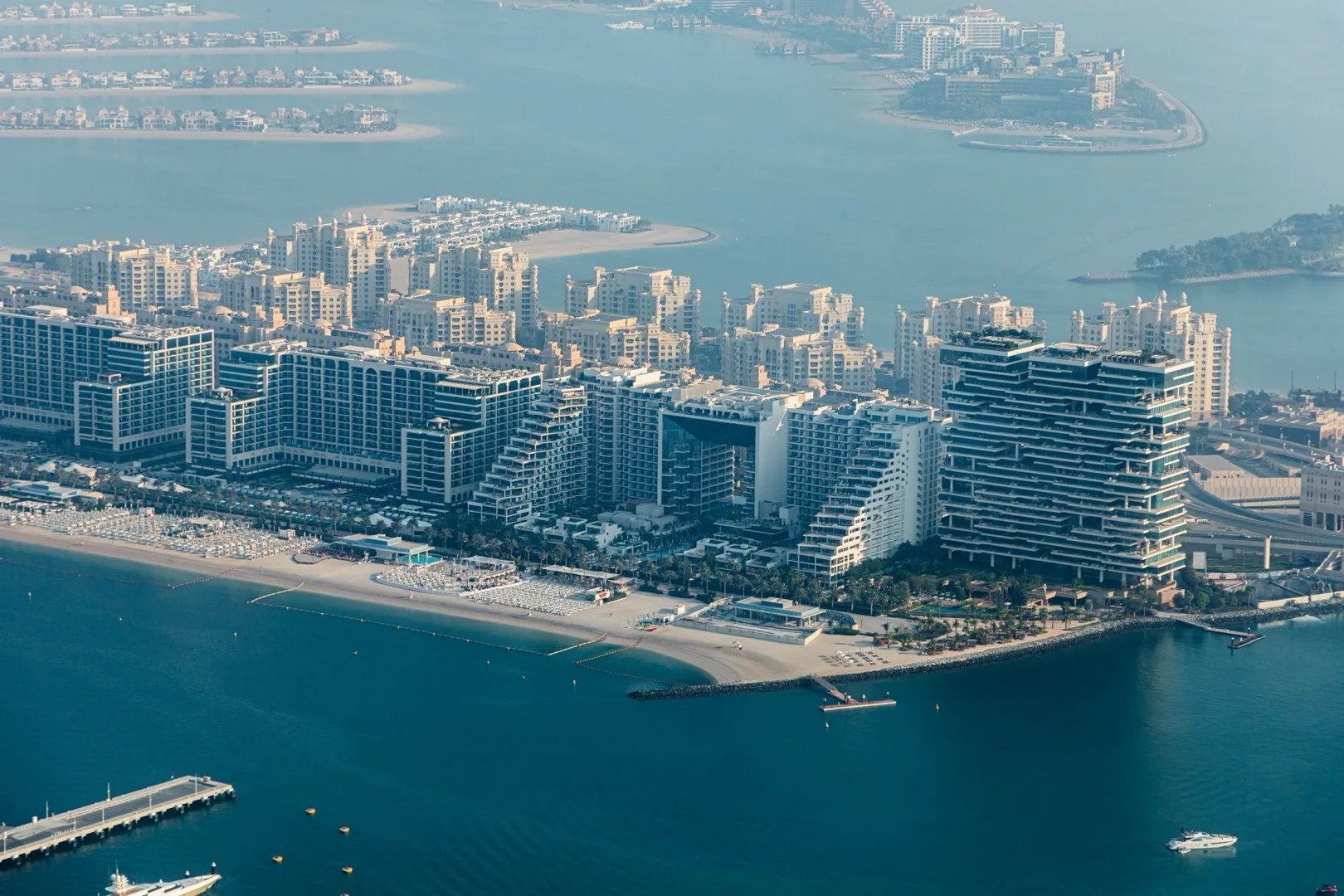
Dubai allows 100% foreign freehold ownership across more than 40 designated freehold areas — including Dubai Marina, Downtown Dubai, Palm Jumeirah, Business Bay, JVC, Dubai Hills Estate, MBR City, Arabian Ranches, Dubai Creek Harbour, and dozens more. The framework was set in 2002, the Dubai Land Department issues title deeds in the buyer's name with no nationality restriction, and the same rules apply to apartments, villas, townhouses, and off-plan units. There are no special permissions, military clearances, or area quotas. For background on the legal mechanics, see our freehold vs leasehold guide for Dubai.
Riyadh / Saudi Arabia: Opening, but Restricted
Saudi Arabia historically restricted foreign property ownership to GCC nationals or required a Premium Residency permit for individual purchases. From 2024–2025, the government issued new regulations allowing foreigners to own real estate in specific designated zones — most prominently parts of Riyadh, Diriyah Gate, NEOM, and the Red Sea Project. Implementing regulations and detailed maps of eligible plots have been rolling out in phases through 2025–2026, but the framework remains narrower than Dubai's.
Foreign buyers in Saudi Arabia typically face one or more of the following: restriction to specific designated zones, minimum investment thresholds, holding-period requirements, or ownership through a Saudi-registered company. Mecca and Medina remain off-limits to non-Muslim foreign ownership entirely. The Real Estate General Authority (REGA) is the regulator, and the legal framework is being built in real time — exactly the kind of environment that suits investors who like first-mover positioning but prices out those who need certainty today.
Regulatory and Tax Comparison
Both jurisdictions are tax-friendly for individuals, but the corporate and indirect tax landscape differs meaningfully — particularly if you intend to hold property through a company or operate short-term rentals at scale.
| Factor | Dubai (UAE) | Riyadh (Saudi Arabia) |
|---|---|---|
| Foreign freehold ownership | Unrestricted in 40+ designated communities | Limited to specific designated zones (Diriyah, NEOM, parts of Riyadh) |
| Personal income tax | 0% | 0% |
| Capital gains tax (individuals) | 0% | 0% |
| VAT | 5% (most goods/services; residential rental exempt) | 15% (broadest base in the GCC) |
| Corporate tax | 9% on profits above AED 375,000 (with free-zone reliefs) | 20% on non-Saudi/GCC corporate profits |
| Inheritance tax | 0% (Sharia default; DIFC Wills available for non-Muslims) | 0% (Sharia rules apply; non-Muslim wills not formally recognised) |
| Property transfer fee | 4% DLD fee + admin (typical total 7–8% all-in) | 5% Real Estate Transaction Tax (RETT) + admin |
| Residency via property | 2-yr visa (AED 750K+); 10-yr Golden Visa (AED 2M+) | Premium Residency programme (lump-sum SAR 800K or annual SAR 100K) |
| Mortgage availability for non-residents | Yes, up to 50–60% LTV (multiple banks compete) | Limited; mostly through specific banks for Premium Residency holders |
| Currency peg | AED pegged at 3.6725 to USD | SAR pegged at 3.75 to USD |
Practical reading: for an individual buying one or two properties for personal income, both markets are tax-light and broadly comparable. For a corporate landlord operating a portfolio, the UAE's 9% corporate tax and 5% VAT framework is materially friendlier than Saudi's 20% / 15% combination. For details on the UAE side, see our corporate tax guide for Dubai property holders.
The Megaproject Pipelines
Both cities are racing to deliver headline-grabbing megaprojects, but the strategies differ. Saudi Arabia is building largely from green field — entire new cities and tourism destinations. Dubai is layering new master-plans onto an already-built, already-occupied metropolis where infrastructure, schools, and commercial demand already exist.
| Project | Location | Focus | Status (2026) |
|---|---|---|---|
| NEOM / The Line | NW Saudi Arabia | Linear smart city, tourism, tech | Scope reportedly being scaled back; phased delivery |
| Diriyah Gate | Riyadh outskirts | UNESCO heritage + luxury hospitality + residential | Construction underway; first deliveries 2026–2027 |
| Qiddiya | SW Riyadh | Entertainment, sports, motorsport | Phase 1 partial delivery; major build-out into 2030 |
| Red Sea Project | Saudi west coast | Luxury island tourism | First resorts open; multi-phase to 2030 |
| New Murabba | Central Riyadh | Mukaab cube + downtown reinvention | Early construction |
| Palm Jebel Ali | SW Dubai coast | Premium villas + waterfront | Sales launched; phased handover from 2027 |
| Expo City Dubai | Dubai South / DWC | Mixed-use 15-min city, R&D | Operational; residential deliveries scaling |
| Dubai Reef | Offshore Dubai | World's largest marine ecosystem project | Phased deployment |
| Bluewaters Phase 2 | Dubai Marina-adjacent | Residential + entertainment expansion | Master-plan phase |
| Dubai South | Around Al Maktoum Intl Airport | Aviation hub + affordable residential | Active build-out; airport expansion underway |
The honest read: Saudi's megaproject pipeline is larger by raw capex and more ambitious in vision, but it is also more uncertain in delivery — public reporting through 2025 indicated that several Vision 2030 projects, including parts of NEOM, were being re-scoped or pushed beyond 2030. Dubai's pipeline is smaller in absolute capex but operates inside a tested delivery system: master developers like Emaar, Nakheel, Meraas, and Dubai Holding have been delivering at scale for two decades, and handover risk is meaningfully lower. For a deeper investment-angle look at one of these, see our Expo City Dubai investment guide.
Lifestyle and Social Rules
This dimension matters more than spreadsheets often capture, because tenant pool and resale demand both depend on whether expats actually want to live in your asset.
Dubai is a fully multicultural metropolis with roughly 200+ nationalities, where expats outnumber Emiratis by approximately 9 to 1. Alcohol is sold in licensed venues without religious restriction on consumers. Dress codes in the city are casual. Mixed-gender public life is the default. Western, Indian, Filipino, Arab, and East Asian communities all run mature ecosystems of restaurants, schools, and clubs.
Riyadh has modernised dramatically since 2017. Cinemas reopened, women drive, public concerts and sporting events run regularly, and a wave of international restaurants and hotels has arrived. But the social baseline is still more conservative than Dubai. Alcohol remains tightly restricted (with limited diplomatic-zone exceptions). Dress codes — while liberalised — are stricter than Dubai. The expat population is large but skews toward business postings rather than the lifestyle-led migration that drives Dubai's tenant demand.
Implication for investors: Dubai's tenant pool is broader, more international, and includes the lifestyle-driven expat segment that pays premium rents. Riyadh's tenant pool is heavier on corporate postings tied to RHQ employees and their families — a real and growing demand segment, but more concentrated and more sensitive to corporate cycle changes.
Following the Market?
Get Market Data in Your Inbox
DLD transaction data, price trends, and quarterly forecasts — before everyone else.
✓ You're in! Check your inbox.
Liquidity and Market Depth
Liquidity — how easily you can sell at a fair price — is where Dubai's lead is widest, and where the gap is most under-appreciated by first-time Gulf investors.
The Dubai Land Department records every transaction publicly. Annual residential and commercial transaction volume in Dubai has consistently exceeded AED 500 billion in recent years, with secondary-market and off-plan activity both contributing strong volume. Title deeds transfer in days, not months. Brokers are RERA-licensed, the Dubai REST app provides digital ownership management, and platforms like Property Finder and Bayut publish detailed comparables. You can model an exit before you buy. For more on this, see our Dubai REST app guide and the Dubai Land Department portal directly.
Saudi Arabia's REGA has been working since 2017 to build similar infrastructure: a national real estate platform, a residential rental index, and a data-publishing programme. Progress is real, but the market is younger, transaction transparency is thinner, and resale liquidity in the foreigner-eligible zones is unproven simply because volume to date has been small. If you bought in Diriyah Gate in 2026 and wanted to sell in 2028, you would be testing the market rather than tapping deep liquidity.
| Liquidity Metric | Dubai | Riyadh |
|---|---|---|
| Annual transaction volume | AED 500B+ (recent years) | Smaller; foreigner-eligible segment is nascent |
| Public price index | DLD, RERA Smart Rental Index, multiple private indices | REGA Residential Rental Index, expanding |
| Title deed processing | Same-day to a few days | Days to weeks; varies by zone |
| Typical price per sqft (mid-market apartment) | AED 1,400–2,200 (~$380–600) | SAR 5,000–8,000 (~$1,330–2,130) in core Riyadh / KAFD |
| Gross rental yield (typical) | 6–9% (varies by area; JVC and Arjan top end) | 5–8% (tighter in core, wider in emerging zones) |
| Foreign mortgage availability | Multiple banks, 50–60% LTV typical for non-residents | Limited and conditional |
For Dubai-specific yield benchmarks by area, our highest ROI areas in Dubai for 2026 guide is the best companion read.
Yields, Pricing, and Returns
Both markets offer Gulf-typical yields that are higher than most mature Western markets. The shape of returns differs.
Dubai tends to deliver yield-led returns in budget and mid-market areas (JVC, Arjan, Dubai South, Town Square — 7–9% gross) and capital-appreciation-led returns in prime areas (Palm Jumeirah, Downtown Dubai, Dubai Hills — 5–6.5% gross with stronger price growth). The market is mature enough that price discovery is honest and rental demand is broad. You can model a 5-year hold with realistic confidence intervals.
Riyadh is more capital-appreciation-driven in foreigner-eligible zones, because rental yields in newly-built premium districts are still establishing themselves. The thesis is: buy early in the Vision 2030 cycle, hold through the corporate-relocation wave, and exit into a deeper, more institutional market in 2030+. That can work — and historically has worked in similar early-cycle Gulf markets — but it is a longer-horizon bet with less yield support along the way.
Capital Gains Tax and Currency
Both jurisdictions impose 0% capital gains tax on individual property sales. Both currencies are pegged to the US dollar — the AED at 3.6725 and the SAR at 3.75. The peg has held for decades in both cases, backed by deep US dollar reserves and managed by the UAE Central Bank and the Saudi Central Bank (SAMA) respectively. For dollar-based investors, FX risk is effectively eliminated, which is a meaningful structural advantage of Gulf real estate over markets with floating local currencies.
Who Should Pick Which Market
This is ultimately the question that matters. Both markets are legitimate. They suit different investors.
Dubai is the better fit if you want:
- Liquid, exit-ready assets. Deep secondary market, transparent pricing, fast title transfer.
- Yield-led returns from day one. Established rental demand from a broad expat tenant pool.
- Lifestyle and the residency option. 10-year Golden Visa from AED 2M; multicultural city; daily life optimised for expats.
- Mortgage leverage. Multiple banks competing for non-resident lending up to 50–60% LTV — see our non-resident mortgage guide for the mechanics.
- Short-term / holiday-let income. Mature DET-licensed framework, large tourist inflow, strong Airbnb demand.
Riyadh is the better fit if you want:
- Early-cycle entry. First-mover positioning in a market the Saudi state is actively developing through 2030 and beyond.
- Long hold horizon. 7–10+ year view, with patience for liquidity to deepen.
- Saudi enterprise ties. Existing or planned business activity in Saudi Arabia where having property + Premium Residency makes operational sense.
- Conviction in the RHQ thesis. Belief that the regional headquarters mandate will produce a sustained corporate-relocation wave, lifting prime Riyadh rents and prices.
- Geographic diversification. Already long Dubai and looking for non-correlated Gulf exposure (note: with both currencies USD-pegged, the diversification is partial).
Many sophisticated Gulf investors run a barbell — a core Dubai portfolio for liquidity and yield, plus a smaller Riyadh allocation as the early-cycle bet. That is a reasonable framing if your capital base supports it.
Risk Factors to Weigh
Risks specific to Dubai
- Off-plan supply. The off-plan pipeline is large; oversupply in specific micro-markets is a real risk and varies by area and developer. Cycle awareness matters — see our capital appreciation areas guide.
- Service charges. Annual service charges in some buildings are high relative to rent, eating into net yields. Mollak transparency helps but doesn't eliminate the issue.
- Short-term-rental rule changes. DET licensing and DTCM rules have evolved; landlords running holiday-home models need to track compliance.
- Concentration. A single-asset, single-area position is exposed to area-level cycles.
Risks specific to Riyadh
- Regulatory immaturity. The foreign-ownership framework is being built in real time. Rules can change, and the protections common in Dubai (e.g., escrow accounts mandated for off-plan since 2008) are still being formalised in some Saudi zones.
- Megaproject delivery risk. If headline projects are delayed or scaled back, the rental and resale demand thesis weakens.
- Liquidity. Selling in 2028 or 2029 means selling into a market that doesn't yet exist at scale for foreign-owned residential. You may face price discovery as you exit.
- Higher transaction friction. 5% RETT, 15% VAT on services, 20% corporate tax for non-Saudi corporate landlords — the all-in cost of operating a portfolio is higher.
- Lifestyle ceiling on tenant demand. The expat tenant pool is narrower than Dubai's, particularly for premium product targeting Western lifestyle expectations.
Risks shared by both
- Geopolitical risk in the wider region. Both are inside the Gulf and exposed to regional shocks — though both have weathered prior cycles with currency pegs intact.
- USD interest-rate cycle. Because both currencies are pegged to the dollar, local interest rates broadly track Federal Reserve policy. Higher rates compress yields and slow off-plan demand in both markets.
- Energy-price sensitivity. While both economies are diversifying, oil revenue still funds a meaningful share of state spending — particularly in Saudi Arabia. Sustained low oil prices could slow government-led project delivery.
Practical Tools for Modelling Either Market
Before committing capital to either market, model the numbers. Our ROI calculator handles Dubai purchase scenarios end-to-end (acquisition costs, financing, service charges, gross-to-net yield), and the DLD fee calculator nails down the all-in cost of a Dubai transaction. For Saudi modelling, work with a local broker who can confirm RETT, agency fees, and zone-specific eligibility — the regulations are evolving and a good local advisor saves real money.
If your scenario includes leverage, also see our UAE LTV rules guide — Dubai mortgage availability is one of its less-discussed structural advantages over Riyadh for non-resident investors.
Frequently Asked Questions
Can foreigners actually buy property in Riyadh in 2026?
Yes, but only in specific designated zones — most prominently parts of Riyadh, Diriyah Gate, NEOM, and the Red Sea Project. Detailed zone maps and implementing regulations have been issued in phases through 2025–2026. Mecca and Medina remain off-limits to non-Muslim foreign ownership. Outside designated zones, foreigners typically still need GCC nationality, Premium Residency, or ownership through a Saudi-registered company.
Are rental yields really higher in Dubai than in Riyadh?
On average, yes — particularly in budget and mid-market areas like JVC, Arjan, and Dubai South where 7–9% gross is achievable. Riyadh foreigner-eligible zones are still establishing rental benchmarks; reported gross yields cluster in the 5–8% range, with significant variance. The bigger structural difference is liquidity: Dubai's secondary market lets you exit at a known price; Riyadh's foreigner segment is too new for that confidence.
How does corporate tax compare for property holders in the two countries?
UAE corporate tax is 9% on profits above AED 375,000, with free-zone reliefs for qualifying activities. Saudi Arabia imposes 20% on non-Saudi/GCC corporate income. For investors holding multiple properties through a company structure, this is a material annual cost difference — and one of the cleanest reasons portfolio investors lean toward Dubai.
Is Saudi Vision 2030 actually a threat to Dubai?
It is genuine competition for corporate headquarters and regional talent — the RHQ Programme has already pulled real activity to Riyadh. But the two markets are not zero-sum. Dubai's lifestyle infrastructure, regulatory maturity, and tourism volume continue to grow alongside Riyadh's rise. Most analysts treat the Gulf as a deepening corporate ecosystem with two strong hubs rather than a winner-takes-all rivalry.
Which city is better for short-term rental / Airbnb investment?
Dubai, decisively. The Department of Economy and Tourism has run a holiday-home licensing framework for years, tourism volume exceeds 17 million annual visitors, and short-term rental returns in well-located units regularly exceed long-term let yields. Saudi Arabia is building tourism infrastructure rapidly, but the short-term rental regulatory framework and demand depth are not yet at Dubai's level.
Do both markets have currency risk for international investors?
Effectively no, for US dollar-based investors. Both the AED (3.6725) and the SAR (3.75) are pegged to the US dollar and have held those pegs for decades. For investors based in EUR, GBP, INR, TRY, or other floating currencies, FX risk runs through the dollar — the same as it would for any USD-denominated asset.
How long does property residency take in each country?
In Dubai, a 2-year property visa (AED 750K+ purchase) typically issues within 2–4 weeks of completion; a 10-year Golden Visa (AED 2M+) issues within 4–8 weeks. Saudi Arabia's Premium Residency programme has both lump-sum (around SAR 800K) and annual (around SAR 100K) options, with processing through the Premium Residency Center taking weeks to a few months. Dubai's pathway is faster, more standardised, and well-documented through the Golden Visa 2026 guide.
Should I split capital between Dubai and Riyadh?
It depends on portfolio size and conviction. For investors with seven-figure AED portfolios, a barbell — a core Dubai allocation for liquidity and yield, plus a smaller Riyadh position as an early-cycle bet — can be reasonable. For first-time Gulf investors with one or two properties of capital, concentrating in Dubai is usually the better starting point: faster setup, cleaner exit, and a more forgiving learning curve.
The Dubai vs Riyadh question is rarely binary in practice — it depends on your timeline, currency, leverage appetite, and whether you want yield, capital growth, or strategic positioning. If you are mapping out a Gulf allocation for 2026 and want a second pair of eyes on the numbers, the Real Estate Club Dubai community runs regular member discussions on cross-Gulf investing, and our analysts can walk you through scenario modelling for either market. Join the conversation and bring your specific case.
Want a Data-Backed Second Opinion?
Tell us your plans — we'll share what the data says about your timing.
Thank You!
We'll get back to you within 24 hours.
Real Estate Agencies in Dubai
Explore providers from our business directory
Still have questions?
Ask a follow-up, or get connected with a vetted Dubai professional.
Follow us on LinkedIn
Dubai market analysis and industry insight for professionals.