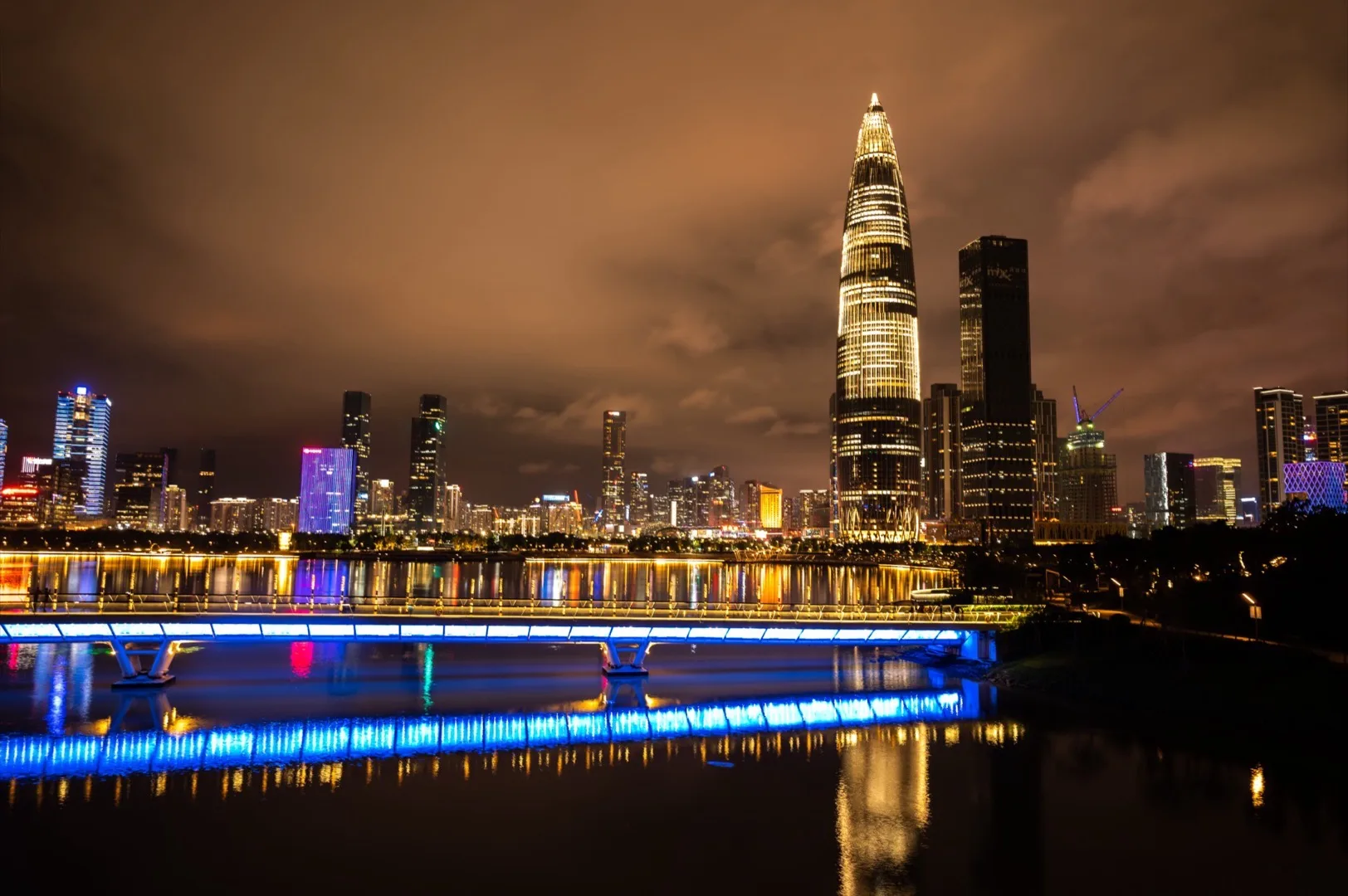
Moving to Dubai from China in 2026: Property, Visas & Banking

- The UAE hosts an estimated 400,000 Chinese nationals — one of the largest Chinese communities in the Middle East — with roughly a fifth living and working around Dragon Mart and International City. Bilateral trade hit USD 101.8 billion in 2024.
- China taxes its tax residents on worldwide income at progressive rates up to 45%; the UAE levies 0% personal income tax. For Chinese nationals the harder test is domicile — household registration (hukou), family and economic ties — not just the 183-day count.
- China's USD 50,000 annual individual forex quota is a real constraint, and rules tightened again from 1 January 2026. Compliant funding routes exist: income already earned and held offshore, and UAE non-resident mortgage financing. Splitting transfers across relatives is not one of them.
- Chinese ordinary-passport holders enter the UAE visa-free under the 2018 mutual exemption — 30 days on arrival, with 2025 reports of an extension to 90 days in any 180 — which makes scouting trips easy before committing to a residency route.
- Residency options: employment visa, Golden Visa via AED 2M property, freelance permits (typically AED 12,000–18,000 all-in for year one) and the remote-work visa (USD 5,000/month income floor).
- UnionPay cards work at almost all UAE point-of-sale terminals and ATMs; Wise's CNY routes cannot be initiated from the UAE, so movers run transfers through USD, HKD or EUR legs instead. China and the UAE both exchange account data under CRS.
- Mainland Chinese driving licences are on the RTA's 57-origin exchange list — no road test needed — and Dubai has the first Chinese national curriculum school outside China, in Mirdif, at AED 27,673–33,207 per year.
The Chinese move to Dubai is the most established of any Asian relocation corridor that is not built on labour migration. It runs on trade — the container economy of Dragon Mart, the 6,000-plus Chinese companies operating across the Emirates, the Belt-and-Road-era logistics and construction contracts — and increasingly on lifestyle and balance-sheet logic: zero personal income tax, freehold property, a ten-year investor visa and a direct eight-hour flight to most of coastal China. An estimated 400,000 Chinese nationals already live in the UAE, so a newcomer from Shanghai or Shenzhen lands into a functioning ecosystem: Mandarin-speaking agents and bankers, Chinese supermarkets, a KHDA-licensed Chinese-curriculum school and WeChat groups for everything from visa runs to second-hand furniture. Last updated: June 2026.
This guide covers the move itself — visas, banking, money movement, schools, driving and day-to-day life. If your question is purely about investing — payment methods, best areas, Golden Visa mechanics for buyers who stay in China — that is a different article: our Dubai property guide for Chinese investors handles the investment angle in depth. Here we assume you are moving your life, not just your capital. One note on the sensitive part: China's foreign-exchange rules are real and enforced, and this guide describes only compliant routes. Where a number could not be verified from a named source, it is given as a range or omitted.
Why Chinese Nationals Move to Dubai in 2026
The corridor is anchored in commerce. China–UAE bilateral trade reached USD 101.8 billion in 2024, and more than 6,000 Chinese companies operate in the UAE across technology, financial services, energy, logistics and construction, per China Briefing's analysis of Chinese business in the UAE. Dubai is the re-export hub through which Chinese goods reach the Gulf, Africa and South Asia, and Dragon Mart — the largest Chinese trading hub outside the mainland, with thousands of trader-run units — is the physical expression of that. Many of the community's longest-standing members arrived as traders and never left.
The community is correspondingly large. Gulf News puts the Chinese expatriate population in the UAE at around 400,000, with roughly 20% living and working in the belt around Dragon Mart and International City. The 2026 wave looks different from the trader generation: tech and crypto entrepreneurs, e-commerce operators serving the Middle East, finance professionals, and families pursuing international schooling — plus a growing cohort of property buyers converting a purchase into a ten-year Golden Visa.
Logistics help. Under the China–UAE mutual visa exemption in force since January 2018, holders of ordinary Chinese passports enter the UAE without a pre-arranged visa — 30 days on arrival, extendable, with reports in 2025 of the visa-free stay being lengthened to 90 days within any 180-day period (UAE Consulate General in Shanghai). Practically, that means you can scout schools, neighbourhoods and offices on a normal passport before committing a dirham to a residency route. For the full seven-step relocation framework that applies to every nationality, start with our Moving to Dubai pillar guide.
The Tax Picture: China's Worldwide Taxation vs the UAE's 0%
China taxes its tax residents on worldwide income at progressive individual income tax (IIT) rates running from 3% to 45%, with the top 45% band applying to annual taxable comprehensive income above RMB 960,000, per China Briefing's IIT guide. The UAE levies no personal income tax on salaries, rental income or capital gains at the individual level. For a high earner the headline gap — 45% versus 0% — is the financial core of the move.
But the residency test matters more for Chinese nationals than the familiar day-count suggests. Under Chinese law you are a tax resident if you are domiciled in China — meaning you habitually reside there by reason of household registration (hukou), family or economic interests — or if you spend 183 days or more in China in a tax year, per PwC's China residence summary. A Chinese citizen who keeps their hukou, spouse and main economic life in Guangzhou can remain a Chinese tax resident — taxable on Dubai income — even while physically living in the UAE most of the year. Genuinely relocating the centre of your life, and documenting it, is what changes the analysis; day-counting alone does not. The well-known "six-year rule" runs in the other direction — it shelters foreign nationals working in China from worldwide taxation for their first six years — and is mainly relevant if you later return.
| Item | China | UAE / Dubai |
|---|---|---|
| Personal income tax | 3%–45% progressive (45% above RMB 960,000) | 0% |
| Tax residency trigger | Domicile (hukou, family, economic ties) or 183+ days | Residence visa + physical presence; no income tax either way |
| Tax on rental income (individual) | Taxable | None at individual level |
| Annual property tax | Pilot schemes in select cities | No annual property tax |
| Account-data sharing | CRS participant | CRS participant (reporting since 2018) |
Two honest caveats. First, anyone with meaningful mainland assets, a company or family remaining in China should take advice from a Chinese tax professional before assuming the Dubai salary is out of scope — the domicile test is fact-specific. Second, transparency is the default now: both China and the UAE exchange financial-account information automatically under the OECD's Common Reporting Standard (OECD AEOI portal), so a UAE bank account held by a Chinese tax resident is reportable to Chinese authorities. The structure has to be right because it will be visible.
Moving Money Out of China: The USD 50,000 Quota, Explained
This is the part every Chinese mover already knows about and most foreign guides get wrong, so let us be precise. Under State Administration of Foreign Exchange (SAFE) rules, each Chinese resident individual has an annual foreign-exchange facilitation quota equivalent to USD 50,000 — the amount of RMB that can be converted and remitted without case-by-case approval, intended for current-account purposes such as travel, study and family support. Capital-account uses — including buying overseas property directly with converted RMB — are not on the permitted list. Enforcement has tightened, not loosened: from 1 January 2026, banks apply stricter identity verification to outbound remittances above RMB 5,000 (about USD 1,000) under a regulation issued on 31 October 2025, per analysis of the new SAFE measures.
The practical implication: an AED 2 million Dubai purchase cannot be compliantly funded by converting mainland RMB savings in one go — and the historically common workaround of pooling several relatives' quotas is exactly what the new know-your-customer rules target. Banks now look for the pattern, and using it can freeze accounts and attract penalties. We do not recommend it, full stop.
What does work, compliantly, is some combination of the following — and most real relocations use two or three of them together:
| Compliant route | How it works | Best for |
|---|---|---|
| Funds already offshore | Salary, business income or investment proceeds earned and held outside the mainland (Hong Kong, Singapore, US accounts) move freely to the UAE | Entrepreneurs and professionals with offshore income history |
| UAE salary accumulation | Move first on an employment or freelance visa; save the untaxed AED salary toward a deposit | Employees relocating with a job |
| UAE mortgage financing | A Dubai bank funds a large share of the purchase, shrinking the cash that must cross any border | Buyers whose liquid funds sit mainly in the mainland |
| Developer payment plans | Off-plan instalments spread the outflow across several years of quota and income | Off-plan buyers with multi-year horizons |
A Hangzhou e-commerce founder wants a two-bed apartment at AED 1.8M. Converting RMB savings to fund it directly is not a permitted use of the individual quota, and USD 50,000 a year (~AED 183,000) would not get there anyway. The compliant structure: she uses profits her Hong Kong trading entity has already accumulated offshore for the down payment, and a Dubai bank mortgage for the balance — halving or better the cash that has to move at completion. Total mainland-origin conversion required: zero. The same logic scales to the AED 2M Golden Visa threshold; the visa rules accept mortgaged property based on DLD valuation. Routes and constraints per the SAFE coverage cited above; mortgage terms vary by bank and residency status.
One more planning point: the sequencing matters. Movers who know a purchase is coming start positioning funds offshore — legitimately, from offshore earnings — well before the property search begins, because the transfer infrastructure is the slow part, not the buying. The buying process itself, including how Chinese buyers actually pay, is covered step by step in our Chinese investors guide.
Visa Pathways for Chinese Nationals in 2026
Visa-free entry handles the visit; living in Dubai requires a residence visa. Four routes cover almost every Chinese mover, and they are nationality-neutral — Chinese applicants face no special restrictions or additions.
1. Employment visa. The default for hired professionals: a UAE employer sponsors the residence visa, Emirates ID and work permit, and typically pays the costs. Chinese-headquartered firms in the UAE — banks, telecoms, construction groups, logistics operators — sponsor large numbers of mainland staff this way. Full fee structure in our employment visa cost guide via the Moving to Dubai pillar.
2. Golden Visa via property. Buy UAE real estate worth at least AED 2 million (DLD valuation; mortgaged and off-plan property qualifies) and you receive a 10-year renewable residence visa with no employer, sponsor or minimum-stay requirement, per the UAE Government Golden Visa portal. This is the route of choice for founders and traders whose income is not a UAE salary. Test your eligibility in two minutes with our Golden Visa checker, and see the property Golden Visa guide for the application mechanics.
3. Freelance permit. For independent consultants, designers, traders and content professionals. A freelance permit plus residence visa typically costs AED 12,000–18,000 all-in for the first year depending on the free zone — the TECOM GoFreelance permit alone runs around AED 7,500, with visa, medical and Emirates ID on top, per market guides to the 2026 freelance routes.
4. Remote work (virtual working) visa. For employees or owners of non-UAE businesses — including mainland companies — who want to live in Dubai while working for clients outside the UAE. The 2026 income floor is USD 5,000 per month with six months of bank statements, health insurance of AED 500,000 cover, and government fees around AED 1,535, per the UAE Government remote-work visa page.
| Route | Duration | Key threshold | Indicative cost |
|---|---|---|---|
| Employment | Typically 2 years, renewable | UAE job offer + sponsorship | Usually employer-paid |
| Golden Visa (property) | 10 years, renewable | AED 2M property (DLD value) | Property + application fees |
| Freelance permit | 1–2 years, renewable | Portfolio / qualification per free zone | ~AED 12,000–18,000 year one |
| Remote work | 1 year, renewable | USD 5,000/mo income; AED 500K insurance | ~AED 1,535 govt fees + insurance |
Banking in Dubai: Accounts, UnionPay, Alipay and the RMB Question
Opening a UAE bank account as a Chinese national follows the standard resident playbook: passport, residence visa, Emirates ID and, for salary accounts, an employer letter. Several large UAE banks staff Mandarin-speaking relationship managers in branches serving the Chinese community, and account opening is routine once residency is in place — non-residents can open accounts too, but with more paperwork and higher minimum balances. Which bank suits you depends mostly on your salary band and balance profile; our Dubai bank account comparison by salary band ranks the options by fees and minimums.
Day-to-day payments are friendlier to Chinese cards than almost anywhere outside Asia. UnionPay cards are accepted at almost all point-of-sale terminals and ATMs in the UAE, and UnionPay has rolled out QR-code payment acceptance with acquirer Network International across more than 10,000 UAE merchants, per UnionPay International. Alipay and WeChat Pay acceptance is widespread in tourist-facing retail — malls, duty free, taxis — though for residents they are a bridge, not a banking solution: your life will run on an AED account and local cards within a month or two.
The harder question is moving RMB. Two realities to plan around. First, transfers out of the mainland run through the SAFE framework described above — there is no app that exempts you from it. Second, the specialist transfer services have limited CNY coverage: Wise supports sending CNY to mainland recipients via UnionPay cards (capped at 33,000 CNY per transfer, with recipient limits of 80,000 CNY per day and 400,000 CNY per year for foreign-passport recipients), but the sending side of its CNY route is restricted to a country list that does not include the UAE, and CNY cannot be held as a Wise balance, per Wise's CNY transfer documentation. In practice, movers run their money through USD, HKD or EUR legs — for example Hong Kong USD/HKD accounts to AED — where a multi-currency service like Wise is genuinely useful for rate transparency on the non-CNY legs. For large property-sized transfers, banks' SWIFT remains the standard rail.
And remember the transparency point: China and the UAE both participate in CRS, so UAE accounts held by Chinese tax residents are reportable. Bank with the assumption that both tax authorities can see the picture — which, if your residency planning is clean, is not a problem.
Relocating to Dubai?
Get Your Relocation Checklist
Cost of living, visa requirements, housing tips, and everything you need to plan your move.
✓ You're in! Check your inbox.
Where Chinese Expats Live in Dubai
The community maps onto three distinct price tiers, which conveniently match the three mover profiles.
International City and the Dragon Mart belt is the historic heart — the China cluster in International City was literally built with Chinese architectural theming, and the surrounding area houses the trader community that works in and around Dragon Mart. It is also Dubai's cheapest entry point: studios list from roughly AED 15,000–18,000 per year on Bayut. The full numbers — and the honest trade-offs on commute and build quality — are in our International City area guide.
Downtown Dubai and Business Bay attract the investor and professional cohort — many Chinese Golden Visa buyers concentrate purchases here for liquidity and brand recognition, and a meaningful share live in what they buy. JVC (Jumeirah Village Circle) is the value compromise for younger professionals and families: new stock, central-ish location, mid-market rents.
| Area | Typical annual rent (2026) | Who lives there |
|---|---|---|
| International City (incl. China cluster) | Studios from ~AED 15,000–18,000 | Dragon Mart traders, budget-first newcomers |
| JVC | 1-bed ~AED 55,000–100,000 depending on building | Young professionals, small families |
| Business Bay | 1-bed ~AED 95,000–130,000 | Finance/tech professionals, investor-occupiers |
| Downtown Dubai | 1-bed ~AED 90,000–150,000 | Golden Visa buyers, executives |
| Mirdif | Mid-market family stock | Families targeting the Chinese School Dubai |
Rent bands per 2026 rental benchmark reporting and live listings; individual buildings vary widely, so treat these as orientation rather than quotes. Families choosing for schools often end up in Mirdif or along the Al Khail corridor — the school, not the community, sets the postcode.
Schools, Healthcare and Your Driving Licence
Schools. Dubai is the only city outside China with a government-backed Chinese national curriculum school. Chinese School Dubai opened in Mirdif in September 2020 as the first overseas school of its kind, supported by Hangzhou No. 2 High School with teachers recruited through the Hangzhou education system; it carries a KHDA rating of Good and charges AED 27,673–33,207 per year, per WhichSchoolAdvisor's review and Gulf News's launch coverage. That gives Chinese families a genuine continuity option no other expat city offers — children can slot back into the mainland system if the family returns. The alternative, chosen by most internationally minded families, is the British or IB track, where Mandarin is widely offered as a language; fee bands and area rankings are in our international schools guide on the site.
Healthcare. Health insurance is mandatory for Dubai residents and is usually employer-provided for employees; freelancers, remote workers and Golden Visa holders arrange their own. Several hospital groups serving the Chinese community advertise Mandarin-speaking staff. For self-sponsored movers bridging the gap before a local policy starts — or remote workers needing the AED 500,000 cover — international cover such as SafetyWing is a practical stopgap.
Driving. Good news that surprises many movers: mainland China is on the RTA's licence-exchange list. Dubai recognises 57 licence origins for direct exchange without driving lessons or a road test, and the People's Republic of China is among them, per the RTA's service page and Gulf News's 2026 list. Chinese licences require a legal translation as part of the application, and you must hold a residence visa to exchange. With petrol cheap by Chinese standards and the metro limited to certain corridors, most families end up with a car within the first few months.
Community and Day-to-Day Life
The infrastructure of daily Chinese life in Dubai is deeper than newcomers expect. WeChat remains the community's operating system — neighbourhood groups for International City, JVC and Downtown, trading groups around Dragon Mart, school-parent groups for Mirdif — and most Chinese-speaking agents, mortgage brokers and PRO services are found through referral inside them rather than through portals. Note that mainland app ecosystems work normally in the UAE; some movers keep a VPN for accessing region-locked mainland services, which is a personal-use question to research independently.
Food and groceries are a solved problem. Dragon Mart's supermarket anchors and the Chinese grocers around International City stock mainland brands; hotpot, Sichuan, Xinjiang and dim sum restaurants cluster in International City, Deira and increasingly Business Bay. Chinese New Year is visibly celebrated at major malls and at Dragon Mart, and the Chinese Business Council and trade-association calendar gives the professional community a year-round circuit.
Two practical notes from the lived experience of the community. First, distances: Dubai is a car city, and the Chinese cluster (International City) is 25–35 minutes from the business core in traffic — factor the commute into the cheap rent. Second, the community's own services market is mature enough that you can complete an entire property purchase — agent, conveyancer, bank, DLD trustee appointment — in Mandarin. If buying is on your roadmap, the Chinese investors guide lists what to ask before signing anything.
Cost of Living: Shanghai vs Dubai
Dubai is materially more expensive than China's tier-one cities, and the honest comparison includes both the costs and the tax offset. Per Numbeo's Shanghai–Dubai comparison, the cost of living in Dubai runs about 54.8% higher than Shanghai excluding rent, and 78.9% higher including rent. You would need roughly ¥46,514 (about AED 25,213) a month in Dubai to match a ¥26,000 lifestyle in Shanghai, renting in both cities.
| Item (monthly unless noted) | Shanghai | Dubai |
|---|---|---|
| 1-bed apartment, city centre | ~¥6,363 | ~¥16,629 (~AED 9,000) |
| 3-bed apartment, city centre | ~¥16,404 | ~¥31,286 (~AED 16,960) |
| Inexpensive restaurant meal | ~¥30 | ~¥85 |
| Overall index vs Shanghai (excl. rent) | Baseline | +54.8% |
| Personal income tax | 3%–45% | 0% |
A product lead on RMB 1.2M a year in Shenzhen has his top income slice taxed at China's 45% band (which starts above RMB 960,000 of taxable comprehensive income). He takes a Dubai role at a broadly equivalent gross package. In the UAE his gross is his net — nothing is withheld. Even paying Business Bay rent at ~AED 110,000 a year and absorbing Dubai's higher day-to-day prices, his annual savings rate rises sharply, because the tax delta on the upper income slices outweighs the cost-of-living gap at this earnings level. The trade-off is real at lower incomes, where Dubai's rent premium can eat the tax saving — run your own numbers in our relocation cost estimator. Brackets and indices per the sources cited above; the example is illustrative.
For the granular line-by-line budget — groceries, school runs, DEWA, salik, insurance — see the complete Dubai monthly budget breakdown.
Frequently Asked Questions
Can Chinese citizens buy property in Dubai?
Yes. Chinese nationals can buy freehold property in Dubai's designated freehold areas as residents or non-residents, with full ownership of the unit and underlying land. A purchase of AED 2 million or more (by DLD valuation) also qualifies the buyer for the 10-year Golden Visa. The constraint is rarely Dubai-side — it is funding the purchase compliantly from China, which is why offshore funds and mortgage financing feature in most Chinese purchases.
Do Chinese nationals pay tax on their Dubai salary?
Not to the UAE — there is no personal income tax on salaries in Dubai. Whether China taxes it depends on your Chinese tax residency: China taxes residents on worldwide income at up to 45%, and residency turns on domicile (hukou, family and economic ties) or 183+ days of presence, per PwC's China residence rules. A genuine relocation that moves your centre of life to Dubai is what takes the salary out of Chinese scope; take professional advice if you keep significant mainland ties.
How does China's USD 50,000 forex quota affect moving to Dubai?
Each mainland resident can convert and remit the equivalent of USD 50,000 per year for current-account purposes — and buying overseas property is not a permitted use of that quota. From January 2026 banks also apply stricter identity checks on outbound remittances above roughly USD 1,000. Compliant approaches are to fund Dubai costs from income already earned and held offshore, accumulate UAE salary, use a Dubai mortgage, or spread off-plan instalments over time. Splitting transfers across family members' quotas is a flagged pattern and should not be used.
Is UnionPay accepted in Dubai?
Yes, widely. UnionPay cards work at almost all UAE point-of-sale terminals and ATMs, and UnionPay QR payments are live at more than 10,000 UAE merchants through Network International. Alipay and WeChat Pay are accepted in much of tourist-facing retail. For residents these are a transition bridge — within a couple of months your daily spending will run on an AED account and local cards.
Can I use Wise to send money between China and Dubai?
Only partially. Wise supports sending CNY to mainland recipients via UnionPay cards (33,000 CNY per transfer; recipient limits apply), but its CNY routes cannot be initiated from the UAE, and CNY cannot be held as a balance. In practice Chinese movers use Wise for the USD, HKD or EUR legs of their money movement — for example Hong Kong to Dubai — and bank SWIFT transfers for property-sized sums.
Is there a Chinese school in Dubai?
Yes — Chinese School Dubai in Mirdif, opened in September 2020 as the first Chinese national curriculum school outside China, backed by Hangzhou No. 2 High School and regulated by KHDA with a rating of Good. Fees run AED 27,673–33,207 per year. It is the only continuity option of its kind in any major expat city; most other Chinese families choose British or IB schools with Mandarin language programmes.
Can I exchange my Chinese driving licence for a Dubai one?
Yes. Mainland China is on the RTA's list of 57 licence origins eligible for direct exchange — no lessons or road test required. You need a valid residence visa, your Chinese licence with a legal translation, an eye test and the RTA fees. Hong Kong licences are also on the exchange list.
How long can Chinese citizens stay in the UAE without a residence visa?
Under the China–UAE mutual visa exemption in force since 2018, ordinary Chinese passport holders enter visa-free for 30 days on arrival, extendable in-country, and 2025 reports indicate the visa-free stay has been lengthened to 90 days within any 180-day period. That is ample for scouting trips, but living, working or sponsoring family requires one of the residence routes — employment, Golden Visa, freelance or remote-work.
Will Chinese authorities see my UAE bank accounts?
Assume yes if you remain a Chinese tax resident. Both China and the UAE participate in the OECD Common Reporting Standard, under which financial institutions report non-resident account holders' details for automatic exchange between tax authorities. This is not a reason to avoid UAE banking — it is a reason to make sure your tax residency position is genuinely and documentably what you say it is.
The sequence that works: scout on the visa exemption, choose your residency route, position funds compliantly, then commit to property or a lease. Start with the Moving to Dubai pillar guide for the full seven-step journey, and if a purchase is part of the plan, check the Golden Visa checker before you shortlist buildings. The REC community includes Chinese members who have made exactly this move — from Dragon Mart traders to Downtown Golden Visa holders — and can pressure-test your plan against lived experience.
Planning Your Move?
Get personalized relocation advice from our Dubai team.
Thank You!
We'll get back to you within 24 hours.
Moving & Relocation Companies in Dubai
Explore providers from our business directory
Still have questions?
Ask a follow-up, or get connected with a vetted Dubai professional.
Join our Telegram channel
Handover alerts, new launches & DLD data — first, in real time.