Dubai South Area Guide 2026: Communities, Prices & the Al Maktoum Airport Effect
- Dubai South is a 145 sq km master district in the far south-west of Dubai, built around Al Maktoum International Airport (DWC) and the Expo City legacy site — closer to Abu Dhabi than to Downtown Dubai.
- It is one of the most affordable freehold zones in Dubai: studios from around AED 519,000, one-beds from the mid-AED 600,000s, and 1-bed rents starting near AED 40,000/year.
- Key residential clusters: The Pulse (apartments + townhouses), Emaar South (golf villas/townhouses), South Bay (lagoon mansions), MAG 5 Boulevard (budget studios) and the nearby giant Azizi Venice (Venetian lagoon community, Q4 2026 handover).
- The big catalyst is the AED 128 billion DWC expansion to an eventual 260 million-passenger capacity — but most of that build-out lands in the 2030s, not 2026.
- Commute is the main trade-off: 40-55 minutes to Downtown/DIFC in normal traffic, with the Dubai Metro Blue Line (2029) not directly serving Dubai South.
- Best suited to: first-time buyers, aviation/logistics workers, end-users wanting space-for-money, and long-horizon investors comfortable with a 5-10 year story.
- Less suited to: anyone needing a short city-centre commute today, or buyers wanting a fully mature, walkable neighbourhood right now.
Dubai South is the part of the city most people have an opinion about but few have actually visited. For investors it is "the airport play." For sceptics it is "the middle of nowhere." For a growing number of families and first-time buyers, it has quietly become the place where an AED 700,000 budget buys a real home instead of a studio in a tower. This guide ignores the hype cycle and answers the practical question: what is it genuinely like to live in Dubai South in 2026, community by community?
We will walk through where it is, each residential cluster and what you actually get there, real buy and rent prices, schools and clinics, the commute reality, the airport and metro timeline, and an honest pros/cons read on who should — and should not — move here. If your lens is purely returns rather than lifestyle, pair this with our companion Dubai South investment guide, which focuses on yields, appreciation and the airport thesis.
Last updated: June 2026.
Where Is Dubai South — and Why It Exists
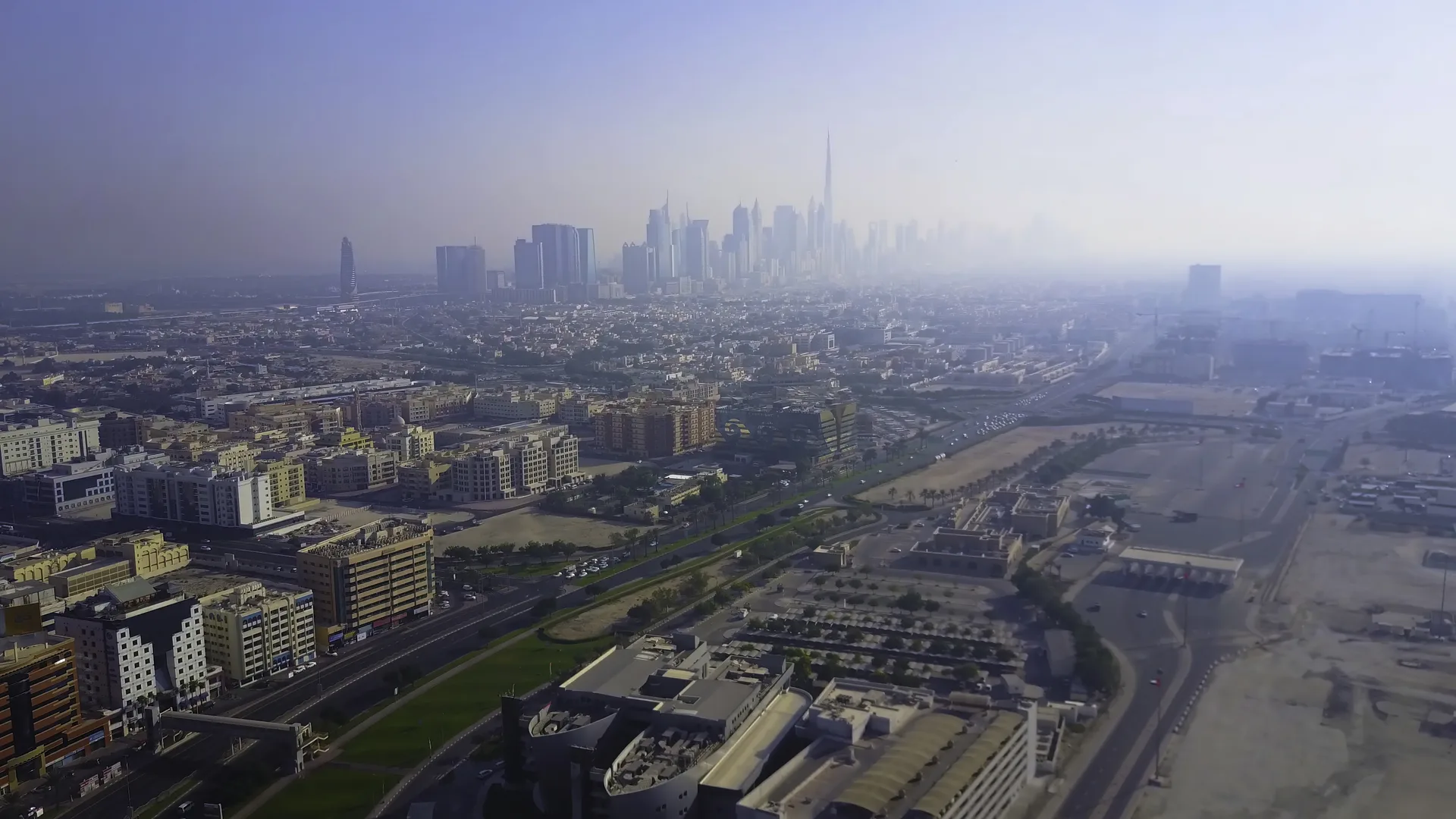
Dubai South sits in the far south-west of the emirate, straddling Sheikh Mohammed Bin Zayed Road (E311) and Emirates Road (E611), roughly between Jebel Ali and the Abu Dhabi border. It is anchored by two things that don't exist anywhere else in the city: Al Maktoum International Airport (DWC), which opened to passengers in October 2013, and the former Expo 2020 site, now Expo City Dubai, a permanent business-and-residential district.
Unlike organic neighbourhoods that grew over decades, Dubai South was planned top-down as an "aerotropolis" — a city designed around an airport. The masterplan spans roughly 145 square kilometres and is organised into themed districts: a Residential District, Aviation District, Logistics District, Business Park, Golf District and the Expo legacy zone. For residents, what matters is that the Residential District and Emaar South sit on the cleaner, greener side, away from the cargo and logistics operations.
The strategic logic is straightforward. Dubai's centre of gravity has been shifting outward for twenty years — Marina, then JVC, then Dubai Hills, and now the southern corridor. Dubai South is the next leg of that expansion, and the government's Dubai 2040 Urban Master Plan explicitly designates it as one of the five main urban centres of the future city. That official backing is the single most important reason the area is not a speculative one-off: it has state-level infrastructure commitment behind it.
The practical implication for a 2026 resident is dual. On one hand, you are buying into a district with genuine long-term momentum and unusually low entry prices. On the other, you are living in something still 60-70% under construction, where some streets are finished communities and others are sand and cranes. Managing that expectation is the whole game in Dubai South.
The Communities: A Cluster-by-Cluster Breakdown
"Dubai South" is not one neighbourhood — it is a collection of very different products under one umbrella. Choosing the right cluster matters more here than in almost any other Dubai area, because the gap between a finished golf-villa community and a half-built apartment block is enormous. Here is the practical map of where people actually live.
| Community | Developer | Product | Best for |
|---|---|---|---|
| The Pulse | Dubai South Properties | Apartments + townhouses | First-home end-users, young families |
| Emaar South | Emaar Properties | Golf villas, townhouses, apartments | Families wanting brand + greenery |
| South Bay | Dubai South Properties | Lagoon townhouses + 4-7BR mansions | Upgraders wanting space + waterfront |
| MAG 5 Boulevard / MAG | MAG Group | Budget studios + 1-2BR apartments | Tightest-budget buyers & renters |
| Expo City Dubai | Expo City Authority | Apartments + Expo Valley villas | Sustainability-focused professionals |
| Azizi Venice (adjacent) | Azizi Developments | Lagoon apartments + villas | Investors + waterfront lifestyle |
The Pulse is the most "lived-in" part of Dubai South — a walkable, family-oriented cluster of mid-rise apartments and townhouses with a central boulevard, retail and parks. It is the closest thing the district has to a finished, functioning neighbourhood, and it is where most owner-occupiers start.
Emaar South is the lifestyle anchor: an 18-hole championship golf course surrounded by Emaar's signature villa and townhouse clusters (Golf Links, Golf Point, Greenview, Parkside, Urbana, Saffron). It carries the Emaar brand premium and build quality, and its apartment sub-communities like Golf Point and Vista Ridge are among the most actively traded in 2026.
South Bay is the premium move: a 3 km crystal lagoon community offering townhouses and notably large 4-7 bedroom waterfront mansions — a rare product at this price point in Dubai. MAG 5 Boulevard sits at the opposite end, delivering Dubai's lowest entry studios. And just outside the official Dubai South boundary, Azizi Venice — a 24 million sq ft Venetian-themed lagoon community — is reshaping the whole southern corridor, with first handovers expected around Q4 2026 (Bayut area guide).
What It Costs to Buy in 2026
The headline reason people look at Dubai South is price: it is among the cheapest freehold land in the city, with an average around AED 800 per square foot in Q1 2026 according to DLD-derived data — well below the citywide average. That said, "Dubai South prices" span a huge range, from a sub-AED 350,000 MAG studio to a near-AED 6 million South Bay mansion. The table below shows realistic 2026 entry points drawn from live Property Finder and Bayut listings.
| Property type | Typical 2026 buy price (AED) | Where |
|---|---|---|
| Studio | ~340,000 (MAG) – 519,000+ | MAG 5, The Pulse, Azizi Venice |
| 1-bedroom apartment | ~673,000 – 1,030,000 | Azizi Venice, Oasis, Golf Views |
| 2-bedroom apartment | ~1,050,000 – 1,575,000 | Golf Views, Urbana, Expo |
| 3-bedroom townhouse | ~2,075,000 – 2,300,000 | The Pulse, Parkside (Emaar South) |
| 4-bedroom townhouse/villa | ~3,500,000 – 4,470,000 | Greenview, Greenridge (Emaar South) |
| 4-7BR lagoon mansion | ~4,300,000 – 5,900,000 | South Bay |
A few practical notes. Much of Dubai South's inventory is off-plan, which means developer payment plans (often 60/40 or post-handover structures) bring the cash-flow barrier far below the headline price — useful if you are buying to live in within a 2-3 year horizon. Before committing, run the full transaction maths, not just the sticker price: factor the 4% DLD transfer fee, agency commission, and mortgage costs using our DLD fee calculator, and review the complete cost-of-buying breakdown.
For first-time buyers specifically, Dubai South is one of the few places where the dream of a townhouse — not just an apartment — fits a sub-AED 2.5 million budget. If you are weighing your first purchase, our guides on best first-property areas and first-time buyer mistakes to avoid are worth reading before you view.
What It Costs to Rent in 2026
Renting is where Dubai South's affordability becomes most obvious. It consistently ranks among the cheapest places in the city to rent an apartment, sitting alongside International City and Dubai Silicon Oasis at the value end of the market. Verified listings put 1-bedroom apartments from around AED 40,000 per year — roughly a third of what the same unit costs in Dubai Marina.
| Unit | Dubai South rent (AED/yr) | Dubai citywide range (AED/yr) |
|---|---|---|
| Studio | ~28,000 – 40,000 | ~40,000 – 90,000 |
| 1-bedroom apartment | from ~40,000 | ~60,000 – 160,000 |
| 2-bedroom apartment | ~55,000 – 80,000 | ~90,000 – 220,000 |
| 3BR townhouse | ~110,000 – 150,000 | ~140,000 – 300,000 |
For tenants, the value equation is compelling on rent but should be weighed against transport cost: a household commuting daily to a central job will spend the rent saving on fuel, Salik tolls and time. Whatever you rent, register the contract through Ejari and know your protections under the 2026 tenant rights guide. Because Dubai South rents are rising off a low base, also check any renewal increase against the official DLD Rental Index using our RERA increase checker.
The Al Maktoum Airport Effect — Timeline and Reality
The airport is the entire reason Dubai South exists, so it deserves a clear-eyed look. The current passenger terminal handles a modest volume and was expanded to a 26 million-passenger capacity. In April 2024, Dubai's leadership approved a far larger Phase Two: a new AED 128 billion (≈USD 35 billion) passenger complex with five parallel runways and roughly 400 gates, designed to reach 150 million passengers in its first major phase and an ultimate 260 million annually — eventually the world's largest airport by capacity (Dubai Airports).
The crucial caveat for anyone moving in 2026: this is a decade-long build, not a 2026 switch-on. Dubai Airports has stated the bulk of the expansion is phased over roughly ten years, with the first 150 million-passenger phase landing in the 2030s. The eventual plan is to migrate operations from DXB to DWC entirely, but that consolidation is years away. So in 2026 you are buying proximity to a construction site that will become the airport, not a fully operational global hub on your doorstep.
For a resident, that has two honest consequences. First, the lifestyle upside — jobs, retail, hotels, density — arrives gradually, so the area will feel "early" for several more years. Second, the investment thesis is a patient one: appreciation tied to infrastructure delivery rewards 5-10 year holders, not flippers. That trade-off is exactly why we keep the returns-focused analysis in a separate Dubai South investment guide — if your decision hinges on yield and exit, read that alongside this lifestyle view.
An Emirates ground-operations manager working near DWC buys a 2-bed apartment in Emaar South off-plan for AED 1.35M on a 60/40 plan. Deposit and first instalments total ~AED 270K over construction; the 4% DLD fee adds ~AED 54K. Living five minutes from work, she eliminates a previous AED 1,800/month commute cost from a Marina rental and converts ~AED 95K/year of former rent into mortgage equity. For her, the "airport effect" is not a speculative bet — it is a same-district job that makes the location rational today, regardless of when Phase Two completes.
Free Weekly Insights
Get Dubai Market Updates in Your Inbox
Expert analysis, market data, and practical tips — trusted by Dubai professionals.
✓ You're in! Check your inbox.
Schools, Clinics and Daily Amenities
This is the category where Dubai South still trails established family areas — but it is filling in fast, and the new lagoon communities are being built with social infrastructure baked in rather than bolted on. As of 2026, the everyday essentials exist but the choice is narrower than in Dubai Hills or Arabian Ranches.
Within the district, residents rely on community retail centres (The Pulse and Emaar South both have neighbourhood plazas with supermarkets, pharmacies and F&B), plus the larger amenity base at Expo City Dubai. The big additions are coming through the master-planned newcomers: Azizi Venice is being delivered with an international school and a community hospital on site, alongside an 8 km cycling and jogging track, sports facilities and extensive parkland (Bayut). South Bay and Emaar South similarly fold schools, clinics and retail into their masterplans.
For families needing established international schools today, the practical pattern in 2026 is a short drive to the Dubai Investment Park / Jebel Ali corridor, where several curricula are already operating, while the in-district schools mature. If schooling is your decisive factor, sanity-check current options and ratings before committing — our guides on international schools by area and best family areas are the right next step.
For healthcare, day-to-day clinics and pharmacies are accessible within the residential clusters and Expo City, with major hospitals reachable along the E311 corridor. As with schools, the trajectory is strongly positive — every new megacommunity adds capacity — but a 2026 resident should map their specific must-haves (a particular school curriculum, a specialist clinic) against what is open now, not what is rendered on a brochure.
The Commute: The Single Biggest Trade-Off
Be honest with yourself about this before anything else: Dubai South is far from the traditional city centre, and that is the defining lifestyle cost of living here. The savings on rent and purchase price are real, but they are partly a payment for distance and time.
| Destination | Approx. drive (off-peak) | Notes |
|---|---|---|
| Al Maktoum Airport (DWC) | 5–10 min | The core advantage of the location |
| Expo City Dubai | 5–10 min | Jobs, events, Metro Red Line access |
| Dubai Marina / JBR | 25–35 min | Straight run up E311 |
| Downtown / DIFC | 40–55 min | Worse in peak; the daily-commute pain point |
| Abu Dhabi (city) | 45–60 min | Closer to AD than most of Dubai |
On public transport, the honest picture is that Dubai South is car-dependent in 2026. The Metro Red Line's southern terminus serves the Expo area, giving partial coverage, but the headline expansion — the AED 18 billion, 30 km Blue Line, opening 9 September 2029 — runs across the eastern side of Dubai (Creek Harbour, Silicon Oasis, International City) and does not directly serve Dubai South. So do not buy here in expectation of a new metro line; buy here in expectation of driving.
One genuine geographic upside: Dubai South is one of the few places that is roughly equidistant — or even closer — to Abu Dhabi than to central Dubai. For households with one worker in each emirate, or anyone commuting toward the capital, that location flips from a weakness into a strength. Model your real weekly driving before deciding; the rent saving can be entirely consumed by Salik and fuel if both earners head Downtown every day.
Pros, Cons and Who Dubai South Actually Suits
Stripped of marketing, Dubai South is a high-conviction trade-off: you exchange location and present-day maturity for price, space and a credible long-term growth story. Whether that is a good deal depends almost entirely on your life stage and commute pattern.
| Pros | Cons |
|---|---|
| Lowest entry prices among Dubai freehold zones | Long commute to Downtown/DIFC (40-55 min) |
| Townhouses/villas within reach of modest budgets | Area still 60-70% under construction in 2026 |
| State-backed 2040 masterplan + airport catalyst | No direct metro; car-dependent lifestyle |
| New communities with built-in schools/clinics | Amenity choice narrower than mature areas today |
| Minutes from DWC + Expo City jobs | Off-plan delivery/timeline risk on some projects |
Strong fit: aviation, logistics and Expo-City workers (the commute disappears); first-time buyers who want a real home, not a studio; end-user families happy to trade central nightlife for space and a quieter community; and patient investors with a 5-10 year horizon who believe the infrastructure thesis. For a numbers-led read on yields and exit, our highest-ROI areas ranking and the dedicated investment guide are the companion pieces.
Weaker fit: professionals with a daily Downtown/DIFC job who value a short commute above all; anyone wanting a fully mature, walkable neighbourhood from day one; and short-term flippers expecting quick capital gains, since the area's appreciation is tied to a multi-year build-out. If a central, ready, vibrant district matters more than price, compare against established options in our Business Bay vs Downtown vs DIFC guide, and browse the full set on our Dubai areas hub.
A teacher couple renting a 1-bed in JVC for AED 85K/year buy a 3-bed townhouse in The Pulse for AED 2.1M. With a 20% down payment (~AED 420K) plus ~AED 84K DLD fee and costs, their mortgage runs roughly AED 9.5-10K/month — comparable to their old rent but building equity, with double the space and a private garden. The cost: a longer commute (school run stays local, but one partner's Downtown job becomes ~50 minutes). For them, the maths only works because both accept the drive in exchange for ownership and space they could not afford anywhere central. That is the Dubai South bargain in one sentence.
How Dubai South Fits the Bigger Picture
Zoom out and Dubai South is best understood as the city's deliberate move south and west — the same outward march that turned former "outskirts" like JVC and Dubai Hills into mainstream choices. The official 2040 master plan, the airport, Expo City and the wave of lagoon megacommunities (Azizi Venice, South Bay) are all pulling in the same direction. The question is never whether the district grows, but whether your personal timeline matches its build-out.
If you are buying to live now and your job or family pattern suits the south-west corridor, the value on offer is genuinely hard to beat anywhere else in Dubai. If you are buying as an investment, the thesis is sound but slow — anchored to infrastructure that completes through the 2030s. And if you need a finished, central, transit-rich neighbourhood today, Dubai South is simply the wrong area for this stage of your life, and that is fine.
Whatever your angle, do the homework before viewing: understand the freehold and ownership rules in our foreign-ownership guide, and start the full purchase journey from our Buy Property in Dubai pillar.
Frequently Asked Questions
Is Dubai South a good place to live in 2026?
It is a good place to live if your priorities are affordability, space and a long-term growth story, and if your job or lifestyle fits the south-west corridor. It is a weaker choice if you need a short daily commute to Downtown or DIFC, or want a fully mature, walkable neighbourhood today. In 2026 the area is still 60-70% under construction, so the experience varies enormously between finished clusters like The Pulse and Emaar South versus newer, half-built developments.
How much does it cost to buy property in Dubai South?
Dubai South is among the most affordable freehold zones in Dubai. Studios start from roughly AED 340,000 (MAG) to AED 519,000, one-bedroom apartments from the mid-AED 600,000s to about AED 1 million, two-beds from around AED 1.05 million, three-bed townhouses from roughly AED 2.075 million, and large 4-7 bedroom South Bay lagoon mansions from about AED 4.3 million. The district averages around AED 800 per square foot (Q1 2026), well below the citywide average.
How much is rent in Dubai South?
Rents are at the value end of the Dubai market, comparable to International City and Dubai Silicon Oasis. Verified one-bedroom apartments start from around AED 40,000 per year, studios from roughly AED 28,000-40,000, and larger family townhouses from about AED 110,000. Because rents are rising off a low base, always check any renewal increase against the official DLD Rental Index before agreeing.
What are the main communities in Dubai South?
The core residential clusters are The Pulse (apartments and townhouses, the most lived-in area), Emaar South (golf villas, townhouses and apartments by Emaar), South Bay (lagoon townhouses and large mansions), MAG 5 Boulevard (budget studios and apartments) and Expo City Dubai (apartments plus Expo Valley villas). The adjacent Azizi Venice — a Venetian-themed lagoon megacommunity — is also reshaping the southern corridor, with first handovers expected around Q4 2026.
When will Al Maktoum International Airport be fully operational?
Al Maktoum (DWC) already handles passengers, but the major AED 128 billion Phase Two expansion — five runways, around 400 gates, and an eventual 260 million-passenger capacity — is a roughly decade-long build. Dubai Airports indicates the first 150 million-passenger phase lands in the 2030s, with the full consolidation of operations from DXB to DWC following later. A 2026 buyer is therefore investing in proximity to a hub that is still being built, not a finished one.
Does the Dubai Metro reach Dubai South?
Not directly, in 2026. The Metro Red Line's southern terminus serves the Expo area, giving partial coverage, but the headline AED 18 billion Blue Line (opening September 2029) runs across the eastern side of Dubai — Creek Harbour, Silicon Oasis, International City — and does not serve Dubai South. The area is car-dependent, so factor fuel and Salik tolls into your budget rather than expecting a new metro line.
How far is Dubai South from Downtown Dubai?
Expect roughly 40-55 minutes by car to Downtown or DIFC off-peak, and longer in rush hour — this is the single biggest trade-off of living here. By contrast, Al Maktoum Airport and Expo City are 5-10 minutes away, Dubai Marina is around 25-35 minutes, and Abu Dhabi city is about 45-60 minutes, making Dubai South unusually convenient for anyone commuting toward the capital.
Are there schools and clinics in Dubai South?
Yes, with day-to-day clinics, pharmacies and community retail in The Pulse, Emaar South and Expo City, though the choice is narrower than in mature family areas. New megacommunities are adding social infrastructure directly — Azizi Venice, for example, is being delivered with an international school and a community hospital on site. For established international schools today, many families do a short drive to the Dubai Investment Park / Jebel Ali corridor while in-district options mature.
Is Dubai South better for investors or end-users?
Both, but for different reasons. End-users get genuine value — space, townhouses and ownership within modest budgets — provided they accept the commute. Investors get low entry prices and a credible long-term appreciation thesis tied to the airport and 2040 master plan, but it is a patient 5-10 year play rather than a quick flip. If your decision hinges on yield and exit timing, read our dedicated Dubai South investment guide alongside this lifestyle one.
Can foreigners buy property in Dubai South?
Yes. Dubai South is a designated freehold area, so foreign nationals can buy property there with full ownership rights, just as in Dubai Marina, Downtown or JVC. Eligibility, the purchase process and the associated fees (including the 4% DLD transfer fee) follow the standard Dubai framework — see our foreign-ownership and complete cost-of-buying guides before you proceed.
Dubai South rewards buyers who match their own timeline to the district's build-out — and punishes those who expect a finished, central neighbourhood today. Before you view, run your numbers on the Buy Property in Dubai pillar, compare it against other neighbourhoods on our Dubai areas hub, and if returns are your driver, pressure-test the thesis with our Dubai South investment guide. The REC community includes owners and tenants already living across The Pulse, Emaar South and South Bay — share your budget and commute, and get a realistic read before you commit.
Have Questions?
Get personalized advice from our Dubai real estate team.
Thank You!
We'll get back to you within 24 hours.
Real Estate Agencies in Dubai
Explore providers from our business directory
Still have questions?
Ask a follow-up, or get connected with a vetted Dubai professional.
Join our Telegram channel
Handover alerts, new launches & DLD data — first, in real time.