Dubai Investments Park (DIP) Area Guide 2026: Green Community Living, Prices and Yields

- DIP is a 2,300-hectare mixed masterplan where residential is only around 14% of leasable space; the rest is logistics, industrial and commercial — home to more than 150,000 residents, per Dubai Investments' own disclosures.
- Studio apartments start from roughly AED 608,000–620,000, one of the cheapest freehold entry points anywhere in Dubai; the blended apartment sale index stood at AED 929 per sq ft in June 2026, per Bayut.
- Reported gross yields for DIP apartments run around 9–10%, among the highest of any affordable freehold community — well above Dubai's citywide apartment average of roughly 7.15% (April 2026).
- Four residential pockets dominate: established Green Community villas, budget-friendly Ritaj apartments, Dunes Village studios, and the newer ~4,000-unit DAMAC Riverside masterplan still under construction.
- DIP is 100% freehold. AED 750,000+ unlocks the two-year property investor visa; AED 2 million+ typically qualifies for the ten-year Golden Visa.
- The Dubai Investments Park Metro Station sits on the Route 2020 Red Line extension, putting DIP roughly 10–20 minutes from Expo City Dubai, Al Maktoum International Airport and Jebel Ali.
- Against Dubai South and Jebel Ali, DIP undercuts on apartment entry price, but its villa market is split in two — new-build townhouses from under AED 3 million versus established Green Community plots averaging over AED 10 million.
Dubai Investments Park does not photograph like a "lifestyle" community. Drive through it and you will pass warehouses, logistics yards and business parks before you reach a villa gate — and that is precisely why its residential pockets post some of the highest rental yields in freehold Dubai. This guide separates DIP's genuinely distinct sub-communities, prices what each of them actually costs in 2026, and checks the area's freehold, Golden Visa and metro claims against sourced data rather than marketing copy. Last updated: July 2026.
What Is Dubai Investments Park? Master Plan and Zoning
Dubai Investments Park (DIP) is a self-contained, 2,300-hectare mixed-use masterplan developed by Dubai Investments Park Development Co., a subsidiary of Dubai Investments PJSC, in the southwest of the emirate near Jebel Ali. According to Dubai Investments' own disclosures, the community was built out over more than 25 years as three synergetic zones: logistics and industrial (around 78% of operating leasable area, supporting manufacturing, warehousing and supply-chain tenants), residential (roughly 14%, now home to more than 150,000 residents), and commercial, retail and hospitality (about 8%, covering offices, showrooms, retail and community services).
That zoning split is the single most important fact for anyone evaluating DIP as a place to live or invest. It is, functionally, a live-work district — tens of thousands of people employed in DIP's industrial and logistics zones form a structural pool of local rental demand that many purely residential Dubai communities lack. It is also why price and rent data across DIP can look inconsistent between sources: DIP 1 (older, more industrial-adjacent) and DIP 2 (where most of the newer residential stock and Green Community sit) are sometimes reported together and sometimes separately, and that distinction matters when comparing listings.
Where to Live in DIP: Green Community, Ritaj, Dunes Village and DAMAC Riverside
Four residential pockets account for most of what buyers and tenants actually transact in.
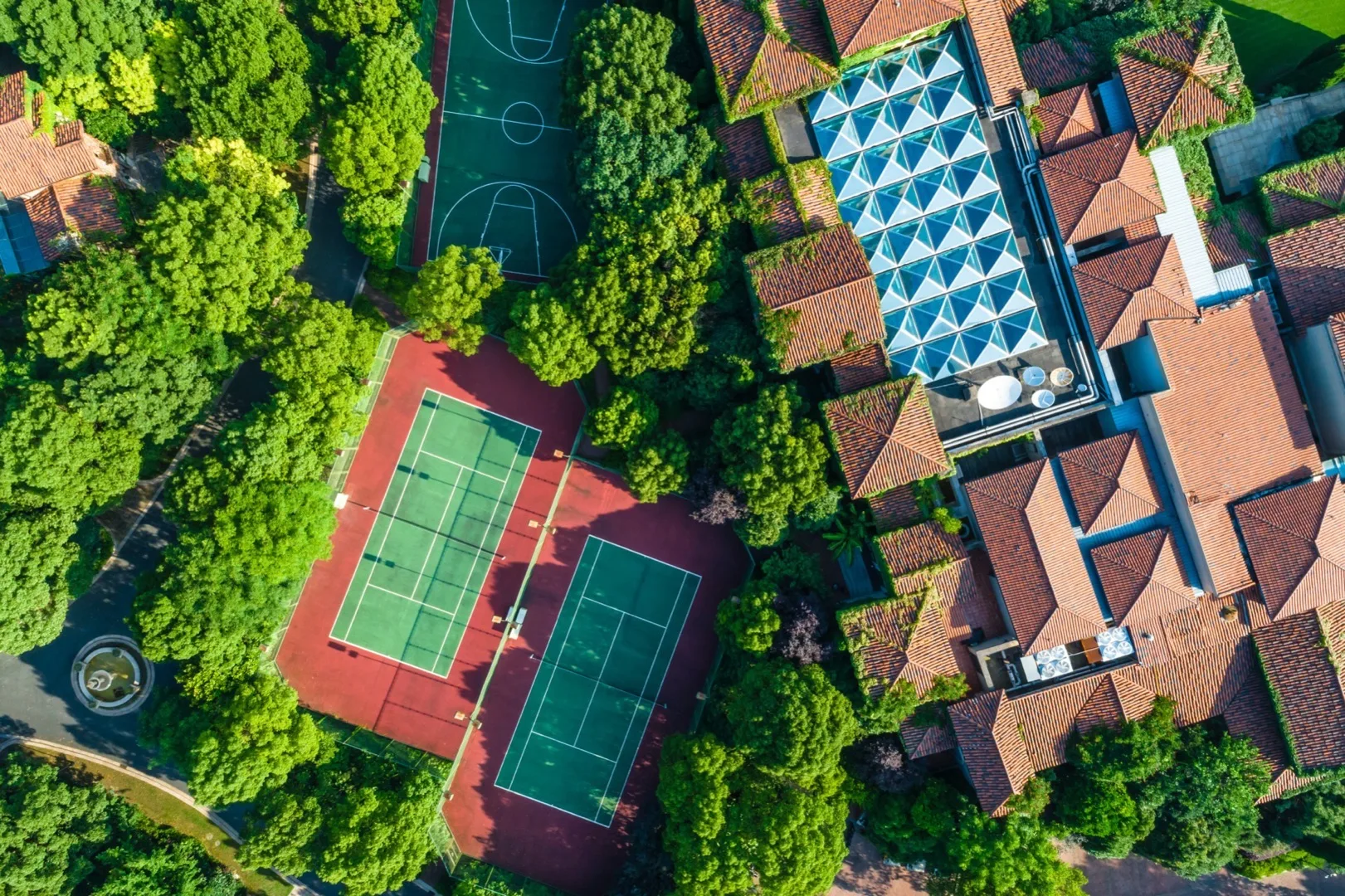
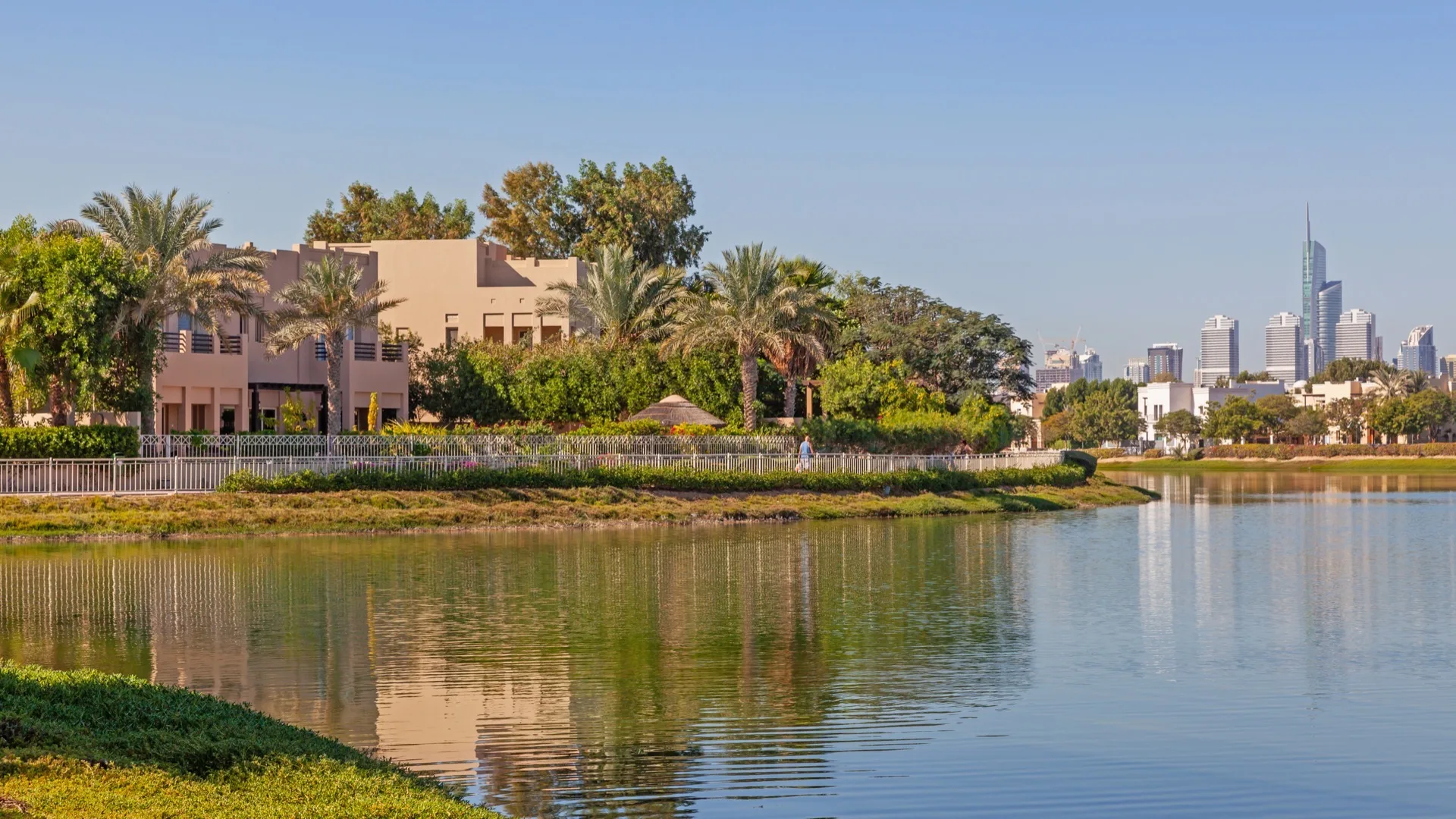
Green Community is DIP's original, established villa enclave — low-density, heavily landscaped, with 3- to 6-bedroom villas, townhouses and a smaller stock of low-rise apartments. It behaves like a mature suburban community rather than a construction site, which is reflected in its pricing: villas here start around AED 5.5 million and average closer to AED 10.2 million across plots ranging from roughly 4,600 to 10,000 sq ft, per recent Property Finder and Bayut-sourced listing data. This is DIP's premium tier, and it prices more like Arabian Ranches or Jumeirah Islands than like the rest of the DIP footprint.
Ritaj is the budget apartment cluster — mid-rise blocks offering some of DIP's lowest per-unit prices, with 1- and 2-bedroom averages around AED 611,000, making it a common entry point for first-time freehold buyers.
Dunes Village is a purpose-built studio and 1–2 bedroom community: 942 units across 19 five-storey buildings, with a wellness centre, mosque and restaurants on site. Asking prices here typically run AED 425,000–700,000, with an average closer to AED 519,000, and rents span roughly AED 39,000–73,000 a year, averaging around AED 40,700, per Bayut-tracked listings.
DAMAC Riverside is the newest addition and the corridor to watch: an eight-cluster masterplan (Teal, Azure, Marine, Indigo, Royal, Capri, Sky and Pacific) totalling roughly 4,000 units, still delivering in phases with handovers into 2029. Launch pricing here runs meaningfully higher than DIP's legacy stock — Azure 2 studios from around AED 748,000, Royal 2 one-beds up to roughly AED 1.38 million — and its "Lush" villa enclave has repriced DIP's villa entry point downward, with 4-bedroom units transacting around AED 2.66 million, a fraction of Green Community's average. That gap between old and new stock is the single most important thing to understand before comparing "DIP prices" across sources: you are often comparing two different products in the same postcode.
Apartment Prices in DIP: Studio to Three-Bedroom in 2026
Per Bayut's DIP sale price index, the blended apartment price stood at AED 929 per sq ft in June 2026 — down 6.75% over the preceding twelve months, having peaked around AED 1,145 per sq ft six months earlier, up sharply from roughly AED 652 per sq ft two years prior. That volatility reflects DAMAC Riverside's phased launches moving through the market rather than a simple up-or-down trend, and it is exactly why per-sqft averages need a size and building context to mean much in DIP.
| Apartment type | Typical sale price (2026) | Typical annual rent | Gross yield |
|---|---|---|---|
| Studio (Dunes Village / Ritaj) | AED 425,000 – 748,000 | AED 39,000 – 55,000 | ~9.0 – 10.5% |
| 1-Bedroom | AED 611,000 – 1,383,000 | AED 55,000 – 75,000 | ~8.5 – 10.0% |
| 2-Bedroom | AED 1,040,000 – 1,928,000 | ~AED 85,000 – 135,000* | ~7.0 – 8.5% |
| 3-Bedroom apartment | up to ~AED 2,400,000 | limited stock; verify per listing | not established |
*2-bedroom rent implied from published gross-yield ranges applied to the sale-price band, not a directly quoted rent figure — treat as an indicative range, not a point estimate. Sources: Bayut, Property Finder, dubaihousing-ae.com listing aggregations, 2026.
The takeaway across every band: DIP's studio and one-bedroom stock is priced for cash flow, not capital growth headlines. A sub-AED 750,000 entry ticket with rents in the AED 40,000–75,000 range is a genuinely different investment case from Dubai's marquee off-plan launches, and it is worth running your own numbers with a rental yield calculator before assuming a headline "9–10%" figure applies to the specific unit you are looking at.
Townhouse and Villa Prices: From Riverside Newbuilds to Green Community Estates
DIP's villa and townhouse market is genuinely bimodal, and conflating the two segments is the most common pricing mistake buyers make researching the area.
At the affordable end, DAMAC Riverside's newer stock has repriced entry-level villa living in DIP 2: 4-bedroom townhouses from around AED 2.4 million, 5-bedroom corner units from roughly AED 3.5 million, and 4-bedroom villas in the "Lush" enclave transacting around AED 2.66 million with a price of roughly AED 1,709 per sq ft. This is meaningfully cheaper than comparable product in most other freehold villa communities in Dubai.
At the established end, Green Community's villa stock — larger plots, mature landscaping, 25-plus years of infrastructure — starts around AED 5.5 million and averages closer to AED 10.2 million, more than double the national average villa price, per recent listing data. That premium buys plot size (commonly 4,600–10,000 sq ft), private pools, gyms, maid's rooms and studies, and a genuinely settled community feel that newer clusters have not yet built up.
| Villa/townhouse segment | Typical price | Gross yield |
|---|---|---|
| 4BR villa, DAMAC Riverside "Lush" (new) | ~AED 2.66 million | ~4.5 – 6.0% |
| 4–5BR townhouse, DAMAC Riverside (new) | AED 2.4 – 3.5 million | not yet established (off-plan) |
| 3–6BR villa, Green Community (established) | AED 5.5 – 10.2+ million | ~4.5 – 6.0% |
The pattern holds across both tiers: DIP villas yield materially less than DIP apartments, which is normal for Dubai — larger, higher-ticket assets almost always trade lower gross yields than studios and one-beds. If capital growth and lifestyle matter more than income to you, Green Community is the more established bet; if you are underwriting on cash flow, the apartment segment above is doing the heavy lifting, not the villas.
Rental Yields: Why DIP Tops Dubai's Affordable Freehold Yield Tables
DIP's apartment yields are consistently reported in the 9–10% gross range through 2025 and into 2026, with studios reaching as high as 9.5–10.5% and one-beds 8.5–10.0%, according to Bayut's DLD-attributed data and area-guide aggregations from local brokerages. For context, Dubai's citywide gross rental yield stood at roughly 6.68% in April 2026, with apartments specifically averaging around 7.15%, per REIDIN-sourced figures reported by Polaris and GlobalPropertyGuide — meaning DIP's better apartment micro-markets are running two to three percentage points above the citywide apartment norm.
Two structural reasons explain the premium. First, DIP's entry prices are genuinely low relative to nearby employment density — a large share of the community's 150,000-plus residents work within DIP's own logistics, industrial and commercial zones, supporting steady local rental demand that does not depend on tourism or speculative flipping. Second, service charges are moderate for what tenants get: typically AED 10–18 per sq ft annually across DIP's residential buildings, which keeps net yields from being eroded as heavily as in some higher-service-charge towers elsewhere in Dubai. Net yields after those charges typically run 1.5–2.5 percentage points below the gross figures quoted above — still a strong 6–8.5% net band on the apartment side.
Villas are a different story: Green Community's gross yields sit closer to 4.5–6%, which is normal for large, high-ticket family homes anywhere in Dubai, but is worth knowing before assuming DIP is a blanket "high-yield" area regardless of unit type.
An investor buys a studio in Dunes Village at the sub-community's average asking price of AED 519,000 and lets it for AED 45,000 a year — a mid-point rent within the AED 39,000–55,000 band Bayut tracks for the building. That is an 8.7% gross yield. Strip out service charges of roughly AED 12–14 per sq ft (around AED 5,000–5,500 a year on a typical 380–420 sq ft studio), and net yield lands close to 7.6–7.7% — still well above Dubai's citywide apartment average of 7.15% in April 2026, and achieved on one of the lowest entry tickets in the freehold market.
Free Weekly Insights
Get Dubai Market Updates in Your Inbox
Expert analysis, market data, and practical tips — trusted by Dubai professionals.
✓ You're in! Check your inbox.
DIP vs Dubai South vs Jebel Ali: How the Affordability Corridor Compares
DIP sits inside a wider southwest Dubai "affordability corridor" that also includes Dubai South and the Jebel Ali villa communities — all three benefiting from Al Maktoum International Airport's expansion and the same Route 2020 metro infrastructure, but each pricing very differently.
| Area | Dominant product | Typical entry price | Gross yield range |
|---|---|---|---|
| Dubai Investments Park (DIP) | Apartments, townhouses, villas + logistics/industrial | Studios from ~AED 425,000 | Apartments ~9–10%; villas ~4.5–6% |
| Dubai South | Apartments, growing townhouse stock, airport-district masterplans | Studios/1BR from ~AED 450,000–900,000 | ~7.5–9.5% (apartments) |
| Jebel Ali Village / western corridor | Villas and townhouses only; no apartment stock | 3BR townhouses from ~AED 4.4 million | ~7–9% (early-stage western-corridor product) |
Read the table with its caveats: Dubai South's per-sqft averages vary noticeably between trackers (roughly AED 1,230–1,550 per sq ft depending on the index used, per Engel & Völkers' 2026 price-per-sqft data), and its own reported apartment yield of around 8.1% sits between DIP's apartment range and the citywide average — a reasonable middle ground given Dubai South's newer, more master-planned product. Jebel Ali Village, by contrast, offers no apartment product at all — its 3-bedroom townhouses start around AED 4.4 million and climb to AED 5.5 million, with independent 4-bedroom villas in the AED 9.2–10.8 million range and 5-bedroom villas from roughly AED 11 million upward, positioning it much closer to Green Community's villa pricing than to DIP's apartment segment.
The practical read: if your budget is genuinely entry-level and you want an apartment, DIP and Dubai South are the two to shortlist, with DIP typically cheaper at the studio and one-bed end and Dubai South offering somewhat newer stock and a stronger long-term masterplan narrative tied to the airport. If you specifically want a freehold villa under AED 3 million, DAMAC Riverside inside DIP 2 is currently one of the few places in Dubai offering that; if budget stretches past AED 5–6 million for a villa, Green Community and Jebel Ali Village become directly comparable, established alternatives. For the broader ranking of where yields are strongest citywide, see our highest-ROI areas in Dubai analysis.
Freehold Ownership, Golden Visa Eligibility and Who Actually Buys in DIP
DIP is designated freehold, with 100% foreign ownership permitted across its residential sub-communities — the same ownership structure as Dubai's other investor-facing freehold zones. That opens two residency pathways that matter directly to buyers evaluating DIP:
- Two-year property investor visa — generally available on freehold property purchases from AED 750,000, which covers most of DIP's studio and one-bedroom stock outright.
- Ten-year Golden Visa — generally requires a property investment of AED 2 million or more (or an equivalent portfolio value), which is achievable in DIP through a Green Community villa, a larger DAMAC Riverside unit, or by combining smaller units toward the threshold, depending on current DLD and ICP rules at the time of purchase.
Always verify the current threshold and any financing conditions directly against the latest rules before committing — the qualifying investment amount and mortgage-equity conditions for the Golden Visa pathway have been adjusted more than once in recent years. Our Golden Visa through property investment guide walks through the current eligibility rules in full.
Who is actually buying? Two distinct buyer profiles dominate DIP transactions. The first is yield-focused investors — often regional or first-time freehold buyers — targeting Ritaj and Dunes Village studios and one-beds specifically for the 9–10% gross yield band, frequently without ever intending to live there. The second is end-users and upgrading families, particularly in Green Community and increasingly in DAMAC Riverside, drawn by villa living at a materially lower price point than Arabian Ranches, Dubai Hills Estate or the Springs, and by DIP's own employment base reducing commute times for anyone working in the surrounding logistics and industrial zones.
Getting Around: DIP Metro Station, Route 2020 and Commute Times
DIP is served directly by the Dubai Investments Park Metro Station on the Route 2020 Red Line extension — the same line built to serve Expo City Dubai — giving residents a direct rail link into the wider Dubai Metro network without relying solely on Sheikh Zayed Road traffic. By road, DIP sits roughly 10–15 minutes from Expo City Dubai, 10–15 minutes from Jebel Ali Free Zone, and 15–20 minutes from Al Maktoum International Airport — the airport currently undergoing the phased expansion that underpins much of southwest Dubai's medium-term investment case, alongside Dubai South and Emaar South.
That metro connectivity is a meaningful differentiator versus Jebel Ali Village, which relies more heavily on road access, and it is one reason DIP's apartment segment in particular continues to attract renters who work across the wider Expo City–Jebel Ali–Dubai South employment corridor rather than exclusively within DIP itself.
An investor is deciding between a resale Ritaj studio at AED 611,000 (renting today for around AED 50,000, an 8.2% gross yield) and reserving an off-plan DAMAC Riverside Azure 2 studio at AED 748,000 on a payment plan — typically a modest down payment with the balance staged through construction to a 2029 handover. The resale unit produces immediate income; the off-plan unit forgoes roughly four years of rent but locks in pricing before the remaining phases of DAMAC Riverside's roughly 4,000-unit masterplan complete and potentially reprice DIP 2's studio segment upward. Neither choice is objectively better — it is the standard entry-price-versus-timing trade-off that applies across every DIP micro-market right now, and it is worth modelling both scenarios before committing to either.
Who Should Buy in DIP — and the Risks Worth Weighing
DIP suits a specific buyer better than it suits everyone. It works well for income-focused investors comfortable owning in a community that is functionally industrial-adjacent rather than beachfront or downtown-adjacent, and for end-users who value villa space and lower density over walkable retail and dining — DIP's community amenities are real but sparser than in Dubai's marquee master-planned communities. It also suits buyers specifically chasing the AED 750,000 investor-visa or AED 2 million Golden Visa thresholds at the lowest achievable entry price.
The risks are worth stating plainly. Supply from DAMAC Riverside's remaining phases is substantial relative to DIP's existing residential base, and a masterplan delivering roughly 4,000 new units into a community of this size can put pressure on rents and resale values for older stock if absorption lags completion — a dynamic worth watching over 2027–2029 as the remaining clusters hand over. Price-per-sqft volatility in the Bayut index above (down 6.75% over the past year after a sharp prior run-up) is a live illustration of how quickly reported averages can move as new launches enter the mix. And because DIP's identity is tied to logistics and industrial activity, buyers prioritising a purely residential, low-traffic environment should walk the specific sub-community — Green Community, Ritaj, Dunes Village and DAMAC Riverside genuinely feel different from one another — before assuming "DIP" describes one uniform product. For a citywide view of where else similar affordability-and-yield trade-offs exist, our Dubai investment guide and the full area directory are useful starting points, alongside the golf-anchored alternative developing nearby at Emaar Golf Vale.
Frequently Asked Questions
Is Dubai Investments Park freehold, and can foreigners buy there?
Yes. DIP is a designated freehold community with 100% foreign ownership permitted across its residential sub-communities, including Green Community, Ritaj, Dunes Village and DAMAC Riverside.
What is the average price of an apartment in DIP in 2026?
The blended apartment sale index stood at AED 929 per sq ft in June 2026 per Bayut, though prices vary widely by sub-community and building age — studios start around AED 425,000–620,000, one-beds from roughly AED 611,000, and two-beds up to around AED 1.9 million in newer developments like DAMAC Riverside.
What rental yields can investors expect in DIP?
Apartments have posted gross yields around 9–10% through 2025–2026, with studios reaching 9.5–10.5% and one-beds 8.5–10.0%, according to Bayut's DLD-attributed data. Villas yield considerably less, around 4.5–6% gross, in line with larger residential assets across Dubai.
Does a DIP property qualify for the UAE Golden Visa?
Property investments of AED 2 million or more generally qualify for the ten-year Golden Visa, and purchases from AED 750,000 can unlock the two-year property investor visa, subject to current DLD and ICP conditions. Verify the latest thresholds and any mortgage-equity requirements before purchasing, since these rules have changed more than once in recent years.
Is there a metro station in Dubai Investments Park?
Yes. The Dubai Investments Park Metro Station sits on the Route 2020 Red Line extension, the same line that serves Expo City Dubai, giving residents a direct rail connection into Dubai's wider metro network.
What is the difference between Green Community, Ritaj, Dunes Village and DAMAC Riverside?
Green Community is DIP's established, low-density villa enclave with premium pricing (villas averaging around AED 10.2 million). Ritaj and Dunes Village are budget apartment clusters, with Dunes Village a purpose-built 942-unit studio community. DAMAC Riverside is the newest masterplan, an eight-cluster, roughly 4,000-unit development still delivering through 2029, with both apartments and a lower-priced "Lush" villa enclave.
How far is DIP from Al Maktoum International Airport and Expo City Dubai?
By road, DIP is roughly 15–20 minutes from Al Maktoum International Airport and 10–15 minutes from Expo City Dubai and Jebel Ali Free Zone, with all three also connected via the Route 2020 Red Line metro extension.
Is DIP a better investment than Dubai South or Jebel Ali?
It depends on the goal. DIP typically offers the cheapest apartment entry price and the highest reported apartment yields of the three. Dubai South offers newer masterplanned stock and a stronger long-term growth narrative tied to the airport, with slightly lower but still strong yields around 8.1%. Jebel Ali Village has no apartment product and competes with DIP's villa segment instead, particularly Green Community, at a broadly similar price range.
What are service charges like in DIP?
Typical residential service charges run around AED 10–18 per sq ft annually across DIP's apartment buildings, which is moderate by Dubai standards and helps keep net yields from eroding as heavily as they do in some higher-service-charge towers elsewhere in the city — net yields on DIP apartments typically land 1.5–2.5 percentage points below the gross figures.
Run the actual numbers on a specific Ritaj, Dunes Village or DAMAC Riverside unit with our rental yield calculator before you commit — headline "9–10%" figures are averages, not guarantees for every building. Inside the REC community, members compare DIP building-by-building rent rolls, service charge histories and DAMAC Riverside handover updates in real time — exactly the level of detail that separates a genuinely high-yield studio from an optimistic listing.
Have Questions?
Get personalized advice from our Dubai real estate team.
Thank You!
We'll get back to you within 24 hours.
Real Estate Agencies in Dubai
Explore providers from our business directory
Still have questions?
Ask a follow-up, or get connected with a vetted Dubai professional.
Join our Telegram channel
Handover alerts, new launches & DLD data — first, in real time.