Emaar South Master Plan 2026: Communities, Prices & the Al Maktoum Airport Effect

- Emaar South is not the same thing as Dubai South. Dubai South is a 145-square-kilometre government master district built around Al Maktoum International Airport (DWC); Emaar South is Emaar's own gated master community inside it — one of the district's eight zones.
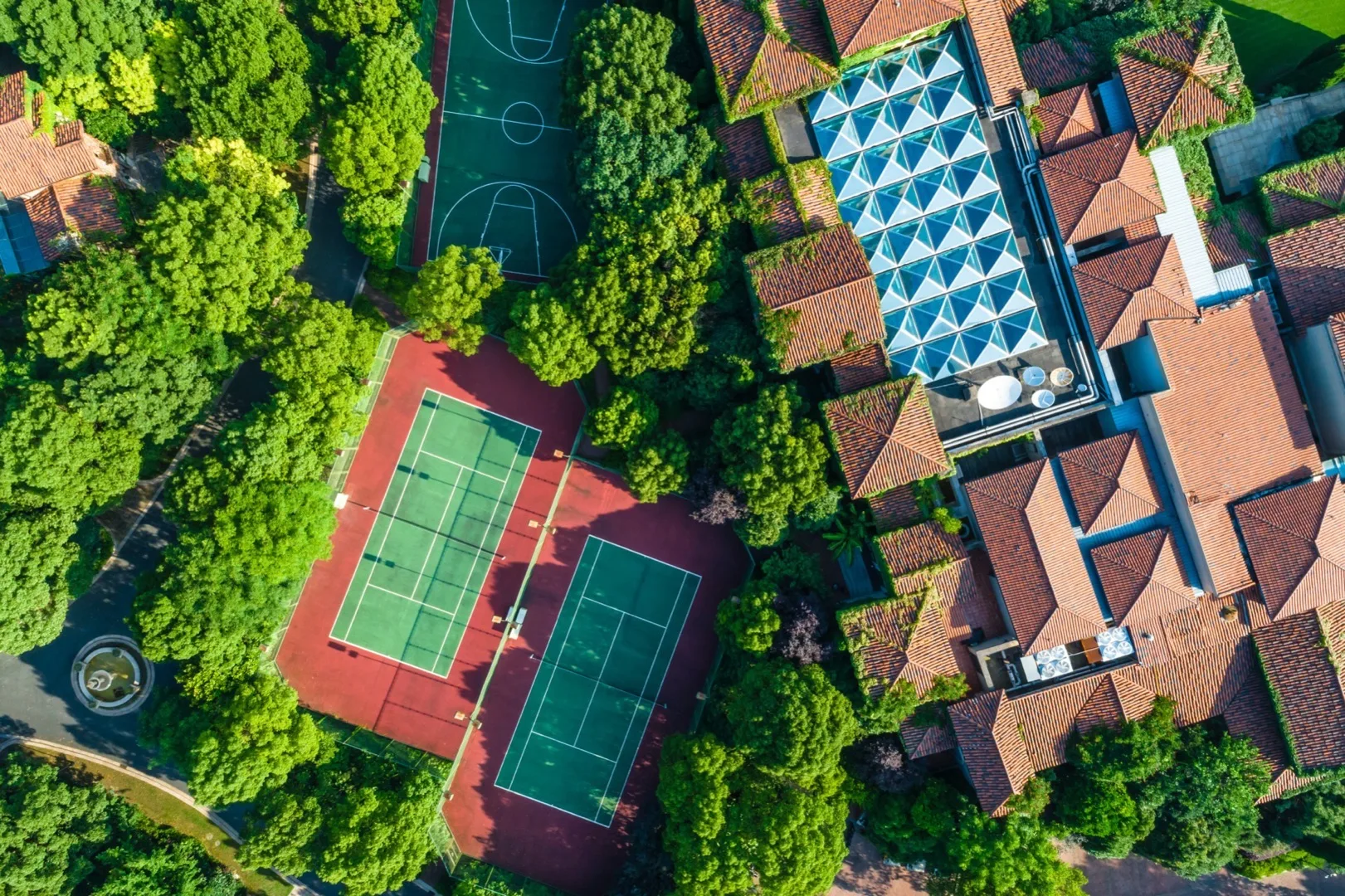
- The plan holds roughly 22,700–23,100 homes across 10+ sub-communities arranged around an 18-hole championship golf course, plus around 53,000 sq m of retail, community parks and a planned Aloft-branded hotel.
- Delivered today: Urbana's tiered townhouses, Golf Views apartments, Golf Links villas and the Expo Golf Villas phases at Parkside and Greenview. Everything branded "Golf Point / Golf Edge / Greenway" is off-plan with 2028–2029 handovers.
- Entry pricing on current launches starts around AED 850,000 for a Golf Point apartment; townhouse clusters such as Greenway start near AED 2.9–3.15 million and villas at Golf Lane from about AED 4.48 million, per Bayut's project listings.
- The airport thesis is real but slow: the AED 128 billion DWC terminal was approved in April 2024, phase one targets around 150 million passenger capacity by roughly 2032, and government messaging anticipates housing demand for up to a million people around the airport — over a decade, not next year.
- Rental reality in 2026: gross yields of roughly 4–6% depending on product, with townhouses by far the most rented type — about 500 contracts registered between January and May 2026 alone, per Bayut/DLD data.
- Read this alongside our Dubai South area guide: that article covers the whole district; this one walks Emaar's community sub-village by sub-village.
Search "Emaar South" and half the results will actually be about Dubai South. Search "Dubai South" and the listings are full of Emaar South apartments. The two names are used interchangeably by agents, portals and even some developers' marketing — and they are not the same thing. One is a 145-square-kilometre government-backed aviation district; the other is a single developer's golf-course community inside it. If you cannot tell them apart, you cannot compare prices, judge supply risk or understand what the Al Maktoum airport expansion actually does to your asset.
This guide is the orientation map for Emaar's community specifically. Rather than repeat the district-wide analysis in our Dubai South area guide, it walks the Emaar South master plan village by village: what is delivered, what is launching, what each product costs, how the payment plans are structured, and — honestly — when the airport effect arrives versus when it is merely priced in. Last updated: June 2026.
Get our independent Emaar South Master Plan Guide (PDF) — every sub-community mapped with current prices, payment plans and the handover timeline in one place. Free, just your email.
Download the master plan guide →Emaar South vs Dubai South: Clearing Up the Name First
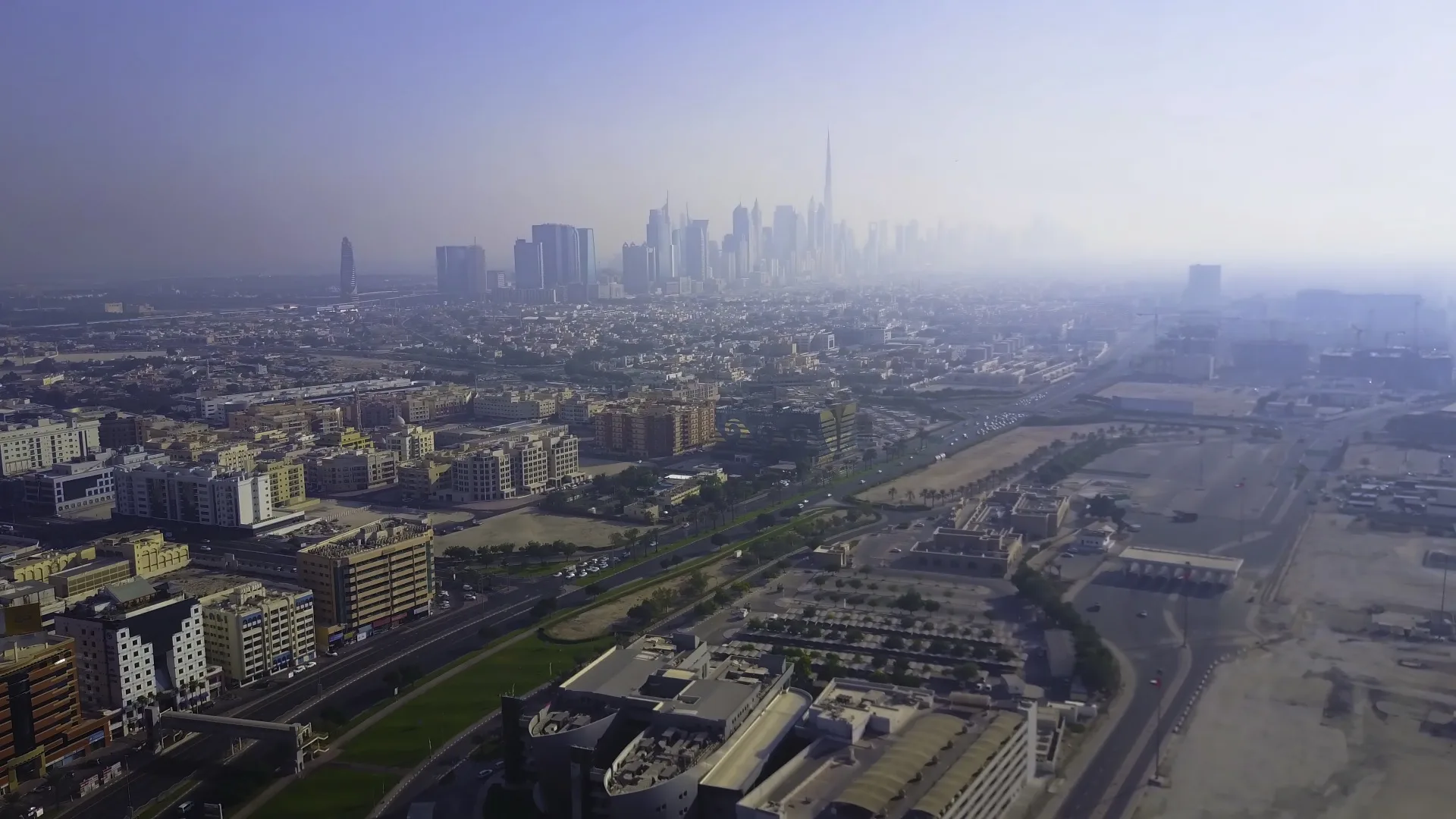
Dubai South is the umbrella. It is a master-planned district of roughly 145 square kilometres in the far south-west of the emirate, organised around Al Maktoum International Airport (DWC) and divided into zones — residential, logistics, aviation, commercial, golf and exhibition districts among them. It is a government-scale economic project, not a housing estate, and it contains multiple residential offerings from different developers: the original Residential District (The Pulse and others), Azizi's Venice lagoon city, and Emaar South.
Emaar South is one community inside that umbrella — Emaar Properties' own gated master development, positioned between Sheikh Mohammed Bin Zayed Road (E311) and Emirates Road (E611) on the district's edge, built around an 18-hole championship golf course. Per Bayut's Emaar South area guide, the plan spans roughly 23,100 residential properties across more than ten residential complexes, with around 53,000 sq m of retail space and twenty-plus community parks.
The distinction matters for three practical reasons. First, pricing: Emaar South trades at a premium to the wider Dubai South residential stock because of the developer brand and the golf product, so a "Dubai South average" understates what you will pay here. Second, supply: the district-wide delivery pipeline is enormous, but what lands inside Emaar's gates is a controlled, single-developer release cadence. Third, resale: your future buyer is buying "Emaar villa on a golf course", not "apartment near the airport" — a different buyer pool with different expectations. Everything below is about the Emaar community; for the umbrella district, including the Residential District and the aviation zones, start with the Dubai South guide.
The Master Plan at a Glance
Emaar South is organised the way most mature Emaar master communities are: a landscape spine (here, the golf course) with residential villages clipped around it, a retail core, school plots and a hotel site. The community sits directly beside the DWC airport land — Bayut puts the drive to the airport at around five minutes, while Chestertons' area guide measures 15–20 minutes to the current passenger facilities; both are right, depending on which edge of a five-runway airport site you measure to. Expo City Dubai is roughly ten minutes away and Dubai Marina around twenty by car.
The non-residential components define the community's self-sufficiency case: the 18-hole championship golf course with clubhouse, the South Village retail centre (around 22,000 sq m, anchored by a Géant Express, per Bayut), nursery and school plots, mosques, and a planned Aloft hotel under Marriott International's brand. Schools in the wider catchment include GEMS Founders, Greenfield International and Dove Green Private School — mostly a short drive towards Dubai Investments Park rather than inside the gates.
Here is the sub-community roster as it stands in mid-2026. Status and indicative pricing are drawn from Bayut's Emaar South project listings and Emaar's own project pages; off-plan prices are launch "from" prices and move with each release.
| Sub-community | Product | Status 2026 | Indicative pricing |
|---|---|---|---|
| Urbana I–III | 2–3BR tiered townhouses (324 in Urbana) | Delivered | Secondary market; townhouse avg ~AED 2.8M area-wide |
| Golf Views | 1–3BR apartments, two buildings on the course | Delivered | Secondary market; area apartment avg ~AED 1.57M |
| Golf Links | 3–4BR standalone villas (2,900+ sq ft) | Delivered | Secondary market; villa avg ~AED 4.9M area-wide |
| Expo Golf Villas (Parkside, Greenview phases) | 3–4BR villas and townhouses | Phases delivered; final phase handed over ~Q4 2025 | Secondary market |
| Fairway Villas 2 & 3 | Golf-fronting villas | FV2 handover ~Q4 2026; FV3 ~Q1 2028 | From AED 3.2M / AED 4.39M |
| Greenway 1–2, Greenridge, Greenville, Greenspoint | 3–4BR townhouses and villas | Off-plan, handovers Q2 2028 – Q1 2029 | From AED 2.9M–3.41M |
| Golf Point, Golf Acres, Golf Dale, Golf Edge, Golf Hills, Golf Verge, Golf Meadows, Vista Ridge, Grove Ridge | 1–3BR apartments, some with townhouse rows | Off-plan, handovers Q4 2028 – Q3 2029 | From AED 850K–1.27M |
| Golf Lane | Villas | Off-plan, handover ~Q4 2028 | From AED 4.48M |
The naming logic is worth decoding: the "Golf" prefix marks the apartment-led mid-rise wave clustered around the course; the "Green" prefix marks the townhouse-and-villa clusters; Fairway and Golf Lane are the villa products with direct course frontage. One name from older marketing you may still encounter — a Vida-branded residence — does not currently appear on Emaar's active Emaar South launch roster, so treat any listing using it with caution and verify the project name against the DLD project register.
What Is Already Delivered (and Lived-In)
Emaar South is not a render. The first generation of villages — Urbana's 324 tiered townhomes, the two Golf Views apartment buildings, Golf Links' standalone villas and the Expo Golf Villas phases at Parkside and Greenview — is handed over, landscaped and occupied, with the golf course operational. The final Expo Golf Villas phase (marketed as Greenview 3 / Expo Golf Villas 6) reached its scheduled handover window around Q4 2025, closing out the community's first build cycle.
That delivered core does two jobs for buyers. For end-users, it proves the product: you can walk a finished Urbana street and see exactly what a 2028 Greenway handover will feel like, because Emaar builds to a house standard. For investors, it provides the comparables that pure off-plan corridors lack — actual DLD-registered rents and resales rather than developer projections. Per Bayut's DLD-sourced data, residential properties in Emaar South sold at an average of about AED 2.73 million over the past twelve months, with apartments averaging around AED 1.57 million.
The gap between the delivered villages and the launch wave is the single most useful mental model for this community: roughly speaking, everything west of a line through the clubhouse is real today, and the apartment districts to come will double the community's density by 2029. Whether that is an opportunity or a risk depends on which side of the handover you sit — more on that in the supply section below.
The 2026 Launch Wave: Golf-Series Apartments, Green-Series Townhouses
Emaar's current release cadence in the community is unusually fast — a deliberate land-bank push timed against the airport story. The table below consolidates the active off-plan roster with launch pricing and handover targets as listed on Bayut's new-projects page for Emaar South in June 2026. Treat "from" prices as floors for the smallest units at launch.
| Project | Type | From (AED) | Handover | Payment plan |
|---|---|---|---|---|
| Golf Point (Towers 1–2) | 1–3BR apartments | 850,000 (~USD 231K) | Q4 2028 | 80/20 |
| Golf Acres | Apartments + townhouses | 950,000 | Q4 2028 | 80/20 |
| Golf Hills 1–2 | Apartments | 1,060,000 | Q3 2029 | 80/20 |
| Golf Dale / Golf Meadows | Apartments + townhouses | 1,120,000 | Q4 2028 / Q3 2029 | 80/20 |
| Golf Edge | 1–3BR apartments + 3BR townhouses | 1,170,000 | Q1 2029 | 80/20 |
| Golf Verge (A–C) | Apartments | 1,200,000 | Q2 2029 | 80/20 |
| Vista Ridge / Grove Ridge | Apartments + townhouses | 1,270,000 | Q3 2029 | 80/20 |
| Greenway 1–2 | 3–4BR G+2 townhouses | 2,900,000–3,150,000 | Q2 2028 | 90/10 |
| Greenridge / Greenville / Greenspoint | Townhouses and villas | 2,940,000–3,410,000 | Q4 2028 – Q1 2029 | 80/20 |
| Fairway Villas 2 / 3 | Golf-fronting villas | 3,200,000 / 4,390,000 | Q4 2026 / Q1 2028 | 85/15 / 90/10 |
| Golf Lane | Villas | 4,480,000 | Q4 2028 | 80/20 |
Two structural reads from this table. First, the payment plans are construction-weighted (80/20 and 90/10 with completion-linked instalments), not the aggressive post-handover schemes some neighbouring developers run — Emaar is selling brand and delivery confidence, not financing. If you are comparing against post-handover offers elsewhere in the corridor, our payment plans explainer shows how to compare them on a like-for-like cash-flow basis. Second, the handover clustering is heavy: almost the entire apartment wave lands between Q4 2028 and Q3 2029, which concentrates both the community's growth and its rental-supply shock into a single 12-month window.
What It Costs: Emaar South vs the Neighbours
Price per square foot is where the Emaar South vs Dubai South distinction turns into dirhams. The wider Dubai South district starts from roughly AED 800 per sq ft for the more affordable residential stock, per market trackers such as Engel & Völkers' 2026 area tables, while Chestertons puts Emaar South's floor at around AED 1,030 per sq ft. Azizi Venice — the lagoon-led mega-project on the other side of the district — launched dense, small-format units whose smallest studios (from about AED 699,000 for roughly 340 sq ft) imply headline rates above AED 2,000 per sq ft, a number that reflects unit size and lagoon positioning rather than a corridor-wide benchmark. Emaar's closest in-house comparable, The Valley on the Al Ain Road, trades around AED 1,100–1,400 per sq ft for its townhouse and villa stock per market analyses.
| Community | Indicative AED/sq ft | Character |
|---|---|---|
| Dubai South (wider district stock) | from ~800 | Mixed developers, affordable entry, heavy pipeline |
| Emaar South | from ~1,030 | Single-developer golf community, brand premium |
| The Valley by Emaar (Al Ain Road) | ~1,100–1,400 | Emaar family villas, no airport thesis |
| Azizi Venice (Dubai South) | 2,000+ on smallest lagoon units | Dense lagoon apartments, small formats inflate AED/sq ft |
The honest read: on a per-square-foot basis Emaar South carries a 25–30% premium over generic Dubai South stock, which is roughly the standard Emaar brand-and-amenity premium you see repeated across the city. Against The Valley — Emaar's other "value frontier" community — Emaar South's townhouses price comparably, and the choice is really airport thesis versus established Al Ain Road corridor; our Valley Phase 2 guide makes that comparison in detail. And against Azizi Venice, the headline AED/sq ft numbers mislead in both directions: Venice sells smaller, denser, lagoon-priced units while Emaar South sells larger family formats — compare total ticket and product, not just the rate. The two master plans are siblings in our coverage; the Azizi Venice master plan guide is the mirror of this article for the other side of the district. For the city-wide context, our price-per-sq-ft data table ranks where the corridor sits against everywhere else.
Free Weekly Insights
Get Dubai Market Updates in Your Inbox
Expert analysis, market data, and practical tips — trusted by Dubai professionals.
✓ You're in! Check your inbox.
The Al Maktoum Airport Effect, Honestly
The airport is the reason this corridor exists in investor conversations, so the timeline deserves precision rather than hype. In April 2024, Sheikh Mohammed bin Rashid approved the designs for the new passenger terminal at Al Maktoum International and commenced construction at a stated cost of AED 128 billion, per the Dubai Media Office announcement. The end-state numbers are genuinely unprecedented: ultimate capacity of up to 260 million passengers a year, five parallel runways, 400 aircraft gates, five times the size of today's DXB.
But the dates matter more than the superlatives. Phase one — the West Terminal and first concourse — targets capacity of around 150 million passengers with completion reported around 2032, which is also when Emirates and flydubai have signalled they intend to begin relocating operations. The same Media Office announcement frames the residential consequence directly: an entire city will rise around the airport in Dubai South, with demand for housing for up to a million people expected to follow as logistics and aviation firms cluster there.
So the honest sequencing for an Emaar South buyer looks like this. 2026–2028: construction employment and early relocations trickle in; your tenant pool is Expo City workers, DWC logistics staff, airline crew and Jebel Ali commuters. 2029: the community's own apartment wave hands over — supply arrives before the airport does. 2032 and beyond: if the phase-one timeline holds, the structural demand story begins in earnest, and it compounds over the following decade rather than landing in one year. Anyone selling you "the airport opens, prices double" is compressing a ten-year industrial migration into a brochure sentence. The corridor-wide investment case — including what could go wrong with the timeline — is covered in our Dubai South area guide.
Connectivity Today (Not in the Brochure)
Today, Emaar South is a car community. The E311 and E611 borders give quick highway access — Expo City in about ten minutes, Dubai Marina in about twenty, DXB airport around forty-plus in normal traffic, and the Abu Dhabi border within roughly fifteen minutes, which quietly makes the community viable for cross-emirate commuters.
On rail: the Route 2020 metro extension (Red Line) currently terminates at Expo City — useful, but a drive away from the community gates. The genuinely significant development is the proposed Airport Express Line: in 2026 the RTA invited consultants to bid on the study and design of a roughly 55-kilometre line linking DXB and DWC with five stations, routed via Al Jaddaf and Al Khail Road, as reported by Khaleej Times. That is design-stage, not under construction — price it as an option, not an amenity. Until rail arrives, every household here needs a car per working adult, and you should budget accordingly.
Rental Reality in 2026: Who Actually Rents Here
The community already has a functioning rental market, and the DLD contract data tells you exactly what it is: a townhouse market. Between January and May 2026, around 500 townhouse rental contracts were registered in Emaar South against 284 for apartments and just 36 for villas, per Bayut's DLD-sourced figures. The tenant profile is families and aviation-adjacent professionals: Expo City and DWC logistics staff, airline crew, DIP and Jebel Ali workers trading commute time for a new-build townhouse at a rent that would get them an ageing apartment nearer the centre.
The numbers, per Bayut/DLD twelve-month data: apartments rent at an average of about AED 86,000 a year (listings roughly AED 65,000–200,000), townhouses average around AED 116,000 against an average purchase price near AED 2.81 million — a gross yield of roughly 4.1% — and villas average about AED 209,000 in rent against AED 4.9 million average prices, around 4.3% gross. Smaller apartment formats do better: Chestertons' analysis puts two-bedroom apartment yields around 6.2% and three-beds around 6%, which is consistent with the city-wide pattern of compact units out-yielding family stock.
Run your own numbers before believing anyone's projection — our ROI calculator lets you model net yield after service charges and voids. The structural point: today's yields are decent-not-spectacular, and the investment case rests on rental growth as airport employment scales, not on 2026 cash flow.
Risks: The Supply Wave and the Early-Mover Premium
Two risks deserve more space than the marketing gives them.
The corridor supply wave. Emaar South's own 2028–2029 apartment handovers land in the same window as enormous deliveries across the wider district — Azizi Venice alone is a multi-tower city, and the Residential District keeps building. Dubai South is consistently flagged as one of the largest contributors to Dubai's residential supply expansion through 2028. When that stock hands over before the airport's phase one opens, rents in the corridor will face a genuine absorption test. Which areas are most exposed, and where the bargains surface when it happens, is the subject of our 2026–2027 delivery wave analysis — Emaar South buyers should read it as a stress test, not a prediction.
The early-mover premium maths. Buying in 2026 means paying today's launch price for demand that materialises meaningfully from 2032. The premium you pay over generic Dubai South stock (~25–30% on AED/sq ft) is the price of the Emaar brand and the golf product; the discount you get versus established Emaar communities is the price of waiting six years for the thesis. If the airport timeline slips — and mega-project timelines do slip — your hold period extends with it. The mitigants are real but should be named as mitigants: Emaar's delivery track record is the strongest of any UAE developer at scale, the community is already partially lived-in rather than speculative, and construction-weighted payment plans mean your capital deploys gradually. Against neighbouring developers in the corridor, that track-record gap is the main thing you are paying the premium for.
Who Should Buy Here (and Who Should Not)
Emaar South works for two distinct buyers, and the master plan serves them differently.
The golf-community end-user buys a delivered or near-term product — an Urbana resale, a Fairway Villas 2 unit handing over late 2026 — and gets an Emaar villa lifestyle at roughly half the AED/sq ft of Dubai Hills Estate, accepting distance from the city as the trade. For this buyer the airport is upside, not thesis: the community already functions, with the golf course, parks and South Village retail operating.
The airport-thesis investor buys the 2028–2029 apartment wave at AED 850K–1.3M entry, accepts negative carry through construction, and is making a leveraged bet on the phase-one airport timeline. This buyer must be honest that they are early — possibly several years early — and that their exit depends on rental growth arriving after a heavy supply window.
Who should not buy: anyone needing strong cash-flow yield from day one (the corridor's 4–6% gross is beatable in mature areas), anyone who cannot hold through 2032 if the timeline slips, and anyone buying an off-plan unit they have not located on the master plan relative to the course, the retail core and the E611 edge — position inside the community will drive resale dispersion once thousands of similar units exist.
A family with an AED 3M budget and one parent working in Jebel Ali compares a Greenway townhouse (from ~AED 2.9–3.15M, handover Q2 2028) against an Urbana resale near the area's ~AED 2.8M townhouse average. They choose the resale: same community, moves in this summer, school run to DIP in fifteen minutes, and the ~AED 116K average townhouse rent they stop paying covers a meaningful slice of the mortgage. The 90/10 Greenway plan offered newer product, but two more years of rent plus handover risk outweighed the newness premium for a family that needs a home, not a position.
An overseas investor puts AED 1.06M into a Golf Hills one-bed (handover Q3 2029) on the 80/20 plan — roughly AED 848K staged through construction, AED 212K at handover. The bet: by handover, airport construction employment supports rents near today's ~AED 65–85K one-bed range, covering costs at ~5–6% gross while the 2032 phase-one opening drives the real appreciation leg. The risks they price in: the 2029 corridor supply wave hitting rents at exactly their handover date, and any slip in the airport timeline extending the hold. Their mitigation is the entry price — at ~AED 1,030+/sq ft they are buying Emaar product below half the city-average rate, so the thesis does not need perfection to clear.
Frequently Asked Questions
What is the difference between Emaar South and Dubai South?
Dubai South is the 145-square-kilometre government master district built around Al Maktoum International Airport, containing aviation, logistics, commercial and several residential zones. Emaar South is one community inside it — Emaar Properties' gated golf-course master development of roughly 22,700–23,100 homes. Prices, developers and products differ sharply between Emaar South and the district's other residential offerings, so always check which one a listing actually sits in.
Which communities in Emaar South are already delivered?
Urbana (I–III tiered townhouses), Golf Views apartments, Golf Links villas and the Expo Golf Villas phases at Parkside and Greenview are handed over and occupied, with the final Expo Golf Villas phase reaching handover around Q4 2025. The 18-hole golf course and South Village retail are operational. Everything in the Golf Point/Edge/Hills apartment series and the Greenway/Greenridge townhouse series is off-plan with 2028–2029 handovers.
How much does property in Emaar South cost in 2026?
Current launches start around AED 850,000 for Golf Point apartments, AED 2.9–3.4 million for Green-series townhouses and villas, and AED 4.48 million at Golf Lane, per Bayut's project listings. On the secondary market, DLD data puts the area's twelve-month average sale near AED 2.73 million overall and about AED 1.57 million for apartments, with per-square-foot pricing from roughly AED 1,030.
Is Emaar South more expensive than the rest of Dubai South?
Yes — typically a 25–30% premium on a per-square-foot basis. Wider Dubai South residential stock starts from roughly AED 800 per sq ft, while Emaar South's floor sits around AED 1,030. The premium buys the Emaar brand, delivery track record, the golf course and a single-developer community standard.
What rental yield does Emaar South deliver?
Per Bayut/DLD twelve-month data, townhouses gross roughly 4.1% (average rent ~AED 116,000 on ~AED 2.81M prices) and villas about 4.3%. Compact apartments do better — Chestertons puts two-bed apartment yields around 6.2%. Townhouses dominate actual leasing activity, with around 500 contracts registered between January and May 2026.
When will the Al Maktoum airport expansion actually affect Emaar South?
Construction is under way now, employing workers who already form part of the tenant pool. The AED 128 billion terminal's first phase — around 150 million passenger capacity — is reported for completion around 2032, when Emirates and flydubai have signalled relocation would begin, and government messaging anticipates housing demand for up to a million people around the airport over the longer term. Treat the demand story as a 2032-and-beyond compounding effect, not a near-term catalyst.
Is there a metro to Emaar South?
Not yet. The Route 2020 Red Line extension terminates at Expo City, a drive from the community. A roughly 55-kilometre Airport Express Line linking DXB and DWC with five stations is in study-and-design stage, per Khaleej Times reporting on the RTA tender — a genuine future catalyst, but design-stage only, so buy assuming car dependence.
What payment plans is Emaar offering in Emaar South?
Current launches run construction-weighted plans — mostly 80/20, with 85/15 and 90/10 on some villa releases — with instalments linked to construction milestones and the balance at handover (Q4 2026 through Q3 2029 depending on project). Emaar does not generally offer post-handover plans here, unlike some corridor competitors.
Emaar South or Azizi Venice — which is the better buy?
Different products for different buyers. Emaar South sells lower-density golf-community living — townhouses, villas and mid-rise apartments — with the strongest developer track record in the corridor at roughly AED 1,030+ per sq ft. Azizi Venice sells dense lagoon-front apartment living with smaller, cheaper entry tickets whose headline per-square-foot rates run far higher. End-users and family landlords skew Emaar South; small-ticket lagoon-lifestyle investors skew Venice. Compare total ticket, product and developer risk — not just the AED/sq ft headline.
Emaar South is the blue-chip way to own the DWC story — but the master plan only pays if you match the right product to the right timeline. For the strategy layer, see our Invest in Dubai Real Estate pillar guide, and read this article's sibling, the Dubai South area guide, for the district-wide view. The REC community includes early Emaar South owners and corridor investors who can tell you what the brochure leaves out — from golf-course service charges to what actually rents — before you commit.
Have Questions?
Get personalized advice from our Dubai real estate team.
Thank You!
We'll get back to you within 24 hours.
Real Estate Agencies in Dubai
Explore providers from our business directory
Still have questions?
Ask a follow-up, or get connected with a vetted Dubai professional.
Join our Telegram channel
Handover alerts, new launches & DLD data — first, in real time.