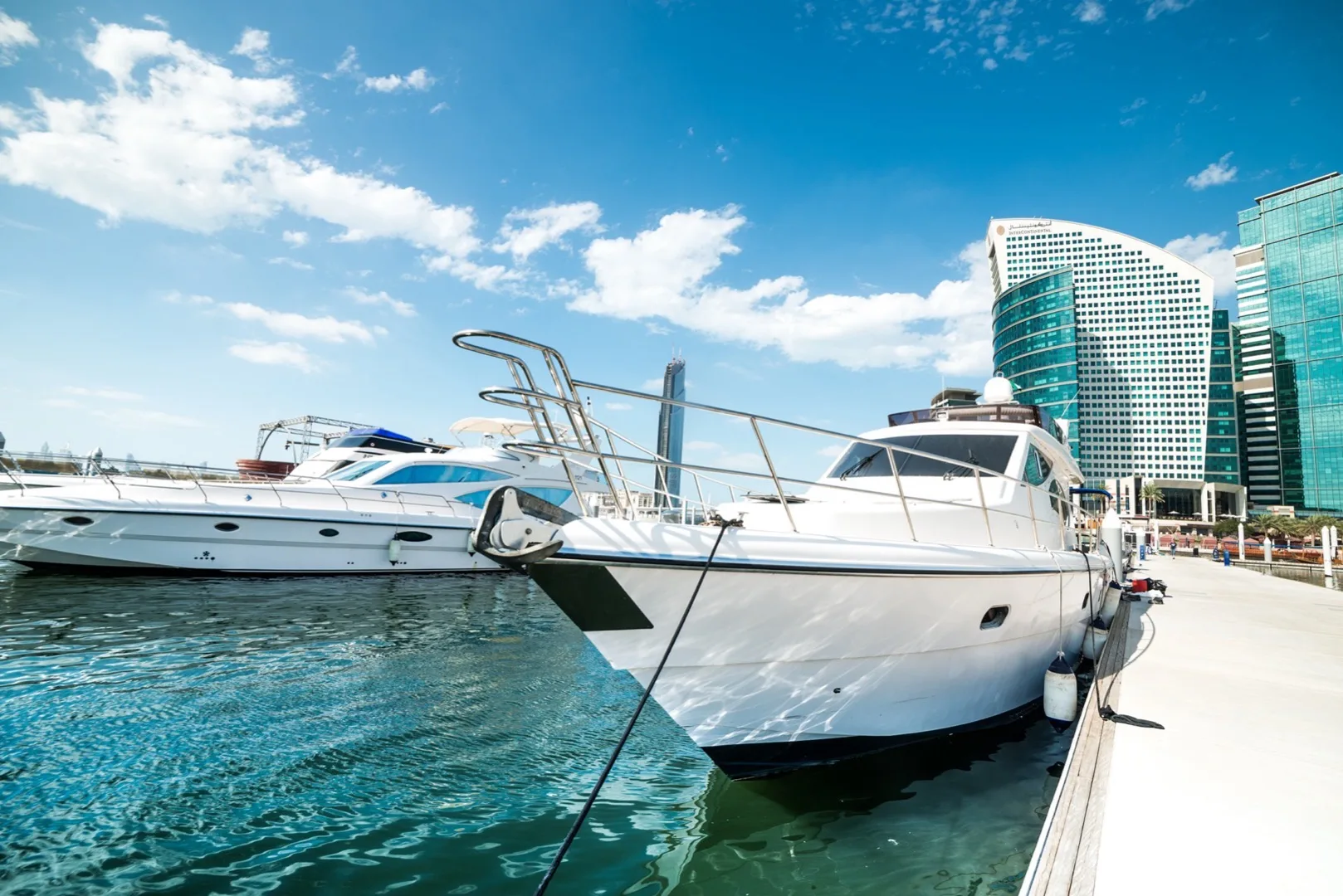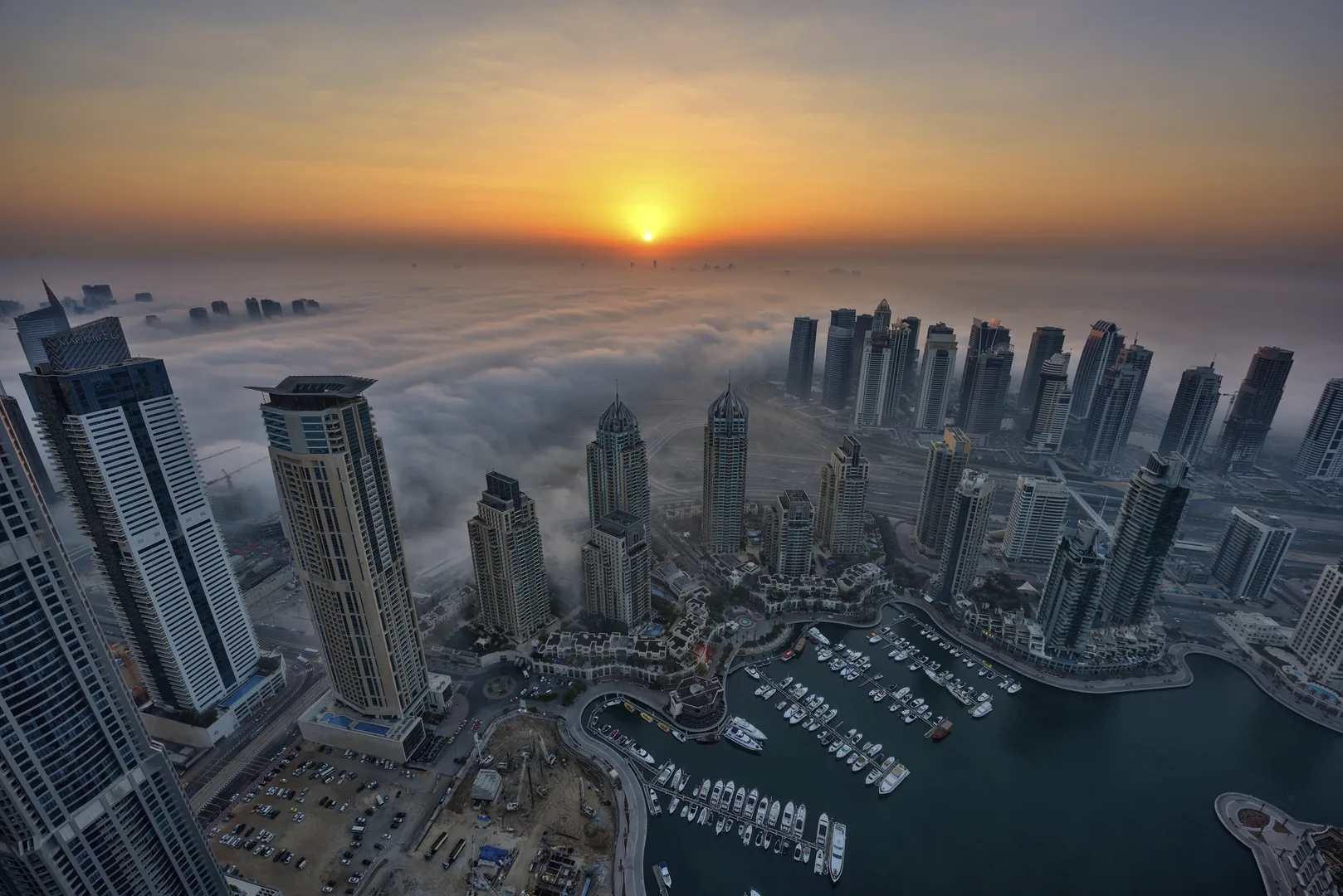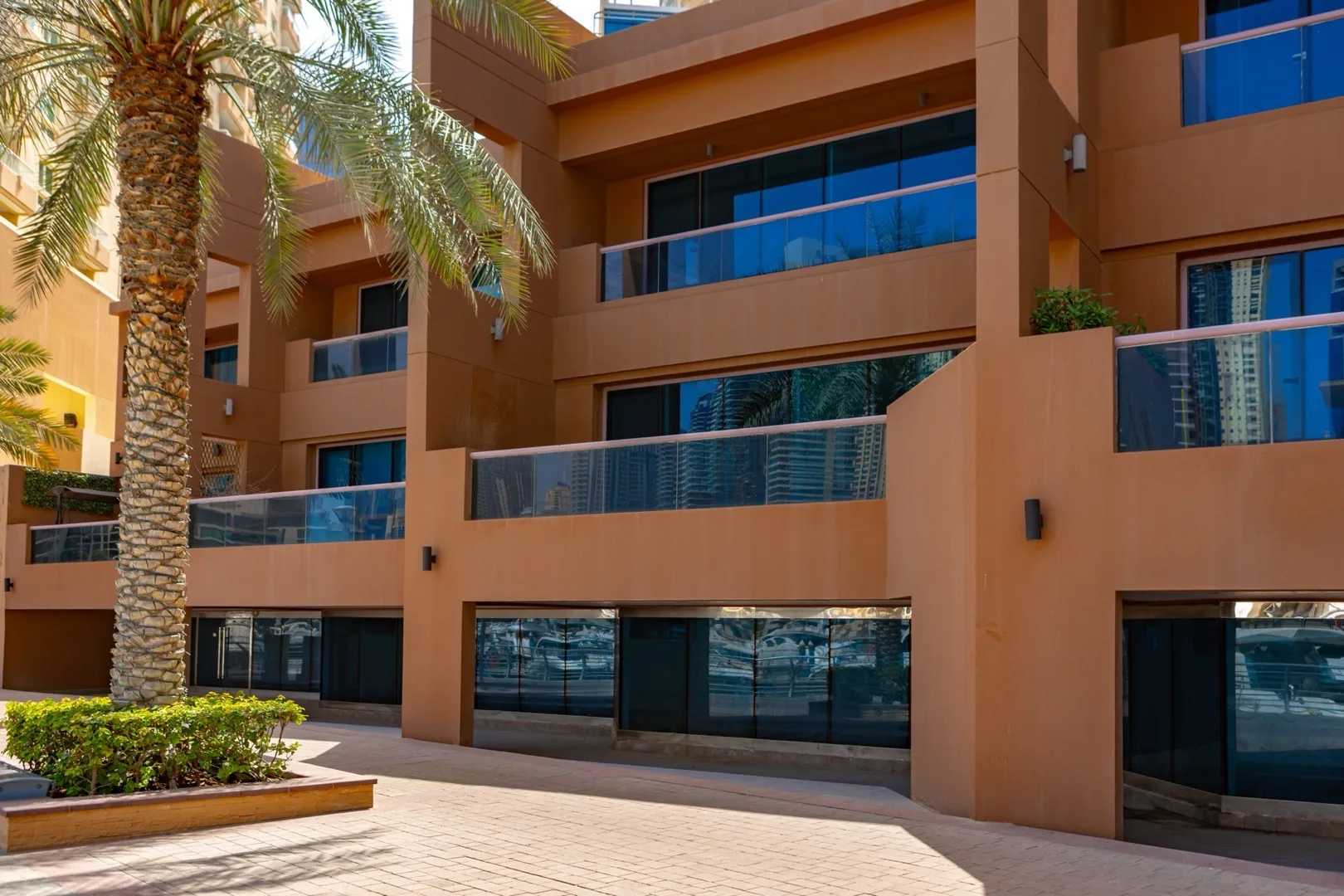

- Arjan is a freehold, apartment-only community in Dubailand, developed by Dubai Properties, sitting at the junction of Sheikh Mohammed Bin Zayed Road (E311) and Umm Suqeim Road (D63) between Al Barsha South and Motor City — no villas, only studios through 3-bed apartments plus serviced units.
- It is home to Dubai Miracle Garden and Dubai Butterfly Garden, two of the emirate's most-visited attractions, sitting inside the community rather than merely nearby.
- Indicative 2026 entry prices: studios from roughly AED 589,000, one-beds from about AED 860,000, two-beds from around AED 1.15 million, three-beds from close to AED 1.85 million, per Bayut and Property Finder listing data.
- Gross rental yields tracked across DLD-linked rental-index data run roughly 7–8.5% for studios and one-beds, moderating to about 6.5–7.5% for two-beds and 6–7% for three-beds — among the stronger mid-market yield bands in Dubai, though always underwrite net, not gross.
- The real story in 2026 is supply, not demand. Bayut alone lists 54 active off-plan projects in Arjan with handovers stretching from Q4 2026 to Q1 2029 — a genuinely heavy pipeline that will keep pressuring both resale prices and achievable rents in a mainstream market that Cavendish Maxwell already shows falling 13.9–15.7% y/y in H1 2026.
- Service charges typically run AED 10–18 per sqft a year depending on the building's age and amenity load — always confirm the specific tower's Mollak-registered figure before you offer.
- Best fit: yield-focused investors comfortable with smaller units and tenant turnover, and first-time buyers priced out of neighbouring JVC — not families wanting villas or a single, cohesive master-planned identity.
Arjan does not have a beach, a golf course or a canal view. What it has is a freehold apartment market priced well below most of central Dubai, a metro-adjacent commute to Internet City and Media City, and two of the emirate's biggest tourist draws sitting inside its own boundary. That combination has made Arjan a fixture on every "best affordable Dubai area" shortlist for several years — but 2026 is not 2023. Dubai's mainstream market has turned, off-plan supply keeps landing in Arjan faster than almost anywhere else, and a buyer who skips the supply-side risk is not getting the full picture. This guide sets out what a buyer or renter actually pays here in 2026, what the numbers really support once you account for the pipeline, and who the area genuinely suits. Last updated: July 2026.
Where Arjan Is and What It Actually Is
Arjan sits in Dubailand, positioned between Al Barsha South and Motor City, at the junction of Sheikh Mohammed Bin Zayed Road (E311) and Umm Suqeim Road (D63), according to Bayut's area guide. That junction is the whole reason the area exists in its current form: it puts residents within a short drive of Mall of the Emirates, Dubai Hills, Motor City and Dubai Science Park, while Sheikh Mohammed Bin Zayed Road runs the length of Dubai's inland growth corridor and Umm Suqeim Road connects directly toward the coast.
The community was developed by Dubai Properties and is described by Property Finder as having launched in the mid-2000s, built out as a "mixed-use community featuring residential, commercial, and recreational spaces." It is a fully freehold area open to foreign ownership, and — unlike Barsha Heights or Al Barsha, which mix freehold and leasehold building by building — that freehold status applies across the community, though buyers should still confirm title status on any specific off-plan project before paying a deposit. Arjan is strictly an apartment and serviced-apartment market: studios through three-bedroom units ranging roughly 400–1,500 sq ft, in low- to mid-rise buildings with fitted kitchens, balconies and shared pool/gym amenities. There is no villa stock here, and buyers wanting one should look elsewhere in Dubailand or toward Arabian Ranches and Dubai Hills Estate.
Dubai Miracle Garden and Butterfly Garden: Arjan's Landmark Neighbours
The single fact that separates Arjan from every other affordable Dubai community is that Dubai Miracle Garden and Dubai Butterfly Garden both sit inside it, not merely nearby. Miracle Garden covers more than 72,000 sq m and displays upward of 150 million flowers across 120 varieties, and holds several Guinness World Records — including the world's largest vertical garden (2013), the biggest flower structure in the world (an Airbus A380 replica built from over 500,000 fresh flowers and live plants), and the tallest topiary-supported sculpture, an 18-metre, roughly 35-tonne Mickey Mouse. The adjoining Dubai Butterfly Garden houses more than 15,000 butterflies across 50-plus species inside ten climate-controlled domes, open daily.
For residents this is more than a curiosity. The gardens draw heavy seasonal footfall (Miracle Garden typically operates only during Dubai's cooler months), which brings weekend traffic and parking pressure to the immediate roads around it but also anchors a level of retail, food and beverage and general amenity investment that a purely residential Dubailand community would not otherwise attract. It is also, practically, a genuine lifestyle perk for anyone who actually lives in Arjan — walking distance to one of the most-photographed attractions in the UAE is not something Barsha Heights, JVC or Dubai Silicon Oasis can offer.
Sale Prices by Unit Type
Arjan pricing spans a wide range depending on building age, floor and finish quality — 2026 listings show buildings barely five years old sitting alongside brand-new handovers, with asking prices moving accordingly. The figures below represent typical entry-level pricing for the segment rather than a single average.
| Unit type | Typical sale price from (AED) | Approx. USD | Typical annual rent (AED) |
|---|---|---|---|
| Studio | ~589,000 | ~$160,400 | ~48,000–53,000 |
| 1 bedroom | ~860,000 | ~$234,100 | ~80,000 |
| 2 bedrooms | ~1,150,000 | ~$313,100 | ~115,000 |
| 3 bedrooms | ~1,850,000 | ~$503,700 | ~144,000–170,000 |
Sale prices are typical entry-level figures drawn from Property Finder's Arjan listings and Bayut, mid-2026; rents per Property Finder's Arjan area-insights averages. Both move with building age, floor and view — treat these as a starting point for negotiation, not a valuation.
Price per square foot across Arjan's listed stock runs roughly AED 1,050–2,000, with older, smaller studios often quoting the highest per-sqft rates and larger three-bed units the lowest, per Property Finder listing data. Several DLD-transaction-linked market trackers put Arjan's average sale price at somewhere around AED 1,300–1,400 per sq ft in early 2026 — roughly 30% below Dubai's citywide average — which is broadly consistent with the raw listing spread above and confirms Arjan's positioning as a genuine value entry point rather than a premium one.
Rents by Building: What Tenants Actually Pay
Area averages hide a lot of building-to-building variation. Property Finder's own data on named Arjan towers shows exactly how wide that spread can be even for comparable unit types:
| Building | Studio (AED/yr) | 1 bedroom (AED/yr) | 2 bedrooms (AED/yr) |
|---|---|---|---|
| Lincoln Park | ~46,000 | ~64,000 | ~80,000 |
| Miraclz Tower by Danube | ~43,000 | ~64,000 | ~98,000 |
| Jewelz by Danube | ~50,000 | ~72,000 | ~96,000 |
| Orion Building | ~39,000 | ~59,000 | ~80,000 |
Per Property Finder's Arjan area-insights building comparisons, mid-2026. Rents in a specific unit will also depend on floor, view, furnishing status and whether service charges are chiller-free.
The spread between Orion Building's studio at roughly AED 39,000 and Jewelz's at roughly AED 50,000 — a near-30% gap for the same unit type in the same community — is the clearest illustration of why an area-wide "average rent" is only a starting point. Always pull comparables for the specific building, not the community, before setting an asking rent or underwriting a purchase.
Rental Yields: What the Numbers Actually Support
Gross rental yield — annual rent divided by purchase price — is the number most often quoted for Arjan, and it is a genuinely strong one by Dubai standards. Running the entry-level prices and typical rents from the tables above, and cross-checked against DLD Rental Index-linked market data, gross yields in Arjan run roughly 7–8.5% for studios and one-beds, moderating to about 6.5–7.5% for two-beds and 6–7% for three-beds. That places Arjan comfortably above the citywide apartment average, which has generally sat closer to 6–7% gross across Dubai in 2026, and in the same competitive tier as JVC and Dubai Silicon Oasis — see our dedicated comparison of JVC vs Arjan vs Dubai Silicon Oasis yields for the head-to-head numbers across all three.
The caveat that matters most here is the same one that applies everywhere in Dubai's affordable-apartment tier: gross yield is not net yield. Service charges (see below), void periods between tenants, agency and renewal fees, and maintenance all erode the headline number — typically by 1.5 to 2.5 percentage points, per the pattern seen consistently across comparable mid-market Dubai communities. Run your own numbers on the specific unit, not the area average, using our long-term rental yield calculator before you commit.
An investor is offered an Arjan studio at AED 620,000 in a mid-vintage tower near Miracle Garden. Comparable studios in the same building are renting on Property Finder at AED 46,000–52,000 a year. At the midpoint (AED 49,000), that is a gross yield of about 7.9% — in line with the area's typical band. After a service charge of roughly AED 8,000–9,000 on a 475 sq ft unit (at AED 17–19/sqft, toward the upper end of Arjan's range), a typical agency and renewal cost, and a modest vacancy allowance, the realistic net yield lands closer to 5.5–6.5%. That is still a solid return relative to Dubai's citywide apartment average, but well short of the 7.9% headline — and it assumes rents hold, which is not guaranteed given the volume of new supply landing in the area (see below).
The Off-Plan Pipeline: Arjan's Real Risk in 2026
This is the section that matters most for anyone weighing an Arjan purchase in 2026, and it is where cheerleading area guides tend to go quiet. Arjan is not a finished community — it is one of the most active off-plan construction zones in Dubai. Bayut's new-projects listing for Arjan shows 54 active off-plan developments in the community as of this writing, from more than two dozen different developers, with handovers scheduled from Q4 2026 through Q1 2029. Entry prices on these launches mostly cluster in the AED 555,000–980,000 band for studio- and one-bed-led buildings — Binghatti Hillcrest from around AED 700,000 (Q4 2026), The Central Downtown by Aqua Developments from AED 555,000–600,000 (Q1 2028), Trinity by Karma from around AED 900,000 (Q4 2026), Rose Gardens 3 from around AED 1.1 million (Q4 2026) — meaning new, competing stock is landing in almost every price bracket this guide covers, continuously, for the next three years.
That matters because Dubai's mainstream market has already turned. Cavendish Maxwell's H1 2026 data shows residential transaction volumes down 13.9% year-on-year and values down 15.7% y/y, and Knight Frank has described 2026 as a "two-speed market" — record ultra-prime sales alongside mainstream prices falling an estimated 5–20% depending on location. Rents are softening too: AGBI reported new-lease volumes down 20% and the average new tenancy down 6% y/y to roughly AED 60,000 as of mid-2026. Arjan is squarely mainstream, not prime, and it is one of the areas absorbing the heaviest share of new off-plan handovers anywhere in Dubai. A steady flow of 54-plus new buildings competing for the same tenant pool and the same resale buyers is a genuine headwind for both rental growth and capital appreciation here — not a reason to avoid the area outright, but a reason to buy on realistic, conservative numbers rather than the best-case yield someone quotes you on a launch day.
There is a partial offset worth naming honestly: citywide, Khaleej Times reported in April 2026 that roughly 71.45% of Dubai's off-plan pipeline through 2029 was already sold, with 2026's own scheduled deliveries (43,217 units) already 94.91% sold — so this is not simply supply arriving into an empty market with no buyers. But "already sold" is not the same as "already occupied and cash-flowing" — a large share of that inventory belongs to investors who will be trying to rent or resell into the same softening market described above. For the wider citywide picture on where supply risk is most concentrated, see our analysis of which Dubai areas face oversupply risk in the 2026–2027 delivery wave, and if you already hold or are considering an off-plan unit here, our guide to off-plan handover delays and developer track records covers what buyers can realistically do if a project slips.
A buyer comparing a ready one-bed resale at AED 860,000 (renting today at roughly AED 80,000) against an off-plan one-bed launching at AED 774,999 with a 20/50/30 plan and a Q4 2026 handover faces a genuinely different risk profile, not just a price difference. The resale unit has a known rent history and an immediate, verifiable yield. The off-plan unit is competing against dozens of similar launches for the same 2026–2027 handover window, meaning the rent it actually achieves on completion could sit meaningfully below today's average if the pipeline lands faster than tenant demand grows. Neither choice is wrong, but the off-plan buyer should discount the advertised "expected yield" by a margin for supply risk — treating the headline figure as a ceiling, not a floor.
Free Weekly Insights
Get Dubai Market Updates in Your Inbox
Expert analysis, market data, and practical tips — trusted by Dubai professionals.
✓ You're in! Check your inbox.
Service Charges and Ongoing Costs
Service charges in Arjan typically run AED 10–18 per sq ft per year, varying with building age, amenity load and management company — the same wide range you would expect from a community built out over nearly two decades by dozens of different developers. Buildings with basic amenities (pool, gym, no chiller-free cooling) tend to sit toward the lower end; newer, amenity-heavy towers with elevated facilities sit higher. Published per-building rates are managed through the Dubai Land Department's Mollak system rather than a single area-wide figure, so the only reliable way to underwrite a specific purchase is to pull that unit's actual Mollak service-charge history before making an offer. Confirm chiller-free versus chiller-paid status too — it materially changes the true annual cost of ownership on top of the headline service-charge rate. For the mechanics of how the system works, see our guide to the Mollak service-charge transparency system.
Schools, Nurseries and Family Amenities
Arjan is not marketed as a family-first community in the way Dubai Hills Estate or Arabian Ranches are, but there are established schooling options within reach, per Bayut: Safa Community School, Dubai Heights Academy, Brighton College Dubai, Repton School and Nord Anglia International School all sit close enough to be realistic options for Arjan residents, alongside nurseries serving the surrounding Dubailand and Al Barsha South catchment. Healthcare is covered by HMC Medical Centre and Right Health Karama Medical Centre on the clinic side, with Life Pharmacy and Aster Pharmacy branches for everyday needs. This is enough infrastructure for a young family on a budget, but it is not the single-community, walk-to-school setup that a purpose-built master plan offers — worth weighing against the lower entry price if schooling proximity is a priority.
Getting Around: Roads, Metro and the 2026 Upgrade
Arjan's location at the junction of Sheikh Mohammed Bin Zayed Road and Umm Suqeim Road gives it fast access across Dubailand and toward the coast, and the Dubai Internet City metro station on the Red Line is reachable in around 12 minutes by car, per Bayut, supplemented by the RTA bus network. Road capacity in the wider corridor improved materially in April 2026: the RTA's Hessa Street upgrade — a 4.5-kilometre widening between Sheikh Zayed Road and Al Khail Road from two to four lanes each way — doubled capacity on that stretch from 8,000 to 16,000 vehicles per hour and cut travel time from around 15 minutes to about 4 minutes, per Gulf News. Arjan is named directly among the beneficiary districts alongside JVC, Dubai Science Park, Al Barsha South, JLT, Jumeirah Islands, Barsha Heights, The Greens and Emirates Hills — a genuinely useful, RTA-confirmed connectivity upgrade rather than a developer marketing claim.
Who Should — and Shouldn't — Buy or Rent in Arjan
Arjan suits yield-focused investors comfortable underwriting smaller units, accepting tenant turnover, and doing building-by-building diligence on service charges and rent comparables rather than relying on an area average. It also suits first-time buyers who have been priced out of neighbouring Jumeirah Village Circle, where entry prices have climbed as the community has matured and filled out — Arjan currently offers a genuinely lower entry ticket for a broadly comparable commute and lifestyle profile. See our full JVC investment guide for the direct price comparison, and our guide to Dubai's best neighbourhoods for young professionals for how Arjan stacks up against similar affordable, connected communities more broadly.
It suits families and buyers wanting long-term capital certainty less well. There is no villa stock, the community lacks a single cohesive master-plan identity — it was built out piecemeal by dozens of developers over nearly two decades and continues to be built out today — and the heavy, ongoing off-plan pipeline described above means both rental growth and resale liquidity are more exposed to new-supply pressure here than in a community closer to build-out completion. Buyers who most value predictability over yield should weigh that trade-off carefully before committing.
How Arjan Fits the Wider Affordable Dubai Map
Geographically and competitively, Arjan sits in the same tier as JVC and Dubai Silicon Oasis — freehold, apartment-led, yield-oriented communities aimed at investors and budget-conscious end-users rather than the villa-and-golf-course buyer. Its differentiators are the Miracle Garden/Butterfly Garden landmark draw and its Sheikh Mohammed Bin Zayed Road/Umm Suqeim Road junction position; its main drawback relative to JVC and DSO is simply how much new stock is still arriving. For the full three-way comparison on price, rent and yield, our JVC vs Arjan vs Dubai Silicon Oasis guide is the right next read. For the broader investment case across Dubai's mid-market, see our Dubai real estate investment guide.
Frequently Asked Questions
Is Arjan freehold?
Yes, Arjan is a fully freehold community open to foreign ownership, developed by Dubai Properties. Always confirm the title status of any specific off-plan project directly with the developer before paying a deposit.
What is the average price of a studio apartment in Arjan?
Entry-level studio pricing in 2026 typically starts from around AED 589,000, per Property Finder and Bayut listing data, though actual prices vary by building age, floor and finish. Always check current listings and recent comparables for the specific building rather than relying on an area-wide figure.
What rental yield can I expect in Arjan?
Gross yields tracked across DLD Rental Index-linked market data run roughly 7–8.5% for studios and one-beds, moderating to about 6.5–7.5% for two-beds and 6–7% for three-beds. After service charges, void periods and management costs, realistic net yields typically land 1.5–2.5 percentage points below those gross figures — underwrite the specific unit, not the area average.
Is Arjan oversupplied?
Arjan is not empty of demand, but it does carry one of Dubai's heavier active off-plan pipelines — 54 listed projects on Bayut alone as of this writing, with handovers through Q4 2026–Q1 2029. Combined with a mainstream Dubai market that Cavendish Maxwell shows falling in H1 2026, that pipeline is a genuine risk to future rental growth and resale liquidity, even though citywide take-up rates on scheduled 2026–2029 supply remain high.
Are there villas in Arjan?
No. Arjan is an apartment and serviced-apartment market exclusively, from studios to three-bedroom units of roughly 400–1,500 sq ft. Buyers wanting villas should look toward other parts of Dubailand, Arabian Ranches or Dubai Hills Estate.
What are Arjan's service charges?
Typically AED 10–18 per sq ft per year, varying by building age and amenity level. Always pull the specific building's Mollak-registered service-charge history before buying rather than relying on this area-wide range.
What is Arjan best known for?
Dubai Miracle Garden and Dubai Butterfly Garden both sit inside the Arjan community — the world's largest flower garden (150 million-plus flowers across 72,000 sq m, several Guinness World Records) and an adjoining butterfly sanctuary housing more than 15,000 butterflies across 50-plus species.
How does Arjan compare to JVC for investors?
Arjan generally offers a lower entry price than JVC for a broadly comparable commute and lifestyle profile, since JVC's stock has matured and prices have risen accordingly, but JVC is closer to build-out completion and carries less ongoing new-supply risk. See our dedicated JVC vs Arjan vs Dubai Silicon Oasis comparison for the full numbers.
Is Arjan connected to the Dubai Metro?
Not directly — there is no metro station inside Arjan itself. The nearest station, Dubai Internet City on the Red Line, is roughly a 12-minute drive away, and the community relies on Sheikh Mohammed Bin Zayed Road and Umm Suqeim Road plus RTA bus routes for connectivity, supported by the April 2026 Hessa Street corridor upgrade.
Read our JVC vs Arjan vs Dubai Silicon Oasis yield comparison for the direct numbers, and run any unit through our rental yield calculator before you offer. Inside the REC community, members who already own in Arjan share real Mollak service-charge figures, building-by-building rent comparables and honest read-outs on which of the area's 50-plus off-plan launches are worth the wait — the detail that decides whether a specific tower is a good buy, not just the area label.
Have Questions?
Get personalized advice from our Dubai real estate team.
Thank You!
We'll get back to you within 24 hours.
Real Estate Agencies in Dubai
Explore providers from our business directory
Still have questions?
Ask a follow-up, or get connected with a vetted Dubai professional.
Join our Telegram channel
Handover alerts, new launches & DLD data — first, in real time.