Dubai Rent Map 2026: Which Areas Are Getting More Expensive and Which Are Finally Cooling

- Dubai's overall rental market has shifted from double-digit growth (12–18% in 2023–2024) to single-digit increases (5–8% in 2026), though prime waterfront areas remain exceptions.
- Downtown, Palm Jumeirah, Dubai Marina, and Bluewaters continue to see 10–15% annual rent increases driven by limited supply and premium demand.
- Mid-market areas like JLT, Business Bay, and DIFC are stabilising as thousands of new units enter the market.
- Outer areas — JVC, Dubai South, Dubailand — are experiencing rent cooling (some down 3–7%) due to significant oversupply.
- Hidden value picks: Al Furjan, Mirdif, and Dubai Silicon Oasis offer quality living at 20–35% below comparable areas.
- The Smart Rental Index remains your strongest legal tool against above-market rent increases.
Dubai Rental Market Overview: From Double-Digit to Single-Digit Growth
Between 2022 and 2024, Dubai experienced one of the most aggressive rental cycles in its history. Average rents across the emirate surged between 12% and 18% annually, driven by a perfect storm of post-pandemic demand, population growth, and limited new supply in established communities. Tenants who had enjoyed years of stable or declining rents suddenly found themselves facing renewal notices with eye-watering increases.
By early 2026, the picture has shifted. According to data from the Dubai Land Department (DLD) and REIDIN, city-wide average rental growth has decelerated to between 5% and 8% year-on-year. This is not a crash — it is a normalisation. Dubai's rental market is transitioning from a landlord-dominated cycle into a more balanced environment where supply, location, and unit quality increasingly determine who holds the negotiating power.
But averages are misleading. The reality on the ground is far more nuanced. Some areas are still surging. Others have plateaued. And a handful are actively correcting downward. If you are a tenant deciding whether to renew or relocate, or an investor evaluating rental yield potential, understanding this area-by-area divergence is critical.
This guide breaks down every major residential area in Dubai, backed by the latest DLD Ejari data, Property Monitor analytics, and Bayut rental listing trends. We will show you exactly where rents are rising, where they are stabilising, and where you can find genuine value in 2026.
The Heat Map: Areas Where Rents Are Still Rising Fast
Not every area in Dubai has joined the cooling trend. Several premium locations continue to defy the slowdown, posting double-digit annual rent increases well into 2026. These areas share common characteristics: severe supply constraints, trophy locations with waterfront or skyline views, and persistent demand from high-net-worth tenants who are relatively price-insensitive.
Downtown Dubai
Downtown remains the most expensive rental address in the emirate for apartments. Average rents for a two-bedroom apartment in Burj Khalifa or Boulevard-facing buildings have crossed AED 200,000 per year, representing a 12–14% increase compared to early 2025. There are virtually no new towers under construction in the core Downtown area — the master community is built out. Every unit that becomes available is absorbed almost immediately, often by corporate tenants or newly arrived executives on relocation packages.
Studios in Downtown now average AED 75,000–95,000, while one-bedroom units command AED 110,000–160,000. For families seeking three-bedroom apartments, expect to budget AED 280,000–400,000 depending on the tower and floor level.
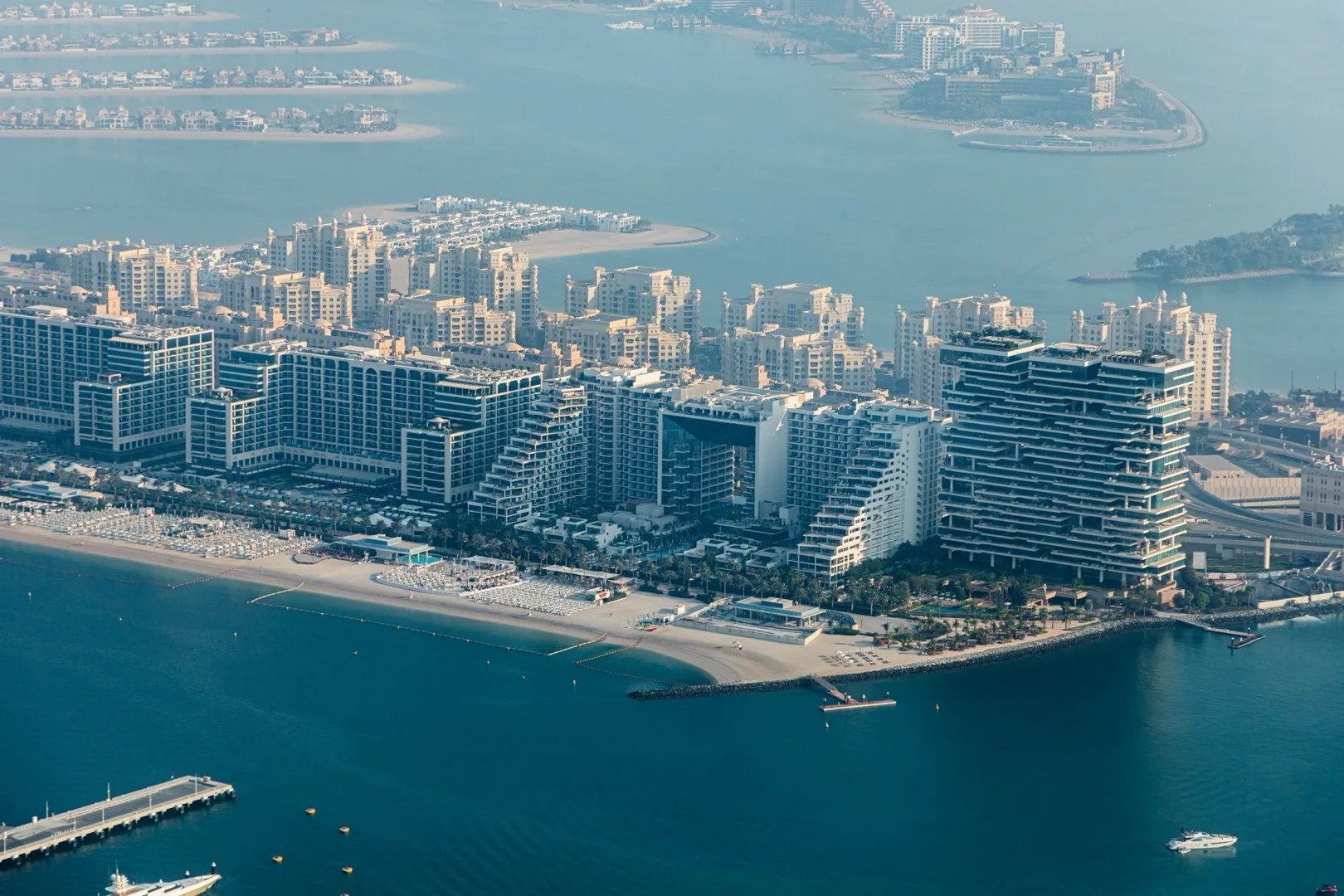
Palm Jumeirah
Palm Jumeirah continues its ascent as Dubai's most premium residential address. Villa rents on the fronds have breached AED 700,000 per year, with signature beachfront properties exceeding AED 1 million. Apartment rents in towers like Tiara, Shoreline, and The 8 have increased 11–13% year-on-year. The limited land area and iconic address ensure that demand perpetually outstrips supply. Recent infrastructure improvements, including enhanced beach access and the Nakheel Mall expansion, have only strengthened the area's appeal.
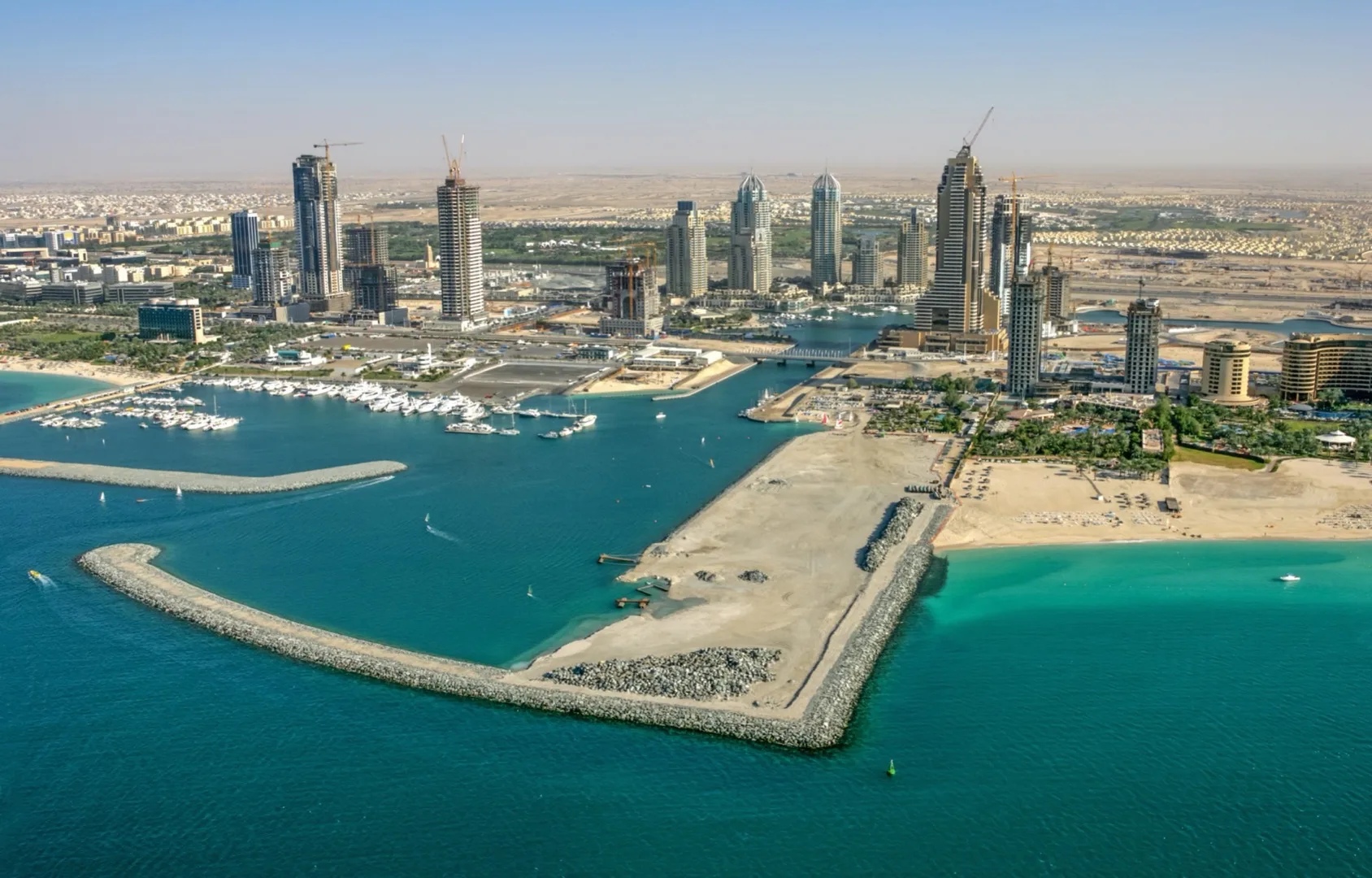
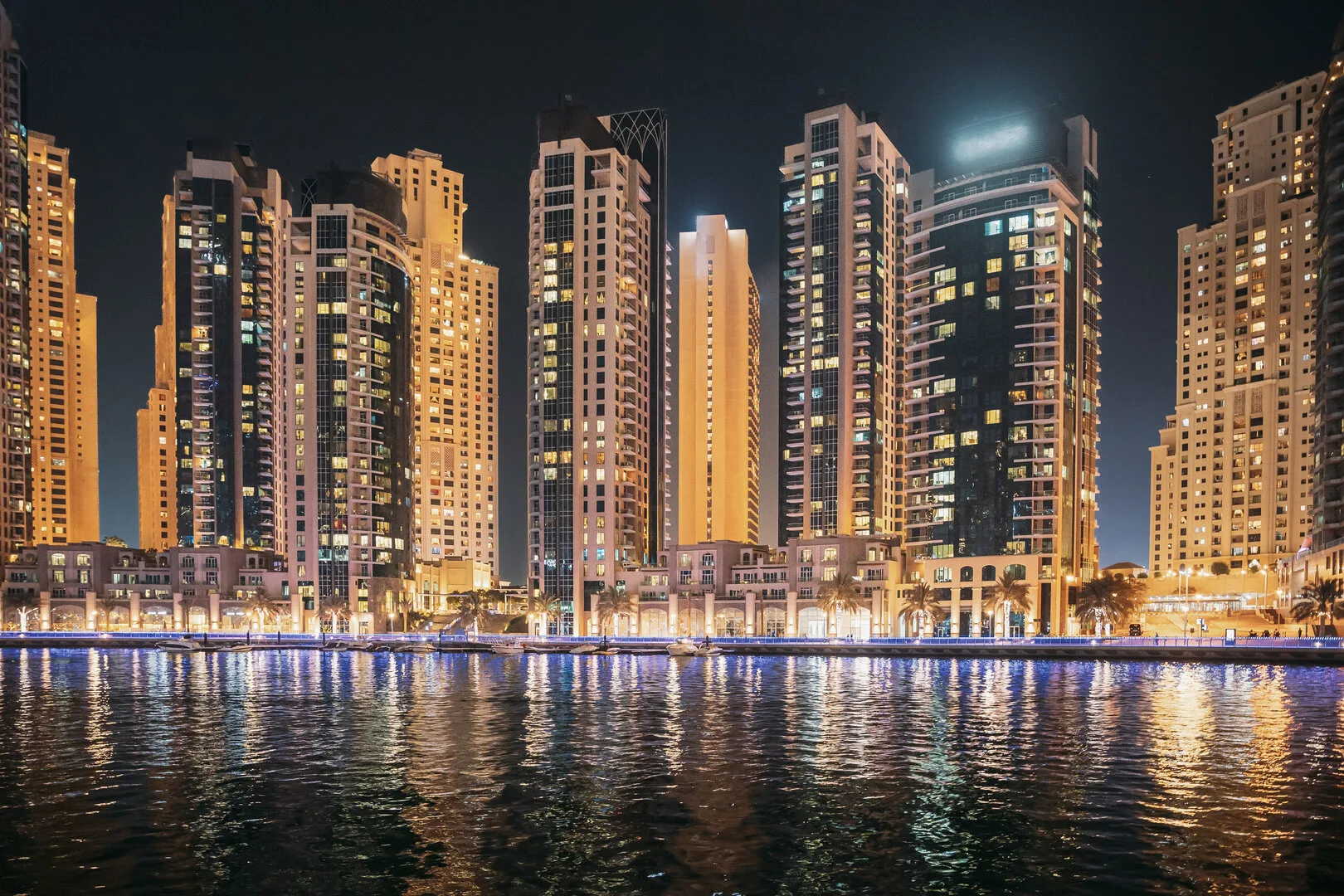
Dubai Marina
Dubai Marina remains one of Dubai's most in-demand rental communities, with rents up 10–12% since last year. The combination of waterfront living, walkability, tram access, and proximity to JBR Beach creates a lifestyle proposition that mid-market areas simply cannot replicate. One-bedroom apartments in premium towers (Cayan, Princess, Marina Gate) now command AED 100,000–130,000, while two-bedrooms range from AED 140,000–200,000. Marina's rental growth is further supported by its popularity with short-term rental operators, which reduces the long-term rental supply pool.
Bluewaters Island
Bluewaters has emerged as a premium micro-community with rents climbing 13–15% annually. The island's exclusivity — only a few residential buildings — combined with Ain Dubai and beachfront access make it highly sought after. One-bedroom apartments now start at AED 120,000, with two-bedrooms reaching AED 180,000–220,000. Supply is permanently fixed, making this one of the most supply-constrained locations in Dubai.
Stabilising Areas: JLT, Business Bay, and DIFC
The middle tier of Dubai's rental market tells a different story. These areas experienced rapid rent escalation during 2023–2024 but are now seeing growth flatten to 2–5% as significant new supply enters the market.
Jumeirah Lake Towers (JLT)
JLT has long been Dubai Marina's more affordable neighbour, attracting tenants who want the lakeside lifestyle without Marina-level pricing. After rents jumped nearly 20% during 2023, the growth rate has slowed to approximately 3–4% in 2026. Several factors explain this stabilisation: new tower completions in the surrounding Jumeirah Islands and Dubai Marina periphery are providing alternatives, and some tenants who were priced out of JLT during the boom have not returned. Studios now range from AED 45,000–60,000, one-bedrooms from AED 65,000–85,000, and two-bedrooms from AED 90,000–120,000.
Business Bay
Business Bay is perhaps the most significant stabilisation story in Dubai. The area saw explosive rent growth during 2023–2024, driven by its central location and relative value compared to Downtown. However, Business Bay has the largest residential supply pipeline in Dubai — over 15,000 units are expected to be delivered between 2025 and 2027. This wave of new inventory is beginning to temper rental increases, with current growth at approximately 3–5%. Some newer buildings are already offering one or two months free to attract tenants, a concession that would have been unthinkable 18 months ago.
DIFC and Surrounds
The Dubai International Financial Centre and its surrounding residential towers have stabilised at approximately 2–4% annual growth. The area's appeal to finance professionals remains strong, but the completion of several new towers along Sheikh Zayed Road and in adjacent Business Bay provides sufficient alternatives to prevent further aggressive increases. Premium one-bedroom apartments in DIFC Gate buildings average AED 110,000–140,000, while standard options in surrounding towers are available from AED 80,000–100,000.
Areas Where Rents Are Cooling: The Oversupply Effect
For the first time since 2020, several Dubai communities are experiencing genuine rent declines. These corrections are almost exclusively driven by one factor: new supply outpacing demand absorption. For tenants, these areas represent the best value opportunities in the current market.
Jumeirah Village Circle (JVC)
JVC is Dubai's highest-volume residential community by unit count, and it is feeling the effects of years of developer enthusiasm. Thousands of new apartments have been delivered since 2024, and thousands more are in the pipeline. Average rents have declined 3–5% from their 2025 peaks. Studios that were renting for AED 45,000 a year ago are now available at AED 40,000–42,000. One-bedroom apartments have dropped from AED 65,000 to AED 58,000–62,000 on average. The silver lining for tenants is that quality has improved — newer buildings in JVC offer significantly better finishes, amenities, and layouts than the older stock.
Dubai South
The area surrounding Al Maktoum International Airport continues to suffer from a supply-demand imbalance. While the long-term vision for Dubai South is compelling — the new airport expansion, Expo City legacy, and logistics hub — residential demand has not kept pace with the volume of apartments and townhouses delivered. Rents have declined 5–7% year-on-year. Studios are available from AED 25,000–30,000, and one-bedrooms from AED 35,000–45,000. For tenants willing to accept a longer commute, the value proposition is remarkable, but the area still lacks the retail, dining, and community infrastructure that more established areas offer.
Dubailand and Adjacent Communities
The broader Dubailand corridor — including communities like Arjan, Liwan, and parts of Dubai Sports City — is experiencing similar cooling dynamics. Rent declines of 3–6% are common across these areas. The primary driver is simple arithmetic: the number of completed units has grown faster than the tenant population in these locations. Many buildings are offering two months free on annual contracts, effectively reducing the true rental cost by an additional 15–17%.
Hidden Value Areas: Where Smart Tenants Are Moving
Beyond the headline areas, several Dubai communities offer exceptional value — quality living at 20–35% below comparable locations. These "hidden value" areas are attracting an increasing number of savvy tenants who prioritise space, community, and lifestyle over postcode prestige.
Al Furjan
Al Furjan has quietly become one of Dubai's best-value communities. Located between Discovery Gardens and the Jebel Ali Expo area, it offers a mix of villas, townhouses, and mid-rise apartments. Two-bedroom apartments are available from AED 70,000–85,000 — roughly 30% below equivalent units in JLT or Business Bay. The area benefits from Metro access (Route 2020), a well-established retail strip, and excellent road connectivity to both Dubai Marina and Downtown. Villa rents start at AED 120,000 for three-bedroom units, making it one of the most affordable villa communities within a 20-minute drive of central Dubai.
Mirdif
Mirdif remains the quintessential family neighbourhood in Dubai. Its low-rise villa and apartment community, anchored by City Centre Mirdif, offers a suburban lifestyle that is increasingly rare in the emirate. Three-bedroom villas are available from AED 100,000–130,000, while spacious two-bedroom apartments in developments like Ghoroob and Shorooq start at AED 65,000. Mirdif's proximity to Dubai International Airport, established schools, and parks makes it particularly popular with families who have relocated from Deira and Bur Dubai. Rents here have been stable, growing just 1–2% annually, offering predictability that tenants in more volatile areas cannot count on.
Dubai Silicon Oasis (DSO)
DSO is a self-contained technology park and residential community that consistently punches above its weight in terms of value. Studios are available from AED 28,000–35,000, one-bedrooms from AED 40,000–50,000, and two-bedrooms from AED 55,000–70,000. The area's tech-focused tenant base, established supermarkets and schools, and direct access to the Academic City corridor make it a solid choice for young professionals and small families. Rents are flat to slightly declining (0–2%), giving tenants maximum negotiating power.
Apartment Rents by Area: Studio, 1BR, 2BR, 3BR
The following table provides a comprehensive snapshot of average annual apartment rents across 15 major Dubai communities as of Q1 2026. Data is sourced from DLD Ejari registrations, REIDIN, and Bayut listed-price analysis. All figures are in AED per year.
| Area | Studio | 1BR | 2BR | 3BR |
|---|---|---|---|---|
| Downtown Dubai | 75K–95K | 110K–160K | 170K–250K | 280K–400K |
| Palm Jumeirah | 70K–90K | 100K–150K | 160K–240K | 250K–380K |
| Dubai Marina | 55K–75K | 100K–130K | 140K–200K | 220K–300K |
| Bluewaters Island | 65K–80K | 120K–150K | 180K–220K | 260K–320K |
| Business Bay | 45K–65K | 70K–100K | 100K–150K | 160K–230K |
| DIFC | 60K–80K | 80K–140K | 130K–200K | 200K–300K |
| JLT | 45K–60K | 65K–85K | 90K–120K | 130K–170K |
| JBR | 55K–75K | 90K–120K | 130K–180K | 200K–270K |
| JVC | 30K–42K | 50K–65K | 70K–90K | 100K–130K |
| Al Furjan | 32K–42K | 50K–65K | 70K–85K | 95K–120K |
| Dubai Silicon Oasis | 28K–35K | 40K–50K | 55K–70K | 80K–100K |
| Mirdif | 30K–38K | 42K–55K | 60K–75K | 85K–110K |
| Dubai South | 25K–30K | 35K–45K | 50K–65K | 75K–95K |
| Dubailand / Arjan | 28K–36K | 38K–50K | 55K–72K | 80K–105K |
| Dubai Sports City | 26K–34K | 38K–48K | 52K–68K | 75K–95K |
Note: Figures represent typical annual rent ranges. Actual rents vary by tower, floor, view, furnishing status, and lease terms. Premium units within any area may exceed the ranges shown.
Villa and Townhouse Rents by Area
The villa market tells its own story. Unlike apartments, where oversupply is becoming a factor in several areas, villa supply remains constrained in most established communities. This has kept villa rents more resilient overall, though pockets of cooling are emerging in newer, more peripheral developments.
| Area | 3BR Villa/TH | 4BR Villa/TH | 5BR+ Villa | YoY Change |
|---|---|---|---|---|
| Palm Jumeirah | 450K–600K | 600K–850K | 850K–1.5M | +12–15% |
| Emirates Hills | — | 500K–700K | 700K–1.2M | +8–10% |
| Arabian Ranches | 180K–230K | 230K–300K | 300K–420K | +6–8% |
| Dubai Hills Estate | 200K–260K | 260K–350K | 350K–500K | +5–7% |
| DAMAC Hills | 130K–170K | 170K–220K | 220K–300K | +2–4% |
| Jumeirah (Beach-side) | 200K–280K | 280K–400K | 400K–650K | +7–9% |
| Al Furjan | 120K–150K | 150K–190K | 190K–240K | +1–3% |
| Mirdif | 100K–130K | 130K–170K | 170K–220K | +1–2% |
| Villanova / Dubai South | 110K–140K | 140K–180K | 180K–230K | -2–4% |
The villa market's resilience is particularly notable in established communities like Arabian Ranches and Dubai Hills Estate, where the combination of school proximity, landscaped parks, and community infrastructure creates sticky demand that insulates against broader market fluctuations.
Following the Market?
Get Market Data in Your Inbox
DLD transaction data, price trends, and quarterly forecasts — before everyone else.
✓ You're in! Check your inbox.
Year-on-Year Rent Change by Area
To give you a clear picture of the directional trend for each area, the table below summarises year-on-year rent changes as of Q1 2026, along with a trend indicator. This data is invaluable for understanding not just where rents are today, but where they are heading.
| Area | YoY Rent Change | Trend | Key Driver |
|---|---|---|---|
| Downtown Dubai | +12–14% | Rising | Zero new supply, trophy location |
| Palm Jumeirah | +11–13% | Rising | Fixed land supply, ultra-premium demand |
| Dubai Marina | +10–12% | Rising | Lifestyle demand, short-term rental drain |
| Bluewaters Island | +13–15% | Rising | Micro-supply, island exclusivity |
| JBR | +8–10% | Rising | Beachfront premium, tourist area |
| Business Bay | +3–5% | Stabilising | Massive new supply pipeline |
| JLT | +3–4% | Stabilising | Tenants moving to alternatives |
| DIFC | +2–4% | Stabilising | New tower completions nearby |
| Al Furjan | +1–3% | Stable | Value discovery, Metro access |
| Mirdif | +1–2% | Stable | Established family community |
| DSO | 0 to -2% | Cooling | New completions, value cap reached |
| JVC | -3 to -5% | Cooling | Significant oversupply |
| Dubai South | -5 to -7% | Cooling | Supply-demand mismatch |
| Dubailand / Arjan | -3 to -6% | Cooling | Oversupply, free-month offers |
| Dubai Sports City | -2 to -4% | Cooling | Competition from newer communities |
The New Supply Effect: Which Areas See the Most Deliveries in 2026
Supply is the single most important variable determining whether an area's rents will rise, stabilise, or decline. In 2026, Dubai is expected to see approximately 45,000–50,000 new residential units delivered — the highest annual figure since 2020. However, this supply is not distributed evenly.
| Area | Est. Units (2026) | Current Rent Trend | Expected Impact |
|---|---|---|---|
| Business Bay | 8,000–10,000 | Stabilising | Rents likely to flatten or dip 2–3% |
| JVC / JVT | 6,000–8,000 | Cooling | Further 3–5% decline possible |
| Dubai South / Expo City | 5,000–6,000 | Cooling | Continued downward pressure |
| Dubailand / Arjan / Liwan | 4,000–5,000 | Cooling | Rents to remain under pressure |
| MBR City / District One | 3,000–4,000 | Stabilising | Premium segment absorbs well |
| Dubai Hills Estate | 3,000–3,500 | Rising | Strong demand absorbs new stock |
| Downtown Dubai | <500 | Rising | No meaningful supply relief |
| Palm Jumeirah | <300 | Rising | Continued upward pressure |
The correlation is unmistakable: areas with the least new supply (Downtown, Palm Jumeirah) continue to see the strongest rent growth, while areas absorbing thousands of new units (Business Bay, JVC, Dubai South) are experiencing stabilisation or decline. For tenants, this data should directly inform your relocation decisions. For investors evaluating rental yield by area, understanding the supply pipeline is as important as understanding current rents.
Tenant Negotiation Power: Where Landlords Are Flexible
One of the most practical questions tenants ask is: "Can I negotiate my rent?" The answer depends entirely on where you live and the supply dynamics in your area. Here is a practical breakdown of negotiation power by area type.
Low Negotiation Power (Landlord's Market)
Areas: Downtown Dubai, Palm Jumeirah, Dubai Marina, Bluewaters, JBR, Emirates Hills
In these areas, landlords hold virtually all the cards. Vacancy rates are below 3%, and every departing tenant is typically replaced within days. If you are renewing in one of these communities, your leverage is limited. The best you can hope for is to negotiate the increase down to the RERA-allowed maximum rather than the premium some landlords attempt to charge. Focus on payment terms — negotiating four cheques instead of one or two can be a meaningful win even if the total amount does not change.
Moderate Negotiation Power (Balanced Market)
Areas: JLT, Business Bay, DIFC, Al Barsha, Dubai Hills Estate apartments
These areas offer tenants a reasonable negotiating position. Vacancy rates are typically 5–8%, meaning landlords have some motivation to retain existing tenants rather than risk a vacant period. Practical negotiation strategies include requesting one month free on a new 12-month contract, asking for a 5–8% reduction on the asking rent, or negotiating included maintenance, chiller fees, or additional parking. Having comparable listings from Bayut or Property Finder ready during negotiations strengthens your position significantly.
High Negotiation Power (Tenant's Market)
Areas: JVC, Dubai South, Dubailand, Arjan, Liwan, Dubai Sports City, International City
In these oversupplied communities, tenants have substantial leverage. Vacancy rates exceed 10% in some buildings, and landlords are actively competing for tenants. Strategies that work well include requesting two months free on a 12-month contract, negotiating 10–15% below the listed price, asking for included DEWA deposits or move-in costs, and requesting flexible payment terms (up to 12 cheques). Many landlords in these areas prefer a slightly lower rent with a reliable, long-term tenant over holding out for a higher price that may leave their unit empty for months.
Rent vs Buy Calculation: At What Rent Level Does Buying Make More Sense?
One of the most common questions from long-term Dubai residents is whether it makes more financial sense to continue renting or to buy. The answer depends on several variables, but a simplified framework can guide your thinking.
The "breakeven rent" — the annual rent at which buying becomes financially equivalent — can be calculated using the total cost of ownership. For a property purchased with a mortgage, the annual cost of ownership includes mortgage payments (principal + interest), service charges, maintenance, and opportunity cost on the down payment. For a detailed comparison, see our complete rent vs buy analysis for 2026.
As a general rule of thumb in Dubai's current market:
- If your annual rent exceeds 5.5–6% of the property's purchase price, buying (with a mortgage) likely makes more financial sense over a 7–10 year horizon.
- If your annual rent is below 4.5% of the purchase price, renting remains more economical — you are effectively getting a discount by not bearing ownership costs.
- In the 4.5–5.5% range, the decision becomes lifestyle-driven rather than purely financial.
For example, if you are renting a one-bedroom apartment in Dubai Marina for AED 120,000 per year, and equivalent units are selling for AED 1.8 million, your rent-to-price ratio is 6.7% — suggesting that buying could be a better financial decision if you plan to stay for five or more years. Conversely, if you are renting a studio in JVC for AED 40,000 and purchase prices are AED 550,000, your ratio is 7.3% — even more compelling for buyers.
Smart Rental Index: Your Legal Protection Against Overcharging
Every tenant in Dubai should understand the RERA Smart Rental Index, operated by the Dubai Land Department. This tool is your primary legal protection against above-market rent increases.
The Smart Rental Index calculates whether your current rent is below, at, or above the average market rent for your specific building, unit type, and area. If your rent is already at or above the market average, your landlord cannot legally increase your rent — regardless of what the broader market is doing.
The index uses a tiered system for permitted increases:
- 0–10% below market average: No increase allowed
- 11–20% below market average: Maximum 5% increase
- 21–30% below market average: Maximum 10% increase
- 31–40% below market average: Maximum 15% increase
- More than 40% below market average: Maximum 20% increase
Crucially, landlords must provide 90 days' written notice before any rent increase takes effect. If you receive a notice that you believe is excessive, check the Smart Rental Index calculator on the DLD website, and if the proposed increase exceeds the allowed threshold, you have grounds to dispute it through the Rental Disputes Centre (RDC). For a deeper dive into your legal protections, read our guide on Dubai's latest rental law changes for 2026.
Predictions: Q3–Q4 2026 Rental Outlook
Based on current supply pipelines, population growth data, and macroeconomic indicators, here is what we expect for the second half of 2026:
Prime Areas (Downtown, Palm, Marina, Bluewaters)
Expect continued rent increases of 8–12% through year-end. Supply constraints are structural and will not change in the short term. The only moderating factor would be a significant economic shock or a dramatic shift in visa/residency policy — neither of which is on the horizon. These areas will remain firmly in landlord territory.
Mid-Market Areas (Business Bay, JLT, DIFC, Dubai Hills)
Rents are expected to flatten further, with some buildings in Business Bay potentially tipping into negative territory as the full weight of 2025–2026 completions is felt. JLT and DIFC should remain stable with minimal growth (1–3%). The key watchpoint is Business Bay — if absorption of new units is slower than projected, we could see 3–5% declines in less desirable buildings by Q4 2026.
Outer Areas (JVC, Dubai South, Dubailand, Sports City)
The cooling trend will continue and potentially accelerate. JVC in particular has several thousand additional units expected in H2 2026, which will maintain downward pressure on rents. For tenants, this is the best negotiating environment in years. For investors in these areas, the focus should shift from rent maximisation to occupancy maximisation — a slightly lower rent that keeps the unit occupied is better than holding out for a higher price and absorbing vacancy costs. Our analysis of the Q1 2026 rental market provides additional context on these trends.
Practical Advice: When to Renew vs When to Move
Armed with the data above, here is a decision framework for tenants facing renewal decisions:
Renew If:
- You live in a prime area where rents are rising — moving will likely cost you more at the new location.
- Your current rent is already at or below market average (check the Smart Rental Index).
- Your landlord's proposed increase is within RERA-allowed limits.
- Moving costs (agency fees, moving company, DEWA transfer, new deposit) exceed the annual savings of relocating.
- You have children enrolled in nearby schools — disruption costs are often underestimated.
Move If:
- You live in a stabilising or cooling area and can relocate to a similar or better unit at a meaningfully lower rent.
- Your landlord is demanding an increase above the RERA-permitted threshold and you prefer to avoid a dispute.
- Newer buildings in your area offer significantly better amenities, finishes, or layouts at comparable rents.
- You are currently overpaying relative to the Smart Rental Index and can find a better-priced unit in the same area.
- A change in commute (new job, remote work) makes a different area more practical.
One often-overlooked tip: the best time to negotiate or relocate is during the summer months (June–September). Landlord flexibility peaks during this period as demand naturally dips, and you are more likely to secure favourable terms, free months, or below-market rates. For a broader understanding of current rental trends, our comprehensive 2026 rental market guide covers average rents, tenant rights, and area-by-area trends in detail.
Frequently Asked Questions
Are Dubai rents still increasing in 2026?
Overall, yes — but the rate has slowed significantly. City-wide average rents are growing 5–8% compared to 12–18% in 2023–2024. However, the picture varies dramatically by area: prime waterfront locations continue double-digit growth, mid-market areas are stabilising at 2–5%, and several outer areas are actually declining 3–7%.
Which areas in Dubai have the cheapest rents in 2026?
The most affordable areas include Dubai South (studios from AED 25,000), Dubai Silicon Oasis (studios from AED 28,000), Dubai Sports City (studios from AED 26,000), and Dubailand/Arjan (studios from AED 28,000). These areas also offer the strongest tenant negotiation power, with many landlords offering one to two months free on annual contracts.
Can my landlord increase my rent by more than 10% in Dubai?
Landlords in Dubai are bound by the RERA Smart Rental Index. The maximum allowed increase depends on how far below the market average your current rent is. If your rent is within 10% of the average, no increase is allowed. The maximum possible increase is 20%, and only if your rent is more than 40% below market average. Any increase requires 90 days' written notice.
Is it cheaper to rent or buy in Dubai in 2026?
It depends on the area and your time horizon. If your annual rent exceeds 5.5–6% of the equivalent property's purchase price, buying generally makes more financial sense over 7–10 years. In areas like JVC and DSO, where rent-to-price ratios exceed 7%, buying is particularly compelling. In ultra-premium areas where ratios are closer to 3–4%, renting remains more economical.
What is the best time of year to rent in Dubai?
The summer months (June to September) typically offer the best rental deals. Demand drops as many residents travel, and landlords become more flexible on pricing, payment terms, and free-month offers. Starting your apartment search in May or June gives you the widest selection and strongest negotiating position.
Which Dubai areas will see rent decreases in 2026?
Areas most likely to see continued rent decreases include JVC (-3 to -5%), Dubai South (-5 to -7%), Dubailand/Arjan (-3 to -6%), and Dubai Sports City (-2 to -4%). These declines are driven primarily by oversupply — thousands of new units are being delivered while demand has not kept pace. Tenants in these areas have significant negotiation leverage.
Disclaimer: This article is for informational purposes only and does not constitute financial, legal, or real estate advice. Rental data is based on publicly available sources including DLD Ejari data, REIDIN analytics, Property Monitor reports, and Bayut listing prices as of Q1 2026. Actual rents may vary based on specific unit characteristics, negotiation, and market conditions. Always verify current rental rates through the RERA Smart Rental Index and consult a licensed real estate professional before making rental or purchasing decisions. Real Estate Club Dubai is not responsible for decisions made based on the information provided in this article.
Want a Data-Backed Second Opinion?
Tell us your plans — we'll share what the data says about your timing.
Thank You!
We'll get back to you within 24 hours.
Real Estate Agencies in Dubai
Explore providers from our business directory
Still have questions?
Ask a follow-up, or get connected with a vetted Dubai professional.
Follow us on LinkedIn
Dubai market analysis and industry insight for professionals.