
Quick answer: Dubai's ultra-prime segment — properties transacting above AED 10 million — recorded 2,148 deals in Q1 2026, a 62.6% year-on-year surge that dwarfs the broader market's 22% volume growth over the same period. Total Q1 2026 real estate transaction value reached AED 252 billion, up 31% on 2025, according to the Dubai Land Department. Trophy deals in early 2026 included a penthouse at Aman Residences for AED 422 million — the third most expensive apartment sale in Dubai's history — and a villa on Jumeirah Bay Island closing at AED 330 million. The driver is structural: a global wealth migration wave meeting a physically constrained supply of ultra-prime coastal land.
The Numbers in Context: What the Data Actually Shows
Headlines about Dubai's luxury market have a long history of breathlessness, so it is worth pinning the Q1 2026 data carefully before drawing conclusions.
According to the Dubai Land Department's official Q1 2026 release, the total real estate sector recorded 60,303 transactions worth AED 252 billion — a 31% value increase on Q1 2025, on a 6% volume increase. That divergence between value and volume growth is itself a signal: the market is being driven upward by higher-ticket deals, not just more transactions.
Within that broader picture, Engel & Völkers' Q1 2026 analysis confirmed 2,148 transactions above AED 10 million, a 62.6% year-on-year increase and one of the highest quarterly totals ever recorded in the emirate. The ultra-prime segment — broadly properties above AED 10 million — is growing at nearly three times the speed of the overall market.
Knight Frank's Dubai Residential Market Review provides useful additional context: Dubai closed 500 transactions above USD 10 million (approximately AED 36.7 million) in full-year 2025 alone, generating USD 9.05 billion in ultra-luxury sales value. That puts Dubai in a different category from almost every other city on earth. In 2021, just 113 such transactions above USD 10 million were recorded. By the end of 2025, the count had grown 1,567% over five years from a 2020 base of roughly 30 deals.
| Metric | Q1 2026 | Q1 2025 | YoY Change |
|---|---|---|---|
| Total transactions (all types) | 60,303 | ~56,890 | +6% |
| Total transaction value | AED 252 billion | AED 193 billion | +31% |
| Transactions above AED 10M | 2,148 | ~1,321 | +62.6% |
| Luxury real estate investment (DLD) | AED 87.71 billion | ~AED 69.6 billion | +26% |
| Foreign investment value | AED 148.35 billion | ~AED 117.7 billion | +26% |
| New investors in the market | 29,312 | ~25,710 | +14% |
Sources: Dubai Land Department Q1 2026 official release; Engel & Völkers Q1 2026 Dubai Report. YoY comparison figures are derived from published percentage changes.
For investors who want to understand this data against the full market cycle, see our Q1 2026 Dubai market report and the broader 2026 market outlook.
Trophy Deals: The Headline Transactions
Data tells part of the story. Individual deals tell the rest. Three transactions in Q1 2026 are worth examining in detail because they reveal the specific nature of ultra-prime demand.
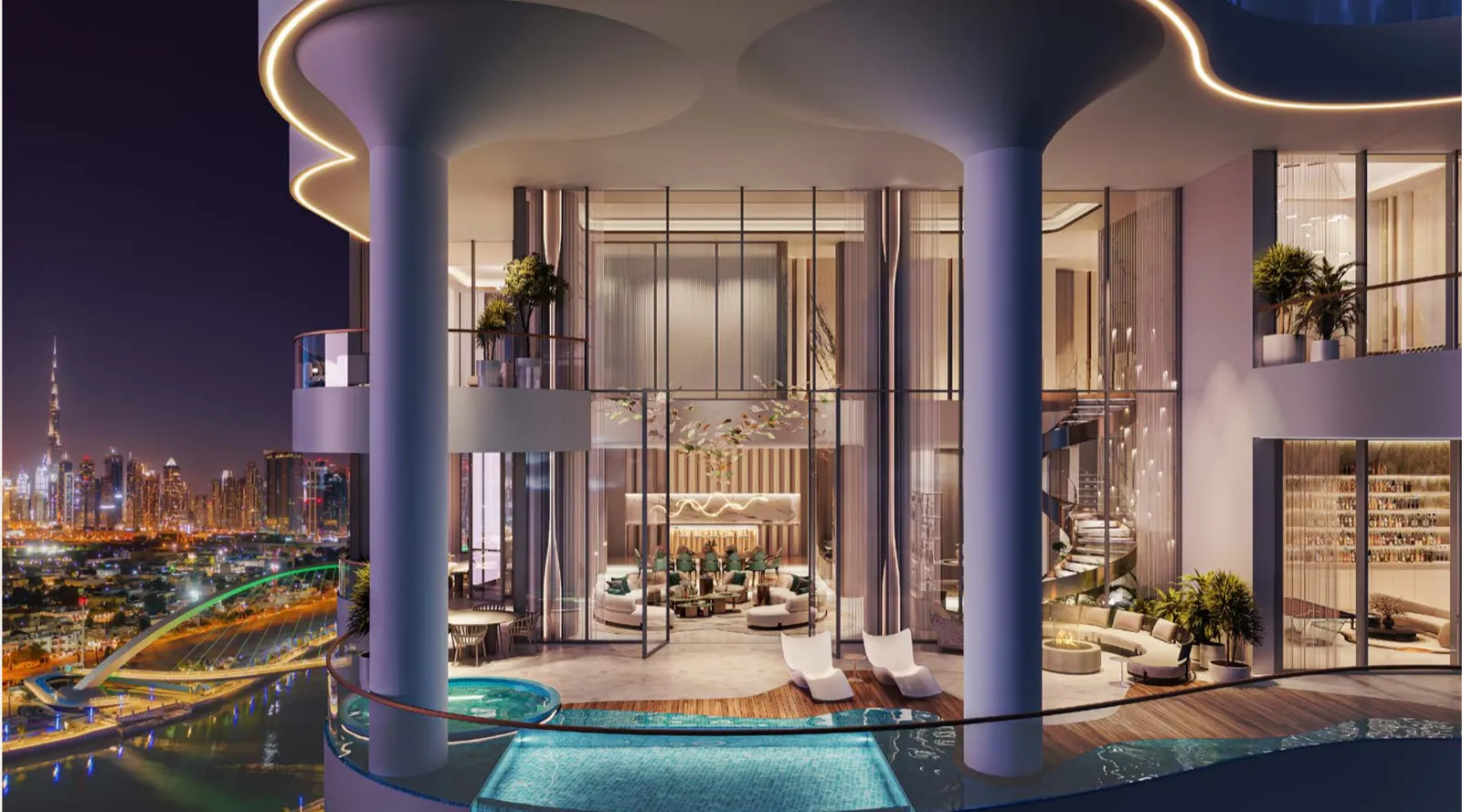
Aman Residences: AED 422 Million Off-Plan Penthouse
In early March 2026, a six-bedroom penthouse spanning approximately 31,200 sq ft at Aman Residences Dubai — located on the Jumeirah Peninsula and developed by H&H Development — transacted at AED 422 million. This placed it third in Dubai's all-time apartment sale records, behind a AED 550 million Bugatti Residences by Binghatti deal in late 2025 and a AED 500 million Como Residences (Nakheel) sale in 2023. The average price per square foot: approximately AED 13,525.
What makes this deal analytically interesting is that it was off-plan — the buyer committed over USD 115 million before construction was complete. That requires a level of conviction in both the developer and the macro environment that is not typical of speculative buyers.
Jumeirah Bay Island Villa: AED 330 Million Record
Dubai Sotheby's International Realty brokered the sale of a custom-built six-bedroom villa on Jumeirah Bay Island — one of only three plots on the island's tip — for AED 330 million, the highest price ever recorded on the island. The previous Jumeirah Bay Island record, also brokered by the same firm, was AED 240.5 million, set in June 2024. That 37% increase in the record price in under two years illustrates the compression of ultra-prime supply.
Jumeirah Asora Bay: AED 350 Million Villa
A villa at Jumeirah Asora Bay — a Meraas waterfront development still under delivery — was recorded at AED 350 million in Q1 2026. That deal, like the Aman transaction, was off-plan, underlining how buyers at this price point are willing to pay a premium for branded, curated product before it delivers.
Where the Money Is Going: Key Ultra-Prime Locations
Ultra-prime demand in Dubai is not spread evenly. It concentrates in a handful of locations with shared characteristics: coastal or waterfront positioning, physical scarcity of plots, lifestyle amenity infrastructure, and a critical mass of peer buyers who reinforce the premium.
Palm Jumeirah
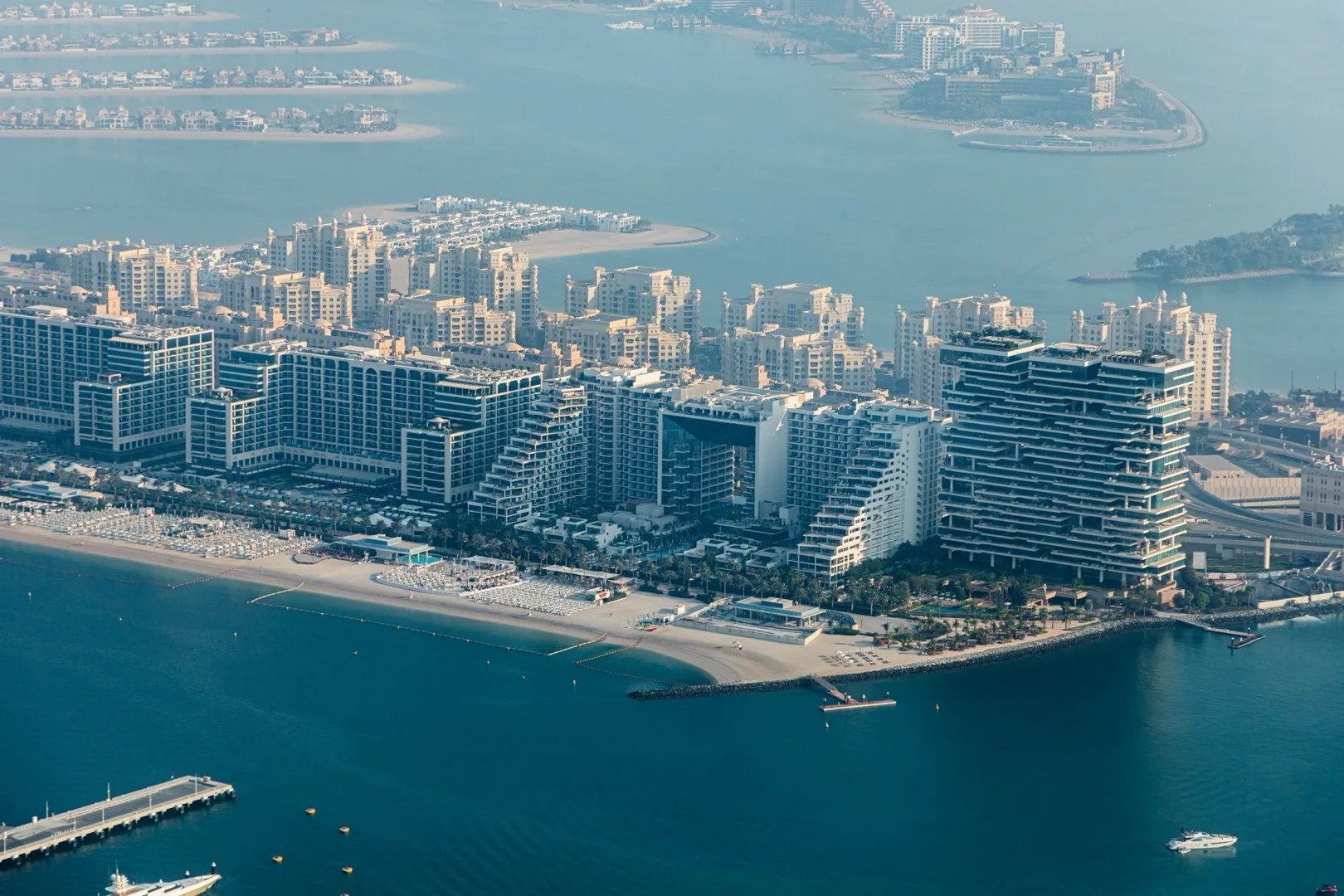
Palm Jumeirah remains the single most important ultra-prime address. Frond villas range from approximately AED 3,500 to AED 6,500 per sq ft depending on renovation status, plot position, and beach access, with tip-of-frond, custom-built mansions regularly exceeding AED 200 million. The average Palm Jumeirah villa transacted at roughly AED 44.6 million in Q1 2026, up 26% year-on-year. Ultra-luxury estates on the Palm command AED 8,000 to AED 12,000+ per sq ft at the top of the range.
The Palm is also ground zero for branded residential development. Aman Residences, Armani Beach Residences (starting from AED 21 million), Six Senses Residences, AVA at Palm Jumeirah by Dorchester Collection, and SLS Residences (starting from AED 24 million) have all launched or are under delivery here, each targeting global UHNWI buyers. For a full rundown of branded residential options, see our branded residences guide.
For area fundamentals, see our Palm Jumeirah area guide.
Jumeirah Bay Island
Jumeirah Bay Island (also known as Bulgari Island, anchored by the Bvlgari Resort) is a 300-metre-long man-made island connected by a 300-metre causeway to Jumeirah. With a limited number of villas, the supply-demand imbalance is extreme. The AED 330 million record surpasses the 2024 record by 37%, and analysts expect further price discovery upward as completed stock diminishes.
Emirates Hills
Emirates Hills, Dubai's original ultra-prime enclave, is a gated villa community that functions more like Beverly Hills than a development project. Plots here are freehold, fixed in number, and surrounded by the Montgomerie Golf Course. Emirates Hills villa pricing was up 22.4% year-on-year in Q1 2026 per CBRE data, with select mansions exceeding AED 400 million in recent cycles. The buyer profile skews toward long-term residents — established GCC business families and senior executives who prioritise community stability over lifestyle amenity novelty.
Downtown Dubai and Branded Towers
Downtown Dubai remains relevant at the ultra-prime end, specifically via the Burj Khalifa residential floors, the Opera Grand, and a growing pipeline of super-luxury towers. Prices per square foot in branded Downtown towers range from AED 5,000 to AED 9,000+, with penthouses in trophy towers regularly exceeding AED 50 million. For broader Downtown investment data, see our Downtown Dubai investment guide.
Emerging Ultra-Prime: Palm Jebel Ali and Jumeirah Asora Bay
Two locations are establishing themselves in the ultra-prime tier. Palm Jebel Ali — 50% larger than Palm Jumeirah — recorded 22 sales above USD 10 million in Q4 2025 alone according to Knight Frank. It is still early in its development arc, which means prices are lower than Palm Jumeirah comparable product, but supply is being released in controlled tranches. Jumeirah Asora Bay, the Meraas project on the Jumeirah coast, is positioning itself as a successor to Bulgari Island in exclusivity, with fewer than 100 total plots planned.
What Is Driving the Ultra-Prime Surge
A 62.6% year-on-year increase in AED 10M+ transactions does not happen in one quarter without structural drivers. There are several distinct and compounding forces at work.
Global Wealth Migration to Dubai
The UAE's millionaire population grew 98% over the past decade, with Dubai specifically growing 102%, according to Henley & Partners data cited in Gulf News. The number of HNWIs in the UAE is expected to rise from approximately 163,000 in 2021 to over 228,000 by 2026, a 39% increase. Dubai is forecast to attract more than 7,000 new millionaires in 2026 alone, according to New World Wealth projections reported by Gulf News. The number of ultra-high-net-worth individuals (assets above USD 30 million) in the UAE is projected to grow from 4,851 to 6,588 by 2031.
These are not tourists making speculative bets. Increasingly, the ultra-prime buyer is a semi-permanent or permanent resident — an Indian or European family that has relocated headquarters, placed children in UAE schools, and is building multi-generational wealth here. Dubai's tax architecture (zero income tax, zero capital gains tax on property, no inheritance tax) is the primary structural attractor, reinforced by the Golden Visa programme's AED 2 million property threshold, which has been simplified and extended through 2026 rule changes.
Tax Pressure in Source Countries
The UK's non-dom abolition, France's wealth tax, and rising effective tax rates across Europe have accelerated the calculation for European UHNWIs. UK interest in Dubai property surged notably after the 2024 UK budget changes. The UAE's flat-tax proposition becomes more compelling as the differential widens. We covered this specifically in our analysis of British buyer flows into Dubai.
Supply Scarcity at the Ultra-Prime Level
This is possibly the most underappreciated driver. Ultra-prime coastal land in Dubai is finite. The Palm Jumeirah fronds are built out. Jumeirah Bay Island has fewer than 20 villas. Emirates Hills has no more plots. New supply — Palm Jebel Ali, Jumeirah Asora Bay, Naia Island — is being delivered in controlled tranches over multi-year timelines. When demand is rising and supply is genuinely constrained, price discovery is one-directional.
This contrasts sharply with the mid-market apartment segment, where over 100,000 units are scheduled for delivery between 2026 and 2028. Ultra-prime is not mid-market — the supply dynamics are fundamentally different.
Branded Residences: The Premium-on-Premium Phenomenon
Dubai has become the world's most active market for branded residential development. The Aman, Bugatti, Bvlgari, Armani, Six Senses, and Dorchester branded projects on offer in Dubai carry a price premium of 30–50% over comparable non-branded product in the same location. Yet they are selling, often off-plan, at AED 10,000+ per sq ft. Buyers pay that premium for a bundle: brand-assured design quality, hotel-grade services, exit liquidity (branded residences tend to retain value), and — increasingly — status signalling within the global UHNWI peer group. See our complete branded residences investment guide for pricing comparisons and risk analysis across all active projects.
Family Offices Treating Dubai as a Platform Asset
Colliers research published in early 2026 identified family offices as a major structural force in Dubai's luxury market — not just buying properties but treating Dubai residential real estate as a core portfolio allocation, often alongside business registration, children's schooling, and wealth structuring decisions. Indian family offices have notably consolidated holdings: selling two or three mid-tier properties and reinvesting the proceeds into a single trophy asset. Chinese family offices have shifted from 2019-era off-plan speculation to targeting completed, ready assets with clear title and strong rental fallback.
Geopolitical Safe-Haven Positioning
Dubai's positioning as a politically neutral, operationally stable hub in a volatile neighbourhood continues to attract capital from conflict-adjacent markets. This is not new — but the scale of inflows from Russia/CIS (post-2022 sanctions), Lebanon, Iran-connected capital, and most recently Eastern European buyers has sustained ultra-prime demand in ways that are structurally different from the speculative cycles of 2008 and 2014.
Buyer Profiles: Who Is Actually Buying at AED 10M+
| Buyer Type | Typical Price Range | Primary Motivation | Preferred Product |
|---|---|---|---|
| Indian family offices / HNWI | AED 15M–80M | Capital preservation, residency, consolidation | Palm frond villas, Emirates Hills |
| European UHNWIs (UK, France, Germany) | AED 10M–50M | Tax domicile shift, lifestyle | Branded apartments, Downtown penthouses |
| GCC royals and business families | AED 40M–400M+ | Trophy ownership, privacy, legacy | Jumeirah Bay, Emirates Hills, custom builds |
| Chinese family offices | AED 10M–30M | Capital diversification, ready assets | Completed branded units, Palm Jumeirah |
| Russian/CIS capital | AED 10M–60M | Asset preservation outside sanctioned zones | Palm villas, waterfront units |
| Tech founders / entrepreneurs | AED 10M–25M | Lifestyle, visa, yield | Branded residences, DIFC-adjacent |
The common thread across all buyer types is that ultra-prime Dubai property is being bought primarily as a multi-functional asset: tax-efficient wealth store, residency anchor, lifestyle base, and generational holding — not a short-term capital gains play.
Following the Market?
Get Market Data in Your Inbox
DLD transaction data, price trends, and quarterly forecasts — before everyone else.
✓ You're in! Check your inbox.
Price Trajectory: How Far Have We Come?
Palm Jumeirah villa prices have risen over 30% in the past two years alone, and the broader Dubai residential price index showed prime districts (Emirates Hills, Palm Jumeirah, Downtown) appreciating at 8–15% year-on-year in Q1 2026, per CBRE UAE data. ValuStrat's Dubai Real Estate Outlook 2026 forecasts citywide residential capital gains of approximately 10% for the year, moderating from 19.8% in 2025 — but notes that prime and ultra-prime are likely to outperform the headline average.
Looking further back: Dubai villa prices overall have risen 206% since the pandemic trough, according to Gulf News analysis of DLD data. For ultra-prime coastal villas, the increase from the 2020 baseline is arguably steeper. The Aman Residences deal at AED 13,525 per sq ft would have been essentially unimaginable in Dubai in 2019, when the market was still recovering from the 2015–2019 price correction.
For investors thinking about how this compares to what a given budget buys across markets, see our comparison of what AED 2 million buys in Dubai versus London, Singapore, and New York.
Is It a Bubble? An Honest Assessment
This is the question that responsible analysts need to ask, and the honest answer is: the ultra-prime segment specifically does not look like a classic bubble, but that does not mean it carries no risk.
Arguments Against a Bubble
Demand is end-use driven. The dominant buyer at AED 10M+ in 2026 is purchasing for occupation or long-term holding, not for a quick resale. Off-plan sales at AED 13,000+ per sq ft are being made by buyers with the liquidity to absorb losses if needed — this is not leveraged speculation by retail investors.
Supply is genuinely constrained. There are no new fronds being built on Palm Jumeirah. Jumeirah Bay Island has single-digit vacant plots. Emirates Hills is built out. The supply pipeline that concerns analysts — 100,000+ units across 2026–2028 — is almost entirely mid-market apartments in inland communities. Ultra-prime coastal stock and branded residences are not part of that supply surge.
Structural wealth migration is durable. The UAE UHNWI count growing from 4,851 to a projected 6,588 by 2031 is not a speculative forecast — it is the product of policy decisions (Golden Visa, business-friendly regulation, tax architecture) that have multi-year momentum.
Mortgage leverage is low. The vast majority of ultra-prime transactions are cash or near-cash. The UAE Central Bank's LTV restrictions mean properties above AED 5 million are generally purchased with large down payments even when mortgaged. There is no subprime risk at this price point.
Legitimate Risks
Concentration of demand. Ultra-prime Dubai is now deeply dependent on Indian and European UHNWI inflows. A material change in India's capital outflow regulations or a reversal of the European tax landscape could reduce demand meaningfully.
Price-to-fundamentals disconnect. Rental yields at the ultra-prime level are thin — typically 2–4% gross on properties above AED 30 million. The investment case rests almost entirely on capital appreciation, which requires sustained demand. If the wealth migration narrative moderates, price support weakens.
Geopolitical tail risk. Dubai benefits from regional stability, but it is located in a volatile neighbourhood. Escalation in the wider Middle East would not be neutral for ultra-prime demand even if Dubai itself remains unaffected.
Liquidity at the margin. Ultra-prime properties are by definition illiquid. A seller at AED 200M+ has a small buyer pool. In a risk-off environment, finding a buyer at peak prices takes time. Sellers who need to exit quickly will face meaningful discounts.
The more credible risk scenario for ultra-prime is not a crash but a plateau — prices holding or correcting modestly (10–15%) as global macro conditions tighten, while the mid-market faces a more material correction from oversupply. Investors should model downside accordingly. For more on this framework, see our 2026 crash risk analysis.
Capital Appreciation vs. Yield: The Ultra-Prime Investment Math
Ultra-prime Dubai property is fundamentally a capital appreciation play, not a yield play. Buyers need to understand this before committing.
At AED 10–20 million, gross rental yields of 4–6% are achievable on branded residences in high-demand locations (Palm Jumeirah, Downtown). Above AED 30 million, gross yields typically compress to 2–4%. A AED 100 million villa generating AED 3 million annually in rent is a 3% gross yield — before service charges, management fees, and vacancy.
The capital appreciation case is stronger. Palm Jumeirah frond villas have delivered 26% year-on-year value growth in Q1 2026. Emirates Hills is up 22.4% year-on-year. Even if growth moderates to 8–10% annually from here, that represents a significant absolute return on a AED 30M+ asset.
For investors who want to understand how yield and appreciation compare across Dubai's price spectrum, our highest-ROI areas guide covers the data across all segments. For the areas where capital appreciation has historically been strongest, see our capital appreciation rankings.
What to Watch in H2 2026 and Beyond
The ultra-prime trajectory for the rest of 2026 depends on several variables that investors should track:
- New inventory releases: How Meraas, Nakheel, and private developers phase upcoming ultra-prime plots will shape supply dynamics. Controlled releases sustain prices; front-loaded releases risk softening.
- US Federal Reserve rate direction: A sustained rate cut cycle would strengthen the USD-pegged AED's purchasing power for European and Asian buyers, adding fuel to demand. The AED/USD peg means Dubai is directly exposed to US monetary policy.
- UK and European tax policy: Further tightening of wealth taxation in the UK, France, or Germany would accelerate the capital migration wave that is currently supporting ultra-prime demand.
- India capital outflow policy: Indian family offices are a dominant buyer group. Any change in RBI's LRS (Liberalised Remittance Scheme) limits or outbound capital controls would reduce Indian participation materially.
- Handover pipeline for branded residences: Several major branded projects — Aman Residences, Six Senses Residences, AVA by Dorchester — are scheduled for delivery between 2026 and 2028. Actual handover quality versus marketed standards will influence resale market sentiment.
Frequently Asked Questions
How many properties above AED 10 million transacted in Dubai in Q1 2026?
The Q1 2026 ultra-prime segment recorded 2,148 transactions above AED 10 million, a 62.6% year-on-year increase and one of the highest quarterly totals in Dubai's history, according to Engel & Völkers' Q1 2026 market report.
What was the most expensive property sale in Dubai in early 2026?
A penthouse at Aman Residences Dubai sold off-plan for AED 422 million in March 2026 — the third most expensive apartment sale in Dubai's recorded history, at approximately AED 13,525 per square foot across 31,200 sq ft.
Which areas have the highest ultra-prime property prices in Dubai in 2026?
Palm Jumeirah frond villas, Jumeirah Bay Island, and Emirates Hills command the highest prices. Branded residences on Palm Jumeirah trade at AED 8,000–13,500+ per sq ft. Emirates Hills mansions and Jumeirah Bay Island villas have both set records above AED 300 million in recent transactions.
Is Dubai ultra-prime property a bubble in 2026?
The ultra-prime segment is supported by genuine end-user demand, constrained supply of coastal land, and durable wealth migration — making a classic bubble scenario less likely than for mid-market apartments. Legitimate risks include concentration of demand from Indian and European UHNWIs, thin rental yields, and illiquidity at the highest price points.
Who is buying AED 10M+ property in Dubai in 2026?
The primary buyers are Indian family offices consolidating portfolios into trophy assets, European UHNWIs relocating for tax efficiency (notably from the UK and France), GCC royals and business families, and Chinese family offices targeting completed ready properties. Most are long-term holders rather than short-term flippers.
Does buying a property above AED 10M qualify for the UAE Golden Visa?
Any property with a DLD-certified valuation of AED 2 million or above qualifies for the 10-year Golden Visa. The AED 10M+ price point far exceeds this threshold. The 50% upfront payment requirement was removed by a February 2026 circular, making off-plan and mortgaged properties eligible if the DLD valuation meets the threshold.
What rental yield can I expect on a AED 10M+ Dubai property?
Branded residences at the AED 10–20 million range in high-demand locations can achieve 4–6% gross yield. Properties above AED 30 million typically compress to 2–4% gross. Ultra-prime is primarily a capital appreciation vehicle, not a yield-driven investment.
Conclusion
Dubai's ultra-prime segment is not behaving like a speculative bubble — it is behaving like a globally scarce asset class responding to a structural shift in where the world's wealthy choose to live and invest. The 62.6% year-on-year surge in AED 10M+ transactions in Q1 2026 reflects a convergence of forces: tax-driven wealth migration, physically constrained coastal supply, the maturation of Dubai's branded residential market, and the emergence of family offices as systematic allocators to the city's top-tier stock.
That does not mean the segment is risk-free. Thin yields, illiquidity at the top, and concentrated demand sources are real concerns. Investors should model entry prices conservatively and define their holding period clearly before committing.
If you are considering allocating capital to Dubai at the AED 10M+ level, the most important step is speaking to an independent advisor who can assess the specific asset — its micromarket, developer track record, service charge structure, and realistic exit options — against your own tax and residency profile. The headline numbers are compelling; the deal-level details are what determine actual returns.
Want a Data-Backed Second Opinion?
Tell us your plans — we'll share what the data says about your timing.
Thank You!
We'll get back to you within 24 hours.
Real Estate Agencies in Dubai
Explore providers from our business directory
Still have questions?
Ask a follow-up, or get connected with a vetted Dubai professional.
Follow us on LinkedIn
Dubai market analysis and industry insight for professionals.