Geopolitical Safe Haven: How Middle East Tension Reshapes Dubai Property Demand in 2026

- Across two decades of regional and global instability — the 2003 Iraq War, the 2011 Arab Spring, the 2014–2015 oil collapse and Yemen escalation, the 2020 pandemic, the 2022 Ukraine war, and the 2023+ Middle East escalation — Dubai property has consistently absorbed displaced capital rather than priced in geopolitical risk.
- The mechanism is structural, not narrative: a USD-pegged dirham, freehold ownership for foreigners, a digitised land registry (DLD), zero personal income, capital-gains and inheritance tax, accessible visa policies, and the AED 2M Golden Visa create a low-friction destination for capital seeking shelter.
- Buyer-origin data shifts visibly with each shock — Russian and CIS volumes surged after February 2022, Lebanese flow accelerated through the 2019–2024 banking crisis, Pakistani and Egyptian shares rose alongside FX devaluations, and Israeli and Lebanese activity stepped up again from late 2023.
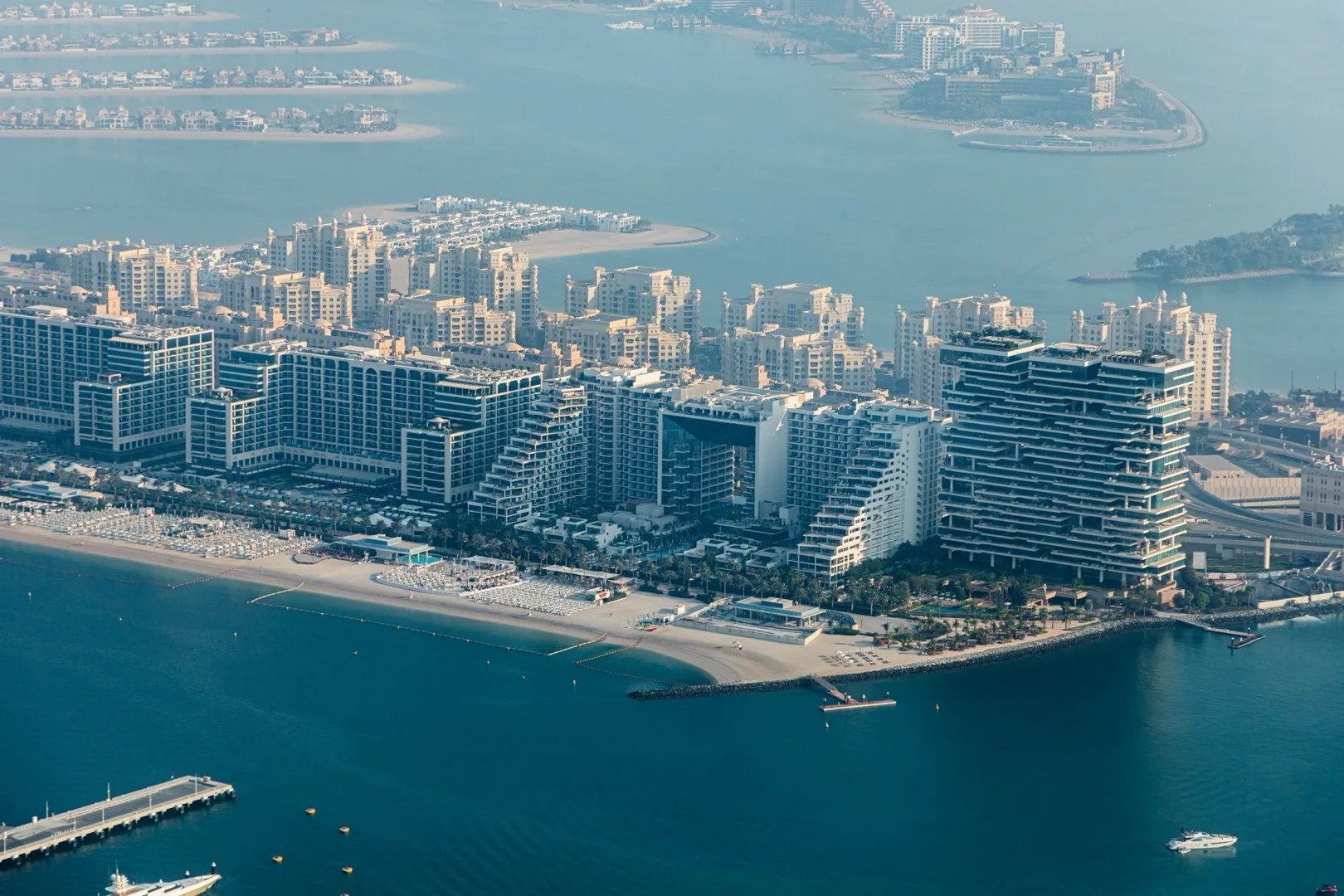
- Prime areas — Palm Jumeirah, Downtown, Marina, Emirates Hills, District One — capture the first wave of safe-haven flow because they offer liquidity, brand recognition, and Golden-Visa-eligible ticket sizes in a single transaction.
- The thesis has limits: oversupply cycles, infrastructure absorption, and regulatory shifts can compress yields and slow appreciation. Safe-haven flow is a tailwind, not a guarantee.
- For 2026, watch the high-end transaction share, foreign-buyer concentration, prime-area absorption time, and Central Bank cross-border deposit data — these are the hard signals beneath the headlines.
The Safe-Haven Question, Reframed
"Safe haven" is a term used loosely in real estate marketing. The serious version of the question is narrower and more useful: when capital is displaced by political, monetary, or military instability somewhere in the world, where does it go, and why? Gold, US Treasuries, and Swiss francs are the textbook answers. Property is messier — illiquid, jurisdictional, exposed to local rules — but in the past two decades a specific combination of features has positioned Dubai property as one of the few real-estate destinations that consistently attracts displaced capital from across the Middle East, North Africa, South Asia, and the former Soviet space.
This article does not argue that Dubai is risk-free, that prices only move in one direction, or that geopolitical tension is "good" for Dubai. It examines the mechanism: which structural features of the Dubai market translate external instability into measurable inflows, what the historical pattern actually looks like, which buyer cohorts move first, and what an investor should monitor going into 2026 and beyond. The framing is analytical, not advocational.
The Historical Pattern: Two Decades of Instability and Inflows
Across the major regional and global shocks since 2003, Dubai property has shown a recurring pattern: an initial, often brief, risk-off pullback, followed by accelerating foreign inflow over the next 12–24 months. The mechanism is not mysterious. Capital under pressure looks for jurisdictions where ownership is clear, the currency is anchored, the registry is trusted, and the path to a long-term residence option is short. Dubai checks each box. Each shock has rewritten the buyer mix without breaking the core absorption capacity of the market.
The 2003 Iraq War accelerated GCC capital previously parked in Western markets back into the region, with Dubai's just-launched freehold framework absorbing a meaningful share. The 2011 Arab Spring repositioned wealth from Egypt, Tunisia, Libya, and Syria toward Dubai — much of it permanent. The 2014–2015 oil collapse and the start of the Yemen conflict produced a softer demand environment locally but kept foreign inflow positive on a relative basis. COVID in 2020 was the unusual case: a sharp short-term shock followed by the most concentrated boom in Dubai's history, as remote-work mobility met UAE vaccine roll-out speed and visa liberalisation. The 2022 Ukraine war redirected significant Russian and CIS capital. The 2023+ regional escalation has, on early evidence, kept the high-end segment unusually active.
The table below summarises the pattern. Specific transaction figures vary across sources (DLD, Property Monitor, brokerage reports) and are best read as directional rather than precise.
| Event Window | Shock Type | Initial 0–6 Month Reaction | 12–24 Month Outcome |
|---|---|---|---|
| 2003 Iraq War | Regional military | Brief risk-off; freehold launch absorbs returning GCC capital | Multi-year price acceleration; foreign-buyer base widens |
| 2011 Arab Spring | Regional political | Mixed; safe-haven inflow from Egypt, Tunisia, Libya, Syria | Recovery from 2008–2010 trough; prime-area volumes rebuild |
| 2014–2015 Oil Collapse + Yemen | Commodity + regional military | Local demand softens; foreign demand resilient | Price correction by area; market broadens to mid-tier products |
| 2020 COVID | Global health/economic | Short, sharp drawdown in Q2 2020 | Largest boom on record from H2 2020 onward; villa segment leads |
| 2022 Ukraine War | European military | Immediate Russian/CIS inflow; FX hedging demand | Prime price expansion; secondary market absorption tightens |
| 2023+ Regional Escalation | Regional military + political | High-end activity remains active; selective new cohorts emerge | Ongoing — under observation through 2026 |
The consistency across very different shock types is what makes the pattern interesting. Wars, currency crises, banking failures, and a global pandemic do not normally produce the same downstream effect on a single property market — unless the market itself offers an unusually wide set of structural attractors. Dubai's combination of attractors is what does the work.
Why Dubai Specifically: The Structural Stack
The features that turn external instability into local inflow are not new and not secret. What is unusual is that they sit together in one jurisdiction.
Politically neutral foreign policy. The UAE has consciously positioned itself as a neutral commercial venue across most regional and global fault lines. For property capital, neutrality reduces the probability that a buyer's home-country dispute spills into their UAE asset.
USD-pegged dirham. The AED has been pegged to the US dollar at roughly 3.6725 since 1997. Property denominated in AED is, in effect, a USD-denominated asset for any buyer whose home currency is unstable. This is a structural feature, supervised by the UAE Central Bank, and it is the single most underrated reason capital arrives during currency stress.
Freehold ownership rights for foreigners. Since 2002–2006, foreign nationals can hold freehold title in designated areas. Title is registered with the Dubai Land Department, with a digital title-deed system that has been progressively integrated with the REST app and Ejari. For a primer on what is and is not freehold and where foreigners can buy, see our freehold vs leasehold explainer.
Tax structure. No personal income tax, no capital-gains tax on individuals, and no inheritance tax. Corporate tax (9%) applies to qualifying businesses, not personal property holdings, though investors using corporate structures should review the corporate-tax implications of holding property through a company.
Visa pathway. The 10-year Golden Visa is available against AED 2 million in property value, with a 2-year property-linked visa available from AED 750,000. The pathway transforms the asset from a passive holding into an instrument that resolves a residency problem — which is often the actual goal of a safe-haven buyer.
Transactional clarity. A 4% DLD registration fee, a single regulator (RERA), an escrow framework for off-plan, and a digital-first registration process. Compared to many jurisdictions where foreign buyers face military clearance, FX restrictions, opaque deed systems, or arbitrary tax escalation, Dubai's process is unusually predictable. The full cost stack is explained in our cost-to-buy guide.
None of these features is unique on its own. The combination is.
How Safe-Haven Flow Shows Up in the Data
If the safe-haven thesis is correct, it should be visible in measurable indicators rather than only in narrative. Four indicators do most of the work.
1. High-end transaction share. When safe-haven capital arrives, it does not arrive in studios. Transactions above AED 10 million (and increasingly above AED 25 million) are a leading indicator of displaced wealth seeking a parking jurisdiction. Each major shock since 2020 has been followed by a step-up in this segment's share of total value.
2. Foreign-buyer share of total transactions. DLD aggregates report foreign-buyer activity in volume and value. A rising foreign share, particularly in prime areas, is a structural sign that demand drivers are external rather than purely local.
3. Average ticket size. Mean and median transaction values have trended upward in waves, with each wave coinciding with a specific cohort entering the market — Russian buyers in 2022–2023, expanded Indian and Pakistani UHNW participation in 2023, fresh European interest in 2024–2025.
4. Prime-area absorption time. The time between listing and signed MOU in Palm Jumeirah, Emirates Hills, and Downtown serves as a velocity gauge. Compressed absorption indicates demand is outrunning supply at the top end.
None of these indicators alone is sufficient. Together they form a coherent picture, and they have moved in the same direction across each of the last three major external shocks.
Buyer-Origin Shifts: Cohorts Track the Shock
One of the clearest fingerprints of the safe-haven mechanism is the way the foreign-buyer mix changes within months of a specific external event. The cohorts move; the market absorbs.
| Cohort | Triggering Pressure | Approx. Period of Acceleration | Typical Profile |
|---|---|---|---|
| Indian | Long-term currency drift, wealth-mobility planning | Persistent; structural growth | Wide range — investor, end-user, second home |
| Russian / CIS | 2022 sanctions regime, capital re-routing | 2022–2024 surge; ongoing | Higher average ticket; prime-skewed |
| British | UK tax reform, GBP volatility, lifestyle relocation | Sustained; refreshed 2024–2026 | Mid- to high-end; family relocation common |
| Pakistani | PKR pressure, political volatility, banking constraints | 2022–2024 step-up | Wealth-preservation, second residence |
| Lebanese | 2019+ banking crisis, regional escalation | 2019–2024; renewed late 2023 | Capital displaced from frozen banking system |
| Egyptian | EGP devaluation cycles 2022–2024 | 2022–2024 | Hard-currency hedging; mid-tier |
| Turkish | TRY depreciation, inflation | 2022–2026 ongoing | Entrepreneurs, mid- to upper-mid tier |
| Israeli | Post-Abraham Accords access; 2023+ tension | 2021–2023; renewed 2023+ | Mixed end-user and investor |
| Chinese | Capital-controls workaround, lifestyle | Variable; selective windows | UHNW + mid-tier; off-plan oriented |
| European (FR/DE/IT) | Tax planning, retirement migration | Sustained; growing 2024–2026 | Lifestyle relocation, second-home demand |
Two patterns are worth highlighting. First, no single cohort dominates for long. The Russian wave of 2022 did not crowd out British or Indian flow; it added on top. Second, the cohorts are not monolithic — within each, ticket size and area preference vary widely. The Pakistani buyer in JVC is a different participant from the Pakistani UHNW buyer in Emirates Hills, and aggregating them obscures the real story.
Following the Market?
Get Market Data in Your Inbox
DLD transaction data, price trends, and quarterly forecasts — before everyone else.
✓ You're in! Check your inbox.
Where Safe-Haven Flow Lands First: Prime Areas
When external capital arrives, it does not distribute evenly across the city. It concentrates first in a small set of prime areas because those areas offer three things at once: liquidity, brand recognition, and Golden-Visa-eligible ticket sizes in single transactions. Cycle after cycle, the same names appear at the front of the wave.
Palm Jumeirah. The single most recognisable address in Dubai globally. Beachfront villas and signature apartment buildings absorb a disproportionate share of UHNW inflow. See our Palm Jumeirah area guide for sub-segment dynamics.
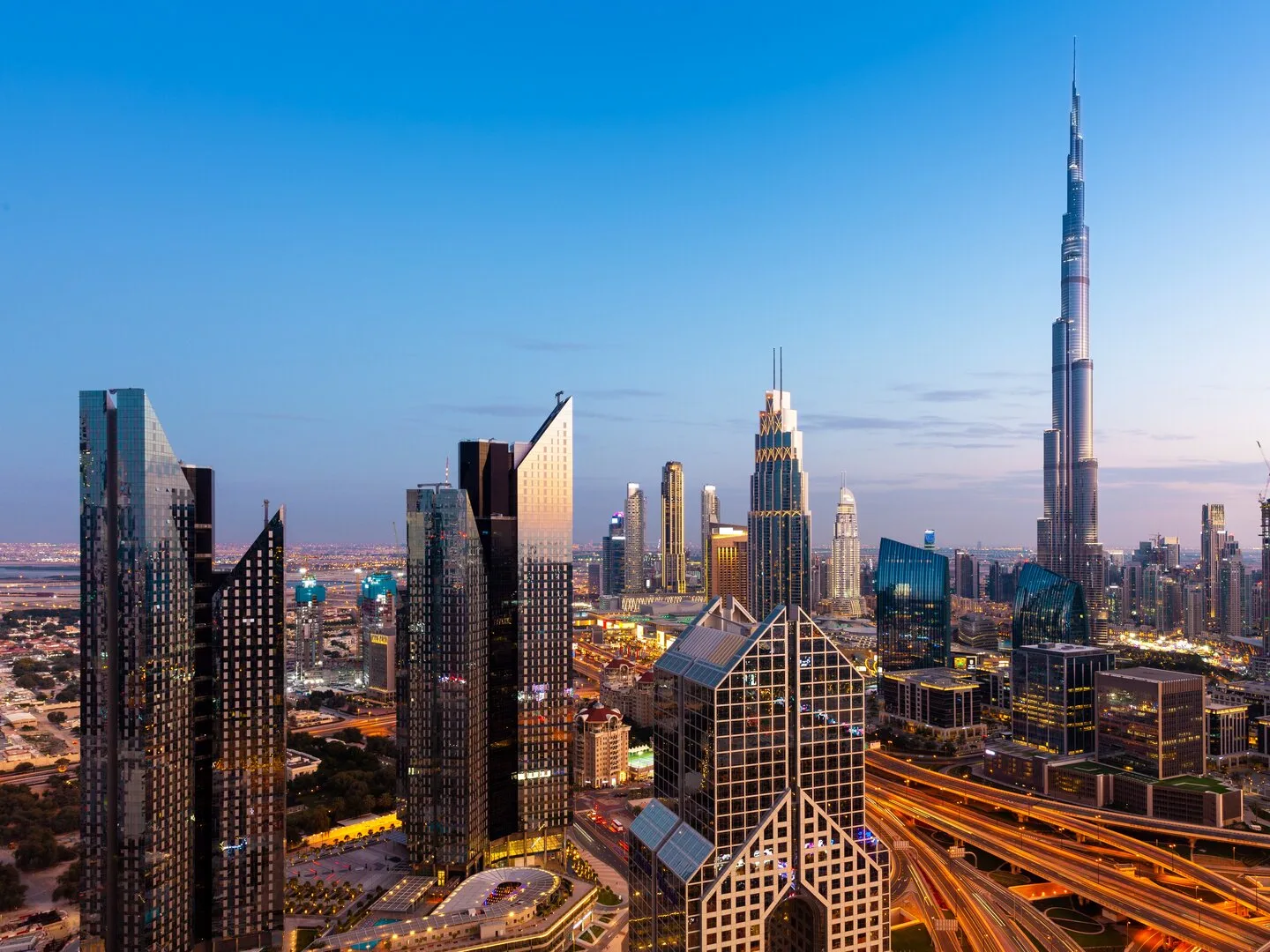
Downtown Dubai. Burj Khalifa adjacency, Dubai Mall infrastructure, and a deep secondary market make Downtown the natural landing zone for capital that wants liquidity. Detailed analysis in the Downtown investment guide.
Dubai Marina. The most internationally legible address after Palm and Downtown. Tower variety, view differentiation, and a deep rental market for re-let. Covered in the Marina area guide.
Emirates Hills and District One. Closed villa enclaves where the entry ticket is itself a signal. UHNW capital coming from regions with strong privacy preferences gravitates here.
Business Bay and Dubai Hills. Second-tier prime that absorbs overflow once primary prime tightens.
The pattern holds across cycles because the structural reasons hold across cycles: international recognition, deep secondary markets, ticket sizes that resolve a Golden Visa in a single transaction, and rental markets that allow the asset to function during periods of non-occupation. For investors specifically focused on which segments compound best when this flow arrives, our capital-appreciation areas analysis walks through the segmentation.
| Prime Area | Typical Inflow Profile | Liquidity Indicator | Why It Captures Flow First |
|---|---|---|---|
| Palm Jumeirah | UHNW villa + signature apt | High — globally recognised | Brand value; iconic address; trophy demand |
| Downtown | Mid-prime to UHNW apt | Very high — deep secondary | Burj adjacency; resale velocity |
| Marina | Mid-prime apt; re-let oriented | High — broad tower mix | International legibility; rental depth |
| Emirates Hills / District One | UHNW villa | Moderate — thin float | Privacy; signal value; scarcity |
| Business Bay | Mid-prime apt; investor-led | High — extensive tower stock | Overflow from Downtown; new product |
| Dubai Hills Estate | Family villa + townhouse | Moderate — newer market | Lifestyle relocation; school proximity |
The Mechanisms Behind the Headlines
It is worth being precise about why these features convert into actual transactions. Three mechanisms do most of the work.
FX hedging via the dirham peg. A buyer whose home currency is depreciating against the USD effectively buys a USD-equivalent asset by acquiring AED-denominated property. The peg has held across major regional and global cycles, supervised by the UAE Central Bank, and is the single feature most often understated in commentary.
Visa-via-asset. The Golden Visa transforms a property purchase into a residency solution. For a buyer whose primary problem is mobility — keeping a passport-independent option open — the AED 2M threshold is small relative to the optionality created. The mechanics, costs, and current rules are detailed in our property-route Golden Visa guide.
Registry trust. A digital, single-source title registry reduces the operational risk of holding the asset from a distance. For investors used to jurisdictions where deeds can be challenged, frozen, or quietly diluted, the DLD's process is a meaningful structural attractor.
These mechanisms are independent of any single political event. They explain why the same pattern appears across very different shocks — Iraq 2003 looks nothing like COVID 2020 looks nothing like Ukraine 2022, but the downstream property dynamic in Dubai rhymes across all three.
Risk Factors and Counter-Arguments
The safe-haven thesis is real but not unconditional. Four risk factors are worth taking seriously.
1. Oversupply cycles. Dubai's pipeline is large. Periods of accelerated handover have historically compressed yields and slowed appreciation in specific segments — JVC and Business Bay studios in 2018–2019, certain off-plan towers post-COVID. Safe-haven inflow does not override absorption math at the project level.
2. Infrastructure absorption. Roads, schools, healthcare, and utilities scale on a different timeline than property handover. New community launches that outrun infrastructure produce real lifestyle frictions even when prices hold.
3. Regulatory shifts. Visa thresholds, mortgage caps, off-plan rules, and short-term-let licensing all evolve. The 2024 changes to the Golden Visa property route — removing the prior down-payment requirement — are the kind of shift that can re-rate demand quickly. The reverse is also possible. Investors should track regulatory developments as actively as price.
4. Geopolitical optionality is mutual. The UAE's neutrality is a strategic choice that has held remarkably well, but geopolitical risk in any direction is not zero. A serious investor models tail scenarios rather than dismissing them.
None of these risks invalidate the thesis. They define its limits.
What to Monitor for the Next 12–18 Months
For 2026 and into 2027, six indicators are worth tracking on a quarterly basis. They translate "is the safe-haven thesis still working" from narrative into something measurable.
- DLD high-end transaction share. Watch the share of total value captured by transactions above AED 10M and AED 25M. A rising share signals continued displaced-capital arrival.
- Foreign-buyer concentration. Watch DLD's foreign-buyer aggregates by nationality. New cohorts entering the top 10 is a leading indicator of fresh external pressure somewhere in the world.
- Prime-area absorption time. Watch listing-to-MOU time in Palm, Downtown, Marina, and Emirates Hills. Compression suggests demand outrunning supply at the top.
- Cross-border deposit flow. The Central Bank's aggregate banking statistics include foreign-deposit data. Sustained inflow is consistent with capital migration.
- Off-plan vs secondary mix. Safe-haven capital typically prefers ready secondary at the high end and off-plan in mid-tier. A sustained shift in either direction signals a change in the buyer mix.
- Golden Visa issuance volume. Where reported, issuance volume by route is a clean signal of how many buyers are using property to resolve a residency question.
None of these indicators is sufficient on its own; together they form a checkable picture. For investors building a thesis at the area level, our highest-yield areas analysis and our Dubai vs Singapore comparison are useful next reads.
How to Think About This as an Investor
The temptation with a safe-haven thesis is to over-fit it — to buy on narrative, to assume that geopolitics will continue to push capital toward Dubai indefinitely, and to treat any external instability as a buy signal. The more useful posture is the opposite: treat safe-haven flow as a structural tailwind that is real but not unlimited, and underwrite each individual purchase on the same fundamentals you would use in a politically calm environment.
That means: rental yield grounded in actual achievable rent; service-charge math that survives oversupply scenarios; an exit strategy that works without assuming a buyer of last resort; an area selection that accounts for infrastructure absorption; and a structure that makes sense for your specific tax residency, not someone else's. Safe-haven flow is the macro context. The micro must still work.
It also means using the tools that exist to model the deal cleanly. Our ROI calculator, mortgage calculator, and DLD fee calculator are designed precisely so that the macro thesis does not paper over micro errors.
Frequently Asked Questions
Is "safe haven" an official designation, or just marketing?
Neither. It is a descriptive label for an observable pattern: across multiple distinct global shocks since 2003, Dubai property has absorbed displaced capital rather than priced in geopolitical risk. The pattern is grounded in measurable structural features (USD peg, freehold rights, tax structure, visa pathway, registry quality), not in any single official statement.
Does safe-haven flow only affect prime areas?
No, but it lands there first. Prime areas — Palm, Downtown, Marina, Emirates Hills — capture the initial wave because they offer brand recognition, liquidity, and Golden-Visa-eligible ticket sizes in single transactions. Mid-tier areas (Business Bay, Dubai Hills, JVC, Arjan) typically absorb overflow once prime tightens.
How quickly does buyer-origin data shift after an external event?
Faster than most observers expect. The Russian/CIS share rose visibly within months of February 2022. Lebanese flow accelerated within quarters of the 2019 banking crisis. Egyptian and Pakistani shares moved alongside specific FX devaluation cycles in 2022–2024. The DLD's quarterly aggregates are the cleanest place to watch this in near-real-time.
Could a regulatory shift undo the safe-haven thesis?
It could compress it. Visa thresholds, mortgage caps, off-plan rules, and short-term-let licensing all evolve. A material tightening of the Golden Visa route or a removal of foreign freehold rights would re-rate demand quickly. The reverse — further liberalisation, as in the 2024 down-payment removal for the property route — re-rates the other way. Investors should track policy as actively as price.
Does Dubai face any oversupply risk that might offset safe-haven inflow?
Yes, in specific segments. Studio and 1-bedroom oversupply has appeared in mid-tier areas during high-handover years. Safe-haven flow does not override project-level absorption math, particularly outside prime. Buying based purely on macro thesis and ignoring local supply is a known way to underperform.
How does the dirham peg actually function as a hedge?
The AED has been pegged to the USD at roughly 3.6725 since 1997, supervised by the UAE Central Bank. For a buyer whose home currency is depreciating against the dollar, holding AED-denominated property is functionally similar to holding USD exposure. The mechanism only fails if the peg fails — a tail risk worth modelling but not the base case.
Is the Golden Visa really part of the safe-haven story, or just a separate programme?
It is integral. For many safe-haven buyers, the actual problem they are solving is mobility, not return. The AED 2M Golden Visa converts a property purchase into a 10-year residency option, which is what makes the asset valuable to that specific cohort. Without the visa pathway, ticket sizes and buyer mix would look materially different.
What single indicator best captures whether the thesis is still working?
The high-end transaction share — specifically the percentage of total transaction value captured by deals above AED 10M, and increasingly above AED 25M. It is a clean, DLD-reported metric, and it has moved up across each of the last three major external shocks. Sustained compression of that share would be the cleanest signal that the dynamic is fading.
The safe-haven story is real, but the only deals that work are the ones that work without it. If you are weighing a specific area, ticket size, or off-plan vs secondary decision, our REC analysts can walk you through the underwriting — yields, service charges, exit assumptions, and how the macro context affects your specific cohort. Reach out through the community or drop us a message and we will route you to the right specialist.
Want a Data-Backed Second Opinion?
Tell us your plans — we'll share what the data says about your timing.
Thank You!
We'll get back to you within 24 hours.
Real Estate Agencies in Dubai
Explore providers from our business directory
Still have questions?
Ask a follow-up, or get connected with a vetted Dubai professional.
Follow us on LinkedIn
Dubai market analysis and industry insight for professionals.