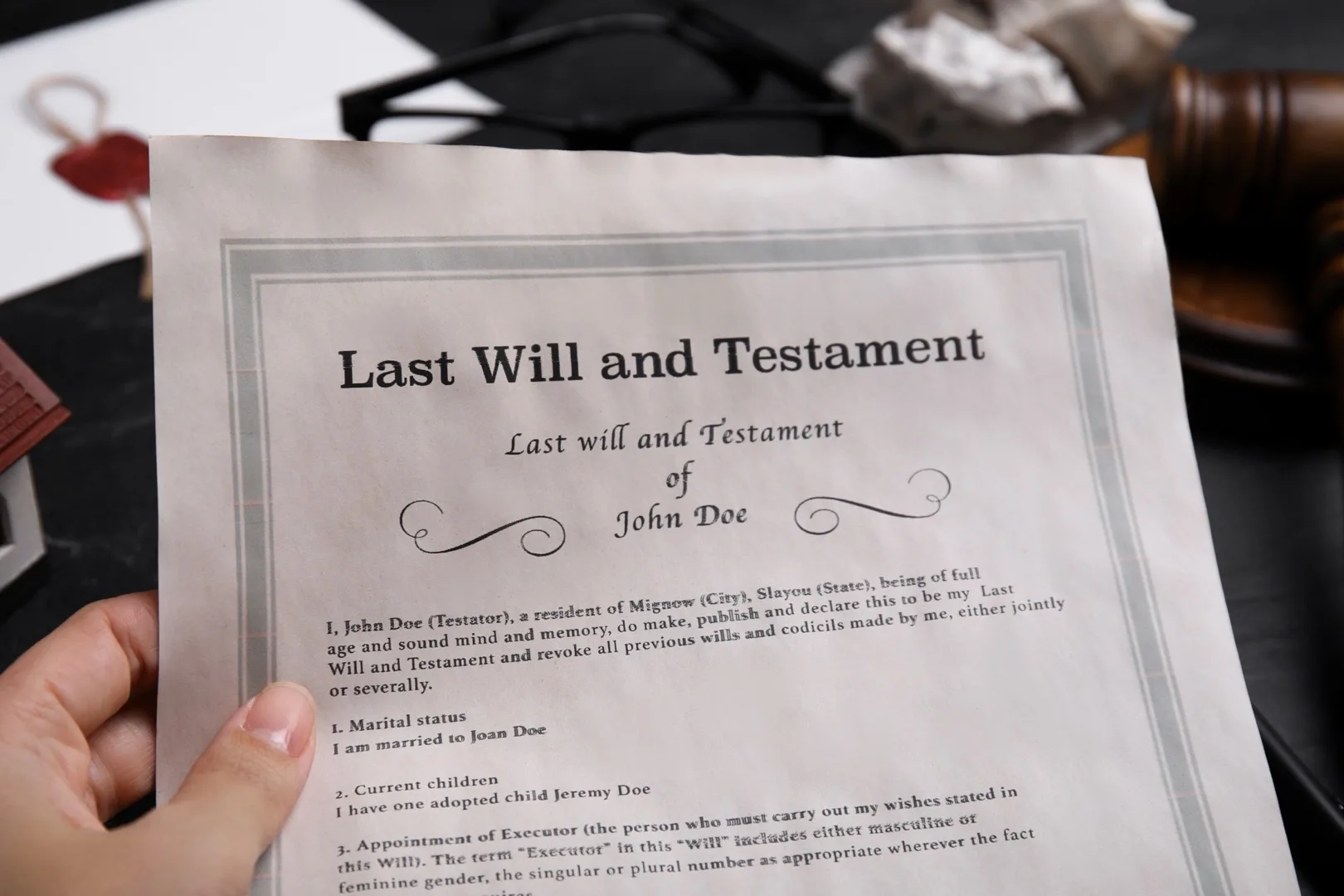
Selling Inherited Property in Dubai 2026: Probate, Transfer & Sale Step by Step

- You cannot sell an inherited Dubai property until the title is legally transferred out of the deceased's name — the Dubai Land Department will not process a sale while the deceased remains on the title deed.
- There are two paths to the court document that unlocks everything: a DIFC Courts probate order if the deceased held a registered DIFC will (roughly 1–3 months, court fee USD 5,000), or a Dubai Courts inheritance file / succession certificate if not.
- The DLD inheritance title transfer itself is cheap and fast: AED 1,000 per property plus roughly AED 500–550 in title deed and map fees — not the standard 4% transfer fee — and processes in about 25 minutes once documents are in order.
- All heirs must consent to the sale. Heirs abroad can sign through attested powers of attorney; heirs who are minors cannot consent at all, and selling their share requires Personal Status Court approval — the single biggest timeline factor.
- Without a will, Federal Decree-Law 41 of 2022 gives a non-Muslim's spouse half the estate and splits the other half equally among children, unless heirs elect home-country law.
- The UAE charges no inheritance tax and no capital gains tax on the sale — but UK inheritance tax, US estate tax filings or home-country rules may still reach the estate or the heirs.
- Realistic end-to-end timelines: DIFC will with adult heirs ~2–3 months; intestate with minor heirs 6–12+ months.
Most guides to Dubai property inheritance stop at the law: who inherits what, why you should register a will, what happens to a joint account. This one starts where those end — at the practical question every heir eventually asks: I have inherited a Dubai apartment or villa. How do I actually sell it?
The answer is a fixed sequence with no shortcuts: obtain the court document that names the heirs, transfer the title at the Dubai Land Department into the heirs' names, then run a standard resale with every heir's consent. Each step has its own fees, documents and failure points, and the order cannot be rearranged. This guide walks all of it — both court routes, the DLD inheritance transfer fee schedule, POA mechanics for heirs abroad, the minors problem, and realistic cost and timeline tables by scenario. If you are still at the planning stage rather than the heir stage, start instead with our guide on why every expat property owner needs a DIFC will — it is the document that turns a year-long process into a two-month one. Last updated: June 2026.
The Sequence: Why You Cannot Just List the Property
When a Dubai property owner dies, the title deed does not automatically pass to anyone. The property stays registered in the deceased's name, and DLD will not register a sale, accept a Form F, or issue a new title deed while that is the case. Listing an inherited property before the title has moved to the heirs is not just premature — no transfer can legally complete, and serious brokers will not market it.
The full sequence looks like this:
- Step 1: Assemble the base documents — death certificate (attested and translated if the death occurred abroad), the title deed, and identity documents for every heir.
- Step 2: Obtain the court instrument that names the heirs and their shares — a DIFC Courts probate order (if a registered DIFC will exists) or a Dubai Courts succession certificate / inheritance file (if not).
- Step 3: Transfer the title into the heirs' names at DLD using the inheritance title transfer service.
- Step 4: Sell — a normal Dubai resale, except every registered heir must sign or be represented, and any minor's share needs court approval.
Steps 1 and 3 are administrative and fast. Steps 2 and 4 are where estates differ by months or years, depending on whether a will exists, where the heirs live, and whether any of them are children. The rest of this guide takes the steps in order.
Step 1 — The Documents Every Heir Needs First
Nothing moves in either court system without a recognised death certificate. If the owner died in the UAE, the local death certificate works directly. If the death occurred abroad — the common case for non-resident investors — the foreign death certificate must be legalised for UAE use: attested in the country of issue (apostille or embassy attestation depending on the country), attested by the UAE embassy there, then by the UAE Ministry of Foreign Affairs, and finally legally translated into Arabic for the Dubai Courts route. Law firms handling cross-border estates typically budget two to six weeks for this chain, depending on the country of origin.
Alongside the death certificate, gather:
- The original title deed (or an e-title via the Dubai REST app; a lost deed can be re-issued by DLD).
- Passport copies for all heirs, plus Emirates IDs for heirs who are UAE residents.
- Marriage and birth certificates proving each heir's relationship to the deceased — attested and translated on the same chain as the death certificate if issued abroad.
- The will, if one exists — and crucially, confirmation of where it is registered, because that decides which court you go to next.
- Mortgage details if the property is financed: the bank must issue a no-objection letter before DLD will transfer the title, and in practice the debt must be settled or restructured first.
Heirs frequently underestimate the attestation step. A succession case filed with an unattested foreign death certificate simply stalls, and each document missing from the kinship chain (a maiden name mismatch, an untranslated birth certificate) adds weeks. Front-load this step before touching either court.
Step 2, Path A — DIFC Probate (When a Registered DIFC Will Exists)
If the deceased registered a will with the DIFC Courts Wills Service, the estate runs through the DIFC Courts' probate jurisdiction — a common-law process familiar to anyone who has dealt with probate in England. The named executor applies for a grant of probate; once issued, the grant is the instrument DLD accepts to transfer the Dubai property to the named beneficiaries. Since Dubai Law No. 2 of 2025, DIFC-registered wills enjoy direct enforcement against Dubai assets, which removed the residual friction of taking DIFC orders into onshore execution.
On cost: a probate application is filed as a claim in the DIFC Courts, and the court fee for a non-monetary application of this type is USD 5,000 (about AED 18,365) under the published DIFC Courts fee guide. Legal fees for preparing and filing the application are additional and vary by firm and estate complexity. The DIFC Courts' own probate costs page also flags the downstream DLD transfer fees, which range from 0.125% to 4% of property value depending on the beneficiary's relationship to the deceased — more on that in Step 3.
On timeline: straightforward applications — valid will, cooperative executor, complete documents — are typically processed in around a month, with law firms commonly quoting two to four months end to end for the probate stage once document gathering and any cross-border attestation are included. That speed, and the certainty that the estate passes exactly as the will directs rather than by statutory shares, is the entire value proposition of the DIFC will. Our DIFC wills expat guide covers registration costs and structuring if you are reading this as an owner rather than an heir.
Step 2, Path B — The Dubai Courts Inheritance File (No DIFC Will)
Without a DIFC will, the estate goes through the onshore Dubai Courts — specifically the Personal Status Court, which opens an inheritance file and issues the succession certificate (legal notification of inheritance) identifying every heir and their share. This document, plus a court letter addressed to DLD, is what unlocks the title transfer.
Who inherits what without a will
For non-Muslim expats, Federal Decree-Law No. 41 of 2022 on Civil Personal Status (in force since February 2023) changed the default dramatically: absent a will, half the estate passes to the surviving spouse and the other half is divided equally among the children, male and female alike. Heirs may alternatively request that the law of the deceased's home country apply — which can produce a different split but requires proving foreign law to the court, adding cost and time. For Muslim owners, Sharia fixed shares apply by default. We will not re-litigate the substantive law here — our companion pieces on what happens to Dubai property without a will and the inheritance rules for non-Muslim owners cover the distribution scenarios in detail. What matters for the sale is the output: a certificate listing exactly who owns what fraction of the property, because every one of those people must later sign the sale.
Cost and timeline at Dubai Courts
Court fees for opening and registering an inheritance case are modest — practitioners typically quote in the region of AED 2,000–2,500 in registration fees, with legal translation, attestation and lawyer's fees on top. The bigger historical cost was time: inheritance files used to grind through the system for months. That has improved sharply. Dubai Courts' Jabr platform, launched in October 2025, cut the creation and registration of inheritance files from 96 days to around three working days, and the courts report the average time to amicably settle inheritance cases fell to 13.8 working days in early 2026, down from 24 days in 2024, according to Gulf News reporting on the Dubai Courts digital reforms.
Treat those headline figures as the best case for clean, uncontested files with complete documents. Estates with foreign documents in the attestation pipeline, heirs who dispute shares, or minors among the heirs still run months, not weeks — the scenario tables later in this guide reflect that.
Step 3 — Transferring the Title to the Heirs at DLD
With the court instrument in hand, the heirs (or their representative) complete the inheritance title transfer at the Dubai Land Department. This is the pleasant surprise of the whole process: per the DLD's official inheritance title transfer service, the fee is a flat AED 1,000 per property collected from the heirs — not the standard 4% transfer fee that applies to a sale — and the transaction processes in about 25 minutes once documents are verified.
| DLD inheritance transfer item | Fee (AED) | Approx. USD |
|---|---|---|
| Inheritance transfer, per property | 1,000 | ~272 |
| New title deed certificate | 250 | ~68 |
| Apartment or villa map | 250 | ~68 |
| Knowledge & innovation fee, per drawing | 20 | ~5 |
| Service partner / trustee office fee | 130 + VAT | ~37 |
| Typical total, single apartment | ~1,660 | ~452 |
The required documents mirror what the courts produced: the legal notification of inheritance, the official court letter addressed to DLD requesting the transfer, Emirates IDs for resident heirs and passports for non-resident heirs, plus a no-objection letter from the mortgage bank if the property is financed (or from the developer if it is still under a preliminary sale agreement). Note the relationship-based fee logic the DIFC Courts flag for probate transfers — 0.125% to 4% of value depending on who the beneficiary is — means transfers to non-relative beneficiaries under a will can cost materially more than the flat heir transfer; confirm your specific case with the trustee office before budgeting.
Once this step completes, a new title deed issues in the heirs' names, in the shares the court certified. Only now is the property legally sellable.
Step 4 — The Sale: Every Heir Signs, or Is Represented
From here the transaction is mechanically a normal Dubai resale — agent appointment (Form A), buyer sourcing, MOU/Form F, developer NOC, transfer at a trustee office — and our complete resale process guide walks that pipeline. What makes an inherited sale different is the seller side: the property is now co-owned by every heir on the new title deed, and DLD requires all of them to execute the sale. One reluctant heir blocks everything; the alternatives are a negotiated buyout of that heir's share or, in deadlock, a court-ordered sale — slow and value-destructive, and the reason brokers ask early whether all heirs are aligned.
Heirs abroad: the POA workflow
In most expat estates, at least one heir lives outside the UAE, and flying everyone in for the NOC appointment and transfer is unrealistic. The standard solution is a power of attorney: each overseas heir signs a property-specific POA — typically appointing one heir, a relative in Dubai or the family's lawyer — notarised locally, attested through the UAE embassy and Ministry of Foreign Affairs chain (or signed directly at a UAE consulate, or remotely via the Dubai Courts' online notary where eligible), then legally translated into Arabic. Budget several weeks per country for the attestation chain. The full mechanics, costs and validity rules are in our dedicated guide to selling Dubai property by power of attorney — required reading if your heirs are spread across three countries.
Two practical notes. First, prepare the POAs while the court stage is running, not after — they are the most parallelisable part of the process. Second, draft them wide enough to cover the whole pipeline: signing the Form A and Form F, obtaining the NOC, appearing at the trustee office, and receiving or directing sale proceeds.
Navigating Dubai Law?
Get Legal & Tax Updates
Property law changes, tax guidance, and compliance updates for Dubai investors.
✓ You're in! Check your inbox.
Minor Heirs: The Single Biggest Timeline Factor
If any heir is under 21 (the age of majority applied in UAE personal status matters), their share cannot simply be signed away by a parent. Minors' inherited assets sit under guardianship and court supervision — Dubai Courts' inheritance and minors' funds circuits, with the Awqaf and Minors Affairs Foundation involved where it acts for minors — and selling a property in which a minor holds a share requires the competent court's approval of the transaction.
In practice the guardian (usually the surviving parent) applies to the Personal Status Court for permission to sell, supporting the application with an independent valuation showing the sale is at fair market value and a plan for the minor's proceeds. Courts scrutinise these applications precisely because their job is to protect the child from a guardian selling cheap or absorbing the money. Approval is routinely granted for sensible sales — but it adds months, and it is the main reason intestate estates with young children run 6–12+ months where an all-adult estate closes in a season.
Blocked funds: what happens to the minor's share of the proceeds
Court approval typically comes with strings on the money. The minor's fraction of the net sale proceeds does not land in the parent's current account: courts commonly direct that it be deposited into a court-supervised or Awqaf-administered account, or otherwise held and managed under court oversight until the child reaches majority, with the guardian able to apply for releases for the child's maintenance and education. Families planning to redeploy the full proceeds — to repay a mortgage elsewhere, or buy a home in the heirs' home country — need to model this: a third child's one-sixth share being locked changes the arithmetic of the whole estate. A DIFC will with properly structured guardianship and executor provisions is, again, the planning tool that avoids most of this — see our DIFC will guide.
Tax: The UAE Takes Nothing — Your Home Country Might
The UAE levies no inheritance tax, no estate tax, and no capital gains tax on individuals selling property. The entire UAE-side cost of inheriting and selling is the fee schedule in this guide. The exposure, where it exists, is at home:
- United Kingdom: since 6 April 2025, UK inheritance tax follows a residence-based test — a deceased who was a "long-term UK resident" (broadly, 10 of the last 20 tax years) is within UK IHT on worldwide assets, including a Dubai apartment, with a residence "tail" of up to ten years after leaving. The nil-rate band is £325,000 (plus the £175,000 residence nil-rate band where applicable), frozen for years, with 40% above, per HMRC's published thresholds. A long-time UK expat who died shortly after leaving the UK may therefore still drag the Dubai property into a UK IHT computation.
- United States: US citizens are estate-taxed on worldwide assets, but the federal exemption is USD 15 million per person from 2026, so most estates owe nothing — though filing obligations (estate return where required, plus the heirs' ongoing FBAR/FATCA reporting on UAE accounts holding proceeds) remain very real.
- India: India has no inheritance tax — heirs receive the asset tax-free — but an Indian-resident heir selling the Dubai property may face Indian capital gains tax on the disposal as a resident taxed on worldwide income, and repatriation of proceeds runs through normal banking channels.
None of this is a reason to delay the Dubai process — the UAE steps are tax-neutral — but heirs should get home-country advice before the sale completes, not after the money has moved. And when you model what actually lands in your account after broker fees, NOC charges and transfer costs, our walkthrough of net proceeds when selling Dubai property does the arithmetic line by line.
Timeline by Scenario
Every estate is different, but the variables that drive the calendar are just three: will or no will, heirs' location, and minors. This table combines them into realistic end-to-end ranges — from death to sale proceeds — assuming a reasonably liquid property that finds a buyer within a normal marketing window.
| Scenario | Court stage | Realistic total to completed sale |
|---|---|---|
| DIFC will, adult heirs, executor in UAE | ~1–2 months (probate) | ~2–3 months + marketing time |
| DIFC will, heirs abroad (attestation + POA chain) | ~2–4 months | ~3–5 months |
| No will, adult heirs, amicable, documents clean | Weeks (post-Jabr best case) to ~3 months | ~3–6 months |
| No will, minor heirs (guardianship + sale approval + blocked funds) | ~4–9 months including sale-approval application | ~6–12+ months |
| Disputed estate (contested shares or refusing heir) | Open-ended litigation | 12 months to several years |
A British owner of a Dubai Marina two-bed dies in the UK, leaving a DIFC will naming his wife as executor and sole beneficiary. The UK death certificate is apostilled and attested (~3 weeks, run in parallel with the probate filing). The DIFC Courts issue the grant in roughly a month; the court fee is USD 5,000 (~AED 18,365) plus legal fees. DLD transfers the title to the widow for about AED 1,660 all-in. She signs a Form A the same week, and the apartment sells through a normal resale. Elapsed time from death to listed property: just over two months. Her remaining homework is not in Dubai at all — it is whether her husband's UK long-term-residence position pulls the flat into the UK IHT estate computation.
A non-Muslim owner dies intestate leaving a JVC townhouse, a widow and two children — one adult, one aged nine. Under Federal Decree-Law 41 of 2022 the widow takes half and each child a quarter. The Dubai Courts inheritance file itself moves quickly, but the nine-year-old's quarter share puts the estate under minors'-funds supervision: the widow, as guardian, must apply to the Personal Status Court for approval to sell, supported by an independent valuation. Approval takes months, and when the sale completes the child's quarter of the net proceeds is directed into a court-supervised deposit rather than the family account, releasable for the child's needs on application. Elapsed time from death to distributed (adult) proceeds: around ten months — and a quarter of the money stays locked until the child reaches majority. The same family with a DIFC guardianship-and-property will would likely have finished inside a quarter of the time.
Full Cost Breakdown
Here is the complete cost map from death certificate to sale completion, combining the verified official fees with typical professional-cost ranges (which vary by firm, country and estate complexity). The buyer customarily pays the 4% DLD transfer fee on the eventual sale, but everything else on this list lands on the estate or the heirs.
| Cost item | Typical amount | Notes |
|---|---|---|
| Death certificate attestation + legal translation | Varies by country; typically AED 1,000–4,000 across the document set | Apostille/embassy + MOFA + sworn Arabic translation; 2–6 weeks |
| Dubai Courts inheritance file (Path B) | ~AED 2,000–2,500 court registration fees | Lawyer's fees additional if represented |
| DIFC probate court fee (Path A) | USD 5,000 (~AED 18,365) | Per DIFC Courts fee guide; legal fees additional |
| DLD inheritance title transfer | AED 1,000/property + ~AED 660 deed, map & service fees | Flat fee — not 4%; ~25-minute processing |
| POA per overseas heir (notarisation + attestation + translation) | Typically AED 1,500–4,000 each | Cheaper if signed at a UAE consulate or Dubai online notary |
| Independent valuation (minors' sale approval) | Typically AED 2,500–5,000 | Required to evidence fair market value to the court |
| Developer NOC (at sale) | AED 500–5,000 | Varies by developer |
| Broker commission (at sale) | 2% of sale price + VAT (market standard) | Paid from proceeds at transfer |
| Trustee office fee (at sale) | ~AED 4,000 + VAT (above AED 500k value) | Customarily split or buyer-paid by negotiation |
For a single mortgage-free apartment with a DIFC will and adult heirs, the entire pre-sale process — probate, transfer, documents — typically lands in the AED 25,000–35,000 region including modest legal support; the Dubai Courts route with no lawyer can be dramatically cheaper in fees but costlier in time. Model the sale-stage numbers against your price with our DLD fee calculator.
Practical Sequencing: How Organised Families Compress the Timeline
The estates that close fastest all do the same four things:
- Run workstreams in parallel. Attestation of foreign documents, POA preparation for overseas heirs, and mortgage settlement discussions with the bank can all proceed while the court file is open. Sequential processing is how a four-month estate becomes a ten-month one.
- Agree the sale decision among heirs in writing early — including reserve price and who instructs the broker — before the title transfer completes. Heir alignment is free when done early and expensive when done late.
- Keep the property earning. Existing tenancy contracts survive the owner's death, and rent belongs to the estate; a tenanted sale is also perfectly possible, though it changes the buyer pool.
- Use one point of contact. A single coordinator — a family member holding POAs or a law firm — prevents the classic failure mode: five heirs in four countries, each holding one paper the others need.
Frequently Asked Questions
Can I sell an inherited Dubai property before the title is transferred to the heirs?
No. The Dubai Land Department will not register a sale while the property remains in the deceased's name. The mandatory sequence is: court instrument naming the heirs (DIFC probate grant or Dubai Courts succession certificate), then the DLD inheritance title transfer into the heirs' names, and only then a sale. Signing an MOU before the transfer completes exposes everyone to a deal that cannot legally close on time.
What does the DLD charge to transfer an inherited property to the heirs?
Per the DLD's published inheritance title transfer service, the fee is AED 1,000 per property collected from the heirs, plus AED 250 for the new title deed, AED 250 for an apartment or villa map, a AED 20 knowledge and innovation fee per drawing, and a service-partner fee of about AED 130 plus VAT — roughly AED 1,660 all-in for a typical apartment. The standard 4% transfer fee does not apply to the heir transfer; it applies later, on the actual sale, and is customarily paid by the buyer.
How long does DIFC probate take for a Dubai property?
Straightforward applications — a valid registered DIFC will, complete documents, a cooperative executor — are typically processed in around a month, with two to four months a realistic end-to-end range once foreign document attestation is included. The DIFC Courts fee for the probate application is USD 5,000 under the published fee guide, with legal fees additional.
Who inherits a Dubai property if the owner had no will?
For non-Muslim residents, Federal Decree-Law 41 of 2022 applies by default: the surviving spouse takes half and the children share the other half equally, regardless of gender. Heirs can alternatively ask the court to apply the deceased's home-country law, which requires proving that law to the court. For Muslims, Sharia fixed shares apply. The court's succession certificate records the final shares, and every named heir must later consent to any sale.
Do all heirs have to agree to sell?
Yes. After the inheritance transfer, the property is registered in all heirs' names in their certified shares, and DLD requires every co-owner to execute the sale — in person or through an attested power of attorney. If one heir refuses, the others can negotiate a buyout of that heir's share or apply to court for a forced sale, but there is no mechanism for a majority of heirs to simply outvote a registered co-owner at the trustee office.
What if one of the heirs is a child?
A minor's share cannot be sold on a parent's signature alone. The guardian must obtain Personal Status Court approval for the sale, typically supported by an independent valuation, and the minor's portion of the proceeds is generally held under court or Awqaf and Minors Affairs Foundation supervision until majority, with releases available for the child's needs. Expect this to add months to the timeline — it is the single biggest variable in inherited-property sales.
Is there any UAE tax on inheriting or selling the property?
No. The UAE has no inheritance tax, no estate tax and no capital gains tax for individuals. The UAE-side costs are limited to court fees, the flat DLD inheritance transfer fee, and normal selling costs (broker commission, NOC, trustee fee). Home-country tax is the real question: UK IHT can reach worldwide assets of long-term UK residents under the post-April-2025 residence rules, US citizens face estate-tax filing rules (with a USD 15 million federal exemption from 2026), and an Indian-resident heir may owe Indian capital gains tax on the eventual sale.
Can heirs living abroad complete the whole process without coming to Dubai?
Largely, yes. Each overseas heir grants a property-specific power of attorney — notarised and attested in their country (or signed at a UAE consulate or via the Dubai Courts online notary where eligible) and translated into Arabic — to a representative in Dubai who handles the court file, the DLD transfer and the sale. The attestation chain takes weeks per country, so start the POAs while the court stage is running rather than after.
Should we sell the inherited property or keep renting it out?
That is an investment decision, not a legal one — but keeping it requires the same court and DLD transfer steps anyway, so holding avoids no legal work. Many families transfer first, rent for a year while heirs decide, and sell into a strong market window rather than under estate-settlement pressure.
The process rewards preparation: parallel-track your attestations and POAs, align the heirs early, and treat the minors question with respect — it drives the whole calendar. For the sale stage itself, our complete resale process guide picks up exactly where the inheritance transfer ends, and the net proceeds breakdown shows what actually reaches the heirs' accounts. The REC community includes members who have settled cross-border Dubai estates — from DIFC probate to minors' funds applications — and can tell you what the timelines really felt like before you commit to a strategy.
Need Professional Help?
Connect with vetted lawyers and finance experts in Dubai.
Thank You!
We'll get back to you within 24 hours.
Real Estate Lawyers in Dubai
Explore providers from our business directory
Still have questions?
Ask a follow-up, or get connected with a vetted Dubai professional.
Follow us on LinkedIn
Dubai market analysis and industry insight for professionals.