Dubai Real Estate in May 2026: Transactions, Prices & What the DLD Data Shows

- The Dubai Land Department recorded AED 51.81 billion (USD 14.11 billion) across 13,631 transactions in May 2026 — but that headline includes mortgages and gifts. Pure sales were 10,483 deals worth AED 29.46 billion.
- Residential sales came to roughly 9,500 deals worth about AED 22 billion — down 46% in volume and 60% in value against May 2025's near-record month (17,600 deals, AED 54.8 billion), per Cavendish Maxwell.
- Two distortions flattered the decline: the week-long Eid Al Adha break (estimated ~3,000 lost sales) and an exceptionally strong May 2025 base. May was also 27% below April 2026.
- Off-plan still dominated: 7,079 residential deals worth AED 14.18 billion — roughly 74% of residential volume — versus 2,422 secondary deals worth AED 7.74 billion.
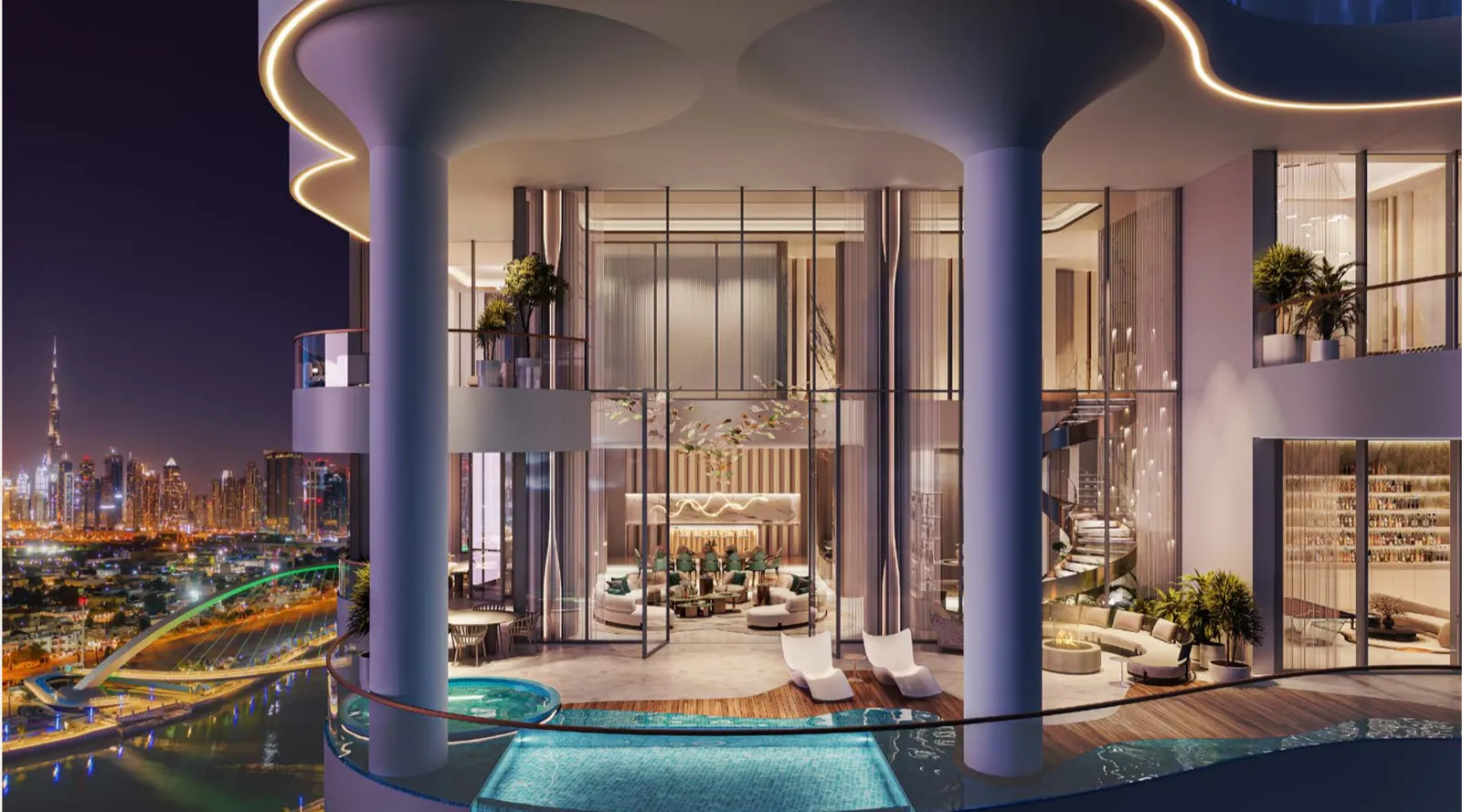
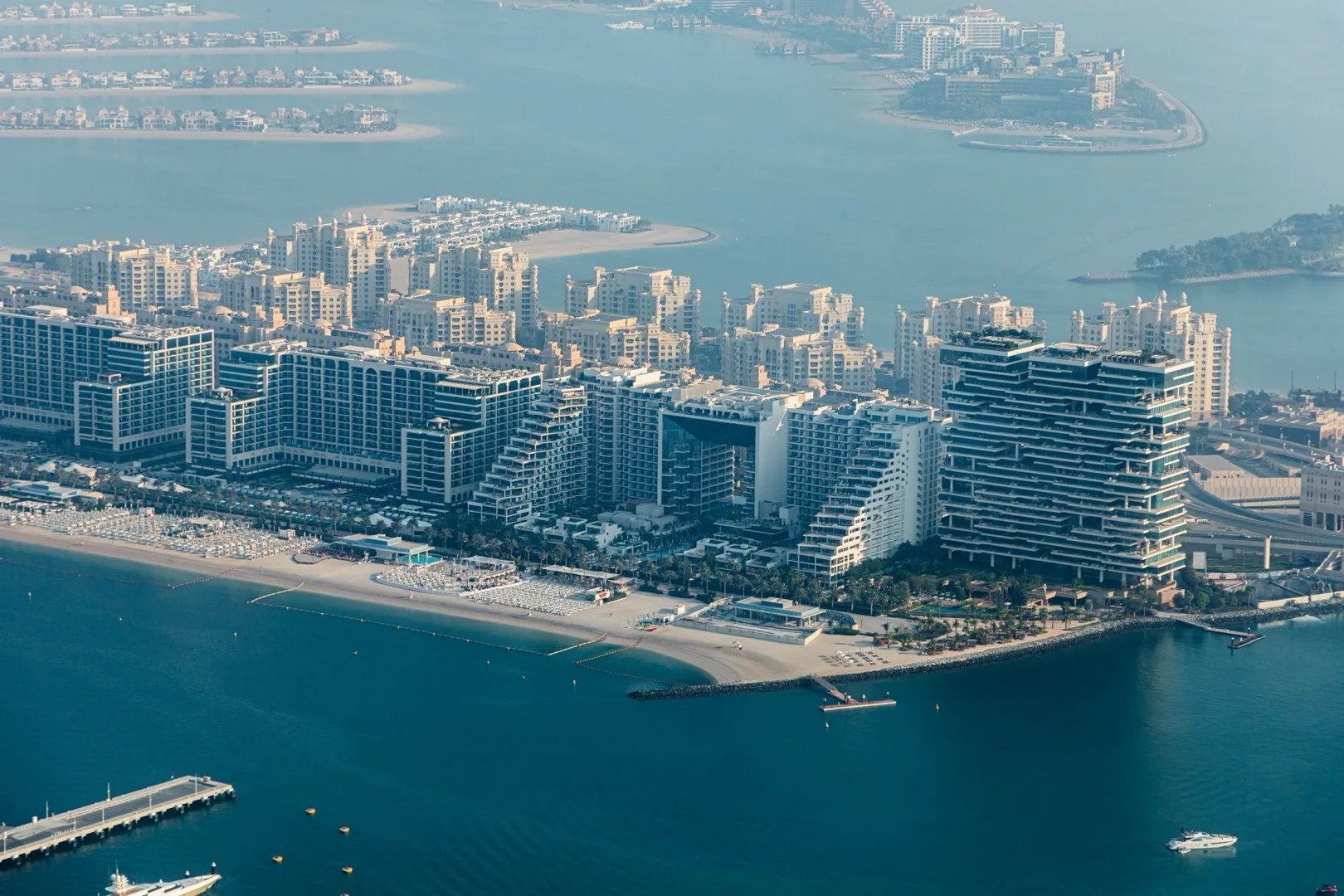
- Luxury barely blinked: Palm Jumeirah took five of the month's ten priciest sales, and the top deal — Solaya 5 in Jumeirah First — closed at AED 112.5 million.
- Listed prices are softening: sellers had cut a combined AED 2.36 billion across 3,292 listings by end-May, and off-plan resale apartments were trading 10–15% below original contract values in many cases.
- For buyers, this is the first genuinely negotiable Dubai market since 2022; for sellers, pricing realism now decides whether a listing moves. H2 hinges on geopolitics and a 65,000-apartment delivery pipeline.
May 2026 is the month Dubai's property data stopped telling one story. Depending on which report you opened, the emirate either recorded "AED 51.81 billion in transactions" with record-setting AED 100 million-plus apartment sales — or suffered a 46% year-on-year collapse in residential volumes. Both are true, and the gap between them is exactly what this recap unpacks.
This is a data recap, not a sales pitch. Every figure below is dated and attributed to its publisher — the Dubai Land Department (DLD), Cavendish Maxwell, DXBinteract-derived market summaries and the major business press — and where a May metric had not yet been published at the time of writing, we say so rather than guessing. It follows the same method as our Q1 2026 market report. Last updated: June 2026.
The Headline Numbers — and Why They Differ by Source
Start with the number you will see quoted most often. Per DLD data reported in early June by Arabian Business, Dubai recorded AED 51.81 billion (USD 14.11 billion) of real estate transactions across 13,631 deals in May 2026. That figure is real — but it is the broadest possible cut, because the DLD counts three transaction types in it: sales, mortgages and gifts.
| May 2026 metric (DLD) | Volume | Value (AED) | Value (USD approx.) |
|---|---|---|---|
| All transactions | 13,631 | 51.81 billion | $14.11 billion |
| — Sales | 10,483 | 29.46 billion | $8.02 billion |
| — Mortgages | 2,411 | 17.55 billion | $4.78 billion |
| — Gifts | 737 | 4.80 billion | $1.31 billion |
| Residential sales only | 9,507 | 22.01 billion | $5.99 billion |
| Commercial sales only | 711 | 6.50 billion | $1.77 billion |
The residential and commercial breakdown comes from the same DLD dataset as analysed by Gulf Business: AED 28.51 billion of residential and commercial property sales across 10,218 deals, of which residential contributed AED 22.01 billion through 9,507 sales and commercial AED 6.50 billion across 711 deals. Within commercial, offices generated AED 2.52 billion, whole-building deals AED 1.77 billion and land AED 1.18 billion.
So when one headline says "AED 51.81 billion" and another says "AED 28.5 billion", neither is wrong — the first counts every registration type including the AED 17.55 billion of mortgage registrations, the second counts sold property only. Market trackers add a third layer: DXBinteract-derived summaries put May at 10,281 sales worth AED 28.9 billion at an average of AED 1,650 per sq ft, per HAUS 51's compilation of DXBinteract data — fractionally different from the DLD's own sales count because of timing and classification cut-offs, but the same picture. Always check which cut a headline is using before you compare months; it is the single most common way Dubai market data gets misread.
The Year-on-Year Reality: A Sharp Cooling From a Record Base
The honest comparison is the uncomfortable one. According to Cavendish Maxwell's June 2026 analysis, around 9,500 residential transactions worth roughly AED 22 billion completed in May 2026 — against 17,600 deals worth AED 54.8 billion in May 2025. That is a 46% drop in volume and a 60% drop in value, year on year. May was also 27% below April 2026 month on month.
| Residential sales | May 2026 | May 2025 | Change |
|---|---|---|---|
| Transactions | ~9,500 | 17,600 | -46% |
| Value | ~AED 22 billion | AED 54.8 billion | -60% |
| vs April 2026 (volume) | 27% lower month on month | -27% | |
| Jan–May 2026 cumulative | 66,900 deals / AED 196.2bn | AED 217.8bn (Jan–May 2025) | ~-10% value |
Two caveats keep this from being a crash narrative. First, the Eid Al Adha holiday fell at the end of May 2026 and shut the market for the better part of a week; Cavendish Maxwell estimates it removed roughly 3,000 sales from the month. Second, the comparison base is brutal — May 2025 was one of the strongest months in Dubai's history, near the top of a cycle in which prices rose roughly 60% between 2022 and early 2025, as Fortune noted in its June 2026 assessment.
Zoom out and the cumulative picture is softer but hardly distressed: 66,900 residential sales worth AED 196.2 billion (USD 53.42 billion) in the first five months of 2026, down from AED 217.8 billion in the same period of 2025 — a value decline of roughly 10%, per Cavendish Maxwell. And the official first-quarter print was still a record: the DLD itself reported AED 252 billion of Q1 2026 transactions, up 31% year on year. The slowdown is a March-onwards phenomenon, not a full-year one — which is exactly the pattern we flagged in our March cooling analysis.
Cavendish Maxwell's Ronan Arthur summarised May this way: the month "recorded a notable decline in both transaction volumes and values", with the ready market seeing "an even more pronounced slowdown, with year-on-year declines since March" — but with buyers "taking a measured approach amid regional and global uncertainty" while "activity levels remain healthy by historical standards". That last clause matters: 9,500 sales in a holiday-shortened month would have been a blockbuster result in any year before 2023.
Off-Plan vs Ready: How the Month Split
The segment split is where the market's two-speed character shows. Per the DLD-derived figures reported by Gulf Business, off-plan generated 7,079 residential transactions worth AED 14.18 billion in May — roughly 74% of residential volume and 64% of residential value — while the secondary (ready) market recorded 2,422 transactions worth AED 7.74 billion.
| Segment — May 2026 | Deals | Value (AED) | Share of residential volume |
|---|---|---|---|
| Off-plan residential | 7,079 | 14.18 billion | ~74% |
| Secondary / ready residential | 2,422 | 7.74 billion | ~26% |
| Apartments (all) | 8,772 | ~14.6 billion | ~92% of residential deals |
| Villas (all) | 1,077 | ~7.2 billion | ~11% of deals, outsized value share |
Apartment and villa rows per DXBinteract data compiled by HAUS 51; segment rows per DLD data via Gulf Business. Minor differences in totals reflect classification cut-offs between trackers.
Two patterns stand out. First, off-plan's ~74% share of volume matches its January–May average per Cavendish Maxwell — launches and payment plans are still where the bulk of buyers are, even in a slower month. Second, villas continue to punch far above their weight on value: 1,077 villa sales generated an estimated AED 7.2 billion, an average ticket several times the apartment equivalent, which is consistent with where the supply scarcity actually sits.
The asymmetry that should worry sellers more than buyers: Cavendish Maxwell notes the ready market has been in year-on-year decline since March — earlier and deeper than off-plan. When the resale side cools first, negotiating leverage migrates to buyers in established communities well before launch pricing adjusts.
Apartments, Villas and the AED 100M+ Sales That Defined the Month
By type, apartments did the volume work: 8,772 apartment sales in May per DXBinteract-derived data, against 1,077 villa sales, 319 commercial unit sales and 113 plot deals. The average transacted price across the market was AED 1,650 per sq ft.
But the month's character was set at the very top. Luxury apartments dominated the highest-value transactions of May, per DLD data reported by Arabian Business, and Palm Jumeirah alone accounted for five of the ten most expensive sales. The podium:
| Sale | Location | Price (AED) | Price (USD approx.) |
|---|---|---|---|
| Solaya 5 | Jumeirah First | 112.5 million | $30.6 million |
| Solaya 6 | La Mer | 106 million | $28.9 million |
| Casa AHS | Dubai Water Canal (Al Safa) | 101.2 million | $27.6 million |
Three nine-figure (dirham) closings in a month where overall volumes fell 46% year on year is the clearest possible signal that this slowdown is a mid-market and volume story, not a flight of wealth. Prime waterfront — Palm Jumeirah, La Mer, the Dubai Water Canal corridor — kept clearing at record levels even as the broader market took a breath.
Where the Activity Concentrated: Top Areas in May
By transaction count, May's leaderboard looked familiar. Per DXBinteract data compiled by HAUS 51, the top-performing areas for residential sales were Jumeirah Village Circle (JVC), Business Bay, Wadi Al Safa 5, Dubai South, Jebel Ali First, Dubai Marina and Dubai Investment Park Second. Exact per-area deal counts for May had not been published in the sources available at the time of writing, so we list the ranking without inventing numbers.
The composition is telling:
- JVC and Business Bay — the perennial volume engines, driven by investor-grade apartment stock and continuous off-plan launches. In the secondary market specifically, Business Bay was the most liquid district in May, followed by JVC and the Burj Khalifa area.
- Wadi Al Safa 5 and Dubai South — launch-driven off-plan volume, with Dubai South still riding the Al Maktoum International Airport expansion story.
- Jebel Ali First and Dubai Investment Park Second — the affordability frontier, where sub-AED 1 million tickets keep absorption high.
- Dubai Marina — the one established prime-ready district in the top group, a reminder that liquid, finished waterfront stock transacts in any market.
Note what is happening beneath the volume table: activity is migrating outward along the price curve. The areas adding deals fastest are the ones offering entry pricing — exactly the pattern you would expect when buyers regain price sensitivity. For the rental-side mirror image of this migration, see our mid-2026 rental market report, published this month.
Prices: What Direction Is the Market Actually Moving?
Transaction averages first: the market-wide AED 1,650 per sq ft May average (DXBinteract via HAUS 51) is a blended figure and shifts with the sales mix, so treat it as a level, not a trend. Property Monitor's dedicated May 2026 price index had not been published at the time of writing — when it lands, it will be the cleaner like-for-like read, and we will fold it into our half-year wrap.
The directional evidence that is published points down, at least in asking prices. Per LuxuryPriceDrops.com data reported by Fortune, sellers had cut a combined AED 2.36 billion (USD 643 million) off listed prices across 3,292 properties by the end of May. AGBI's mid-May analysis of the same tracker — which monitors nearly 27,000 live listings — found discounts of up to 50% on previously listed prices, with the secondary market producing more than twice as many markdowns as off-plan, and gave two vivid examples: a La Mer villa cut from AED 110 million to AED 85 million, and an Arabian Ranches villa reduced five times, from AED 8.5 million to AED 7.4 million, still unsold.
In the off-plan resale market, Fortune reports off-plan secondary apartments trading 10–15% below original contract values in many cases. That is the segment showing the most stress — investors who bought late-cycle launches on payment plans and now want out before handover. Context for how unusual this is: before the current turbulence, Fitch's standing forecast was for a correction of up to 15% through end-2026, after the roughly 60% price run-up between 2022 and early 2025. The market is, so far, tracking inside that pre-existing forecast rather than below it.
Important nuance: these are listing-price cuts and resale discounts, not a registered-price index. Transacted prime values clearly held in May (see the AED 100M+ closings above), and segment-level registered price movement for May was not yet published at the time of writing. The honest summary is: asking prices are correcting, mid-market off-plan resale is correcting hardest, and prime ready stock is so far insulated. Whether registered prices follow is the question our 20-year market cycles analysis frames in historical context.
Following the Market?
Get Market Data in Your Inbox
DLD transaction data, price trends, and quarterly forecasts — before everyone else.
✓ You're in! Check your inbox.
Why May Cooled: Eid, Geopolitics and the Base Effect
Three forces compounded in May, and separating them is essential to reading the data correctly.
1. The calendar. Eid Al Adha closed the market for roughly a week at the end of May. Cavendish Maxwell's ~3,000-sale estimate implies the underlying month was closer to 12,500 residential deals — still down year on year, but a materially less dramatic decline than the raw -46%.
2. The regional conflict. Sentiment has been under pressure since March 2026, when — per a Goldman Sachs analysis cited by Fortune — transaction volumes fell 37% year on year in the first twelve days of the month. Citi analysts, also cited by Fortune, see the conflict as a "considerable risk" to Dubai's growth engine, forecasting population expansion of just 1% in 2026 against a historical norm of around 4%. Population inflow is the single most important demand variable in this market; if Citi is right, absorption maths for 2026–2027 deliveries get harder.
3. The base effect. May 2025 was a near-record month at the top of a three-year boom. Any comparison against it flatters the decline. Against May 2022 or May 2023, May 2026's ~9,500 residential sales would read as a strong month — which is precisely what Cavendish Maxwell means by "healthy by historical standards".
Policy is already responding to the demand question. In April, Dubai removed the AED 750,000 minimum property value for the two-year investor residency visa — a deliberate widening of the buyer funnel at the affordable end, as Fortune reported in its June coverage. Measures like this are worth watching as a leading indicator: Dubai's regulator historically loosens demand-side rules early in soft patches, not after them.
Mortgages and the Rate Environment
One of May's quieter signals was financing resilience. The DLD registered 2,411 mortgage transactions worth AED 17.55 billion in May — meaning mortgage registrations ran at roughly 60% of the value of all property sales in the same month. Cash remains king in Dubai, but leverage is doing more work than the stereotype suggests, particularly in the ready segment where banks will actually lend.
Rates are helping rather than hurting. The 3-month EIBOR — the benchmark most variable UAE mortgages price from, published daily by the Central Bank of the UAE — stood near 3.69% in early June 2026. UAE mortgage comparison platforms list headline fixed rates from roughly 3.25% (Islamic) and 3.70% (conventional) at the most competitive end, with mainstream fixed offers in the 3.89–4.75% band. Because the dirham is pegged to the dollar, EIBOR tracks the US Federal Reserve with a short lag, and the consensus among UAE mortgage analysts is for a relatively stable rate corridor through 2026 — a meaningfully friendlier financing backdrop than 2023–2024's peaks.
For a buyer, the practical effect: a softer market and sub-4% fixed money is a combination Dubai has not offered simultaneously since before the boom. Run your own numbers with our ROI calculator before assuming either the discount or the rate will still be there in Q4.
Supply: The Delivery Wave Hanging Over H2
The other side of the absorption equation is supply, and 2026's pipeline is heavy. Per Fortune's June reporting, around 65,000 apartments and 12,500 villas are scheduled for delivery by year-end 2026 — though many handovers are now expected to slip into 2027, as developers respond to slower sales by stretching timelines. Betterhomes' 2026 forecast frames the bigger picture: anywhere from 200,000 to 300,000 new units could arrive by 2028, with a large share concentrated in 2026–2027.
Supply is not evenly spread, which is why area selection matters more in 2026 than at any point in the cycle. Districts with deep off-plan pipelines and thin end-user demand face genuine oversupply risk; established communities with finished stock and school-and-commute fundamentals face very little. We mapped this district by district in our 2026–2027 delivery wave analysis — if you are buying anything off-plan this summer, read that before the brochure.
The interaction to watch in H2: if Citi's 1% population-growth scenario materialises while even two-thirds of the scheduled 2026 handovers complete, the ready market inherits a tenant's-and-buyer's environment into 2027. If deliveries slip en masse and population inflows recover with regional de-escalation, the supply wave flattens into something the market has absorbed before. The data will show which path we are on by the Q3 prints.
What It Means for Buyers, Sellers and Investors
Buyers have leverage for the first time since 2022. Over 3,200 listings carried price cuts by end-May, secondary-market markdowns outnumber off-plan ones two to one, and off-plan resales are changing hands 10–15% below original contract values in many cases. The playbook: anchor offers to registered comparables rather than asking prices, prioritise motivated off-plan assignments and ready stock in supply-light districts, and lock fixed-rate financing while it starts with a 3.
Sellers face a pricing-realism test. The Arabian Ranches villa that AGBI tracked through five cuts — AED 8.5 million to AED 7.4 million, still unsold — is the cautionary tale: chasing the market down costs more than pricing to current comparables on day one. If you do not need to sell into a -27% month-on-month market, the rational alternative is to hold and let the rental market — where fundamentals remain firm, per our mid-2026 rental report — carry the asset.
Investors should read May as a sorting month, not an exit signal. Prime waterfront set records; the affordability frontier kept its volume; the squeezed middle — late-cycle off-plan resale in commodity districts — is where losses are being taken. Cycle positioning, not market timing, is the decision that matters here.
A buyer targets a ready two-bedroom apartment in Business Bay — May's most liquid secondary district — with listings asking around AED 2.4 million. Instead of negotiating from the asking price, she pulls the building's registered May–June transactions and finds closings clustering 5–8% below current asks, consistent with a month where 3,292 listings carried cuts. She offers against the registered comparables, secures a 4.1% five-year fixed (well inside the 3.89–4.75% mainstream band), and her mortgage payment lands below the unit's prevailing rent. The data did the negotiating; the rate environment did the rest.
An investor holds a 2024-launch off-plan apartment, 60% paid, handover due mid-2027. Resales in his project are listing 10–15% below original contract value — the segment Fortune identifies as the most stressed. Selling now crystallises that discount plus transfer costs. Holding means funding the remaining instalments into a heavy 2026–2027 delivery pipeline, but with sub-4% EIBOR-linked financing available at handover and his district outside the worst oversupply clusters in our delivery-wave map. He models both paths — exit at -12% versus hold-and-let at current rents — and holding wins unless he needs the liquidity. The point is not the answer; it is that May 2026 is a month to decide with a spreadsheet, not a headline.
H2 2026 Outlook: What the Published Forecasts Say
Anchoring strictly to published forecasts rather than our own crystal ball:
- Fitch (pre-conflict forecast, via Fortune): a correction of up to 15% through end-2026 — a view the market is currently tracking inside, not below.
- Citi (via Fortune, June 2026): population growth of ~1% in 2026 versus a ~4% historical norm if regional risks persist — the most bearish published demand assumption.
- Betterhomes (2026 scenarios): a base case of broad 5–8% price growth for the year, with established communities outperforming — a view published before the spring turbulence and now representing the optimistic end of the range.
- Cavendish Maxwell (June 2026): activity "healthy by historical standards" with buyers "taking a measured approach amid regional and global uncertainty" — the measured middle.
- LuxuryPriceDrops.com's co-founder Matias Dorta (via AGBI): near-term cuts continuing — "the pace of new reductions is not slowing" — but a longer-term expectation that the market will "go a lot higher in the coming years".
The spread between those views is unusually wide, which is itself information: H2 2026 is a scenario market, not a consensus one. The swing variables are regional de-escalation (which would restore the population inflow), the actual versus scheduled pace of the delivery wave, and whether Fed-tracking rates drift lower. We compared five leading analyst views in depth in our H2 2026 forecast round-up, and we track every monthly print on our continuously updated Dubai real estate statistics page.
Our own discipline for June and July: watch the ready-market volume line (the segment that cooled first), the off-plan resale discount (the stress gauge), and the per-area registered prices in the seven volume leaders above. Those three series will tell you whether May was an Eid-distorted pause or the second leg of a correction — before any headline does.
Frequently Asked Questions
How many property transactions did Dubai record in May 2026?
The Dubai Land Department recorded 13,631 total transactions worth AED 51.81 billion (USD 14.11 billion) in May 2026, comprising 10,483 sales worth AED 29.46 billion, 2,411 mortgage registrations worth AED 17.55 billion and 737 gift transactions worth AED 4.80 billion. Residential sales specifically came to about 9,500 deals worth roughly AED 22 billion.
Why do some reports say AED 51.81 billion and others AED 28.5 billion for May 2026?
They are different cuts of the same DLD data. AED 51.81 billion counts every registration type — sales, mortgages and gifts. AED 28.51 billion counts residential and commercial property sales only (AED 22.01 billion residential plus AED 6.50 billion commercial). Neither is wrong; always check whether a headline includes mortgage registrations before comparing months.
Is the Dubai property market crashing in 2026?
The published data shows a sharp cooling from a record base, not a crash. May 2026 residential volumes fell 46% year on year per Cavendish Maxwell, but against the strongest May in Dubai's history, and with a week lost to Eid Al Adha. Cumulative January–May value is down roughly 10% year on year, Q1 2026 was a record AED 252 billion per the DLD, and prime sales set AED 100 million-plus records in May. Asking prices are correcting — sellers cut AED 2.36 billion across 3,292 listings by end-May — but registered prime values held.
How much did the Eid Al Adha holiday affect May 2026 sales?
Cavendish Maxwell estimates the week-long Eid Al Adha break at the end of May removed roughly 3,000 sales from the month. Adjusting for it, underlying residential activity was closer to 12,500 deals — still down year on year, but materially less dramatic than the raw 46% decline suggests.
What were the most expensive homes sold in Dubai in May 2026?
Per DLD data reported by Arabian Business, the top three were all luxury apartments: Solaya 5 in Jumeirah First at AED 112.5 million, Solaya 6 in La Mer at AED 106 million, and Casa AHS on the Dubai Water Canal (Al Safa) at AED 101.2 million. Palm Jumeirah accounted for five of the month's ten highest-value sales.
Which Dubai areas had the most transactions in May 2026?
Per DXBinteract-derived data, the volume leaders were Jumeirah Village Circle, Business Bay, Wadi Al Safa 5, Dubai South, Jebel Ali First, Dubai Marina and Dubai Investment Park Second. In the secondary market specifically, Business Bay was the most liquid district, followed by JVC and the Burj Khalifa area.
Is off-plan still dominating the Dubai market?
Yes. Off-plan generated 7,079 residential transactions worth AED 14.18 billion in May 2026 — about 74% of residential volume — versus 2,422 secondary-market deals worth AED 7.74 billion. Notably, though, the ready market has been cooling faster, with year-on-year declines since March per Cavendish Maxwell, and off-plan resales are the most discounted segment, trading 10–15% below original contract values in many cases per Fortune.
Are Dubai mortgage rates high in mid-2026?
No — financing is comparatively cheap. The 3-month EIBOR stood near 3.69% in early June 2026 per Central Bank of the UAE published rates, and comparison platforms list competitive fixed mortgage rates from roughly 3.25–3.70%, with mainstream fixed offers around 3.89–4.75%. May's AED 17.55 billion of mortgage registrations shows financing demand remains robust.
Is June 2026 a good time to buy property in Dubai?
It is the most negotiable market since 2022: thousands of listings carry price cuts, off-plan resales trade at discounts, and fixed rates start below 4%. The risks are the 2026–2027 delivery wave and conflict-dependent population growth, so district selection matters more than timing. Anchor offers to registered comparables, avoid oversupply clusters, and stress-test the numbers with an ROI model rather than buying the headline — in either direction.
This recap is part of our continuous data series — start with the Q1 2026 market report for the quarter's full picture, and our live Dubai real estate statistics page for every series we track. Inside the REC community, members share registered comparables, off-plan resale pricing and on-the-ground broker reads weekly — the kind of signal that reaches the headlines a month late. If you are deciding whether to buy, sell or hold this summer, pressure-test your plan against people doing the same maths in real time.
Want a Data-Backed Second Opinion?
Tell us your plans — we'll share what the data says about your timing.
Thank You!
We'll get back to you within 24 hours.
Real Estate Agencies in Dubai
Explore providers from our business directory
Still have questions?
Ask a follow-up, or get connected with a vetted Dubai professional.
Follow us on LinkedIn
Dubai market analysis and industry insight for professionals.